Why Remote Teams Need Browser Isolation Now
Browser isolation for remote teams creates a secure boundary between employee devices and company web sessions, preventing data leaks, credential theft, and malware infections — regardless of where or how employees connect. Instead of trusting every home network, personal laptop, and shared Wi-Fi hotspot, isolation runs browser sessions in controlled environments where no sensitive data touches the local device. Below, we break down eight specific ways this approach protects distributed workforces and how to implement it without slowing your team down.

The Security Gap Remote Work Created
When companies shifted to remote and hybrid models, they extended their attack surface overnight. IT teams that once controlled every endpoint, network switch, and firewall rule suddenly had to trust hundreds of unmanaged environments. The consequences have been severe — remote-work-related breaches cost an average of $173,000 more than on-site incidents, according to IBM’s 2025 Cost of a Data Breach report.
Personal Networks Are Uncontrolled
Home routers run outdated firmware. Coffee-shop Wi-Fi lacks encryption. Co-working spaces share a single network across dozens of strangers. When an employee opens a client dashboard or logs into a CRM from any of these networks, every packet travels through infrastructure the company doesn’t control. VPNs encrypt the tunnel but do nothing about what happens inside the browser itself — a phishing page still renders, a malicious script still executes, and session cookies still get stored locally.
BYOD Creates Inconsistent Security Posture
Bring-your-own-device policies trade convenience for risk. Personal machines may lack endpoint protection, run outdated operating systems, or share user accounts with family members. A child installing a browser game could introduce adware that intercepts form data. A spouse’s browser extension could have permission to read all page content. Even well-intentioned employees who keep their machines clean often disable security features that slow down personal use.
Shared Credentials Multiply Exposure
Remote teams routinely share login credentials for SaaS platforms, social media accounts, advertising dashboards, and client systems. These credentials frequently travel via Slack messages, shared documents, or sticky notes on desks. When one compromised device captures a shared password, every account using that credential is exposed. Traditional password managers help but don’t solve the fundamental problem: the browser session itself is the attack vector.
Shadow IT Bypasses Every Policy
When employees find the approved tool too slow or restrictive, they sign up for alternatives using their work email. These shadow IT applications — file-sharing services, project management tools, AI assistants — operate outside company security monitoring. Browser isolation addresses this by controlling the execution environment rather than trying to police every application employees might access.
8 Ways Browser Isolation Protects Remote Teams
1. Centralized Session Management
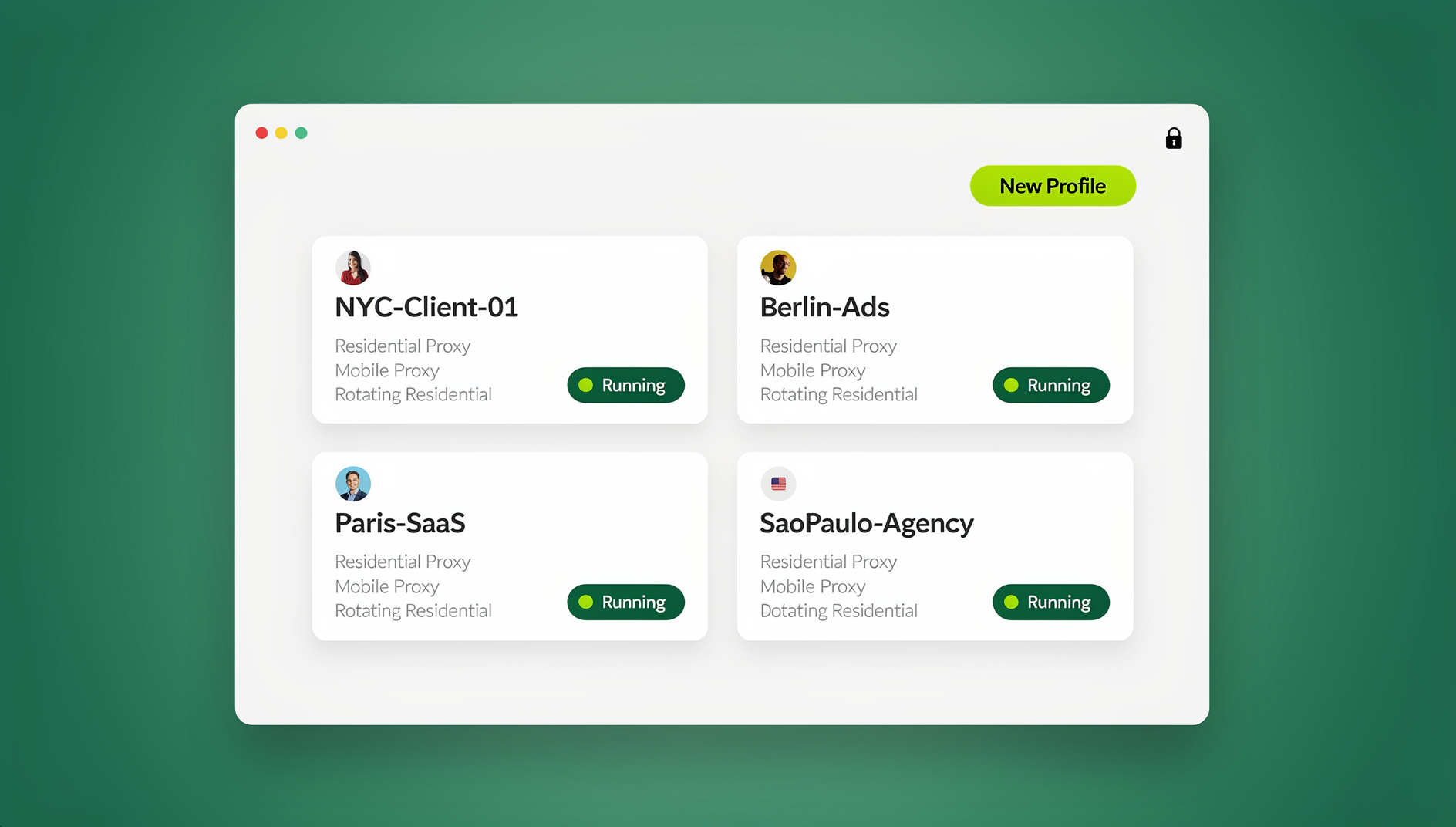
Browser isolation platforms let IT administrators create, configure, and monitor browser sessions from a single dashboard. Instead of hoping every remote employee follows security protocols, administrators enforce them at the session level. Each team member gets pre-configured profiles with specific proxy settings, geographic locations, and security policies — all managed centrally regardless of where the employee physically sits.
Run Browser Isolation For Remote Teams in the Cloud With Send.win
Send.win’s cloud browser runs your isolated profiles on remote infrastructure — open a clean, fingerprint-isolated session from any device without installing anything:
- Instant cloud sessions – launch an isolated browser in seconds, no local install
- Isolated profiles – separate fingerprint, cookies, and storage per session
- Cloud sync & profile sharing – pick up the same profiles on the desktop app (Windows, macOS, Linux) or share them with your team
- Built-in residential proxies – with automatic timezone and locale matching
You can try it right now: the Send.win demo browser opens an isolated cloud session directly in this browser tab. The 30-day free trial needs no credit card, and paid plans start at $6.99/month billed annually — see pricing.
For teams that need to manage multiple accounts across clients or platforms, centralized session management prevents the chaos of credentials scattered across personal browsers, password managers, and shared spreadsheets.
2. Zero Local Data Storage
When browser sessions run in isolated environments — whether cloud-based or containerized — cookies, cached files, autofill data, and browsing history never touch the employee’s local device. If a laptop gets stolen from a coffee shop, the thief finds no saved passwords, no cached client data, and no active sessions. This approach is dramatically more effective than remote-wipe policies, which depend on the device being online and the theft being reported quickly.
3. Team Profiles With Granular Permissions
Modern browser isolation lets administrators create role-based profiles. A junior account manager might have read-only access to a client’s ad dashboard, while a senior manager gets full access with different proxy routing. Profiles can restrict clipboard access (preventing copy-paste of sensitive data), disable downloads, block specific URLs, and enforce session timeouts. These permissions travel with the profile, not the device — so they work identically whether the employee is on their work laptop, a personal tablet, or a borrowed machine.
4. Cloud Execution Eliminates Endpoint Risk
Cloud browser sessions execute all web content on remote servers. JavaScript, WebAssembly, browser exploits, and malicious downloads run in a disposable environment that gets destroyed after each session. The employee’s device only receives a visual stream of the rendered page. This architectural approach means that even zero-day browser exploits can’t reach the endpoint — they detonate harmlessly in a container that will be recycled minutes later.
Understanding remote browser isolation architecture is essential for IT leaders evaluating these solutions — the technology has matured significantly from early implementations that felt sluggish and limited.
5. Isolated Client Access Prevents Cross-Contamination
Agencies and service providers managing multiple client accounts face a specific risk: a breach in one client’s environment leaking into another. Browser isolation creates hard boundaries between client sessions. Each client gets its own isolated profile with separate cookies, storage, and network routing. A compromised session for Client A cannot access data, credentials, or cookies belonging to Client B — even if the same employee manages both.
6. Secure SaaS and CRM Access
Enterprise SaaS tools like Salesforce, HubSpot, and Stripe contain sensitive customer data, financial information, and business intelligence. Browser isolation adds a security layer between these critical systems and potentially compromised endpoints. Sessions can be configured to allow access only from specific IP ranges, require additional authentication steps, and log every action for audit purposes. For teams prioritizing safe browsing practices, isolated SaaS access is one of the highest-impact implementations.
7. Compliance Without Complexity
Regulations like GDPR, HIPAA, SOC 2, and PCI-DSS require organizations to demonstrate control over data access and processing. Browser isolation provides a clear compliance narrative: sensitive data is accessed only within controlled, auditable environments. Session logs, access controls, and data-residency options give compliance teams the documentation they need without requiring every employee to become a security expert.
8. Onboarding and Offboarding in Minutes
When a new team member joins, IT creates a profile with the right permissions and shares it — no device imaging, no VPN configuration, no endpoint agent installation. When someone leaves, IT revokes the profile. No credentials remain on any device, no sessions persist, and no data needs to be remotely wiped. For companies with high contractor turnover or seasonal staff, this speed is transformative.
Browser Isolation vs. VPN vs. VDI: Which Fits Remote Teams?
Remote teams typically evaluate three approaches to secure access. Each has distinct strengths, but they solve different problems. Effective session isolation requires understanding where each technology excels and where it falls short.
| Feature | VPN | VDI (Virtual Desktop) | Browser Isolation |
|---|---|---|---|
| What it protects | Network traffic in transit | Full desktop environment | Browser sessions specifically |
| Local data exposure | High — data still lives on the device | Low — data stays on VDI server | None — no browser data on device |
| Setup complexity | Moderate — client install + config | High — server infrastructure needed | Low — works via cloud or lightweight app |
| Cost per user | $5–$15/mo | $30–$80/mo | $7–$30/mo |
| Performance impact | Moderate — adds latency to all traffic | High — depends on server capacity | Minimal — only browser traffic isolated |
| BYOD compatibility | Requires client install | Requires client or browser access | Works on any device |
| Shadow IT prevention | No — only secures tunnel | Partial — locked desktop limits apps | Yes — controls the browsing environment |
| Session-level access control | No | Limited | Yes — per-profile permissions |
| Ideal for | Securing network access to on-prem resources | Full desktop replacement for remote workers | Securing web-based workflows and SaaS access |
For most remote teams that work primarily in web-based tools, browser isolation delivers the best balance of security, cost, and usability. VPNs remain useful for accessing on-premises resources but don’t protect the browser session itself. VDI provides the highest security but at 3–5× the cost and with significant performance and maintenance overhead.
Key Use Cases for Remote Team Browser Isolation
Agencies Managing Client Systems
Digital agencies routinely access client ad accounts, analytics dashboards, CMS platforms, and social media profiles. Each client expects their credentials to be handled securely and their accounts to be isolated from other clients. Browser isolation creates per-client profiles with dedicated sessions, unique fingerprints, and separate network routing — eliminating the risk of accidental cross-client data exposure.
Sales Teams in CRM and Financial Tools
Sales representatives access CRM systems containing customer PII, deal values, and contract terms. They also use financial tools for quoting, invoicing, and payment processing. Browser isolation ensures this sensitive data never caches on personal devices, while session logging provides the audit trail that compliance teams require.
Accessing Sensitive Data From Untrusted Locations
Remote employees occasionally need to access sensitive systems from airports, hotel business centers, or client offices. Browser isolation makes this safe by ensuring the untrusted network never sees the actual data — only the encrypted stream between the isolation environment and the employee’s screen.
Contractor and Freelancer Access
Short-term contractors need temporary access to specific systems without installing software or receiving full network credentials. Browser isolation provides time-limited, permission-scoped access that can be revoked instantly when the engagement ends. No software to uninstall, no credentials to rotate, no devices to audit.
Implementing Browser Isolation: A Practical Roadmap
Step 1: Audit Your Web-Based Workflows
List every SaaS tool, client system, and web application your team accesses. Categorize them by sensitivity level: critical (financial systems, customer PII), important (project management, communication), and standard (research, general browsing). Focus isolation efforts on critical and important categories first.
Step 2: Define Team Roles and Permissions
Map out who needs access to what. Create role templates that specify which systems each role can access, what actions they can perform (view-only vs. full access), and what session restrictions apply (clipboard access, download permissions, session duration).
Step 3: Choose Your Isolation Architecture
Decide between cloud-based isolation (sessions run entirely in the cloud — no software on the device) and desktop-client isolation (a lightweight application manages local session containers). Cloud-based is simpler for BYOD environments; desktop clients offer better performance for heavy daily use.
Step 4: Roll Out by Team, Not Company-Wide
Start with the team handling the most sensitive data — typically finance, client management, or executive operations. Gather feedback, refine permissions, and document processes before expanding to the full organization.
Step 5: Monitor, Audit, and Iterate
Use session logs to identify unusual patterns: access from unexpected locations, credential sharing, or attempts to access restricted systems. Regular audits ensure permissions stay current as roles change and new tools are added.
How Send.win Supports Remote Team Security
Send.win is purpose-built for teams that need isolated browser sessions across distributed workforces. The platform operates in two modes: Sendwin Browser, a native desktop application for Windows, macOS, and Linux that runs isolated profiles locally, and cloud browser sessions that execute profiles entirely in the cloud with no local installation required.
The Pro plan ($19/month, or $6.99/month billed annually) includes 150 browser profiles, 5GB of proxy bandwidth, and the Automation API for Selenium/Puppeteer/Playwright workflows — ideal for small remote teams. The Team plan ($49/month, or $20.99/month billed annually) scales to 500 profiles, 20GB of bandwidth, Automation API access, and 16 team seats. Administrators can create profiles with specific configurations, assign them to team members, set permissions, and monitor usage — all from a central dashboard. The Automation API is available on both plans.
For remote teams, the cloud browser sessions feature is particularly valuable: team members can access pre-configured, isolated browser profiles from any device without installing software. Sessions run in Send.win’s cloud infrastructure, so no cookies, credentials, or browsing data ever touches the employee’s machine. When a team member finishes, the session can be preserved for continuity or destroyed for maximum security.
The 30-day free trial requires no credit card, so teams can test the full workflow — profile creation, team assignment, cloud sessions, and permission management — before committing.
🏆 Send.win Verdict
For remote teams juggling client accounts, SaaS tools, and sensitive data across uncontrolled networks, Send.win’s combination of desktop and cloud browser isolation eliminates the biggest security gaps. The Team plan’s 500 profiles and 16 seats cover most mid-size distributed teams, while cloud browser sessions let contractors and BYOD employees work securely without any software installation. Role-based profile permissions and centralized management give IT leaders the control they need without slowing teams down.
Try Send.win free today — 30-day trial, no credit card, full Team plan features included.
Frequently Asked Questions
What is browser isolation for remote teams?
Browser isolation for remote teams is a security approach that runs browser sessions in controlled environments — either cloud servers or local containers — so that web content, cookies, and cached data never directly touch employee devices. This protects against malware, credential theft, and data leaks, even when employees work from unsecured personal networks or BYOD devices.
How does browser isolation differ from a VPN?
A VPN encrypts network traffic between a device and a corporate network but doesn’t protect what happens inside the browser. Browser isolation goes further by executing web sessions in a separate environment, preventing phishing pages, malicious scripts, and browser exploits from reaching the endpoint. Many teams use both: a VPN for on-premises access and browser isolation for web-based tools.
Can browser isolation work with BYOD policies?
Yes. Cloud-based browser isolation is especially suited for BYOD because sessions run entirely on remote servers. Employees access isolated sessions through a lightweight client or a regular browser — no corporate software needs to be installed on personal devices, and no company data is stored locally.
Does browser isolation slow down browsing?
Modern browser isolation solutions have minimal performance impact. Cloud-based solutions stream rendered pages with latency typically under 50 milliseconds. Desktop-based solutions like Sendwin Browser run profiles locally with near-native performance. The experience is significantly better than VDI solutions, which route the entire desktop environment remotely.
How does browser isolation help with compliance?
Browser isolation provides a clear audit trail of who accessed what, when, and from where. Session-level access controls, data-residency options, and zero-local-storage architecture help satisfy requirements under GDPR (data minimization), HIPAA (access controls), SOC 2 (monitoring and logging), and PCI-DSS (network segmentation). Compliance teams can demonstrate that sensitive data never persists on uncontrolled endpoints.
What happens to my sessions if an employee’s device is lost or stolen?
With browser isolation, nothing sensitive is on the device. There are no saved passwords, no cached pages, no session cookies, and no browsing history on the local machine. IT simply revokes the employee’s profile access, and all sessions terminate instantly. No remote wipe is needed, and there’s no waiting for the device to come online.
Can I manage browser isolation for contractors and freelancers?
Yes. Browser isolation platforms allow administrators to create time-limited profiles with specific permissions for contractors. Access can be restricted to particular tools or client systems, clipboard and download features can be disabled, and the entire profile can be revoked in seconds when the engagement ends — without needing to touch the contractor’s device.
How many team members can use browser isolation simultaneously?
This depends on your plan. Send.win’s Team plan supports 16 concurrent seats with 500 browser profiles, which covers most distributed teams. Profiles can be assigned to specific members or shared among roles, with permissions controlling what each person can do within their assigned sessions.