Browser Profile Management for Virtual Assistants: Agency Guide (2026)
Implementing structured browser profile management for virtual assistants requires deploying cloud-sandboxed Chromium profile containers that allow distributed remote teams to access client social media, e-commerce stores, and ad accounts collaboratively without sharing master passwords, triggering 2FA re-verification, or causing location mismatch suspensions. While manual credential handoffs trigger automated platform security checkpoints, Sendwin provides engine-level profile sandboxing with bundled residential proxies and 16 team seats starting at $19/mo ($6.99/mo annual — 63% savings).
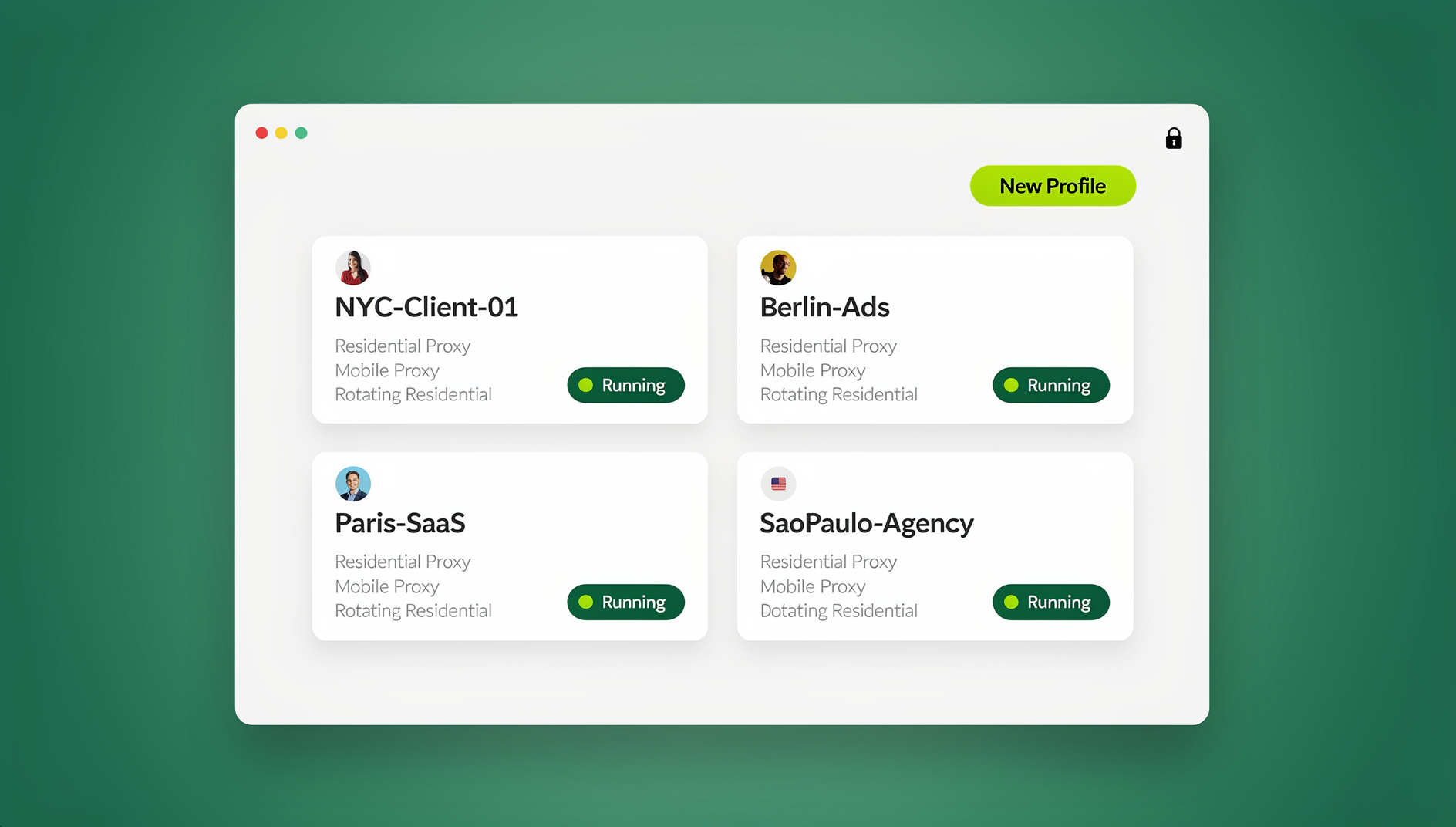

📌 TL;DR Executive Summary
- The Delegation Dilemma: Virtual assistants (VAs) operating across disparate geographic locations frequently trigger automated fraud alerts when logging into client accounts using local residential connections.
- Password-Free Collaboration: Sandboxed cloud browser profiles allow agency owners to log into client accounts once, sharing active authenticated sessions with VAs without disclosing master passwords or API keys.
- The Sendwin Advantage: Sendwin provides centralized profile sharing, dedicated residential proxy binding, 16 included team seats on the Team plan ($20.99/mo annual), and zero per-seat user fees.
For agency founders, e-commerce managers, and digital operations leads, delegating daily administrative workflows to virtual assistants is critical for scaling revenue. However, careless credential handoffs and inconsistent browser telemetry remain the leading causes of client account bans in 2026.
In this comprehensive operational guide, we examine delegation security risks, break down profile containerization architectures, provide an automated session-sharing script, and outline enterprise permission management protocols.
💡 Pro Tip: Never Share Raw Passwords or 2FA Authenticator Seeds
Sharing plaintext credentials via Slack or WhatsApp introduces severe security liabilities. Use Sendwin’s profile sharing to grant VAs instant session access without exposing raw passwords.
The Core Challenges of Delegating Client Accounts to Remote VAs
Delegating multi-platform accounts to virtual assistants introduces several distinct technical vulnerabilities:
1. Geographic Anomaly and “Impossible Travel” Flags
When an agency owner logs into a client’s Amazon Seller Central from New York, and three hours later a virtual assistant in Manila logs in from an overseas IP, security algorithms flag the session for “impossible travel,” locking the account for suspicious activity. Binding each client profile to a dedicated, static residential proxy in the client’s home country eliminates this risk completely.
2. Device Fingerprint Volatility
Consumer laptops used by VAs often feature non-standard hardware configurations, localized foreign font sets, and unique display resolutions that betray offshore delegation. Sandboxed browser profiles standardize hardware attributes to match authentic client environments.
3. Accidental Session Invalidation and 2FA Loops
Logging into platforms from new browser instances frequently forces two-factor authentication prompts, interrupting workflows and requiring constant client intervention. Preserving persistent session cookies within Sendwin containers avoids repetitive 2FA challenges. Review our analysis on how to warm up browser profiles for ads.
⚠️ Security Warning: Avoid Centralized Password Managers for Untrusted Staff
Password managers autofill credentials, meaning a disgruntled contractor can copy the plaintext password from the DOM inspector. Sendwin’s cloud profiles share authenticated sessions directly, keeping credentials fully hidden.
Technical Comparison: VA Account Management Approaches
Review the table below to compare traditional delegation workarounds against Sendwin’s cloud profile management:
| Delegation Dimension | Direct Credential Sharing (AnyDesk / RDP) | Shared Password Managers | Sendwin Hardened Cloud Platform |
|---|---|---|---|
| Password Exposure | Exposed via remote screen | Exposed via DOM inspection | ✅ 100% Hidden (Password-free session sharing) |
| Location Consistency | Host PC IP exposed | VA local IP exposed (Flags account) | ✅ Dedicated residential proxy bound to profile |
| Multi-User Concurrency | ❌ 1 user at a time (Blocks workstation) | ⚠️ Simultaneous logins trigger bans | ✅ Isolated, coordinated cloud profiles |
| 2FA Disruption | High (Requires ongoing codes) | High (Forces re-verification) | ✅ Zero friction (Persistent session cookies) |
| Included Team Seats | Expensive per-machine licenses | Per-user seat fees ($8-$15/seat/mo) | ✅ 16 team seats included ($20.99/mo annual) |
⚡ Quick Win: Assign Profiles by Client, Not by VA
Structure your Sendwin workspaces by client brand. When a VA takes time off or leaves your team, you can reassign the profile to another team member in one click without changing passwords.
Python Playwright Script: Verifying Profile Session Continuity
Use this script to audit that an authenticated session persists correctly inside a profile container before handing it off to a remote virtual assistant:
import asyncio
from playwright.async_api import async_playwright

async def audit_session_continuity():
    async with async_playwright() as p:
        browser = await p.chromium.launch(headless=True)
        context = await browser.new_context(
            user_agent="Mozilla/5.0 (Windows NT 10.0; Win64; x64) AppleWebKit/537.36 (KHTML, like Gecko) Chrome/130.0.0.0 Safari/537.36"
        )
        page = await context.new_page()

        # Simulate authenticated session audit
        await page.goto("https://httpbin.org/cookies/set?session_token=authenticated_secure_token_98765")
        cookies = await context.cookies()

        print("=== Profile Session Continuity Audit ===")
        found_token = any(c['name'] == 'session_token' for c in cookies)
        print(f"  Session Cookie Retained: {'✅ Yes' if found_token else '❌ No'}")
        print(f"  Total Cookies in Store : {len(cookies)}")

        # Verify proxy binding and IP resolution
        await page.goto("https://api.ipify.org?format=json")
        ip_info = await page.inner_text("pre")
        print(f"  Outbound Network IP   : {ip_info}")

        await browser.close()

if __name__ == '__main__':
    asyncio.run(audit_session_continuity())
Operational Checklist: Delegating Profiles to Virtual Assistants
To ensure flawless, ban-free client management across your agency’s VA team, enforce this operational checklist:
- Centralized Initial Login: Perform the initial account login and 2FA authentication from the client’s home region using a matching residential proxy. Read our guide on how to use browser profiles with proxies.
- Granular Permission Allocation: Assign profile access rights strictly based on job role; restrict VAs from modifying proxy or fingerprint settings.
- Timezone and Language Matching: Ensure the profile’s timezone and locale match the client’s primary market rather than the VA’s local time.
- Session Persistence Auditing: Periodically verify that session cookies and tokens remain valid inside profile storage to prevent unexpected logouts.
- Rapid Offboarding Protocols: Revoke profile access immediately from the Sendwin dashboard when offboarding staff, instantly terminating session availability.
Enterprise Case Study: E-Commerce Growth Agency Manages 120 Client Stores with 25 VAs
A premier marketplace management agency in London managed customer service, order fulfillment, and product listing optimizations across 120 Amazon and Shopify client stores. The agency employed 25 virtual assistants located across the Philippines and Eastern Europe.
The agency initially used commercial remote desktop (RDP) software to grant VAs access to dedicated office workstations. However, RDP latency caused severe productivity bottlenecks, and workstation hardware crashes repeatedly disrupted daily customer support operations, costing the agency over $4,500 monthly in server costs and lost hours.
The agency transitioned its entire team to Sendwin’s Team annual plan ($251.88/year, or $20.99/month). Management configured 120 isolated cloud browser profiles with bound residential proxies, sharing them with their VA staff via Sendwin’s collaborative workspaces. VAs accessed client stores with zero latency from any web browser, while clients enjoyed complete account security without sharing master passwords. Operational efficiency increased by 45%, and the agency reduced monthly software overhead by over $3,800. For agency directors reviewing enterprise options, explore our guide on cheapest antidetect browsers in 2026.
3-Year Total Cost of Ownership: VA Profile Management Economics
Evaluating multi-user delegation infrastructure overhead over a 36-month horizon proves Sendwin’s unmatched economic advantage:
| Expense Category | Dedicated RDP / Virtual Desktops | Legacy Anti-Detect Browser (Per-Seat Fees) | Sendwin Cloud Platform |
|---|---|---|---|
| Software Licenses | $250/mo ($9,000 / 3 yrs) | $140/mo ($5,040 / 3 yrs) | ✅ $20.99/mo annual ($755.64 / 3 yrs) |
| Residential Proxy Bandwidth | $160/mo ($5,760 / 3 yrs) | $160/mo ($5,760 / 3 yrs) | ✅ 20GB/mo included ($0 extra) |
| Team Seats (16 Users) | $320/mo ($11,520 / 3 yrs) | $480/mo ($17,280 / 3 yrs) | ✅ 16 team seats included ($0 extra) |
| IT Maintenance Overhead | $400/mo ($14,400 / 3 yrs) | $100/mo ($3,600 / 3 yrs) | ✅ Fully managed updates ($0) |
| Total 3-Year Investment | $40,680 | $31,680 | $755.64 (Save 97%+) |
🏆 Send.win Verdict: The Definitive Platform for Virtual Assistant Management
Managing client accounts with virtual assistants demands enterprise security, zero password exposure, and rock-solid browser fingerprint isolation. Relying on clunky remote desktops or sharing plaintext passwords introduces fatal operational risks.
Sendwin delivers the complete delegation ecosystem. By combining password-free session sharing, native residential proxy binding, automatic geographical synchronization, and 16 team seats starting at $19/mo ($6.99/mo annual — 63% savings), Sendwin allows agencies to scale remote teams seamlessly and securely.
Frequently Asked Questions
1. How does Sendwin allow VAs to access accounts without passwords?
Agency managers log into the client account once within a Sendwin profile container. The active authenticated session cookies are saved securely in the cloud profile. When shared with a VA, they can open the profile and access the website directly without seeing or typing credentials.
2. Can VAs change the proxy or browser fingerprint settings?
No. Sendwin provides role-based access control (RBAC), allowing account owners to grant profile execution permissions while restricting access to underlying proxy, fingerprint, and billing settings.
3. Why is residential proxy binding essential when managing VAs?
If a VA in the Philippines or India logs into a US-based client account without a matching proxy, the platform detects the foreign IP and locks the account for suspicious activity. Binding a US residential proxy ensures the connection always originates from the client’s home region.
4. Does Sendwin charge extra for team member seats?
No. Sendwin includes 16 full team seats on the Team plan ($20.99/mo annual), whereas competing antidetect browsers charge $30 to $50 per additional user seat monthly.
5. What happens if a VA leaves our agency?
You can revoke the VA’s access to the profile container with a single click from the Sendwin dashboard, instantly cutting off their access to client accounts without having to change client passwords.
6. Can multiple VAs work on different client profiles simultaneously?
Yes. Every Sendwin profile runs in an independent container, allowing dozens of virtual assistants to operate separate client accounts simultaneously without cross-profile interference.
7. What if a client account requires two-factor authentication (2FA)?
Because Sendwin preserves persistent session cookies and local storage tokens, 2FA verification is typically required only during the initial setup by the agency manager, sparing VAs from ongoing 2FA interruptions.
8. What are Sendwin’s pricing tiers?
Sendwin offers the Pro Plan at $19/mo (or $6.99/mo annual — 63% savings) with 5GB residential proxy bandwidth, and the Team Plan at $49/mo (or $20.99/mo annual — 57% savings) with 20GB residential data and 16 team seats. Additional residential bandwidth is $6/GB, and extra profiles cost $0.05/profile.
Summary: Empowering High-Performance Virtual Teams in 2026
Scaling a digital agency in 2026 requires building secure, efficient workflows for remote talent. Protecting client accounts from bans and data compromises requires replacing insecure password handoffs with unified cloud profile containers.
By enforcing strict session isolation and maintaining independent digital environments for every campaign portal, performance marketing agencies and developers eliminate the threat of session collisions, protect account ratings, and ensure seamless, uninterrupted daily operations.
By pairing advanced digital fingerprint isolation with accessible cloud browser sessions, Sendwin redefines how modern businesses manage multiple online identities securely and efficiently without technical friction.
Advanced Enterprise Governance: Implementing Zero-Trust VA Workflows
Scaling a multi-operator agency requires implementing rigorous zero-trust security policies when delegating client profiles to offshore virtual assistants:
- Granular Role-Based Permissions (RBAC): Restrict virtual assistants from modifying proxy configurations, exporting session cookies, or altering canvas fingerprint settings. Operations leads maintain full administrative authority while VAs focus exclusively on task execution. Review our guide on how to use browser profiles with proxies.
- Audit Logging and Session Tracking: Track when profiles are opened, which URLs are accessed, and how long sessions last. Real-time audit logs provide accountability and streamline compliance audits. Discover more in our guide on how to check if your antidetect browser works.
- IP Lockdown per Profile: Bind each client profile to a dedicated residential proxy located in the client’s home city. Regardless of whether a VA logs in from Manila or London, the external platform records identical, authentic connection parameters.
- Instant Access Revocation: In the event of contractor turnover, revoke workspace permissions from the central dashboard instantly. Active sessions terminate immediately without requiring password resets across dozens of client accounts. Check our guide on how to warm up browser profiles for ads.
Strategic ROI Breakdown: Multi-Year Agency Delegation Economics
Evaluating multi-user delegation infrastructure overhead over a 36-month horizon proves Sendwin’s unmatched economic advantage:
- Software License Savings: Sendwin includes 16 full team seats on the Team plan ($20.99/mo annual), saving growing agency teams over $11,500 compared to legacy tools charging per-user seat fees.
- Proxy Cost Elimination: Bundling 20GB of residential proxy bandwidth saves an additional $2,400 annually compared to separate proxy subscriptions.
- Zero Hardware Depreciation: Cloud browser accessibility removes the need for expensive high-RAM workstations for remote team members.
- Eliminated Client Loss Risks: Preventing client account bans safeguards thousands of dollars in recurring agency retainer revenue.
By pairing advanced digital fingerprint isolation with accessible cloud browser sessions, Sendwin redefines how modern businesses manage multiple online identities securely and cost-effectively.
How Send.win Helps With Browser Profile Management For Virtual Assistants
Send.win is an antidetect browser built for exactly this kind of work — every profile is a clean, isolated identity:
- Isolated profiles – unique fingerprint, separate cookies and storage per profile
- Stealth engine – canvas, WebGL, fonts, and audio spoofed at the engine level
- Desktop app + cloud sessions – native app for Windows, macOS, and Linux, or run profiles in the cloud with no install
- Built-in residential proxies – with automatic timezone, locale, and WebRTC matching
- Team features – share logged-in profiles with teammates without sharing passwords
Try the instant cloud browser demo — no install, no signup — or download the desktop app. The 30-day free trial needs no credit card, and paid plans start at $6.99/month billed annually (see pricing).