How Do Attackers Escape Browser Sandboxes to Compromise Devices?
A browser sandbox escape explained in technical terms is a multi-stage cyber attack where an exploit chain breaks out of a web browser’s isolated renderer process to execute arbitrary code on the underlying operating system. Because sandboxes restrict untrusted web content to a low-privilege rendering process, attackers must combine a Renderer Remote Code Execution (RCE) bug with an Inter-Process Communication (IPC) or OS kernel privilege escalation vulnerability to break containment. Modern cloud-based solutions like remote browser isolation eliminate this local attack surface by shifting rendering to air-gapped infrastructure.

Understanding Modern Browser Sandbox Architecture
Modern web browsers such as Google Chrome, Microsoft Edge, Mozilla Firefox, and Apple Safari rely on multi-process architectures designed to isolate untrusted web code from critical system resources. In early web browser designs, a single crash or malicious script in one tab could read memory from adjacent tabs or execute arbitrary commands with full user privileges. Today’s security posture relies on strict process boundaries and low-privilege operating system sandboxes.
To understand how an escape occurs, security architects must first examine the four primary processes in a modern Chromium-based browser environment:
- Browser Process (Privileged Core): Manages the user interface, window management, network requests, disk I/O, and tab orchestration. It runs with full user account privileges on the host OS.
- Renderer Process (Unprivileged Worker): Executes JavaScript engines (e.g., V8), parses HTML/CSS, builds the Document Object Model (DOM), and handles layout. This process runs inside restricted OS sandboxes (such as Windows AppContainer, Linux seccomp-bpf, or macOS App Sandbox) with restricted system access.
- GPU Process (Graphics Hardware Interface): Handles hardware acceleration, 3D WebGL rendering, and compositor tasks. It communicates directly with GPU drivers while remaining constrained by sandboxing policies.
- Utility & Network Processes: Dedicated low-privilege processes created for audio decoding, network socket handling, proxy negotiation, and extension execution.
The core objective of sandbox containment is simple: even if an attacker tricks the renderer process into executing arbitrary machine code (Renderer RCE), the compromised process cannot access file systems, open network sockets, view memory from other tabs, or spawn sub-processes on the host device.
OS-Level Containment Primitives
Browsers do not invent sandboxing from scratch; they build upon native operating system kernel primitives. On Microsoft Windows, Chromium leverages Restricted Tokens, Integrity Levels (Low/AppContainer), and Job Objects to prevent process creation or filesystem writes. On Linux systems, sandboxing relies on seccomp-bpf system call filtering, user namespaces, and chroot jails to restrict syscall access. On macOS, Apple’s App Sandbox mechanism uses kernel-level Seatbelt profiles to restrict entitlement tokens. Maintaining proper session isolation across these low-level primitives is vital for preventing cross-process contamination.
| Process Type | Primary Responsibility | OS Privilege Level | Direct System Access Allowed? |
|---|---|---|---|
| Browser Process | UI, File I/O, Network, State | Full User Privileges | Yes (Reads/Writes Disk, Spawns Processes) |
| Renderer Process | HTML, CSS, JS Execution (V8) | Low Integrity / Sandboxed | No (Blocked by OS Sandbox Filters) |
| GPU Process | WebGL, 3D Hardware Render | Restricted Sandbox | Limited (Driver API Access Only) |
| Cloud Session | Offloaded Virtual Execution | Air-Gapped Virtual Container | Zero Access to Local Device Hardware |
The Mechanics of a Browser Sandbox Escape
Because the renderer process is locked inside a restricted sandbox, a single vulnerability is almost never sufficient to compromise a victim’s host device. A successful full-chain exploit requires combining at least two distinct vulnerabilities into a coordinated exploit chain.
Stage 1: Renderer Process Compromise (Renderer RCE)
The initial entry point occurs when a victim visits a malicious website or views an infected iframe. The web browser downloads JavaScript, WebAssembly, or HTML elements processed by the rendering engine (e.g., Blink, WebKit, or Gecko) and JavaScript engines (V8, JavaScriptCore, SpiderMonkey).
Typical Stage 1 vulnerabilities include:
- Use-After-Free (UAF): Pointers to heap-allocated objects remain active after the memory has been freed. Attackers reclaim the memory chunk with controlled data to hijack virtual function tables (vtables).
- Heap Out-of-Bounds Write / Buffer Overflow: Flaws in array handling, JIT (Just-In-Time) optimization, or image parsing allow memory overwrite beyond allocated buffer boundaries.
- Type Confusion in JIT Compilers: JIT optimization engines misidentify object types during speculative optimization, allowing malicious code to cast arbitrary memory integers into object pointers (creating `read/write` primitives in memory).
Once Stage 1 succeeds, the attacker achieves Remote Code Execution (RCE) inside the renderer process. However, the attacker remains trapped within the sandbox jail and cannot write files to `C:\Windows`, install malware, or log keystrokes outside the browser window.
Stage 2: Crossing the Inter-Process Communication (IPC) Barrier
To interact with the outside world, the sandboxed renderer process must send messages to the privileged browser process via Inter-Process Communication (IPC). Chromium uses Mojo IPC—an asynchronous message passing system—to handle tasks such as requesting web page navigation, printing documents, or requesting clipboard access.
Stage 2 exploitation targets the Mojo IPC interface. If the privileged browser process fails to properly validate inputs received over Mojo IPC, an attacker inside the compromised renderer process can send crafted binary payloads across the IPC boundary. Vulnerabilities here include deserialization errors, integer overflows in message size calculations, and logic bugs where the browser process trusts renderer-supplied parameters without authorization checks.
Stage 3: OS Kernel & Driver Privilege Escalation
If an IPC vulnerability is unavailable, an attacker inside the renderer process may attempt to exploit the host operating system kernel directly. Because the sandbox restricts file systems and network access, system calls (syscalls) to the host kernel remain one of the few open pathways.
Attackers inspect kernel drivers—particularly graphics drivers (NVIDIA, AMD, Intel) or OS subsystem components like Windows `win32k.sys`—for zero-day vulnerabilities. Exploiting a kernel bug elevates the attacker’s execution state from low-integrity sandboxed user mode straight into OS Kernel Mode (Ring 0) or System Privileges (NT AUTHORITY\SYSTEM), completing the sandbox escape.
Real-World Sandbox Escape CVEs Analyzed
Examining historical CVE exploit chains reveals how sophisticated threat actors bypass sandbox architecture in practice.
Case Study 1: Chrome V8 Engine & Mojo IPC Exploit Chain
In a notable wild exploit chain targeting Google Chrome, attackers paired a V8 JIT compiler flaw with a Mojo IPC logic error. First, the attacker exploited a Type Confusion vulnerability in V8’s speculative optimization pipeline to corrupt JavaScript object representations, granting arbitrary read and write capabilities inside the renderer memory space. Second, the attacker leveraged this RCE primitive to construct custom binary Mojo IPC packets sent directly to the browser process interface. The browser process failed to sanitize the memory address parameter in the incoming message, leading to arbitrary code execution within the main browser process at full user privilege.
Case Study 2: Chromium UAF & Windows Kernel Elevation
In another real-world attack detected during zero-day campaigns, malicious actors targeted a Use-After-Free flaw in Chromium’s DOM audio component to achieve renderer code execution. Once inside the sandbox, the exploit code issued specific DirectX graphics API syscalls to target an unpatched memory corruption flaw inside the host’s `win32k.sys` display driver. The kernel exploit overwrote token privileges in the OS system process table, completely bypassing Windows AppContainer isolation and granting the attacker full persistent administrative access on the victim’s device.
| CVE ID | Vulnerable Component | Attack Stage | Exploitation Mechanism |
|---|---|---|---|
| CVE-2020-6418 | Chrome V8 Engine | Stage 1 (Renderer RCE) | Type confusion in JIT optimization array processing. |
| CVE-2020-6449 | Mojo IPC Interface | Stage 2 (IPC Escape) | Use-after-free in WebAudio IPC message handler. |
| CVE-2021-21224 | V8 JIT Compiler | Stage 1 (Renderer RCE) | Integer conversion bug in math reduction functions. |
| CVE-2021-31956 | Windows NT OS Kernel | Stage 3 (Kernel Escalate) | Heap buffer overflow in Windows NTFS file system driver. |
Why Local Sandboxing Fails Against Zero-Day Exploits
While local browser sandboxing is a cornerstone of modern cybersecurity, relying exclusively on software sandboxing on local devices leaves structural security gaps:
- Shared Hardware Memory Space: Local sandboxes run on the same physical CPU, RAM chips, and motherboard as the underlying operating system. Hardware-level vulnerabilities (such as speculative execution side-channel attacks) can bypass software boundaries entirely.
- Exploit Chain Automation: Advanced persistent threat (APT) groups and commercial spyware vendors routinely purchase or develop zero-day exploit chains. Combining a renderer zero-day with a kernel zero-day completely neutralizes local sandbox protections without triggering user prompts.
- Massive Attack Surface: Modern browsers contain tens of millions of lines of C++ code, complex JIT compilers, WebGL graphics pipelines, and multimedia decoders. Securing every potential IPC endpoint and kernel syscall boundary continuously is mathematically improbable.
- Overlapping Security Practices: Web users frequently engage in workflows without verifying safe browsing hygiene, leaving their local environments vulnerable to zero-day drives-by downloads.
Cloud Remote Browser Isolation: The Unbreachable Air Gap
To eliminate the risk of browser sandbox escapes on endpoint devices, cybersecurity architects are shifting away from local browser execution toward Cloud Remote Browser Isolation (RBI).
Unlike local sandboxes—which attempt to contain malicious code inside low-privilege OS processes on your physical laptop or desktop—Cloud RBI moves the entire rendering engine to an isolated cloud container. Web pages, untrusted scripts, WebAssembly payloads, and complex DOM elements execute entirely inside disposable, containerized cloud environments.
How Cloud RBI Secures Endpoints
When a user browses via Cloud RBI:
- Zero Local Script Execution: Untrusted JavaScript, CSS, and HTML are parsed inside a disposable Linux container running in secure cloud data centers.
- Safe Interactive Streaming: The cloud container streams a sanitized vector feed, interactive web pixel stream, or clean HTML payload back to the user’s local browser window.
- Instant Container Destruction: Even if a malicious website executes a full zero-day sandbox escape (Stage 1 RCE + Stage 2 IPC + Stage 3 Kernel Privilege Escalation), the exploit only compromises a temporary, stateless cloud container. The container is completely destroyed upon tab closure, leaving zero trace on the user’s local hard drive or physical RAM.
Securing Multi-Account Workflows and Enterprise Browsing with Send.win
Managing multi-account operations, automated web scrapers, digital marketing assets, or remote research teams requires both privacy isolation and structural device protection. Send.win addresses these challenges by offering flexible, high-security browsing architectures designed for modern teams.
Send.win Architectural Modes
Send.win provides two distinct security modes tailored to user requirements:
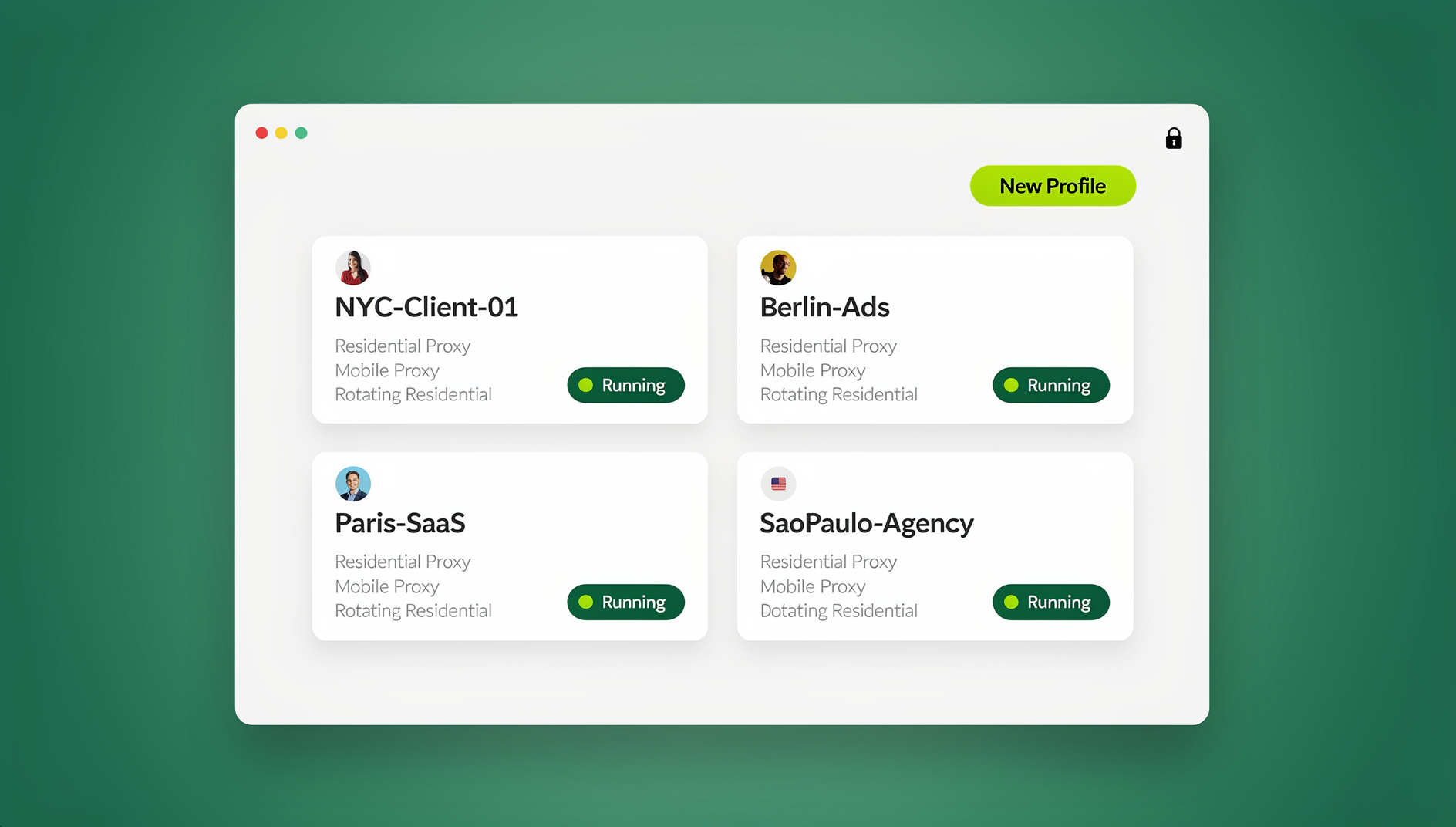
- Sendwin Browser (Native Desktop App): Requires local installation on Windows, macOS, or Linux. Built for multi-profile management, each profile operates with dedicated storage, cookies, localized hardware fingerprint parameters, and custom proxy configurations.
- Cloud Browser Sessions: Requires no local installation. Profiles run inside secure cloud instances, insulating local hardware from web-borne exploits, drive-by downloads, and sandbox escape vectors while granting access from any browser, anywhere.
Advanced Anti-Detection & Automation Capabilities
Beyond sandbox defense, modern web workflows face strict detection algorithms that identify multi-account activity. Send.win incorporates a comprehensive fingerprint protection engine that customizes WebGL contexts, Canvas fingerprints, AudioContext hashes, Client Hints, and navigator parameters. Understanding browser fingerprint explained concepts highlights how Send.win ensures each profile presents an authentic, unique digital identity to target platforms.
For developers and automation engineers, Send.win includes a powerful Automation API supported across Pro and Team plans. Developers can seamlessly connect Selenium, Puppeteer, or Playwright scripts directly to Send.win profile sessions to automate routine browsing tasks, account management, or data extraction without triggering automated bot security triggers.
Transparent & Flexible Pricing Plans
Send.win offers clear pricing structures with a full 30-day free trial requiring no credit card:
- 30-Day Free Trial: Full access to core features with no credit card required to start.
- Pro Plan ($19/mo standard or $6.99/mo billed annually): Includes 150 isolated profiles, 5GB storage, cloud profile sync, and full access to the Automation API for Selenium, Puppeteer, and Playwright.
- Team Plan ($49/mo standard or $20.99/mo billed annually): Designed for scaling agencies and security teams with 500 profiles, 20GB storage, full Automation API access, and up to 16 team member seats with granular access controls.
🏆 Send.win Verdict
Local browser sandboxes offer essential defense, but zero-day exploit chains can still bypass OS containment to endanger host systems. Send.win bridges this gap by offering both native isolated desktop profiles and completely air-gapped cloud browser sessions. Whether automating complex web tasks with Python scripts via the Automation API or managing hundreds of isolated identities, Send.win keeps your host system completely safe.
Try Send.win free today — Start your 30-day free trial with no credit card required and experience ultimate browser isolation security.
Frequently Asked Questions
What is a browser sandbox escape?
A browser sandbox escape is a security breach where malicious code running inside a constrained web rendering process breaks out of OS privilege boundaries to gain arbitrary execution privileges on the host operating system.
How do zero-day exploits bypass browser sandboxes?
Zero-day exploits bypass sandboxes by linking multiple unpatched vulnerabilities together: a renderer memory bug (RCE) to control the browser tab, combined with an IPC logic flaw or OS kernel vulnerability to elevate system privileges.
Is local browser sandboxing enough to stay safe online?
While local sandboxing blocks standard malware, it cannot stop advanced zero-day exploit chains or hardware side-channel attacks. High-risk web activities require cloud remote browser isolation to achieve true physical separation.
What is the role of Mojo IPC in Chromium sandbox escapes?
Mojo IPC is the communication framework passing messages between sandboxed renderer processes and the privileged browser process. Security bugs in Mojo handlers allow attackers to send crafted packets that execute code outside the sandbox.
How does Cloud Remote Browser Isolation prevent sandbox escapes?
Cloud Remote Browser Isolation executes web pages inside disposable cloud containers rather than on your local device. Even if an exploit escapes the cloud container sandbox, your physical hardware and local files remain completely untouched.
Can Send.win profiles protect my team from browser vulnerabilities?
Yes. Send.win offers isolated Cloud Browser Sessions that execute web content off-device, along with native desktop profile management that isolates cookies, storage, and fingerprints for safe multi-account operations.
Does Send.win support automated browser scripting?
Yes. Send.win features an Automation API available on both Pro and Team plans, allowing seamless integration with Puppeteer, Playwright, and Selenium for secure, scriptable browser automation.
How much does Send.win cost?
Send.win includes a 30-day free trial with no credit card required. Paid plans start at $19/mo ($6.99/mo annually) for the Pro plan and $49/mo ($20.99/mo annually) for the Team plan.
Run Browser Sandbox Escape Explained in the Cloud With Send.win
Send.win’s cloud browser runs your isolated profiles on remote infrastructure — open a clean, fingerprint-isolated session from any device without installing anything:
- Instant cloud sessions – launch an isolated browser in seconds, no local install
- Isolated profiles – separate fingerprint, cookies, and storage per session
- Cloud sync & profile sharing – pick up the same profiles on the desktop app (Windows, macOS, Linux) or share them with your team
- Built-in residential proxies – with automatic timezone and locale matching
You can try it right now: the Send.win demo browser opens an isolated cloud session directly in this browser tab. The 30-day free trial needs no credit card, and paid plans start at $6.99/month billed annually — see pricing.