The right collaboration features for managing multiple client accounts in agencies include role-based access control, automated approval workflows, centralized communication, and secure profile delegation. These features ensure that teams coordinate actions on client profiles safely without duplicating effort or triggering security warnings. In this guide, we examine the essential collaborative capabilities, tools, and security structures that allow agencies to scale client account management securely.

Running a digital agency means managing dozens — sometimes hundreds — of client accounts across multiple platforms. Social media profiles, advertising accounts, analytics dashboards, CMS logins, and e-commerce backends all demand attention. But the real challenge isn’t managing the accounts themselves; it’s coordinating the team of people who manage them.
Without robust collaboration features for managing multiple client accounts in agencies, teams often duplicate messages or trigger security blocks. The right features transform chaotic account management into a streamlined operation where every team member knows exactly what they’re responsible for, what’s been done, and what needs attention next. Without these features, agencies face duplicated efforts, missed deadlines, security breaches, and ultimately, lost clients.
Essential Collaboration Features for Agency Account Management
1. Role-Based Access Control (RBAC)
Not every team member needs access to every account, and not everyone needs the same level of access. Role-based access control lets agencies define precisely who can do what within each client account. When reviewing collaboration features for managing multiple client accounts in agencies, pay close attention to audit logs and session sharing. Establishing custom roles ensures junior team members can publish while senior directors retain approval rights. Furthermore, implementing granular access controls reduces the security risk of employee turnover. If a team member leaves your agency, you do not have to change passwords across fifty different client accounts. Instead, you simply revoke their profile access within your central dashboard, saving days of critical admin time and ensuring client data remains safe.
Key RBAC capabilities to look for:
- Granular permissions: Control access at the account level, feature level, or even action level (view vs. edit vs. publish)
- Role templates: Pre-defined roles like “Content Creator,” “Account Manager,” “Client Reviewer” that can be quickly assigned
- Client-specific access: Ensure team members only see the accounts they’re assigned to work on
- Temporary access: Grant time-limited access for freelancers or contractors without permanent permission changes
- Access audit trails: Log who accessed what and when for security compliance and client transparency
Without proper RBAC, agencies face a painful choice: give everyone broad access (risking security) or manually manage permissions (wasting administrative time). The best tools make this effortless.
2. Approval Workflows
Content going out on client accounts must be approved before publishing. Approval workflows automate this process, routing content through the right people in the right order before it goes live.
Effective approval workflows include:
- Multi-stage approvals: Content passes through copywriter → editor → account manager → client
- Conditional routing: Different content types follow different approval paths
- In-line feedback: Reviewers can comment directly on content items with suggested changes
- Deadline tracking: Automatic reminders when approvals are pending past deadline
- Bulk approvals: Clients can review and approve multiple items in a single session
- Mobile approval: Clients can review and approve content from their phones
3. Shared Workspaces and Project Organization
When an agency manages 20+ clients, organization becomes critical. Shared workspaces let teams group accounts, assets, and tasks by client, campaign, or project, creating clear boundaries and reducing cognitive load.
Workspace features that matter:
- Client-level grouping: All accounts, assets, and tasks for a client in one view
- Shared asset libraries: Brand guidelines, logos, templates, and approved imagery accessible to the team
- Content calendars: Visual overviews of scheduled and planned content across all client accounts
- Task boards: Kanban or list-based task management integrated with account activities
- Notes and documentation: Client briefs, strategy documentation, and meeting notes attached to workspaces
Additionally, organize client folders with color-coded tags and specific campaign labels. This helps team members distinguish between active client deliverables and archived assets, preventing accidental edits on outdated profiles.
4. Real-Time Collaboration Tools
Teams working on the same client accounts need real-time visibility into what others are doing. Without this, you get duplicate responses to messages, conflicting content schedules, and general confusion.
- Collision detection: Alerts when two team members are working on the same message or content item
- Activity feeds: Real-time updates showing who’s doing what across client accounts
- @mentions and notifications: Tag team members in comments, tasks, or content for their attention
- Shared dashboards: Live performance dashboards visible to the entire team
- Internal chat: Built-in messaging for quick team communication without leaving the platform
For agencies handling e-commerce operations, logging into multiple Amazon accounts can trigger immediate verification checks if cookies or IP addresses are linked.
5. Client-Facing Features
The best agency tools don’t just help internal teams collaborate — they extend collaboration to clients themselves. Client-facing features build trust, reduce email back-and-forth, and streamline the feedback process.
- Client portals: Dedicated dashboards where clients can view schedules, approve content, and see reports
- White-label interfaces: Branded portals that present a professional agency image
- Read-only reports: Automated report delivery that gives clients visibility without overwhelming them
- Comment and feedback tools: Clients can leave feedback directly on content items
- Real-time notifications: Clients receive alerts when content is ready for review
To run storefronts without risk, check our complete guide to safe multi-store operations, which covers anti-detection techniques.
Top Tools with Agency Collaboration Features
Send.win — Best for Secure Multi-Account Browser Access
Send.win addresses a collaboration challenge that most social media tools can’t: securely sharing access to accounts that don’t have native team features. Many platforms — especially e-commerce sites, niche social networks, and business tools — don’t offer multi-user access or team management.
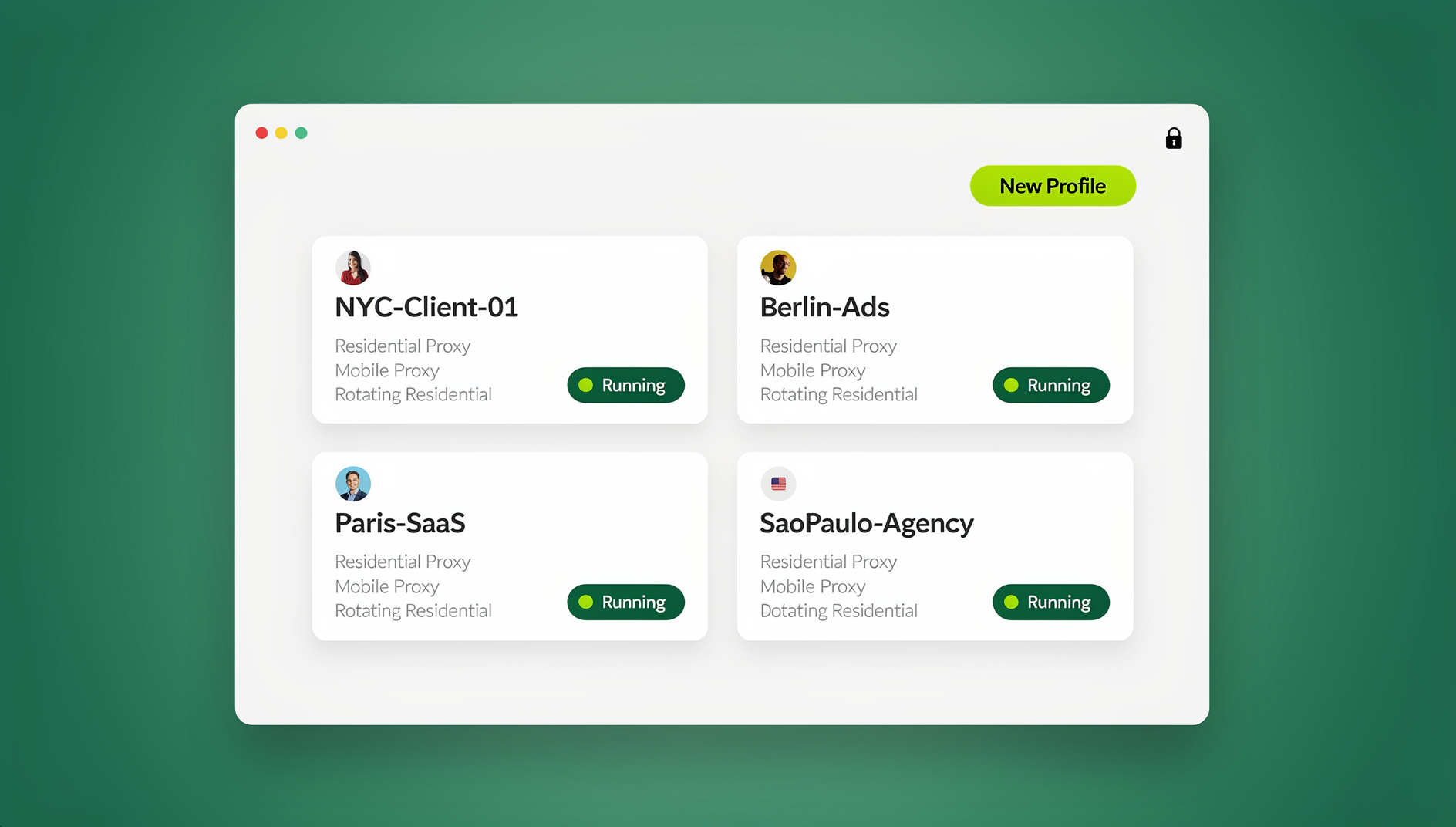
With Send.win, agencies create isolated browser profiles for each client account and share them with specific team members. Each profile maintains its own cookies, fingerprint, and session, so team members can access client accounts without sharing passwords or triggering security alerts.
Send.win operates using two robust modes: the Sendwin Browser (a native desktop app) and cloud browser sessions that require no local installation. This dual approach ensures your team can collaborate from anywhere securely.
Agency collaboration features:
- Share browser profiles with team members without sharing passwords
- Assign profiles to specific team members with access controls
- Cloud-based profiles accessible from any device or location
- Each profile maintains isolated sessions — no cross-contamination
- Works with any web-based platform, not just social media
Understanding the principles of managing multiple accounts is essential for setting up an agency-wide security protocol.
Sprout Social — Best Enterprise Agency Suite
Sprout Social’s agency-tier features include multi-client management, custom workflows, and advanced reporting that scales with agency growth. Its Asset Library and shared content calendars facilitate seamless collaboration across teams. Sprout Social also provides advanced analytics tools to measure average team response times, allowing agency managers to optimize workflow speed.
Sendible — Best for White-Label Agency Presentations
Sendible stands out with its white-label capabilities, letting agencies present the platform under their own brand. This professional touch, combined with solid multi-account management, makes it popular among agencies focused on client perception. The white-label portals allow clients to log in directly to approve scheduled posts, leaving comment notes within the calendar view.
To achieve complete isolation, team members should use the best browser for multiple accounts, which prevents fingerprint linking.
Agorapulse — Best for Engagement Team Coordination
Agorapulse’s collaboration features are particularly strong for teams handling high volumes of social engagement. Its inbox assignment system, internal notes, and conversation history make it easy for multiple team members to handle client engagement without stepping on each other’s toes.
monday.com — Best for Project-Centric Agency Workflows
While monday.com is not a dedicated social management inbox, it serves as the operational spine for hundreds of marketing agencies in the USA. It offers highly customizable board structures that are perfect for coordinating cross-functional team campaigns.
Key monday.com capabilities:
- Visual boards to track creative assets from design to publication
- Time tracking to monitor client billable hours
- Automated triggers that notify managers when a draft is ready for review
- Client guest seats to provide transparent project tracking
- Integrations with popular messaging platforms and data dashboards
Building an Agency Collaboration Framework
Tools are only as effective as the processes built around them. Here’s a proven framework for implementing collaboration features effectively in your agency:
Phase 1: Define Your Account Structure
Before configuring any tool, document your agency’s account management structure. First, run a complete client inventory. Create a secure master spreadsheet cataloging every social profile, marketing manager access point, and e-commerce portal associated with each client. Second, outline your team assignments, linking specific designers, copywriters, and account executives to their respective client portfolios. Third, establish access levels for each team member to avoid security bloat. Finally, map the content creation workflow stages so tasks flow systematically from draft to approval.
Phase 2: Configure Your Tool Stack
Set up your tools to mirror your defined structure. Create client workspaces or groups for each account, set up role-based access matching your team assignments, configure approval workflows for content and campaigns, and establish notification rules so the right people are alerted at the right times.
Phase 3: Establish Communication Protocols
Clear communication protocols prevent the confusion that undermines collaboration. Determine where the team discusses client work (in-tool comments or Slack) and how clients provide feedback. Establish escalation paths and regular status update frequencies.
Phase 4: Onboard and Train
Even the best tools fail without proper adoption. Create documentation for each tool, run hands-on training sessions, and assign a tool champion who can answer questions. Ultimately, the right collaboration features for managing multiple client accounts in agencies will secure your workflows and increase retention. Additionally, organize monthly refresher sessions where team members can discuss workflow bottlenecks and share tips on managing proxies and cookies. Constant training ensures that security standards remain high as your agency takes on larger campaigns.
Security Considerations for Agency Collaboration
Sharing access to client accounts introduces security risks that agencies must actively manage. Never share raw credentials through email or spreadsheets. Instead, use browser-based profile sharing through tools like Send.win that don’t expose passwords. Establish standard offboarding checklists to revoke access immediately when team members depart, and maintain detailed audit logs.
Additionally, configure proxy servers for each client profile. When multiple employees access a single client dashboard, they must appear to log in from the same geographic region. By assigning a dedicated resident proxy to a client’s profile in Send.win, any team member launching that profile will browse under the client’s localized IP address, preventing security warnings and two-factor authentication loops.
Scaling Collaboration as Your Agency Grows
What works for an agency with 5 clients won’t work for one with 50. Plan for scale from the beginning. Standardize templates for client onboarding, workflow setup, and reporting before taking on new clients. Additionally, automate repetitive tasks like scheduled reports and approval notifications to eliminate manual bottlenecks. As your operations expand, assign dedicated technical managers to audit profile configurations, ensuring that proxies and cookies remain clean and that no team members retain access to former client folders. When onboarding new clients, create a dedicated checklist that matches your agency’s tool stack. This checklist should outline every credential to collect, every role to assign, and every workflow to configure. Standardizing this process ensures that new clients are integrated within hours, not days. Furthermore, review your tool subscriptions quarterly. As your agency scales, you may require more seats, larger proxy bandwidth, or advanced automation capabilities. Ensure that your chosen platforms scale alongside your client roster without introducing massive financial overhead.
Best Practices for Agency Team Communication
To avoid miscommunication, agencies must enforce three key protocols. First, utilize centralized thread logs. Never allow team members to discuss client strategy across disjointed SMS threads or personal chats. All feedback must remain within the primary workflow dashboard or client card. This guarantees that if a team member goes on leave or leaves the company, their successor can instantly review the entire history of changes and client notes without losing context.
Second, define clear escalation paths for crisis management. If a client account receives a surge of negative comments, the social inbox agent must follow a documented protocol: tag the account manager immediately, draft an approved response, and coordinate with the PR lead before replying. This structured approach prevents hasty responses that could escalate a public relations issue.
Finally, implement weekly resource checks. Agency workloads fluctuate based on campaign cycles. Project managers should meet weekly to assess team capacity, redistribute accounts if an agent is overloaded, and verify that all shared profiles have active, healthy proxy connections to ensure uninterrupted client service. Additionally, document your agency’s communication protocols in a central, shared handbook. New hires should study these guidelines during onboarding so they understand how to represent the client’s voice, when to escalate customer issues, and how to operate within shared browser profiles securely. To ensure seamless alignment, schedule a brief, ten-minute daily standup meeting with your account management team. Use this time to review pending content approvals, assign urgent client messages, and check proxy connection health. If a proxy appears slow, swap it immediately before the client’s scheduled posting window begins.
Final Thoughts and Verdict
In conclusion, choosing the right collaboration suite ensures your agency can grow safely and efficiently. By centralizing operations, delegating roles, and utilizing isolated browser sessions, your team can manage client profiles without friction.
🏆 Send.win Verdict
Agencies cannot scale safely when sharing raw passwords or risking client account bans due to fingerprint leakage. Send.win provides the ultimate collaboration framework by allowing secure session sharing, isolated profile environments, and multi-user access control without password exposure.
Try Send.win free today — empower your agency team with secure client account management tools.
Frequently Asked Questions
What are the critical collaboration features for agencies managing client accounts?
Granular role-based access control, approval workflows, shared client workspaces, real-time collision detection, and client-facing dashboards are the most critical features for agency account management.
How does Send.win secure collaboration across teams?
Send.win allows agency administrators to share isolated browser profiles with team members. Team members can open and operate client profiles without seeing the raw login credentials, preventing unauthorized access.
Does Send.win offer a free trial?
Send.win does not offer a free trial. Paid plans are Pro at $19/mo or $83.88/yr, and Team at $49/mo or $251.88/yr, with the first card purchase covered by a 7-day money-back guarantee. You can also preview the cloud browser for free at the demo.
What plans does Send.win offer for agencies?
Send.win offers the Pro plan at $19/month ($6.99/month annual — 63% savings) for 150 profiles, and the Team plan at $49/month ($20.99/month annual — 57% savings) which supports 500 profiles and 16 team seats.
Does Send.win offer an Automation API for agency clients?
No, Send.win has no automation interface: there is no API, SDK, headless mode or Selenium/Puppeteer/Playwright support on any plan.
Do I need to install software to use Send.win?
Send.win provides the Sendwin Browser native desktop app for local execution, and cloud browser sessions which require no local installation and run entirely in your web browser.
How does Send.win prevent client accounts from getting linked?
Every profile inside Send.win operates with isolated cookies, cache, local storage, and distinct canvas, WebGL, and hardware device fingerprints, ensuring platforms treat them as separate physical devices.
Can we customize client access permissions within Send.win?
Yes, administrators can grant full, edit-only, or view-only access to shared browser profiles, allowing agencies to control exactly how team members interact with client profiles.