Why Financial Institutions Need Cloud Browsers to Stop Web Threats
Deploying a cloud browser for financial services creates a zero-trust, virtual air-gap between dangerous web environments and core banking infrastructure. By executing web code inside isolated cloud containers rather than on endpoint workstations, banks and wealth management firms eliminate drive-by downloads, session hijacking, and credential harvesting while strictly meeting SOC 2, PCI-DSS v4.0, and GLBA compliance mandates. Send.win provides cloud browser environments that empower financial teams to conduct threat research, manage client accounts, and process transactions without exposing internal networks to modern web exploits.

The Evolving Web Threat Landscape in Financial Services
Financial institutions remain the primary target for sophisticated cybercriminals worldwide. As banking operations shift online and financial analysts rely heavily on external web research, third-party web portals, and cloud-hosted SaaS tools, the web browser has emerged as the single largest unmanaged attack vector in financial cybersecurity.
Traditional endpoint perimeter controls—such as basic URL filtering, antivirus software, and enterprise firewalls—were designed for an era when internal networks were static. Today, financial employees interact continuously with dynamic, JavaScript-heavy web applications. Attackers exploit this necessity through several malicious vectors:
- Zero-Day Drive-By Downloads: Malicious code embedded within compromised news portals or financial blogs executes automatically upon page load, exploiting unpatched browser vulnerabilities to install keyloggers or ransomware without user interaction. Relying solely on basic safe browsing filters often leaves firms vulnerable to newly registered domain threats.
- Session Hijacking and Token Theft: Adversaries deploy adversary-in-the-middle (AiTM) phishing kits to interpose themselves between financial workers and authentic banking portals. By stealing active session cookies, attackers bypass Multi-Factor Authentication (MFA) entirely. Advanced session isolation techniques are required to compartmentalize authentication states and prevent cross-session leakage.
- Waterhole Attacks on Financial Analysts: Cyber espionage groups breach specialized economic forums, regulatory portals, or market news sites frequented by wealth managers. Once inside the analyst’s endpoint browser, malware pivots laterally into core mainframe databases and wire transfer systems.
- Browser Fingerprinting and Tracking: External websites dynamically profile operating system specs, installed fonts, canvas rendering, and hardware signatures. Without masking mechanisms, an analyst’s digital profile reveals corporate IP ranges and strategic research activities. Understanding how a browser fingerprint explained in technical terms affects operational security is vital for risk mitigation.
Regulatory Mandates Driving Cloud Browser Adoption in Banking
Regulators across the globe have recognized that standard endpoint browsers are incompatible with zero-trust mandates. Compliance frameworks for banking, wealth management, and fintech startups now explicitly or implicitly demand robust internet isolation controls.
1. PCI-DSS v4.0 (Payment Card Industry Data Security Standard)
PCI-DSS Version 4.0 places strict emphasis on protecting Cardholder Data Environments (CDE) from client-side script attacks and web-based entry vectors. Requirement 6.4.3 mandates continuous management of all scripts running in customer browsers, while Requirement 11.6.1 requires anti-tampering mechanisms. A cloud browser environment isolates payment processing staff from untrusted internet scripts, guaranteeing that external code never reaches workstations operating within the CDE boundary.
2. SOC 2 Type II (Trust Services Criteria)
For fintech providers and wealth platforms, achieving and maintaining SOC 2 Type II compliance requires demonstrating rigorous logical access controls (CC6.1) and boundary protection (CC6.6). Cloud browser infrastructure provides verifiable audit logs of isolated session activity and guarantees that untrusted internet code cannot violate the security boundary of internal customer data systems.
3. Gramm-Leach-Bliley Act (GLBA) Safeguards Rule
The FTC’s updated GLBA Safeguards Rule mandates that covered financial institutions implement comprehensive data access controls, multi-factor authentication, and robust threat detection. Utilizing isolated cloud browser profiles ensures that Nonpublic Personal Information (NPI) remains compartmentalized and shielded from browser-based exfiltration mechanisms.
4. FFIEC Architecture and Operations Guidelines
The Federal Financial Institutions Examination Council (FFIEC) advises banks to maintain layered defense architectures that isolate critical systems from high-risk external activities. Cloud browser sessions create an architectural boundary that fulfills FFIEC requirements for segmenting high-value transaction systems from general internet browsing.
How Cloud Browser Isolation Constructs an Airtight Air-Gap
Cloud browser technology fundamentally changes the security paradigm by moving all page rendering and web execution off the local device and into secure, containerized environments in the cloud.
Rather than permitting raw HTML, CSS, active WebSockets, and executable JavaScript to run directly inside the local computer’s memory, a cloud browser executes the entire web session inside an isolated container. The user interacts with a secure visual stream or sanitized display representation of the website. When the user closes the session or profile, the cloud container is purged, destroying any resident tracking cookies, temporary scripts, or cached malware.
By implementing enterprise-grade remote browser isolation, financial institutions achieve several strategic defensive advantages:
- Zero Local Attack Surface: Active exploits, PDF payload triggers, and malicious scripts execute millions of miles away on cloud infrastructure, never touching local RAM or system files.
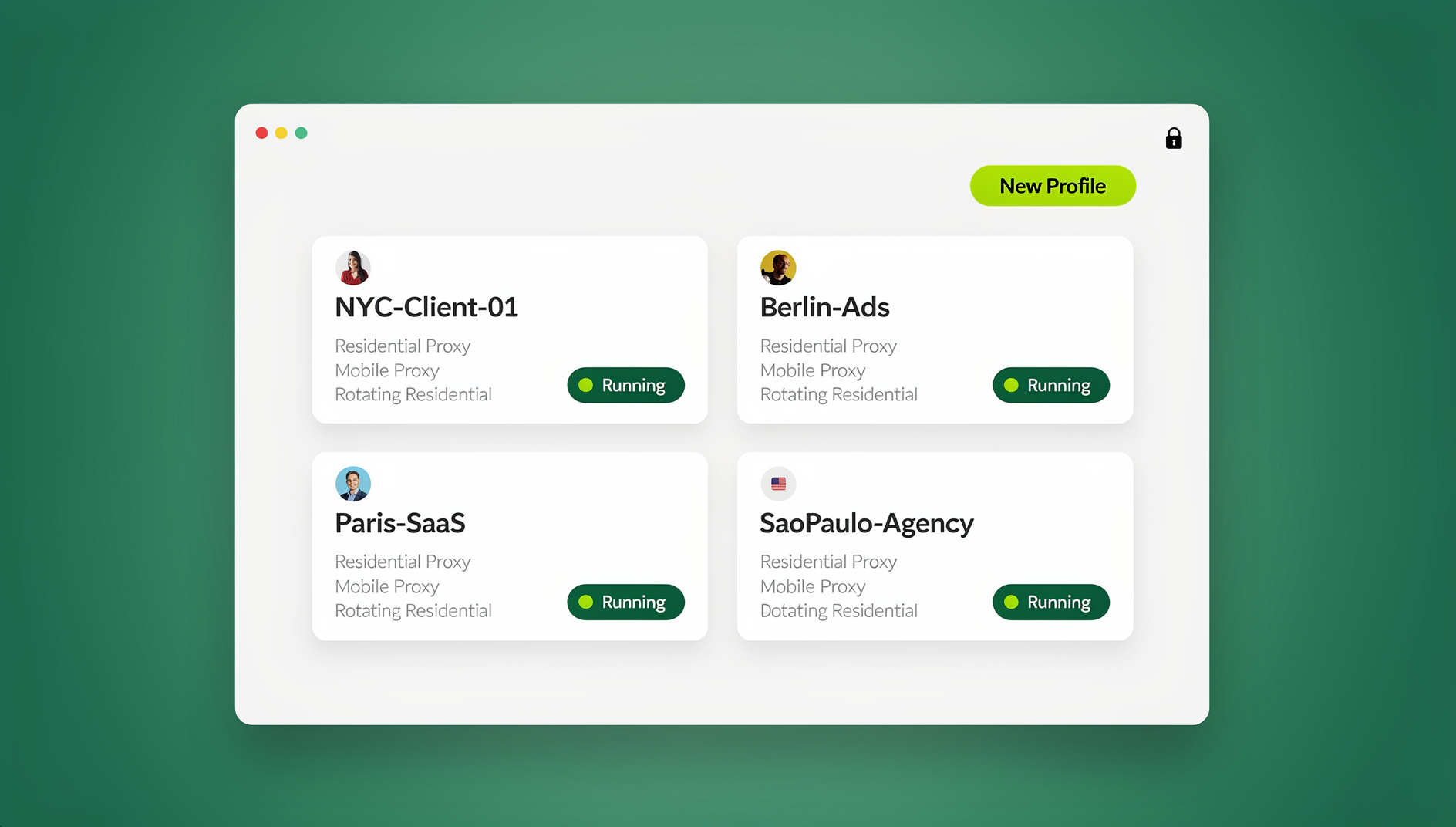
- Compartmentalized Session State: Each client account, regulatory portal, or intelligence research project runs inside a distinct browser profile with separate cookies, local storage, and proxy routing.
- Strict Network Air-Gapping: Internal financial networks remain entirely isolated from external web connections. Even if an employee clicks on a spear-phishing link, the attack fails because the cloud container lacks direct routing into the internal corporate intranet.
- Controlled Data Loss Prevention (DLP): Security teams can enforce granular DLP policies inside the cloud session, restricting file downloads, blocking copy-paste actions into untrusted web forms, and auditing uploaded documents.
Comparing Security Architectures: Traditional vs. Cloud Browser Isolation
To evaluate why leading financial security teams are replacing legacy web gateways with cloud browser solutions, consider the architectural differences outlined below:
| Security Dimension | Traditional Endpoint Browser | Cloud Browser Isolation |
|---|---|---|
| Code Execution Location | Local Workstation RAM & CPU | Isolated Cloud Container |
| Zero-Day Malware Protection | Reactive (Depends on signatures/patches) | Proactive (Code never reaches endpoint) |
| Session & Cookie Isolation | Shared profile (Vulnerable to cross-site leaks) | Strict multi-profile sandboxing |
| Compliance & DLP Control | Complex agent management per OS | Centralized cloud policy enforcement |
| Fingerprint Exposure | Exposes internal network & hardware parameters | Customizable, anti-detect cloud profiles |
| Deployment Overhead | Heavy local software updates & maintenance | Instant access, zero local footprint option |
Financial Services Operational Use Cases
Beyond defensive security, deploying a cloud browser for financial services unlocks significant operational advantages across core financial divisions:
1. Financial Crime, AML, and Fraud Investigation
Anti-Money Laundering (AML) analysts and fraud investigators frequently examine suspicious websites, dark web forums, and unverified merchant portals. Conducting these investigations from a standard corporate browser risks compromising the bank’s identity or infecting the analyst’s PC with malware. Cloud browsers allow investigators to assign dedicated residential proxies and customized browser fingerprints to each case, conducting undercover research in total isolation from corporate IT networks.
2. Multi-Account Management for Wealth Managers & Advisory Firms
Wealth management teams manage portfolios across dozens of custodian platforms, client dashboards, and institutional exchanges. Logging in and out of multiple accounts using conventional browsers causes credential confusion, session overlaps, and sudden IP bans caused by security anti-fraud algorithms. Cloud browser profiles maintain persistent, isolated login states for every client account, paired with static residential proxy IPs to guarantee seamless access.
3. Regulatory Compliance & Audit Operations
Compliance teams must monitor foreign financial markets, cross-border regulatory registries, and international sanction lists. Cloud browsing enables team members to instantly spin up geolocated browser environments in Europe, Asia, or the Americas without setting up complex corporate VPN tunnels or risking network routing misconfigurations.
4. Automated Compliance Monitoring & Data Extraction
Fintech firms and quantitative trading desks rely on automated web scraping to track interest rate shifts, regulatory updates, and corporate filings. Using headless local automation script triggers anti-bot blocking systems. Cloud browser sessions integrated with automation frameworks enable scalable, legitimate data extraction without triggering CAPTCHAs or IP blocks.
How Send.win Delivers Enterprise Cloud Browsing for Financial Teams
Send.win is engineered specifically to provide secure, flexible, and cost-effective browser isolation for modern businesses. Whether your compliance team requires zero-footprint web environments or your developers need scalable automation, Send.win delivers enterprise capabilities without enterprise complexity.
Flexible Operational Modes
Send.win supports two distinct operational modes tailored to your infrastructure requirements:
- Sendwin Browser (Native Desktop App): A powerful Windows, macOS, and Linux client designed for high-performance multi-profile management. It allows local workstation execution with complete profile isolation, custom proxy assignment, and hardware fingerprint spoofing.
- Cloud Browser Sessions: Run fully isolated browser profiles directly in the cloud without installing any local software. Employees can securely access work environments from any managed device via a web interface, ensuring complete zero-footprint operation.
Run Cloud Browser For Financial Services in the Cloud With Send.win
Send.win’s cloud browser runs your isolated profiles on remote infrastructure — open a clean, fingerprint-isolated session from any device without installing anything:
- Instant cloud sessions – launch an isolated browser in seconds, no local install
- Isolated profiles – separate fingerprint, cookies, and storage per session
- Cloud sync & profile sharing – pick up the same profiles on the desktop app (Windows, macOS, Linux) or share them with your team
- Built-in residential proxies – with automatic timezone and locale matching
You can try it right now: the Send.win demo browser opens an isolated cloud session directly in this browser tab. The 30-day free trial needs no credit card, and paid plans start at $6.99/month billed annually — see pricing.
Programmable Automation API for Regulatory Workflows
Send.win includes a built-in Automation API compatible with standard automation frameworks like Puppeteer, Playwright, and Selenium. Compliance teams can automate routine audit reporting, sanction check verification, and competitive rate monitoring across hundreds of isolated profiles programmatically.
Send.win Team Plan: Designed for Financial Security Teams
For banking institutions, fintech startups, and advisory firms, the Send.win Team Plan provides an unbeatable combination of capacity, team management, and value:
- 500 Isolated Profiles: Maintain dedicated, segregated environments for every client, investigation, or audit pipeline.
- 20GB Storage: Store persistent session data, cookies, and cache files securely in cloud storage.
- 16 Team Seats Included: Enable seamless collaboration between risk officers, fraud analysts, and compliance leads with granular profile-sharing controls.
- Full Automation API Access: Included standard on both Pro and Team plans for seamless programmatic integration.
- Cost-Effective Scaling: At just $49/month ($20.99/month billed annually), Send.win costs a fraction of legacy enterprise remote browser isolation platforms that charge thousands per user.
For smaller teams or individual research analysts, the Send.win Pro Plan offers 150 profiles, 5GB storage, and Automation API access for just $19/month ($6.99/month billed annually). All plans come with a hassle-free 30-day free trial with no credit card required.
Implementation Roadmap: Deploying Cloud Browsers in Financial Enclaves
Transitioning your financial institution to a cloud browser architecture can be accomplished smoothly in five steps:
- Audit High-Risk Web Roles: Identify departments with high web exposure, such as fraud investigation, external market research, wealth management, and M&A advisory teams.
- Define Profile Templates & Proxy Policies: Establish standardized browser profile templates, configuring specific operating system signatures, geographic proxy locations, and storage policies matching regulatory requirements.
- Provision Team Access on Send.win: Set up a Send.win Team workspace, assign 16 team seats to risk management leads, and configure permission levels for profile creation and credential sharing.
- Enforce Isolated Workflows: Direct all external web research, suspicious link verification, and multi-client account access through isolated Send.win cloud browser sessions or the native Sendwin Browser client.
- Automate Compliance Checks: Connect your compliance scripts to Send.win’s Automation API to automate recurring audit reporting and data aggregation across isolated containers.
🏆 Send.win Verdict
A cloud browser for financial services is no longer a luxury—it is an essential cybersecurity and regulatory compliance requirement. By executing dangerous web sessions in cloud containers and isolating client account environments, financial institutions neutralize drive-by malware, prevent session hijacking, and protect internal banking networks. Send.win offers the most flexible, cost-effective platform on the market, combining cloud browser sessions, native desktop app performance, multi-seat collaboration, and powerful automation APIs.
Try Send.win free today — Start your 30-day free trial (no credit card required) and secure your financial browsing infrastructure now.
Frequently Asked Questions
What is a cloud browser for financial services?
A cloud browser for financial services is a secure web browsing environment where web pages are executed inside isolated cloud containers rather than on an employee’s local computer. This prevents web threats like malware, session hijacking, and drive-by downloads from reaching internal banking networks.
How does cloud browser isolation help with PCI-DSS v4.0 compliance?
PCI-DSS v4.0 requires financial institutions to protect Cardholder Data Environments (CDE) from untrusted client-side web scripts and attacks. Cloud browser isolation ensures that external web content never executes within the CDE boundary, maintaining compliance while allowing employees to conduct necessary web research.
Can employees use Send.win without installing local software?
Yes. Send.win offers Cloud Browser Sessions that run entire browser environments in the cloud without requiring local software installation. For users who prefer local performance, Send.win also provides the native Sendwin Browser desktop app for Windows, macOS, and Linux.
How do cloud browsers prevent session hijacking and MFA bypass attacks?
Cloud browsers isolate each web session into its own segregated profile container with dedicated cookies, storage, and proxy settings. Even if an adversary attempts an AiTM phishing attack, session state cannot leak across profiles or be exfiltrated to local endpoint memory.
Can financial analysts automate web research using Send.win?
Yes. Send.win provides a comprehensive Automation API compatible with Puppeteer, Playwright, and Selenium. Compliance officers and quantitative analysts can automate rate monitoring, sanction list checks, and corporate filing collection across isolated browser profiles.
How much does Send.win cost for financial security teams?
Send.win is extremely affordable compared to legacy enterprise tools. The Pro plan costs $19/month ($6.99/mo annual) for 150 profiles. The Team plan costs $49/month ($20.99/mo annual) and includes 500 profiles, 20GB storage, 16 team seats, and full Automation API access. A 30-day free trial is available without a credit card.
Does Send.win require a browser extension?
No. Send.win does not rely on or require any browser extensions. It operates either as standalone Cloud Browser Sessions in the cloud or as a native standalone desktop app (Sendwin Browser), offering significantly higher security than extension-based tools.
Why is browser isolation preferred over traditional URL filtering?
Traditional URL filtering relies on blacklists and category databases, which fail to block zero-day malicious sites or compromised legitimate websites. Cloud browser isolation assumes zero trust, executing all active web code in an isolated container regardless of whether the domain is marked safe.