The Fundamentals of Google Ads Multi-Account Architecture
Managing google ads manager multiple accounts requires creating a parent Manager Account (formerly MCC) on Google Ads and linking your clients’ individual accounts under it. However, to prevent cascading suspensions and keep competing client data separated, you should access each client profile using Sendwin’s isolated, fingerprint-protected browser sessions instead of sharing a single browser cookie space.
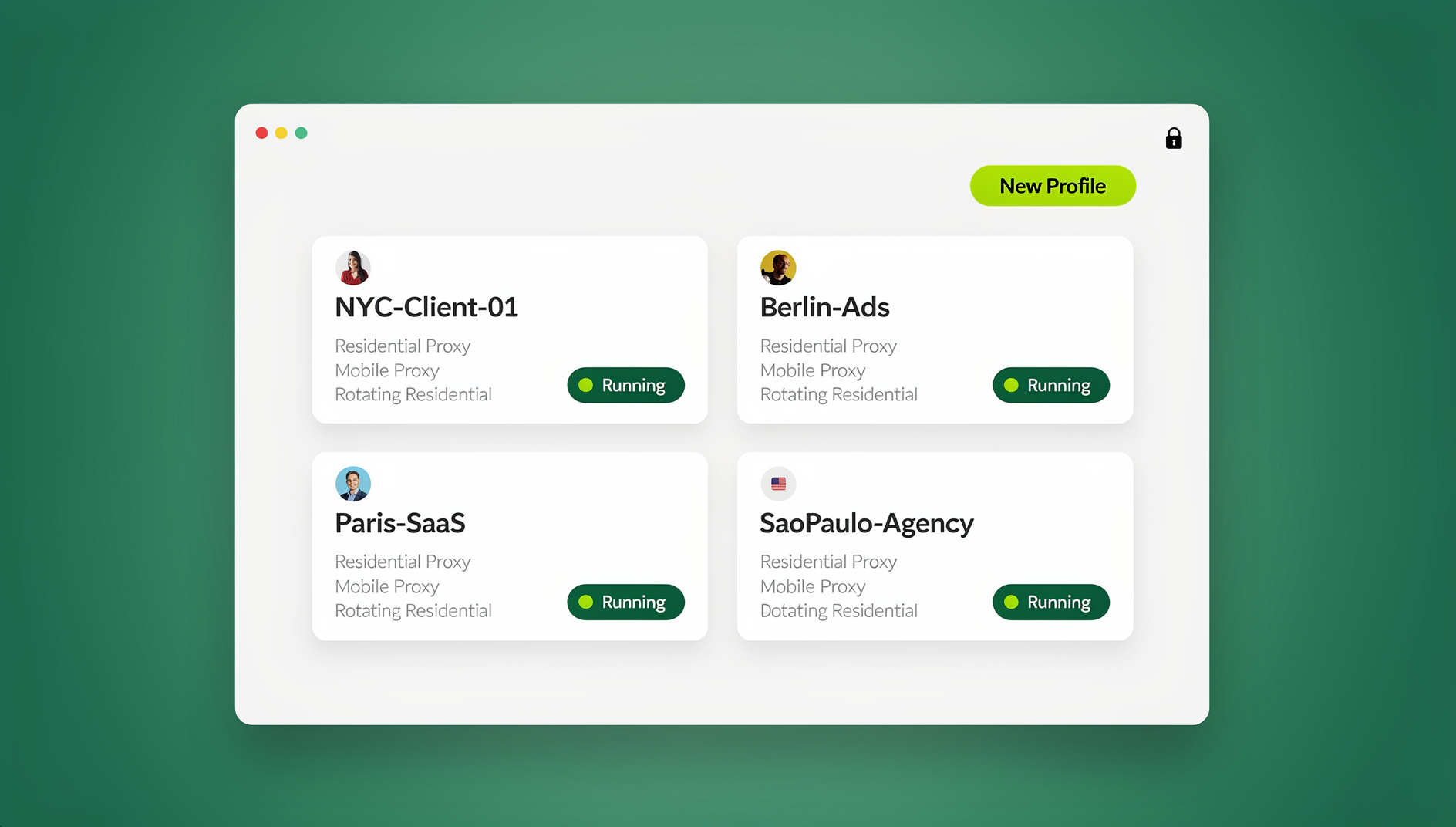

For modern marketing agencies, independent freelancers, and multi-brand enterprise companies, scaling paid search campaigns across several clients or business divisions is a daily challenge. Google Ads provides an official administrative solution: the Google Ads Manager Account (My Client Center or MCC). This dashboard acts as a central hub to monitor budgets, review campaigns, and generate reports. But is the administrative dashboard enough to protect your business? Let’s analyze where Google’s official tool succeeds, where it fails, and why a secure session manager is essential for safe scaling.
What is a Google Ads Manager Account (MCC)?
The Google Ads Manager Account is a parent account that links together individual, child Google Ads accounts. It is designed to solve the logistical nightmare of logging in and out of different Google profiles to check separate client dashboards. With a single login, an agency standard user can switch between child accounts, run consolidated reports, and manage billing profiles. Historically, this tool was known as My Client Center (MCC), and while the name has changed to reflect Google’s broader branding updates, the core operational structure remains the same: a hierarchical tree where one master login controls access to multiple distinct sub-dashboards.
While extremely helpful, an MCC account is strictly an administrative utility. It does not separate or mask your digital environment. When you navigate through different client dashboards inside your MCC, your browser is still running on the same physical computer, sending the same cookies, local storage files, and hardware configuration hashes directly to Google’s monitoring servers. This shared environment is where risk originates. If you manage multiple accounts without session-level isolation, your entire business setup rests on a single, shared hardware fingerprint, which leaves you vulnerable to automated account linking and security sweeps.
Why Advertisers Need Session-Level Isolation
Google employs highly advanced automated compliance engines to detect suspicious activity, policy violations, and coordinated advertiser networks. When Google’s algorithms review an account, they analyze more than just keywords and budgets. They review the entire digital context of the manager, including device identifiers, geographic locations, and payment details. If Google flags one of your client’s child accounts for a policy violation—such as a trademark issue, misleading content, or a billing discrepancy—the compliance system does not just suspend that individual account. It begins tracing every other account linked to it.
This automated tracing is exceptionally aggressive. If you manage multiple accounts without session-level isolation, Google’s systems can link them via your device fingerprint. This leads to “association suspensions,” where completely unrelated client accounts are shut down overnight because they were managed from the same browser. To prevent this, using a secure method of isolation is critical. For instance, in e-commerce, sellers must utilize a dedicated multiple Amazon accounts framework to prevent their stores from being linked. A similar level of protection is required for Google advertising, where maintaining a strict barrier between client profiles is the only way to safeguard your operations from cascading bans.
Comparing Google Ads Manager (MCC) vs. Sendwin Browser Sessions
To understand how to best structure your advertising workflow, we must compare what each tool offers. They are not mutually exclusive; they should be used in combination to provide both administrative efficiency and operational safety. While the Manager Account gives you administrative visibility and allows you to view aggregate statistics across your portfolio, Sendwin provides the technical boundary that isolates each client profile from the others at the hardware and network level.
| Operational Feature | Google Ads Manager Account (MCC) | Sendwin Browser Sessions | Strategic Benefit |
|---|---|---|---|
| Multi-Account Access | Sequential switching via one dashboard | Simultaneous access in isolated tabs | Increases speed; allows side-by-side work |
| Device Fingerprinting | Shared across all linked accounts | Fully unique, isolated fingerprints | Prevents Google from linking unrelated brands |
| IP Isolation | Single IP for all accounts | Dedicated residential proxies per profile | Masks geo-location; avoids IP-based sweeps |
| Billing Separation | Allows consolidated or split billing | Isolates payment session cookies | Prevents payment processors from connecting accounts |
Using the official Google MCC dashboard allows you to handle general campaign adjustments and report generation across multiple properties. However, when you need to run ads for competing brands or protect sensitive high-spend clients, relying solely on Google’s dashboard is a significant vulnerability. By integrating Sendwin into your workflow, you can keep each client open in a separate tab, running on its own dedicated residential proxy, which completely prevents Google’s automated compliance systems from cross-contaminating your client metadata.
Understanding User Permissions in Google Ads
Google Ads Manager Accounts allow you to assign specific team members to different access levels. This controls what actions they can perform and which client accounts they can view. The primary permission levels include:
- Administrative: Full access to manage users, link or unlink child accounts, edit billing, and modify campaigns.
- Standard: Can edit campaigns, view reports, and manage settings, but cannot add new users or modify links.
- Read-Only: Can view data and run reports, but cannot make any changes.
- Billing: Can only view and edit payment settings.
While these permissions protect client data internally, standard logins still leak browser tracking details. When managing sensitive operations, choosing the best browser for multiple accounts is essential to ensure that your physical devices and external team workflows are insulated from each other. Assigning a team member Standard access in the MCC dashboard is only half the battle; if they log in from a personal laptop that lacks fingerprint protection, their local device signals could still trigger an automated security sweep.
Step-by-Step: Setting Up a Google Ads Manager Account
Creating your master administrative dashboard is a straightforward process, but it must be done carefully to ensure your settings are correctly configured for long-term growth:
- Navigate to the official Google Ads page at ads.google.com/home/tools/manager-accounts/.
- Click the “Create a Manager Account” button.
- Log in with the primary corporate Google account you wish to use as the master administrative email. It is highly recommended to use a clean, domain-specific email address rather than a generic Gmail address to build trust with Google’s verification algorithms.
- Enter your manager account display name (use your agency or parent brand name).
- Select your primary usage: “Manage other people’s accounts” (for agencies) or “Manage my accounts” (for multi-brand owners).
- Choose your billing country, primary time zone, and local currency. (Note: These settings are permanent and cannot be modified later).
- Click “Submit” and navigate to your new dashboard.
From here, you can link existing client accounts by requesting access using their 10-digit Google Ads Customer ID. The client will receive an invitation in their email, which they must approve to complete the link. Once linked, the account will populate in your dashboard under the “Accounts” tab.
The Hidden Danger: Digital Fingerprinting in Google Ads
Digital fingerprinting is the primary method Google uses to identify when a single device is controlling multiple distinct advertising profiles. When your browser accesses Google Ads, Google’s tracking scripts run silent hardware tests behind the scenes. They measure your device’s screen size, operating system version, canvas rendering parameters, WebGL graphics chip signatures, system fonts, and audio device structures. These scripts can easily bypass standard browser cookies and read detailed hardware attributes to create a unique fingerprint.
Even if you use multiple browser profiles in Chrome, log out of accounts, clear your cache, or use incognito mode, your hardware fingerprint remains exactly the same. Google’s systems compile these details into a unique device hash. If Google flags one of your child accounts for a policy violation, the algorithm searches for matching device hashes. If it finds that five other child accounts are accessed by the same device hash, all five are immediately put under review or suspended. This shows why basic profile setups are not secure. For more information, read our comprehensive guide on managing multiple accounts to understand device fingerprinting and learn how to implement a secure separation between profiles.
How Sendwin Isolates Google Ads Sessions
Sendwin mitigates fingerprint linkage by creating completely isolated virtual browser environments. For every Google Ads account you manage, Sendwin generates a brand-new browser profile containing unique cookies, separate local storage, and spoofed hardware parameters. Sendwin offers two distinct modes for different operational needs:
1. The Sendwin Browser (Desktop Client)
The Sendwin Browser is a native desktop client that runs locally on Windows, macOS, or Linux. It provides direct hardware level spoofing, altering your canvas and WebGL hashes dynamically for each profile. This native tool is perfect for agencies with dedicated media buyers who manage specific clients on their primary workstations. It runs directly on your local system, offering high-speed performance and native interface rendering.
2. Cloud Browser Sessions
For teams that need to collaborate, share access, or manage campaigns on the go, Sendwin provides cloud browser sessions. These sessions run on remote servers and are accessed directly in your browser with absolutely no local installation. Because the browser sessions run in the cloud, you can share access to active logins with remote team members or clients without triggering Google’s location-based verification systems. This is particularly valuable for agencies that employ remote media buyers across different countries, as it ensures all team access appears to originate from a single, static geographic location.
Additionally, keeping your ad accounts separate at the browser level ensures that your client’s brand metadata never mixes. To see how to structure this safety layer across different advertising channels, read about safe multi-store operations to optimize your agency’s compliance setup and protect your client portfolios from accidental suspensions.
Pricing and Plans: Finding the Right Setup for Your Team
Sendwin provides scalable pricing options designed to match any agency size, starting with a comprehensive 30-day free trial with no credit card required. This allows you to test the platform and verify its fingerprint isolation capabilities before committing. Paid plans include:
- Pro Plan: Priced at $19/month (or $6.99/month when billed annually). The Pro plan supports up to 150 active profiles, includes 5GB of residential proxy bandwidth, and unlocks Sendwin’s powerful local Automation API for automating repetitive browser tasks. This plan is ideal for individual media buyers or small agencies starting to scale their operations.
- Team Plan: Priced at $49/month (or $20.99/month when billed annually). The Team plan scales your operations to 500 profiles, includes 20GB of proxy bandwidth, the local Automation API, and supports up to 16 team seats for secure collaboration. This plan is designed for growing agencies that need to distribute account management across multiple team members.
🏆 Send.win Verdict
Managing google ads manager multiple accounts requires more than just Google’s administrative MCC dashboard. To truly protect your clients and business from devastating association bans, you must use Sendwin’s session isolation technology. Sendwin separates cookies, local cache files, and device fingerprints at the browser level, ensuring Google’s automated compliance engines treat each child account as a completely independent advertiser.
Try Send.win free today — Unlock secure multi-account advertising and manage your client portfolio with absolute confidence.
Frequently Asked Questions
What is the difference between a Google Ads Manager Account and a standard account?
A Google Ads Manager Account (formerly MCC) is a master administrative account used to link and manage multiple individual (standard) Google Ads accounts from a single login. A standard Google Ads account is a single advertiser profile where campaigns are created and billing is configured.
Can Google link my accounts if I manage them from one device?
Yes. If you access multiple accounts using a standard browser, Google’s tracking scripts collect your device fingerprint (canvas settings, system fonts, and IP address). If one account is restricted, Google can use these matching parameters to link and suspend your other accounts.
How does Sendwin prevent Google Ads account linkages?
Sendwin creates isolated browser profiles, each with its own local cookie storage, browser cache, and unique digital fingerprints (such as spoofed user-agents and graphics parameters). This makes each profile appear as a completely separate physical computer, preventing account linkages.
Can I run Google Ads automation inside Sendwin?
Yes. Sendwin’s Pro and Team plans include a local Automation API. This API allows you to run automation libraries like Puppeteer, Playwright, or Selenium within your isolated browser profiles, enabling you to automate campaign adjustments and reporting securely.
Do I need to download a local application to use Sendwin?
No. Sendwin features cloud browser sessions that run on virtual servers and can be accessed from any device inside your standard web browser with no download required. However, Sendwin also offers a native desktop client if you prefer to run profiles locally on your computer.
Will sharing a payment card link my Google Ads accounts?
Yes. Using the exact same credit card or billing profile across multiple child accounts is a major trust signal that Google uses to connect advertisers. If one account faces a billing suspension, all other accounts sharing that payment card are highly likely to be restricted.
How many accounts can I manage under a Google Ads MCC?
Google Ads Manager Accounts do not have a strict limit on the number of linked accounts, and they can scale to manage thousands of child accounts. However, new Manager Accounts have a starting limit that automatically increases as your total ad spend grows.
Does Sendwin offer a trial period?
Yes. Sendwin offers a comprehensive 30-day free trial that requires no credit card input. This trial grants access to Sendwin’s profile management features, allowing you to evaluate the platform’s security and session isolation capabilities risk-free.