Can You Manage Multiple Amazon Accounts Safely? The Seller Central Rules
Yes, you can manage multiple Amazon accounts safely, but doing so without suspension requires strict session isolation. Operating multiple storefronts or buying accounts from the same device triggers Amazon’s advanced IP and hardware fingerprinting. To prevent linking, professional sellers use Send.win’s native desktop client and cloud browser sessions paired with residential proxies. This isolates cookies, canvas hashes, and IP addresses, keeping each storefront completely independent.
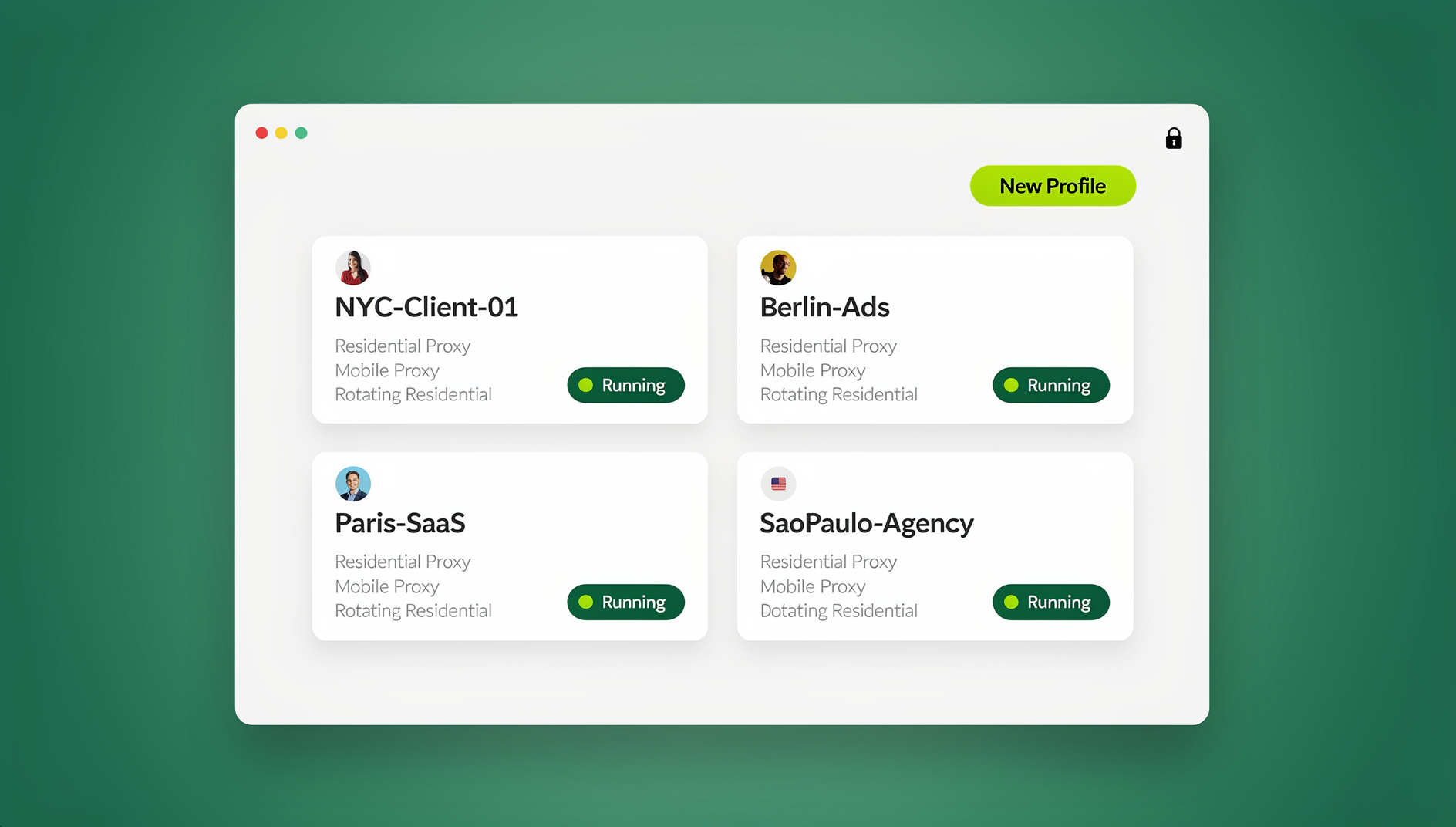

Operating multiple storefronts is one of the most powerful strategies for scaling an e-commerce business. It allows sellers to target different niches, manage separate brands under independent legal entities, and reduce operational risk. However, Amazon’s Seller Central platform is notorious for its strict anti-fraud detection systems. A single mistake—such as logging into two accounts from the same browser or sharing financial details—can link your stores, resulting in the immediate suspension of all your seller accounts. Understanding how to manage multiple storefronts safely is vital for long-term survival in the Amazon marketplace. As competition intensifies, having a secure, multi-account backup plan protects your business from arbitrary shutdowns and algorithmic errors.
Understanding Amazon’s Strict Account Linking Policies
Amazon’s Seller Central guidelines state that a seller should operate only one selling account per region. To open additional selling accounts, you must demonstrate a legitimate business need. Amazon’s policy has evolved over the years, becoming more automated and less reliant on manual human review. If Amazon’s backend algorithm detects a technical link between two accounts, it flags them as related and initiates an automated suspension. To scale without fear, you must ensure that your hardware, network, legal, and operational configurations have zero points of intersection.
What Amazon Considers a Legitimate Business Need
Amazon will generally allow you to run multiple Amazon accounts if you meet specific, rigorous criteria. These include owning separate, legally registered businesses (such as individual LLCs) with distinct tax identification numbers, managing completely different brands with unique product catalogs, maintaining separate email addresses, and utilizing separate bank accounts for deposits. Simply wanting to sell the same items on two different storefronts to double your search visibility is not considered a legitimate need and will lead to an immediate ban. Each brand must serve a distinct market segment and be legally structured as a standalone enterprise.
The Danger of Unauthorized Multi-Accounting
If you set up separate storefronts without establishing clean boundaries, Amazon’s algorithms will link them. The consequence of account linking is severe: if one account gets suspended due to a performance issue, policy violation, or customer dispute, all linked accounts are suspended automatically. This means your entire e-commerce empire could collapse overnight because of a minor issue on a secondary storefront. Maintaining strict technical isolation is the only way to safeguard your assets and ensure that a localized store problem does not contaminate your entire enterprise.
How Amazon’s Anti-Fraud Systems Track and Link Accounts
Amazon’s detection systems are among the most advanced in the world. They analyze multiple layers of data to identify when the same person or organization is managing different seller accounts.
The Network Layer: IP Addresses and Geolocation
Every network connection transmits a public IP address. If you access two Seller Central accounts from the same local office network, Amazon logs the matching IP address. While a single match might not trigger a ban immediately, repeated access from the same IP—especially when combined with other shared parameters—will link the profiles. Using datacenter proxies or commercial VPNs is highly risky, as Amazon blocklists these IP ranges to prevent automated scraping and bot activity. The only reliable approach is using high-quality residential proxies that assign a unique residential IP location to each store profile.
The Browser Layer: Canvas, WebGL, and Media Device Fingerprints
When you log in to Seller Central, Amazon’s scripts read your browser fingerprint. This includes your operating system version, browser user-agent, system fonts, screen resolution, audio settings, graphics card model, and canvas rendering signatures. Standard browser profiles share the exact same hardware fingerprint. Even if you log in through separate browser profiles or clear your cookies, your canvas and WebGL hashes remain identical, revealing to Amazon that both accounts are being operated on the same computer. Bypassing this requires modifying the browser code directly to supply randomized configurations for each profile.
The Financial Layer: Payment Methods and Bank Accounts
Amazon cross-references the credit cards used for seller fees and the bank accounts used for payouts. Reusing a credit card, billing address, or deposit bank account across multiple seller profiles is the fastest way to get linked. You must use separate financial credentials for every storefront, registered under the corresponding business entity. Using corporate charge cards with unique card numbers is an effective way to maintain financial separation.
The Legal Layer: Tax IDs, Addresses, and Phone Verification
Every Seller Central account requires verification of business details. Reusing a business address, telephone number, tax ID (EIN or SSN), or passport image across profiles will link them instantly. Each store must have its own legal representation, separate phone lines, and verified business documentation. Attempting to use virtual phone services that reuse numbers will trigger verification failures, so dedicated SIM cards or business VoIP systems are necessary.
The Operational Layer: Inventory, Images, and Listing Copy
Amazon uses image recognition and natural language processing to audit listings. If you list identical products with the same images and descriptions across separate storefronts, Amazon will flag the accounts. You must use unique listing titles, write original descriptions, and upload fresh product photography for each store. Sharing suppliers or importing bulk catalogs with identical metadata will alert Amazon’s systems to coordinate a review of your business relationship.
Evaluating Setup Strategies for Multi-Store Management
E-commerce sellers have used various methods to manage multiple profiles, with varying degrees of success and risk.
Strategy 1: Dedicated Hardware and Mobile Hotspots
The traditional method involves buying separate laptops and using dedicated mobile hotspots for each Amazon account. While physically secure, this method is highly expensive, difficult to scale, and logistically painful. Managing five physical laptops and multiple mobile contracts in a single office is highly inefficient and prone to human error, such as accidentally connecting a laptop to the wrong Wi-Fi network. The physical clutter and ongoing hardware costs make this strategy unviable for growing e-commerce teams.
Strategy 2: Virtual Private Networks (VPNs)
Sellers often attempt to use VPNs to change their IP address. However, VPNs do not hide your browser fingerprint, canvas hashes, or local cookies. Furthermore, VPN IP addresses are shared by thousands of other users. If another Amazon seller uses the same VPN IP and gets banned, your account could be linked to their suspension, leading to an unfair ban. VPNs do not provide the multi-layered isolation required for Seller Central compliance.
Strategy 3: Virtual Machines (VMs)
Virtual machines emulate separate operating systems on a single computer. While they isolate local storage, they are highly resource-intensive, requiring high-end RAM and CPU. VMs also share the host CPU and graphics hardware signatures, which advanced anti-fraud scripts can detect. Setting up and maintaining virtual machines is complex and requires specialized technical expertise. Additionally, configuring remote access for virtual assistants through VMs is laggy and difficult to manage.
Strategy 4: Cloud-Based Isolated Browser Solutions
The modern, professional standard is using dedicated multi-login software like Send.win. Send.win runs each profile in an independent, sandboxed environment. By modifying browser fingerprints and integrating residential proxies, it ensures that Amazon sees each profile as a completely separate physical computer and network connection. This is the ultimate method for managing safe multi-store operations at scale. It consolidates all profiles into a single dashboard, allowing teams to collaborate securely without performance degradation.
Setting Up Safe Multi-Store Operations Step-by-Step
Implementing a secure multi-account strategy requires careful planning and the right tools. Follow this step-by-step workflow to ensure complete isolation for your storefronts.
Configuring Isolated Profiles on Send.win
- Create your Send.win account: Sign up for a 30-day free trial on the official website. No credit card is required to begin.
- Launch the native desktop client: Install the Sendwin Browser on your desktop. Alternatively, you can use cloud browser sessions to manage your profiles from any web browser without local installation.
- Set up separate profiles: Create a new session for each Amazon storefront (e.g., “Amazon Store A”, “Amazon Store B”).
- Integrate residential proxies: Assign a clean residential proxy to each profile. This provides a unique, stable IP address that matches the geographical location of your registered business.
- Access Seller Central: Launch the profiles and log in. Send.win keeps your session cookies persistent, meaning you will stay logged in without needing to enter credentials repeatedly.
This technical separation prevents Amazon’s algorithms from linking your accounts. However, you must also separate your physical and operational assets to avoid suspensions. If one of your stores experiences issues, a clean separation prevents an Amazon account suspended error from spreading to your other storefronts. Operational discipline is just as important as technical parameters.
Separating Legal, Financial, and Operational Entities
Each Amazon seller account must be treated as an entirely separate business. Set up a dedicated LLC for each storefront, obtain individual tax IDs (EINs), and open independent business bank accounts. Never use the same credit card for multiple stores. For shipping, ensure that return addresses, warehousing details, and utility bills are unique to each business entity. This legal separation ensures that if Amazon audits your business, you can provide clean, independent documentation for each brand. It also keeps your corporate liability compartmentalized.
Best Practices for Managing Multiple Storefronts at Scale
Operating multiple stores requires strict operational discipline to prevent accidental cross-contamination. Follow these best practices:
- Never access multiple accounts in the same session: Always use the designated Send.win profile for each storefront.
- Do not copy listing text: Write unique titles, bullet points, and descriptions for every product listing. Copy-pasting text allows Amazon’s content algorithms to link your stores.
- Use unique product images: Upload fresh photography for each store. Amazon’s image recognition software can easily identify matching photos across different listings.
- Use unique barcodes: Purchase separate GS1 UPC barcodes for each brand. Sharing barcodes across storefronts is a major red flag that will trigger an Amazon seller account suspended notification.
- Delegate securely: If you hire virtual assistants (VAs), use Send.win’s session sharing feature. This allows VAs to access the stores directly within their pre-configured, isolated browser profiles without ever seeing your passwords.
Send.win Pricing and Plans
Send.win provides flexible, affordable pricing tiers designed to scale alongside your e-commerce operations. Review the plans below to select the right fit for your business.
| Plan Feature | Pro Plan | Team Plan | Free Trial |
|---|---|---|---|
| Monthly Price | $19/mo | $49/mo | $0 (30 Days) |
| Annual Price | $6.99/mo (Billed Annually) | $20.99/mo (Billed Annually) | N/A |
| Profile Slots | 150 Profiles | 500 Profiles | Full Access (Limited Profiles) |
| Proxy Bandwidth | 5 GB Included | 20 GB Included | Basic Allocation |
| Automation API | Yes (Local API) | Yes (Local & Cloud API) | No |
| Team Members | Single User | Up to 16 Seats | Single User |
For high-volume operations, you can purchase additional bandwidth for $6 per GB or extra profile slots for $0.05 per profile. These upgrades integrate seamlessly with your active subscriptions, allowing you to scale your business smoothly as you expand into new e-commerce marketplaces.
🏆 Send.win Verdict
Managing multiple Amazon storefronts requires complete segregation of network connections, local cache, and browser fingerprint metadata to bypass Amazon’s anti-fraud systems. Send.win provides the technical session isolation that professional e-commerce sellers need to run multiple storefronts safely. By separating your profiles using the native desktop client or cloud sessions, you protect your brands from correlated suspensions.
Try Send.win free today — secure your e-commerce storefronts and manage multiple Amazon accounts without the risk of correlated account bans.
Frequently Asked Questions
Can I have two Amazon seller accounts?
Yes, Amazon permits sellers to operate multiple seller accounts if they have a legitimate business need, such as owning separate brands under different legally registered companies. You must ensure that the stores are completely isolated both technically and operationally.
Will a VPN protect my multiple Amazon accounts?
No, a VPN only changes your IP address. It does not hide your browser fingerprint, canvas hashes, local storage, or cookie history. Amazon’s detection scripts can easily link profiles accessed from the same browser, even if you run a VPN.
Can Amazon detect virtual machines?
Yes, Amazon’s security scripts can identify hypervisor signatures, virtual network cards, and shared graphics hardware characteristic of virtual machines. Dedicated cloud browser profiles run on standardized, natural-looking parameters that avoid virtual signatures.
How many Amazon accounts can I manage safely?
With proper session isolation, separate legal structures, and unique financial details, you can manage an unlimited number of accounts. Many professional agencies and aggregator groups manage dozens of client accounts using Send.win.
Is it legal to have multiple Amazon accounts?
Yes, having multiple profiles is completely legal. However, failing to isolate them technically violates Amazon’s Seller Central Terms of Service. If Amazon detects unauthorized linking, they will apply policy enforcement, leading to store suspensions.
What happens if Amazon suspends one of my linked stores?
If one store is suspended and Amazon’s algorithms have linked it to your other stores, all associated accounts will be suspended automatically. This is why maintaining complete technical isolation through Send.win is critical to protecting your business.