Why PayPal Limited Your Multiple Accounts (and How to Fix It)
The paypal limited multiple accounts fix starts with understanding what triggered the restriction: PayPal’s fraud-detection system flagged your accounts as connected through shared IP addresses, browser fingerprints, cookies, or linked payment methods. To recover, submit an appeal with supporting documentation through PayPal’s Resolution Center, verify your identity for each account separately, and — critically — prevent future limitations by running each account in an isolated browser profile with a unique IP, separate cookies, and distinct payment credentials.

What Does “PayPal Limited” Actually Mean?
When PayPal “limits” your account, it restricts your ability to send, receive, or withdraw funds. This isn’t a permanent ban — it’s a temporary hold while PayPal investigates suspicious activity. Think of it as PayPal putting your account on probation.
There are three severity levels:
- Soft limit — You can still receive payments but can’t withdraw or send. PayPal asks you to verify your identity or provide documents.
- Hard limit — All transactions frozen. You must resolve the issue before any money moves.
- Permanent limitation — PayPal closes your account entirely. Funds are held for 180 days. This usually follows repeated violations.
For sellers running multiple PayPal accounts — whether for separate businesses, different storefronts, or regional operations — limitations happen far more frequently because PayPal’s systems are specifically designed to detect account relationships.
Why PayPal Limits Multiple Accounts: The Detection Mechanisms
PayPal uses a sophisticated web of signals to determine whether multiple accounts belong to the same person. Understanding these mechanisms is the first step toward protecting yourself.
1. Shared IP Address
Logging into multiple PayPal accounts from the same IP address is the most common trigger. PayPal logs every IP that touches an account, and when two or more accounts share the same IP history, its automated systems flag them for review. Even using the same Wi-Fi network at a coffee shop or co-working space can create this link.
2. Browser Fingerprinting
PayPal collects detailed information about your browser environment: screen resolution, installed fonts, timezone, WebGL renderer, canvas hash, and dozens of other parameters. When two accounts share an identical or near-identical browser fingerprint, PayPal’s system treats them as operated by the same person.
3. Cookie and Session Leakage
Cookies are persistent. If you log into Account A in your regular browser, then log out and log into Account B, traces of Account A’s session remain in your cookie store, local storage, and cached data. PayPal’s tracking scripts can read these remnants and link the accounts together.
4. Phone Number and Email Overlap
Using the same phone number for verification on multiple accounts instantly links them. The same applies to recovery email addresses, or even emails on the same custom domain. PayPal cross-references contact information across its entire user database.
5. Payment Method Linking
This is the silent killer. Adding the same bank account, credit card, or debit card to multiple PayPal accounts creates an undeniable link. PayPal shares payment method data across accounts, so even adding a card you previously used on a different account — even years ago — can trigger a limitation.
6. Device ID and Hardware Fingerprint
Beyond the browser, PayPal’s mobile app and web platform collect hardware-level identifiers: your device’s MAC address, device ID, and hardware serial numbers. Running multiple PayPal accounts from the same physical device is inherently risky without proper isolation.
Step-by-Step Recovery: How to Fix a Limited PayPal Account
If your account is already limited, here’s the recovery process in order of priority.
Step 1: Check the Resolution Center
Log into the limited account and navigate to the Resolution Center. PayPal will tell you exactly what they need — usually identity verification, proof of address, or documentation about specific transactions. Don’t guess; address exactly what they ask for.
Step 2: Prepare Your Documentation
Gather the following before submitting your appeal:
- Government-issued photo ID — passport, driver’s license, or national ID card matching the name on the account
- Proof of address — utility bill, bank statement, or government letter dated within the last 3 months
- Business documentation — if running a business account, provide your business license, registration certificate, or articles of incorporation
- Transaction evidence — invoices, shipping receipts, or correspondence related to flagged transactions
Step 3: Submit Your Appeal
Upload documents through the Resolution Center — not via email. PayPal’s review process prioritizes Resolution Center submissions. In your appeal message:
- Be concise and factual — don’t write emotional paragraphs
- Explain the legitimate business reason for each account if you have multiples
- Reference specific transaction IDs if PayPal flagged particular payments
- Don’t admit to violating the Terms of Service
Step 4: Complete Identity Verification
PayPal may require a phone call, video verification, or additional document uploads. Respond within the deadline — PayPal gives you a specific timeframe, and missing it can escalate a soft limit to a hard limit.
Step 5: Follow Up Strategically
If your appeal is denied or you don’t hear back within 10 business days, call PayPal’s support line directly. Phone support representatives have more authority to escalate cases than the automated Resolution Center. Keep a record of every interaction, including the representative’s name and any case numbers provided.
Prevention: How to Run Multiple PayPal Accounts Without Getting Limited
Recovery is painful. Prevention is everything. Here’s how to structure your multi-account setup so PayPal’s detection systems never link your accounts together.
Use Isolated Browser Profiles
The most effective defense against browser-based detection is running each PayPal account in a completely isolated browser session. Each profile should have its own:
- Cookie store and local storage (no cross-contamination)
- Unique browser fingerprint (canvas, WebGL, fonts, screen resolution)
- Separate browsing history and cache
- Independent timezone and language settings
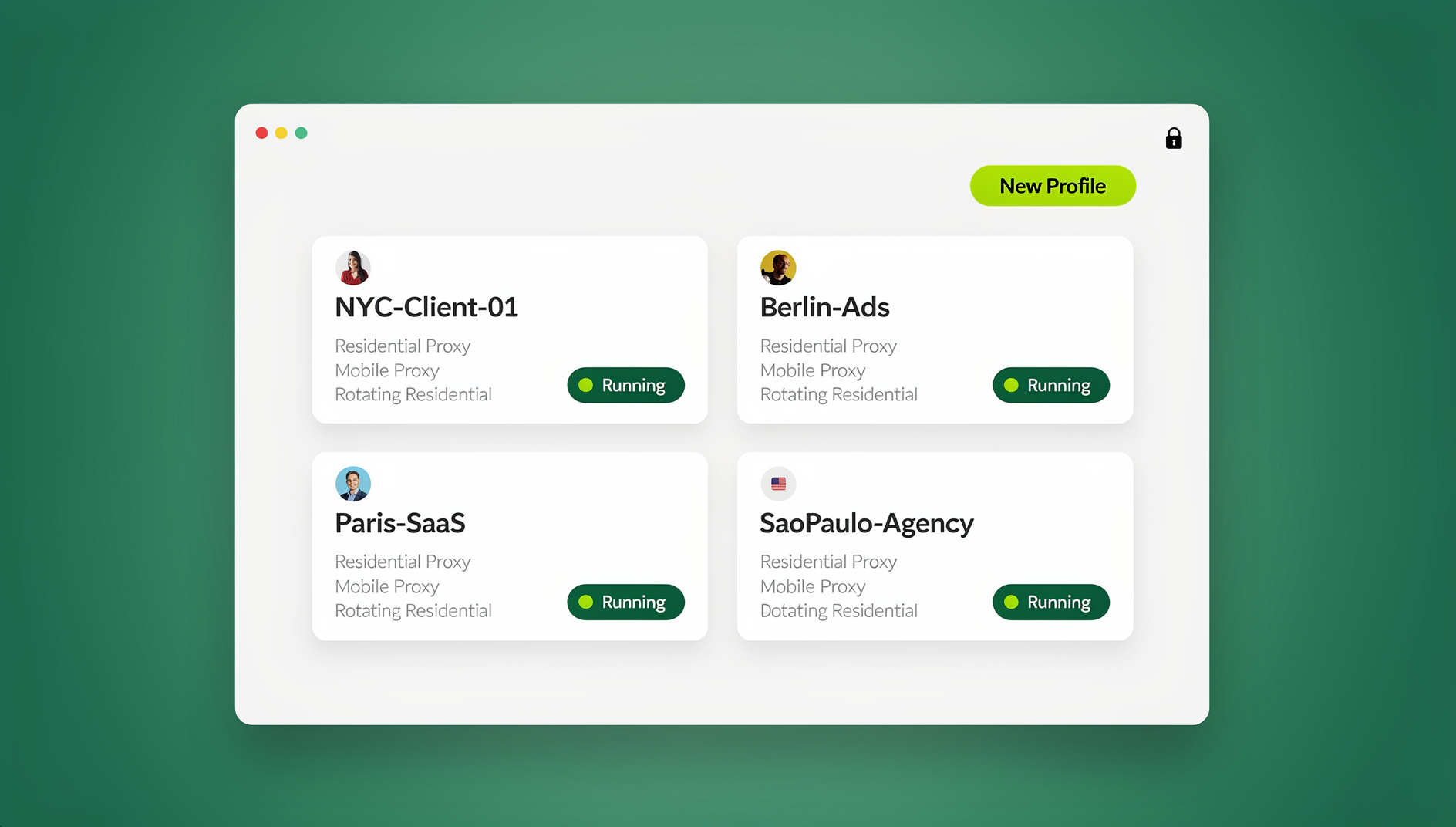
Sendwin Browser gives you exactly this. Each browser profile runs as a fully isolated environment with its own fingerprint, cookies, and session data. When you open Profile A and Profile B side by side, PayPal sees two completely different users on two different devices — because, from a fingerprint perspective, they are.
Assign Unique IPs Per Account
Every PayPal account needs its own dedicated IP address. Use residential proxies — datacenter proxies are easily flagged by PayPal’s anti-fraud systems. Assign one proxy per profile and keep that assignment permanent. Rotating proxies defeat the purpose because PayPal tracks IP consistency: real users don’t change their IP address every session.
Match the proxy’s geographic location to the account’s registered address. A PayPal account registered in Texas logging in from a German IP will raise immediate flags.
Separate Payment Methods Per Account
This is non-negotiable. Each PayPal account needs:
- Its own unique bank account
- A distinct credit or debit card
- A separate phone number for verification
- A unique email address (preferably on different email providers)
Never reuse a payment method across accounts, even if you’ve removed it from the previous account. PayPal retains historical payment method data indefinitely.
Maintain Consistent Login Patterns
Real users have predictable behavior. Log into each account at consistent times, from the same IP, using the same device profile. Avoid logging into multiple PayPal accounts in rapid succession — space your sessions out. If Account A is your “morning” account and Account B is your “afternoon” account, keep that routine.
Setting Up Send.win for PayPal Multi-Account Management
Here’s a practical walkthrough for structuring your accounts in Sendwin Browser — the native desktop app for Windows, macOS, and Linux.
Create One Profile Per PayPal Account
Open the Sendwin Browser app and create a separate profile for each PayPal account. Name them clearly — “PayPal-Store-US,” “PayPal-Store-UK,” etc. Each profile automatically gets its own isolated fingerprint, cookie store, and session storage.
Assign Proxies
In each profile’s settings, assign a dedicated residential proxy that matches the account’s geographic location. Send.win supports HTTP, HTTPS, and SOCKS5 proxies. Pro plan includes 5GB of proxy bandwidth; Team plan includes 20GB.
Verify Isolation
Before logging into PayPal, visit a fingerprint-checking site (like browserleaks.com) in each profile. Verify that the canvas hash, WebGL renderer, timezone, and IP address are all different across profiles. This confirms that PayPal will see each session as a unique user.
Automate Cautiously
If you need to manage PayPal workflows (checking balances, downloading transaction reports) across accounts, Send.win is a browser profile manager: each profile keeps its own cookies, storage, sessions and fingerprint settings, so profiles do not share one browser identity. This is available on both Pro and Team plans. However, be extremely conservative with activity speed — mimic human timing with randomized delays between actions. You can learn more about managing multiple accounts safely in our detailed guide.
Common Mistakes That Lead to PayPal Limitations
| Mistake | Why It’s Dangerous | Fix |
|---|---|---|
| Using the same browser for all accounts | Cookies and fingerprint link every account | One isolated profile per account |
| Sharing a bank card across accounts | Payment methods are cross-referenced permanently | Unique payment method per account |
| VPN with shared IPs | VPN IPs are flagged; shared by thousands of users | Dedicated residential proxy per account |
| Registering accounts on the same day | Account creation timestamps are correlated | Space registrations days or weeks apart |
| Using incognito mode | Fingerprint remains identical; only cookies are cleared | Full fingerprint isolation, not just private browsing |
| Same phone number for 2FA | Instant linkage in PayPal’s database | Separate phone number or VoIP per account |
What to Do If PayPal Permanently Limits Your Account
If your account receives a permanent limitation, your options narrow but don’t disappear:
- Withdraw remaining funds — After 180 days, PayPal releases held funds. Set a calendar reminder.
- File a complaint with the CFPB — For U.S. users, a Consumer Financial Protection Bureau complaint sometimes prompts PayPal to re-review the case.
- Contact an e-commerce attorney — If significant funds are held, legal pressure through a demand letter can accelerate resolution.
- Move to alternative payment processors — Stripe, Square, Wise, and Payoneer offer similar services. Diversify your payment processing to reduce single-platform risk.
PayPal’s Terms of Service: What You Should Know
PayPal’s Acceptable Use Policy technically allows one personal account and one business account per person. Running more than that operates in a gray area. However, many legitimate businesses require multiple accounts — for different legal entities, different countries, or different brands. The key is ensuring each account has a legitimate, documented business purpose and maintaining complete operational separation between them.
How Send.win Helps With Paypal Limited Multiple Accounts Fix
Send.win is a browser profile manager built for exactly this kind of work — every profile is a clean, isolated identity:
- Isolated profiles – unique fingerprint, separate cookies and storage per profile
- Fingerprint settings – canvas, WebGL, fonts, and audio configured per profile
- Desktop app + cloud sessions – native app for Windows, macOS, and Linux, or run profiles in the cloud with no install
- Built-in residential proxies – with automatic timezone, locale, and WebRTC matching
- Team features – share logged-in profiles with teammates without sharing passwords
Try the instant cloud browser demo — no install, no signup — or download the desktop app. There is no free trial; paid plans start at $19/month on Pro ($83.88/year), and the first card purchase is covered by a 7-day money-back guarantee (see pricing).
For businesses operating across borders, it’s essential to practice anonymous browsing techniques to keep regional accounts properly segmented and avoid cross-border detection triggers.
🏆 Send.win Verdict
PayPal’s multi-account detection is aggressive, but it’s beatable with proper isolation. Sendwin Browser creates completely separated browser environments — unique fingerprints, independent cookie stores, and dedicated proxy support — so PayPal sees each profile as a different user on a different device. The Pro plan at $6.99/month (annual) gives you 150 isolated profiles with built-in proxy bandwidth, which is more than enough for even aggressive multi-account setups. No more IP overlap, no more cookie leakage, no more linked fingerprints.
Try the free Send.win cloud demo — a 3-minute preview without signup, or 10 minutes a day with a free account. Isolate your PayPal accounts before the next limitation hits.
Frequently Asked Questions
How many PayPal accounts can I legally have?
PayPal officially allows one personal account and one business account per person. However, separate legal entities (different registered businesses) can each have their own business account. The critical requirement is that each account represents a distinct, documented business purpose — and that you maintain complete operational separation between them.
Will a VPN protect my multiple PayPal accounts?
A VPN alone is not enough. While a VPN changes your IP address, it does nothing about browser fingerprinting, cookies, or payment method linking. VPN IPs are also often flagged by PayPal because they’re shared by thousands of users. You need full browser profile isolation — unique fingerprint, separate cookies, and a dedicated residential proxy — not just an IP change.
Can PayPal detect incognito mode?
Yes. Incognito mode only clears cookies and browsing history when you close the window. Your browser fingerprint — canvas hash, WebGL data, screen resolution, installed fonts, timezone — remains identical. PayPal can still link accounts accessed from the same device in incognito mode because the fingerprint matches.
How long does PayPal hold funds after a limitation?
PayPal holds funds for 180 days after a permanent limitation. For temporary limitations, funds are released once you resolve the issue through the Resolution Center. During the hold period, you can’t send, receive, or withdraw money — but the funds are not forfeited. After 180 days, PayPal allows you to transfer the remaining balance to your linked bank account.
Can I create a new PayPal account after being limited?
Technically, PayPal prohibits users with permanently limited accounts from opening new ones. Their systems cross-reference identity documents, payment methods, device fingerprints, and IP addresses to prevent this. If you do open a new account, it must be under a different legal entity with completely separate credentials, payment methods, and device environment — and you must have a legitimate business reason for the new account.
What triggers PayPal’s automated limitation system?
The most common triggers include: receiving a sudden spike in payment volume, multiple buyer disputes or chargebacks, logging in from unusual locations or new devices, selling restricted items, receiving payments from flagged accounts, and having multiple accounts linked through shared identifiers (IP, fingerprint, payment methods, phone numbers). Even a single chargeback on a new account can trigger an immediate review.
Do browser fingerprint changes look suspicious to PayPal?
Constantly changing your fingerprint is actually more suspicious than keeping it consistent. Real users have stable device environments — they don’t change their screen resolution or installed fonts daily. The goal isn’t to randomize your fingerprint on every session; it’s to have a consistent, unique fingerprint per account. Sendwin Browser excels here because each profile maintains a persistent, stable fingerprint that’s simply different from your other profiles.
Is using an antidetect browser for PayPal against the rules?
PayPal’s Terms of Service don’t specifically mention antidetect browsers. What they prohibit is circumventing their security measures to operate multiple accounts deceptively. If you’re running separate legitimate business accounts with proper documentation and using isolated browser profiles simply for operational security, you’re in a defensible position. The tool itself isn’t the issue — it’s whether the accounts serve legitimate purposes.