E-commerce merchants can implement solutions for managing multiple merchant accounts globally by deploying payment orchestration platforms (POPs) for smart routing, setting up multi-currency payment service providers (PSPs) like Stripe or Adyen, and utilizing sandboxed browser profiles in Send.win’s native desktop app or cloud browser sessions. Standardizing portal access prevents fraud triggers, IP-linked locks, and cross-contamination when managing payment dashboards from different geographic regions.

Why Global Expansion Requires Multiple Merchant Accounts
As e-commerce companies expand across international borders, they quickly encounter the limitations of using a single merchant account. While a local processor might work perfectly for domestic sales, processing international transactions through a single home-base account often leads to higher transaction fees, declined payments, and currency conversion losses. To succeed globally, businesses must establish localized payment processing setups in their key markets.
The primary reason for maintaining multiple merchant accounts is authorization rate optimization. When a customer in Germany purchases from a US merchant, the transaction is processed as a cross-border payment. Issuing banks are naturally more suspicious of cross-border transactions, leading to higher decline rates. By routing the transaction through a local German merchant account, the payment is treated as domestic, increasing authorization rates by 5% to 15% and reducing customer abandonment.
Additionally, multi-merchant setups allow businesses to avoid expensive currency conversion fees. If your store settles in USD but sells to customers in Euros, a single merchant account will charge conversion markup on every transaction. By establishing separate merchant accounts for different currencies, you can settle payments in the local currency and hedge your FX risk. This makes identifying solutions for managing multiple merchant accounts globally a key priority for scaling e-commerce brands.
Furthermore, having redundant merchant accounts provides business continuity. If your primary payment processor experiences a sudden service outage, or suspends your account due to a sudden spike in chargebacks, your business will grind to a halt. By setting up secondary and tertiary merchant accounts across different payment networks, you can redistribute your transaction volume and keep your sales flowing even during a processor crisis.
Payment Orchestration: The Smart Routing Solution
Payment Orchestration Platforms (POPs) have emerged as one of the most powerful solutions for managing multiple merchant accounts globally. A payment orchestration layer sits between your e-commerce checkout and your various payment processors. Instead of integrating each processor individually, you connect to the POP via a single API, and the platform handles the routing, processing, and reconciliation across all your accounts.
The core benefit of payment orchestration is smart routing. Based on rules you configure, the platform analyzes each transaction at checkout and directs it to the optimal merchant account. For instance, you can route transactions based on geographic location, card brand, transaction value, or risk profile. If your primary processor in Europe experiences a service outage, the POP can automatically route transactions to a backup processor, ensuring that you never miss a sale.
Payment orchestration also simplifies the PCI DSS compliance process. Because the orchestration layer tokenizes card data at the point of entry, sensitive information never touches your servers or your individual processor accounts. This reduces your compliance scope and makes it easier to pass annual security audits. Leading platforms like Spreedly, Primer, and ProcessOut offer robust orchestration tools that support hundreds of processors worldwide, making them ideal for high-volume enterprise merchants.
Furthermore, orchestration platforms provide advanced transaction analytics. By consolidating data from all underlying payment channels, these tools help merchants monitor average processing fees, authorization rates, and chargeback volumes globally. This data is invaluable for negotiation purposes with card networks and processors, helping businesses minimize transaction overhead and maximize overall profitability.
Detailed Smart Routing Protocols in Payment Orchestration
To implement smart routing effectively, payment orchestration layers utilize a set of rule-based triggers configured in the platform’s routing engine. These protocols examine transaction metadata in real-time, matching the incoming request with the optimal processor. Below is a breakdown of the core smart routing protocols:
- Geographic Acquirer Routing: Routes payments based on the issuer country of the customer’s credit card. By directing European cards to a European acquiring bank and US cards to a US acquirer, merchants avoid cross-border processing fees and maximize authorization rates.
- Cost-Based Minimization Routing: Evaluates transaction fees across active merchant accounts. For instance, if Processor A offers cheaper rates for Visa debit cards, while Processor B is more cost-effective for Mastercard credit cards, the routing engine distributes transactions accordingly.
- Dynamic Failover and Cascading: Automatically retries a transaction on a backup processor if the primary processor returns a soft decline (e.g., temporary bank network timeout). This cascade process happens in milliseconds at checkout, transparently to the user, preventing lost sales.
- Card Brand & Type Optimization: Identifies whether the card is a standard retail card, a corporate card, or a high-limit premium card. High-limit cards can be routed to processors specializing in enterprise risk validation, while standard cards flow through cheaper transaction pathways.
Full-Service Global Payment Platforms vs. Specialized Local Processors
When selecting solutions for managing multiple merchant accounts globally, businesses must choose between full-service global Payment Service Providers (PSPs) and specialized regional processors. Global PSPs like Stripe, Adyen, and PayPal Commerce Platform offer broad international coverage with a single integration. Stripe Connect allows marketplaces to manage sub-accounts for hundreds of sellers, while Adyen provides direct acquiring access in dozens of countries.
These global platforms are highly convenient and easy to set up. They support multi-currency settlement, local payment methods, and unified dashboards that aggregate your sales data across all regions. However, this convenience often comes with higher fee structures. For high-volume merchants, the cost of using a single global PSP can be significant, especially compared to the interchange-plus pricing models offered by local acquirers in specific countries.
In contrast, using regional processors (such as EBANX for Latin America, Flutterwave for Africa, or Mollie for Europe) allows you to optimize for local payment methods and minimize processing costs. E-commerce merchants often combine both approaches: using a global PSP like Stripe for their core markets and integrating regional processors in high-growth areas. To understand how to organize your team and manage various platform profiles safely, you can read our guide on managing multiple accounts across different services.
Comparison: Global Payment Service Providers vs. Payment Orchestration
To help merchants choose the correct architecture, the following table compares full-service global PSPs, regional processors, and payment orchestration platforms:
| Solution Type | Integration Effort | Smart Routing Support | Multi-Currency Handling | Best For |
|---|---|---|---|---|
| Global PSPs (Stripe/Adyen) | Low — single API for global access | Limited — internal routing only | Excellent — automatic conversion | Startups and mid-market e-commerce |
| Regional Processors (EBANX/Mollie) | High — separate integrations required | No — manual setup per market | Excellent — optimized for local currencies | Firms with high transaction volumes in specific regions |
| Payment Orchestration (Spreedly/Primer) | Medium — one API connecting all systems | Excellent — dynamic rules & failovers | Excellent — multi-PSP routing | Enterprise e-commerce and global marketplaces |
Selecting Regional Payment Gateways for Global Markets
For merchants choosing to integrate regional processors directly, selecting the right partner in each territory is essential. Here is a review of the leading payment options across major global markets:
- Europe (EEA): Mollie is highly recommended for Northern Europe, offering native support for local methods like iDEAL (Netherlands) and Bancontact (Belgium) at low rates. Adyen is the default enterprise option, providing direct localized card acquiring across the entire continent.
- Latin America (LATAM): EBANX and dLocal are the market leaders. They support local payment options such as Pix and Boleto Bancário in Brazil, OXXO in Mexico, and localized credit card installments, which are critical for high conversion rates in these countries.
- Asia-Pacific (APAC): 2C2P is the dominant processor in Southeast Asia, supporting bank transfers, mobile wallets, and over-the-counter payments across Singapore, Thailand, and Indonesia. Stripe also provides excellent local card processing in Australia and Singapore.
- Middle East and Africa (MENA/SSA): PayTabs and Flutterwave provide essential local processing. Flutterwave supports local mobile money wallets (like M-Pesa and MTN Mobile Money) across Sub-Saharan Africa, which are preferred over traditional credit cards by local consumers.
Operational Challenges of Multi-Merchant Account Management
While maintaining multiple merchant accounts optimizes transaction costs and authorization rates, it introduces significant operational complexity. The foremost challenge is bank reconciliation. When payments flow through five different processors in three currencies, matching deposits with order logs is extremely difficult. Without automated tools, accounting teams must manually download reports from each processor portal, leading to errors and delays.
To address this, businesses should integrate their processors with centralized treasury management systems or modern accounting platforms like NetSuite and Quickbooks. Many payment orchestration platforms also offer consolidated dashboard reporting, providing a single view of your transaction history, chargeback rates, and settlement payouts across all accounts. This saves time and ensures that your financial records remain accurate.
Another challenge is managing foreign exchange (FX) risk. When settling payments in multiple currencies, currency fluctuations can erode your profit margins. Implementing FX hedging strategies, such as forward contracts or multi-currency bank accounts, allows you to lock in exchange rates and stabilize your revenue. Utilizing a specialized best browser for multiple accounts can also help finance teams monitor and log into various bank and processor portals securely without triggering suspicious activity flags.
In addition, currency matching must extend to chargeback disputes. When a customer files a chargeback, the billing currency, settlement currency, and refund fee calculations must align to prevent unexpected treasury losses. Managing these details across several merchant bank accounts requires a clear set of financial policies and specialized software tools.
Technical Safeguards: Securing Merchant Portal Access and Preventing Fraud
Accessing multiple payment processor dashboards is a major security challenge for global finance teams. To manage disputes, monitor payout schedules, and adjust fraud filters, team members must log into portals for Stripe, Adyen, and regional processors daily. Logging into multiple accounts from a single browser profile can trigger security flags, as payment companies monitor browser cookies and fingerprints to prevent unauthorized access.
If your team accesses multiple client or regional merchant portals from the same browser, the processor’s automated security systems may link these accounts together. In the event of a security audit or a policy dispute on one account, linked accounts can be suspended or put on hold. This makes technical session isolation critical. Managing multiple digital profiles is similar to running multiple amazon accounts safely, where strict profile decoupling is required to prevent security blocks.
Moreover, multi-merchant operations require cross-account fraud monitoring. Fraud patterns are rarely confined to a single processor, and a fraudster blocked on Stripe might attempt to checkout using a regional portal. Implementing a centralized fraud prevention tool (such as Sift or Signifyd) that analyzes transaction risk before routing it to any processor ensures that your entire multi-merchant network remains protected.
This security protocol is also essential for maintaining PCI DSS compliance. E-commerce merchants handling multi-merchant dashboard accounts must follow strict guidelines regarding cardholder data access control. Restricting access permissions based on role, using secure network tunnels, and ensuring that employees access portals through isolated, non-persistent session tools are critical criteria to satisfy annual PCI-DSS Self-Assessment Questionnaire (SAQ-D) requirements.
How Send.win Isolates and Protects Merchant Portal Logins
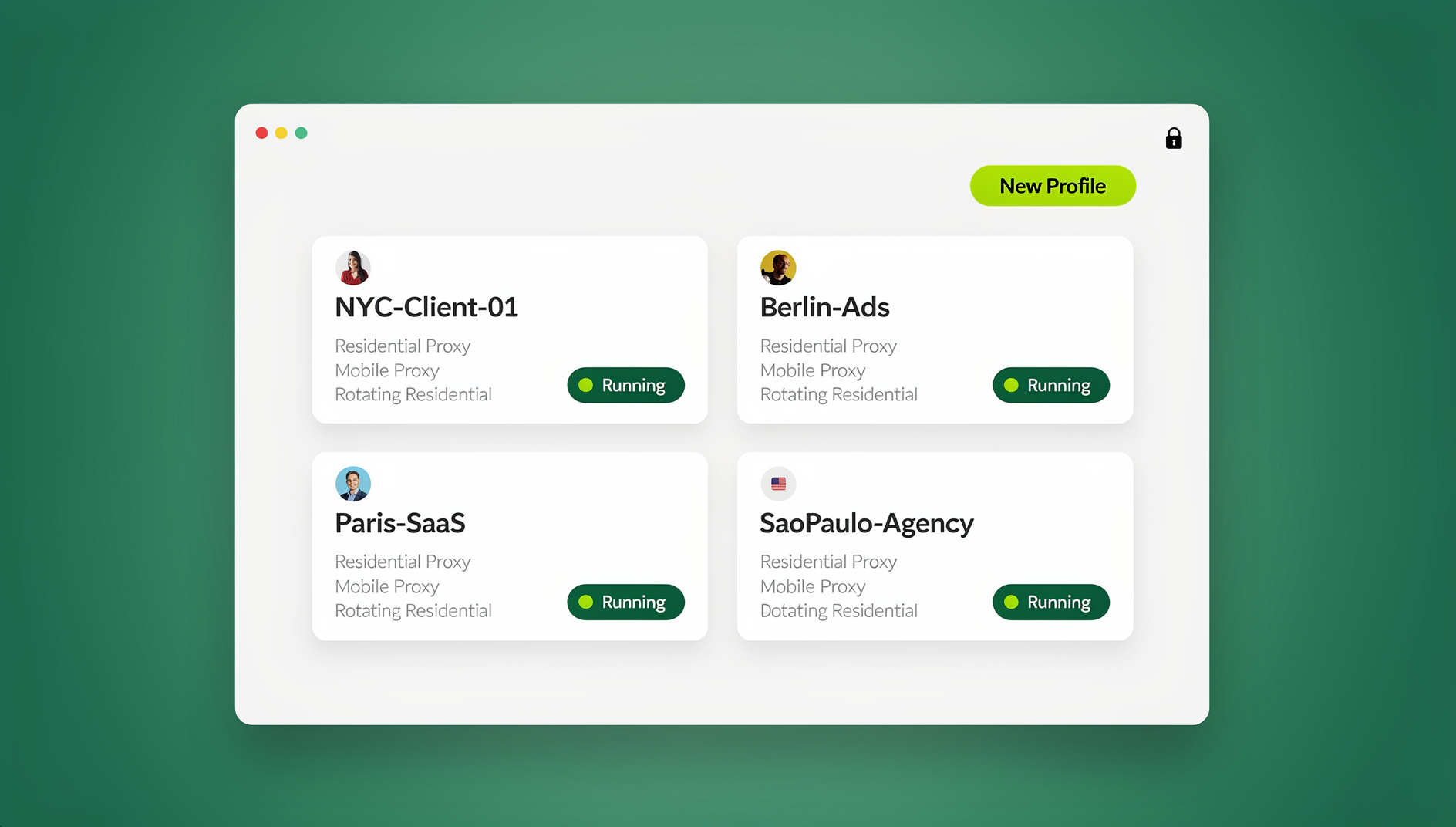
Send.win provides the ideal technical solution for securing access to multiple merchant dashboards. By sandboxing cookies, local storage, and browser fingerprints on a per-profile basis, Send.win allows finance and customer support teams to manage multiple payment dashboards simultaneously without any data leaks or session overlaps.
Importantly, Send.win contains no browser add-on or browser plugin — it operates through two primary modes: the native Sendwin Browser desktop client (available for Windows, macOS, and Linux) and cloud browser sessions that run entirely on Sendwin’s remote infrastructure without requiring any local installation. This architecture allows teams to assign distinct proxies to individual merchant profiles. For example, if you are managing a European merchant account that requires European IP logins, you can configure that specific Send.win profile to route through a German or UK proxy, while keeping your US dashboards on domestic connections.
Send.win’s Pro and Team plans also include a local Automation API. This allows developers to write scripts using Puppeteer, Playwright, or Selenium to automate repetitive financial workflows, such as downloading monthly reconciliation reports or extracting payout schedules from different portals, without having to build complex API integrations for each processor. By combining financial orchestration with secure session management, global e-commerce brands can scale their payment operations safely and efficiently.
Using the Automation API, developers can schedule script runs that securely launch isolated profiles, navigate to payment portal panels, enter verification parameters via secure APIs, and scrape transaction records. This eliminates manual labor while keeping each workflow sandboxed in its own dedicated browser session, preventing cross-profile cookie leaks and ensuring absolute data security.
🏆 Send.win Verdict
Managing multiple global merchant accounts requires both financial orchestration and strict security partitioning. Accessing different merchant portals from a single browser profile risks cross-linking fraud filters and triggering security holds. Send.win provides isolated, fingerprint-protected browser profiles via its native Sendwin Browser desktop client and cloud browser sessions, ensuring your payment dashboards remain secure and decoupled.
Try Send.win free today — secure all your global merchant portals with a 30-day free trial.
Frequently Asked Questions
Why do global businesses need multiple merchant accounts?
Global businesses use multiple merchant accounts to optimize transaction costs, support local payment methods, and improve authorization rates. Processing a transaction through a local acquirer rather than a cross-border processor typically increases approval rates by 5% to 15%.
What is payment orchestration and how does it work?
Payment orchestration is a software layer that integrates with multiple payment processors and merchant accounts. It uses smart routing rules to dynamically direct each transaction to the optimal processor at checkout, ensuring the lowest processing cost and highest approval rate.
Can I run multiple merchant accounts under the same business entity?
Yes. A single corporate entity can open multiple merchant accounts with different processors or under different currencies. However, to maximize authorization rates, many global businesses establish local subsidiaries in key regions to hold local merchant accounts.
What is the risk of logging into multiple Stripe accounts from the same browser?
Logging into multiple processor accounts from the same browser profile shares local cookies and fingerprints. If one account is flagged for high chargeback rates or policy violations, the processor’s automated fraud systems can link and suspend the other accounts accessed from that browser.
How does Send.win ensure security for merchant dashboard access?
Send.win isolates cookies, cache, local storage, and browser fingerprints on a per-tab basis. This sandboxing ensures that different tabs can run active sessions on the same website under different credentials simultaneously without any data leaks or session overlaps.
What is the cost of using Send.win for payment teams?
Send.win offers a 30-day free trial with no credit card required. Paid plans include the Pro plan at $19/month ($6.99/month billed annually — 63% savings) supporting up to 150 profiles, and the Team plan at $49/month ($20.99/month billed annually — 57% savings) which includes 500 profiles and team collaboration seats.
Does Send.win offer an API for automation on payment dashboards?
Yes. Send.win’s local Automation API, which supports Puppeteer, Playwright, and Selenium to control isolated profiles programmatically, is available starting on the Pro plan as well as the Team plan, making automation accessible to developers and finance teams.