Headless Browser Automation, Explained in Plain English
What is headless browser automation? It means driving a real browser engine — Chromium, Firefox or WebKit — with no visible window, controlled by code over a protocol such as CDP or WebDriver. The browser still parses HTML, builds the layout, executes JavaScript and loads network requests; you just never see a painted screen. Your script navigates, clicks, reads and asserts while the job runs on a server, in CI or in a container with no display.

📌 TL;DR Executive Summary
- Core Takeaway: Headless mode keeps the JavaScript engine, layout and network stack and drops only the painted window, so the same page logic fits into containers, CI runners and unattended servers.
- Key Risk/Challenge: Headless runs can behave differently from headed ones and leak automation signals, so “passes headless, breaks for real users” and bot detection both stay live problems.
- Recommended Solution: Drive the browser with Playwright or Selenium, wait on conditions instead of clock time, pin your browser build, and attach to persistent isolated profiles rather than launching a clean browser on every run.
How a Headless Browser Works Under the Hood
A headless browser is a web browser without a graphical user interface, controlled from the command line or over network communication. What stays matters more than what goes: HTML parsing, layout, colour and font selection, JavaScript and Ajax execution all happen exactly as they would in the browser on your desk. Screenshots prove it — those pixels were computed even though nothing was ever drawn to a monitor.
The Rendering Pipeline Stays; the Painted Window Goes Away
Launch Chromium in headless mode and you keep the JavaScript engine, the layout engine and the full network stack. What you drop is the compositor surface and the window that would display it. That is why a headless run is cheaper and easier to containerise: no X server, no virtual framebuffer, no GPU passthrough.
It also explains why the savings are smaller than people expect. You still load a complete browser, so per-context memory stays close to a headed instance. Dramatic reductions come from changing engines, not from hiding a window.
What Actually Drives the Browser
Chrome gained native remote-control support in version 59 and Firefox in version 56. Once the real engine could be scripted directly, tools that tried to imitate a browser lost their reason to exist. The clearest answer to what is headless browser automation is the control channel, and today that channel defines the tooling:
- Chrome DevTools Protocol (CDP): Puppeteer and Playwright speak it, giving you DOM access, network interception and low-level page control.
- W3C WebDriver: the Selenium standard, implemented per browser and stable across languages.
- HTTP APIs: older Python tooling such as Splash, which renders WebKit through Qt and exposes Lua scripting rather than a driver protocol.
Not Everything Called “Headless” Is a Browser
This is where most confusion starts. jsdom parses HTML, cookies and some JavaScript but never renders the DOM and has limited event support. HtmlUnit, written in Java, uses the Rhino engine for JavaScript and Ajax with only partial rendering. Lightpanda, open source and written in Zig, supports CDP, DOM access and JavaScript execution but no graphical rendering. They are cheap and fast, and they break on any page that needs a real layout to decide what to show.
| Approach | What it keeps | What it cannot do | Typical use |
|---|---|---|---|
| Full engine headless (Chromium, Firefox, WebKit) | Layout, JavaScript, network stack, full rendering | Show a user interface | Testing, scraping JS-rendered pages, screenshots, PDFs |
| Lightweight parsers (jsdom, HtmlUnit) | HTML parsing, cookies, partial JavaScript | Render the DOM, fire complete DOM events | Fast checks on markup you already trust |
| Agent-oriented engines (Kitesurf, Lightpanda) | HTML and CSS parsing, JavaScript, CDP compatibility | Video, WebGL, real-TLS bot challenges, long authenticated sessions | Cheap, short, stateless page reads at scale |
Headless vs Headed: What Actually Changes
The “new headless” Chrome path runs the same code as headed Chrome, which makes the classic passes-headless-breaks-headed bug rarer than it used to be — but not gone. The remaining differences are practical, and they show up where automation usually fails. Everything that changes follows from what is headless browser automation actually drops: the compositor surface, not the engine underneath it.
| Dimension | Headed | Headless |
|---|---|---|
| Display requirement | Needs a real or virtual display | None |
| Container and CI fit | Extra setup, heavier images | Runs inside a slim image |
| Per-context cost | Full engine plus compositor | Full engine, lighter surface — savings are modest |
| Display-bound behaviours | Permission prompts and media surfaces have somewhere to appear | Often need explicit flags or a virtual display |
| Debugging | You can watch it happen | You rely on traces, screenshots and logs |
| Automation signals | Fewer obvious ones | More, unless the build and profile are handled carefully |
Headless also has an older SEO history. Google stated back in 2009 that headless browsing could help its search engine index Ajax-based websites — the same pre-rendering idea behind dynamic rendering for search today.
What You Actually Use Headless Automation For
The documented use cases are stable: test automation, screenshots, JavaScript library testing, page interaction, and scraping content that only exists after JavaScript runs. In practice they split into four workflows.
- Regression testing. BrowserStack’s guide reports that headless runs can cut test execution time by up to 30% during large regression cycles — a vendor figure, but directionally right, because you stop paying for rendering surfaces nobody looks at.
- Data collection. Price checks, catalogue monitoring and listing audits on pages that build their DOM client-side. Without a JS engine, the page you fetch is not the page a customer sees.
- Artifacts. Screenshots, PDFs and snapshots, which double as the fastest way to see what a failing selector actually rendered.
- Agent-driven browsing. Guides published in 2026 describe AI agents taking a plain-English objective and driving headless or headed Chrome, sitting alongside classic selector-driven suites.
Automate What Is Headless Browser Automation With Send.win
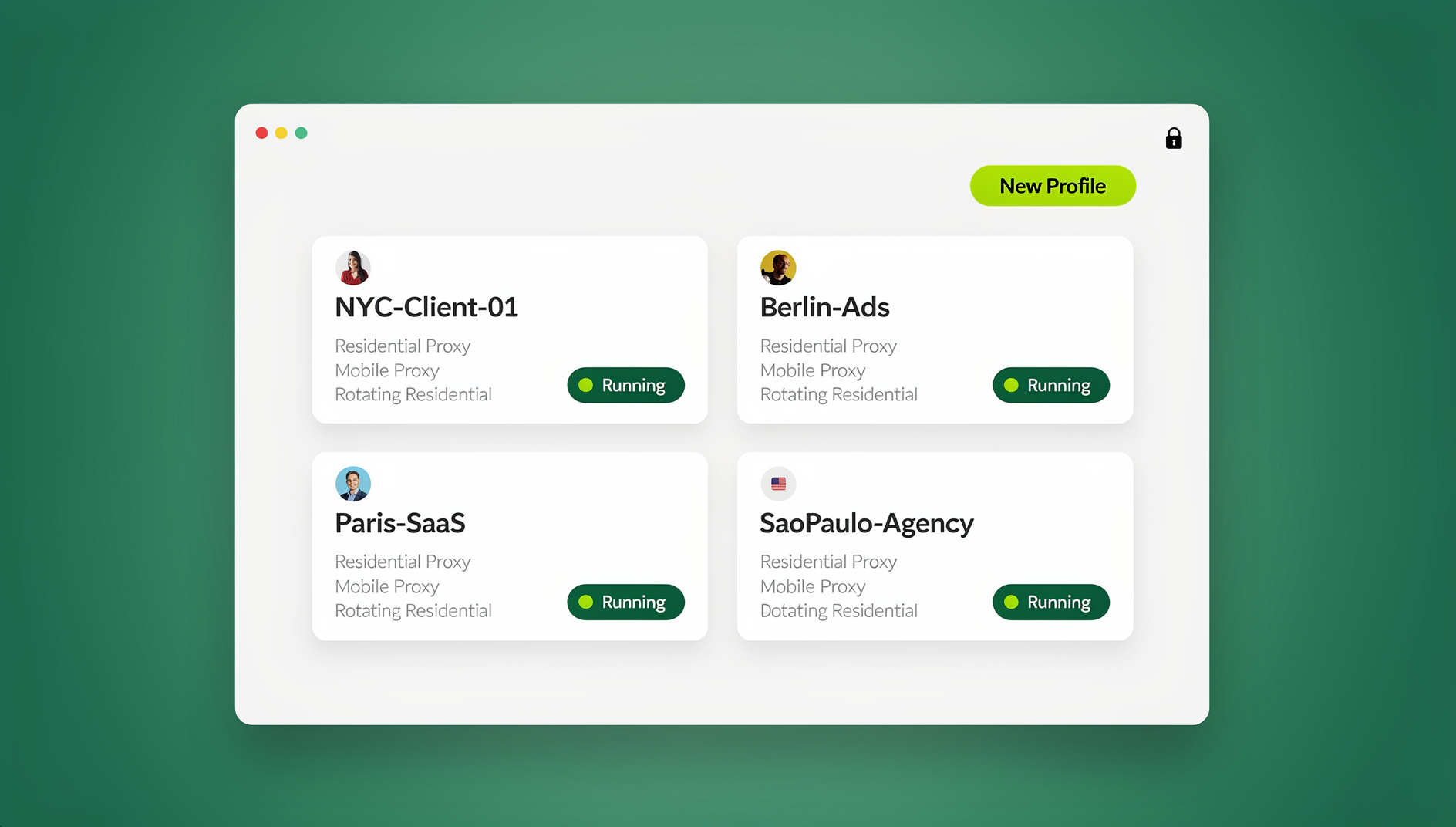
Send.win pairs isolated, fingerprint-managed browser profiles with a full Automation API, so your scripts run in profiles that look and behave like real, separate users:
- Selenium, Puppeteer & Playwright support – drive any profile programmatically (Team plan)
- Isolated profiles – each with its own fingerprint, cookies, and storage
- Built-in residential proxies – with automatic timezone, locale, and WebRTC matching
- Desktop app for Windows, macOS & Linux – plus cloud sessions when you don’t want a local install
Try the instant cloud browser demo — no install, straight from your browser. Then compare plans: a 30-day free trial with no credit card, and paid plans from $6.99/month billed annually.
If that last category is your focus, the mechanics of headless browsers for AI agents are worth reading first, because determinism and cost behave differently when an agent chooses the next step instead of your script.
Picking a Tool: Playwright, Puppeteer or Selenium
All three drive real browsers. The differences are about scope and control, not quality. Whichever one you choose, what is headless browser automation drives underneath stays the same — a real engine behind a control channel, with no window.
| Tool | Browsers | Strength | Watch out for |
|---|---|---|---|
| Puppeteer | Chrome and Chromium over CDP | Deep protocol access, low overhead, first-class CDP | Single engine; you give up Firefox and WebKit coverage |
| Playwright | Chromium, Firefox, WebKit via one API; branded Chrome and Edge via the channel option | Device emulation, auto-waiting locators, trace viewer, parallel projects | More concepts to learn; browser downloads need planning in CI |
| Selenium WebDriver | Many browsers, many languages, W3C WebDriver | The standard in enterprise cross-browser environments | More plumbing for waits and session handling |
Playwright’s release cadence matters if you pin versions. Release 1.64, published in October 2026, bundles Chromium 156.0.8078.4, Firefox 157.0 and WebKit 27.2, and was tested against stable Chrome 155 and Edge 155. Chromium runs ahead of branded browsers: when the world is on Chrome N, Playwright already supports Chromium N+1, which reaches Chrome and Edge a few weeks later. It also installs two different Chromium builds — a regular build for headed work and a separate headless shell. On CI you can skip the full browser with --only-shell, or skip the shell with --no-shell when you opt into the new headless mode via channel: 'chromium'. The browser installation docs lay out the trade-offs.
Whichever you pick, one decision determines whether multi-account work survives: does each run get a fresh browser, or attach to a profile that already owns an identity? That premise is what Playwright multiple browser profiles is built around, and it matters more in headless mode because nobody is watching when profile 12 logs in from a machine it has never used.
A Setup Checklist for Headless Runs That Hold Up
- Pin the browser build. An auto-updating Chrome can change headless behaviour between Monday and Wednesday. Pin what your suite was tested against and upgrade deliberately.
- Wait on conditions, never on the clock. A fixed sleep fails both ways: too short and you scrape an empty shell, too long and the job crawls. Wait for a selector, a response or a state change.
- Block what you do not need. Aborting images, fonts and media cuts bandwidth and time. Keep stylesheets if your script reads layout-dependent values.
- Set an explicit viewport. Responsive layouts collapse into shapes your selectors were never written for. Pick a size and keep it identical in both modes.
- Run the script headed before you ship it. If it only passes headless, you found a divergence rather than a success.
- Attach to a persistent profile when sessions matter. Cookies, fingerprint and proxy should survive between runs instead of being rebuilt per job.
Attaching Playwright to a Profile Instead of Launching One
When your browser lives behind a profile manager, the script does not launch a browser — it connects to one that is already running with the identity you want.
from playwright.sync_api import sync_playwright

CDP_URL = "http://127.0.0.1:PORT"  # copy it from the profile's automation settings

with sync_playwright() as p:
    browser = p.chromium.connect_over_cdp(CDP_URL)
    context = browser.contexts[0]
    page = context.pages[0] if context.pages else context.new_page()

    page.route(
        "**/*",
        lambda route: route.abort()
        if route.request.resource_type in {"image", "font", "media"}
        else route.continue_()
    )

    page.goto("https://example.com/dashboard", wait_until="domcontentloaded")
    page.wait_for_selector("[data-testid=orders]", state="visible")
    print(page.locator("[data-testid=orders] tr").count())

    browser.close()  # disconnect from the profile, do not kill it
Running Headless Chrome with Selenium
from selenium import webdriver
from selenium.webdriver.chrome.options import Options
from selenium.webdriver.common.by import By
from selenium.webdriver.support.ui import WebDriverWait
from selenium.webdriver.support import expected_conditions as EC

options = Options()
options.add_argument("--headless=new")           # same code path as headed Chrome
options.add_argument("--window-size=1440,900")   # layouts collapse without a viewport
options.add_argument("--disable-dev-shm-usage")  # small /dev/shm in containers
options.add_argument("--no-sandbox")             # only inside a disposable container

driver = webdriver.Chrome(options=options)
try:
    driver.get("https://example.com/login")
    WebDriverWait(driver, 15).until(
        EC.presence_of_element_located((By.CSS_SELECTOR, "#email"))
    )
    driver.find_element(By.CSS_SELECTOR, "#email").send_keys("user@example.com")
finally:
    driver.quit()
--no-sandbox and --disable-setuid-sandbox remove a real security boundary. They are common in server environments because containers often cannot set up the sandbox, but they belong only inside a disposable container running code you trust — never on a developer workstation or a machine holding live account credentials.
Common Mistakes That Break Headless Automation
- Treating headless as a separate product. Scripts, selectors and waits should be identical across modes; only the launch options change.
- Assuming a parser is a browser. jsdom or HtmlUnit will cheerfully return markup for pages whose real content is built by JavaScript after load.
- Ignoring memory math. Every concurrent context holds a full engine, so fifty Chromium contexts means fifty browsers. The fix is fewer contexts or a lighter engine, not a smaller window.
- Disabling the sandbox everywhere. It is a container workaround, not a default.
- Letting the browser update itself mid-project. Silent upgrades are a classic cause of a suite that passed yesterday and fails today.
- Believing stealth plugins are a strategy. Plugins like puppeteer-extra-plugin-stealth adjust obvious signatures, which helps against naive checks and does nothing against a site correlating fingerprint, IP and behaviour.
Is Headless Browser Automation Detectable?
Yes, and it is worth being precise about what gets noticed. Older headless modes leaked obvious tells: missing plugins, unusual navigator values and a HeadlessChrome user agent string. Modern headless builds close most of those gaps, which is why detection arguments now focus on the profile rather than the window mode. In other words, what is headless browser automation removes from the engine is rarely the reason a session gets flagged.
Two data points keep this honest. A 2018 study of browser traffic found no preference by malicious actors for headless over non-headless browsers — headless was never the giveaway people assume. And Cloudflare states that its Browser Run traffic is always identified as bot traffic, with requests signed via Web Bot Auth so any site can verify and block them; allowlisting Browser Run on your own domain requires an Enterprise plan. If you automate a site you do not own, that is the environment you are working in.
The practical lesson: your risk comes from a fingerprint that does not match its proxy, a session that jumps countries between requests, or a profile that resets on every run. The headless browser detection methods that fire in production are about coherence, not about the word “headless”.
Where Agent-Oriented Engines Fit
Cloudflare launched Kitesurf on 6 August 2026: a Rust engine compiled to WebAssembly, running in V8 isolates on Workers and built from Blitz for HTML parsing and text shaping, Stylo for CSS and Boa for JavaScript. You select it inside Browser Run with a browser=kitesurf parameter, and Puppeteer, Playwright and CDP-speaking clients need no other change.
The trade-offs are documented and specific. On Cloudflare’s own 14-URL corpus, Kitesurf used 3.1–3.8x less CPU and 4.7–7x less memory than Chromium but took 1.7–1.8x longer in wall time, and it does not support video, WebGL, real-TLS bot-challenge handshakes or long-running authenticated sessions with persistent state. Its Web Platform Tests count grew from 215,000+ at launch to 235,000+. It is free in beta with no announced post-beta price, while Browser Run’s documented anchor is 10 browser hours a month on Workers Paid and $0.09 per hour after that — vendor-reported, beta-era numbers. Short stateless page reads: yes. Logged-in workflows: no.
Where Send.win Fits in a Headless Workflow
Most headless pain is not the driving code — it is that every run starts as a brand-new machine. Sendwin Browser separates identity from script. It is a native desktop app for Windows 10/11 (64-bit), macOS 12+ and Linux (AppImage or .deb), built on a patched-Chromium engine with the Sendwin Stealth engine inside. Canvas, WebGL, audio, fonts and hardware are spoofed at the engine level and kept coherent, so each profile reads as a separate real machine rather than a set of injected overrides.
Your automation then attaches to a profile instead of launching one. The local Automation API — on the Team plan, for Selenium, Puppeteer and Playwright — lets a script connect to a running profile that already holds its cookies, its proxy and its fingerprint, and resume where the last run stopped. You copy the connection endpoint from the profile’s automation settings, so nothing in your script depends on undisclosed internals.
Network setup lives in the same place. Every plan includes residential proxies, with bring-your-own HTTP or SOCKS5 if you prefer your own pool, and timezone, locale, WebRTC and geolocation follow the proxy’s exit IP automatically — exactly the coherence problem that trips headless runs in the wild. If you would rather not install a desktop app on the machine doing the work, the cloud browser runs profiles on EU and US nodes from any device with nothing to install: a free 10-minute daily preview, and unlimited cloud browsing time on Pro and Team. Sharing behaves the same in both modes — a paid teammate opens a shared profile already signed in, and live cloud sessions can be handed over mid-task. This comparison of headless browser vs cloud browser covers the trade-offs honestly, including the cases where plain headless Chrome on your own CI runner is the better answer.
🏆 Send.win Verdict
Headless automation is right for anything you run unattended, but it removes the human who used to notice that “the same browser” was actually a fresh machine every morning. Sendwin Browser covers that gap: profiles with engine-level fingerprints, built-in residential proxies whose exit IP drives timezone and locale, and a local Automation API for Selenium, Puppeteer and Playwright on the Team plan, so scripts connect to an identity that persists instead of inventing one per run.
Try Send.win free today — run your automation against isolated profiles for 30 days at $0, cancel anytime, with your local profiles staying on your machine.
Frequently Asked Questions
What is a headless browser in simple terms?
A headless browser is the engine you use every day, minus the window. It loads pages, builds layout, runs JavaScript and fires network requests, but you control it from code instead of a mouse. That makes it usable on servers, in containers and inside CI pipelines where no display exists.
Is headless browser automation detectable?
Yes. Sites can inspect the user agent, plugin lists, navigator values and how canvas or WebGL renders. Older headless modes leaked obvious tells and modern ones close most of those gaps, so detection usually comes down to profile, IP and behaviour rather than window mode. Treat “undetectable” as a moving target, not a setting.
Playwright vs Puppeteer vs Selenium: which should I use?
Pick Selenium when you need W3C WebDriver across many languages and an enterprise cross-browser matrix. Pick Puppeteer if you work in Node, stay on Chromium and want deep CDP control. Pick Playwright for one API across Chromium, Firefox and WebKit, branded Chrome and Edge through the channel option, device emulation, auto-waiting locators and a trace viewer when something fails.
Does a headless browser render JavaScript and CSS?
A full headless browser does: layout runs, colours and font selection apply, and JavaScript and Ajax execute as they would in a headed instance. What is skipped is the painted window. That is the core difference between a headless browser and a parser such as jsdom, which reads HTML without ever rendering the DOM.
Can headless browsers take screenshots and generate PDFs?
Yes. Screenshots, PDF generation, page interaction, JavaScript library testing and scraping of JS-rendered content are all standard headless jobs. Screenshots also double as your best debugging tool, because they show what the run actually rendered when an assertion failed.
When should you use headed instead of headless?
Go headed while you build and debug a flow, when a page behaves differently without a display, or when a site’s risk model is sensitive enough that you want the pipeline a real user has. The new headless Chrome path runs the same code as headed Chrome, so the classic split is rarer than it was — but it has not disappeared.
Why do my headless runs pass but the real browser break?
Usually because the two runs differ in browser build, viewport, locale or wait behaviour. Some responsive layouts collapse without an explicit window size, timing shifts when no compositor is present, and a sleep that is long enough on your laptop is too short on a shared CI runner. Pin versions, set the viewport, wait on conditions, then run it headed before shipping.
What is Cloudflare Kitesurf and when should you use it?
Kitesurf is a Rust rendering engine compiled to WebAssembly that runs in V8 isolates on Cloudflare Workers and is enabled with a browser=kitesurf parameter inside Browser Run. Cloudflare’s own benchmarks show far lower CPU and memory use than Chromium but slower wall time, and it does not handle video, WebGL, real-TLS bot challenges or long authenticated sessions. Use it for cheap, short, stateless reads — not logged-in workflows.