What Is a Browser Sandbox Online With No Download?
A browser sandbox online no download is a remote, isolated browsing environment you access through your existing browser — no installer, no extension, no local software at all. Everything runs on a distant server: the sandbox launches a fresh session, you interact through a live stream or remote desktop feed, and when you close the tab every cookie, file, and fingerprint is destroyed. Below we break down exactly how these tools work, compare five options you can start using in under a minute, and cover the real-world use cases where an online sandbox beats a local one.

How Browser Sandboxing Works (Quick Primer)
Before diving into specific tools, it helps to understand what “sandboxing” actually means in a browser context. A sandbox is an isolated execution environment — code that runs inside it cannot read, write, or modify anything outside of it. Traditional sandboxes like Windows Sandbox or Sandboxie create this isolation locally on your machine. Online sandboxes push the isolation to a remote server.
Local vs. Online Sandboxing
A local sandbox (Sandboxie, Windows Sandbox, a VM) requires you to install software, allocate RAM, and manage snapshots. An online sandbox requires nothing on your end — the provider handles the virtualization, the network stack, and the cleanup. You just open a URL.
The tradeoff is control vs. convenience. Local sandboxes give you full control over the environment, but demand resources and expertise. Online sandboxes sacrifice some configurability but deliver instant, zero-friction isolation. For most users — security researchers clicking suspicious links, developers testing layouts across browsers, privacy-conscious users who don’t want cookies persisting — the online approach is faster and safer.
Key Properties of a True Online Sandbox
- No persistence: Sessions are ephemeral. Nothing survives after you close the tab.
- No local footprint: No installer, no driver, no background process on your machine.
- Network-level isolation: The sandbox’s traffic exits from the provider’s IP, not yours.
- Disposable identity: Each session starts with a clean browser profile — no cookies, no cache, no history from previous sessions.
If you’re new to the concept of isolated browsing, our deep-dive on browser sandbox fundamentals covers the underlying technology in more detail.
5 Browser Sandboxes You Can Use Online Right Now
We tested each tool for speed, features, privacy policy, and whether it genuinely requires zero downloads. Here’s what we found.
1. Browserling
Browserling is one of the oldest browser-in-browser services. It gives you a live, interactive session running a real browser (Chrome, Firefox, Safari, Opera, Edge) inside your tab via VNC streaming. The free tier limits you to 3-minute sessions on older browser versions — enough to test a suspicious link or check a quick layout, but tight for anything else.
- Free tier: Yes — 3 minutes, limited browser versions.
- Speed: Moderate. Connection lag is noticeable on intercontinental routes.
- Features: Screenshot, video recording, tunneling for localhost testing (paid).
- Privacy: Sessions are destroyed after use. Paid plans add SSH tunnels.
- Download required: No.
Browserling’s sweet spot is quick, one-off checks — verifying a URL isn’t a phishing page, testing a CSS fix across browsers. For sustained browsing or multi-session workflows, the time limit and cost ($19/month for Developer plan) push you toward alternatives.
2. Browser.lol
Browser.lol is a newer entrant focused on disposable browsing. You land on the homepage, click “Start,” and get a temporary Chromium session. No account needed. Sessions last around 5 minutes on the free tier. The interface is clean and minimal, and the latency is surprisingly low if you’re geographically close to their servers.
- Free tier: Yes — ~5-minute sessions, no account.
- Speed: Fast when nearby, variable otherwise.
- Features: Minimal — browse, screenshot, close. No automation, no proxy control.
- Privacy: Sessions wiped on close. Basic privacy policy.
- Download required: No.
Think of Browser.lol as the disposable browser for people who want zero commitment. It’s ideal for quickly viewing a link someone sent you without exposing your local browser to trackers or potential malware.
3. Send.win Cloud Browser Sessions
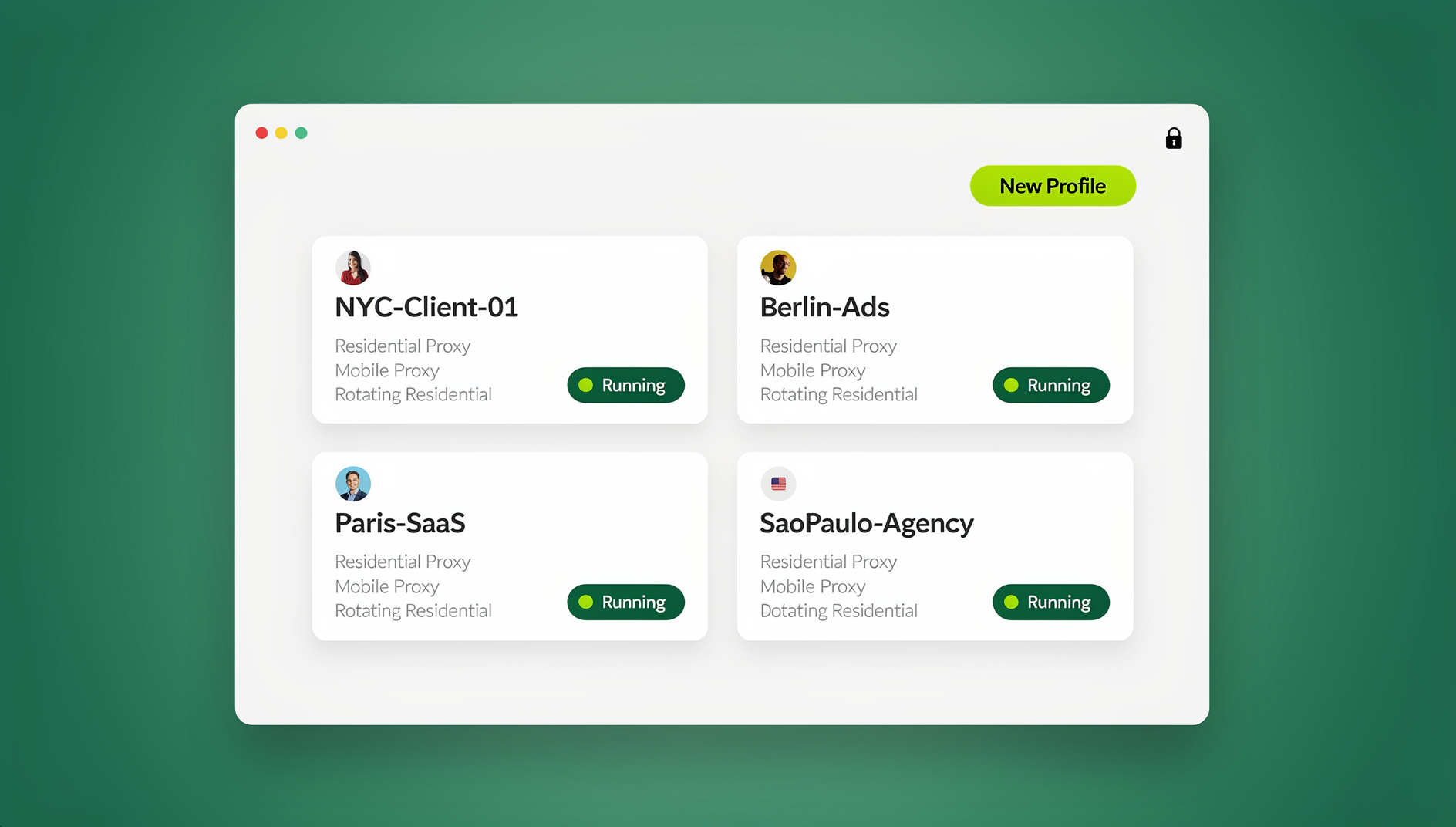
Send.win is a browser profile manager with a native desktop app for Windows, macOS and Linux, and it also offers a cloud browser that runs on Send.win’s servers in the EU. Its cloud browser sessions mode is a genuine online sandbox — you launch an isolated browser profile from your Send.win dashboard, and it runs entirely on Send.win’s servers. No local install. Each profile keeps its own consistent fingerprint, timezone, WebRTC configuration, and optional proxy. When you close it, the session state is either destroyed (if you want a disposable session) or saved to the cloud (if you need to resume later).
- Free tier: No free trial. Paid plans start at $19/month (Pro) or $49/month (Team), and the first card purchase is covered by a 7-day money-back guarantee. The only free option is the cloud demo at send.win/demo-browser/.
- Speed: Good — streaming quality is competitive with dedicated RBI tools.
- Features: Per-profile fingerprint isolation, proxy integration, session persistence (optional), up to 500 profiles on Team.
- Privacy: Each profile is fingerprint-isolated. Traffic exits through your configured proxy.
- Download required: No — cloud sessions run without the desktop app.
The differentiator here is depth. Most online sandboxes give you a throwaway browser with no identity controls. Send.win cloud sessions give you the full profile stack — per-profile fingerprints, proxy routing — running remotely. If your use case is more than “click a link safely” and extends to managing accounts, testing geo-locked content, or organising separate workflows, this is the option with the broadest feature set at $19/month (Pro) or $49/month (Team with 500 profiles).
4. Browserstack Live
Browserstack is a developer-centric platform primarily used for cross-browser testing. Its “Live” product gives you interactive browser sessions on real devices and real browsers — Chrome on Windows 11, Safari on macOS Ventura, Firefox on Ubuntu. You stream the session in your tab. No download required (though they do offer a local testing client for tunneling).
- Free tier: Free trial with limited minutes. No permanent free plan.
- Speed: Excellent — Browserstack invests heavily in low-latency infrastructure.
- Features: Real devices, responsive testing, DevTools access, localhost tunneling, screenshot/video capture.
- Privacy: Sessions are isolated. Enterprise security certifications (SOC 2).
- Download required: No for basic use. Optional local binary for tunnel testing.
Browserstack Live is overkill for casual sandbox use and priced accordingly ($29/month for the Live plan), but for developers who need to test across dozens of real browser/OS combinations without maintaining a device lab, it’s hard to beat.
5. Sandboxie-Plus (Local — Honorable Mention)
Sandboxie-Plus is technically a local sandbox, not an online one. We include it here because many people searching for “Sandboxie online” are looking for cloud alternatives after Sandboxie’s acquisition by Sophos and its transition to open-source. Sandboxie-Plus does require a download and runs only on Windows — it intercepts system calls to create an isolated container for any application, including browsers.
- Free tier: Fully free and open-source.
- Speed: Near-native (no streaming latency since it runs locally).
- Features: Full Windows application sandboxing, not just browsers. Snapshot/restore, resource access policies.
- Privacy: Everything stays local. No data leaves your machine.
- Download required: Yes — Windows only.
If you’re comfortable with a local install and need to sandbox applications beyond just a browser, Sandboxie-Plus is a solid, free option. But if you specifically want a browser sandbox online no download, keep reading — the comparison table below will help you pick the right cloud-based solution.
Comparison Table: Online Browser Sandboxes
| Feature | Browserling | Browser.lol | Send.win Cloud | Browserstack Live | Sandboxie-Plus |
|---|---|---|---|---|---|
| No download | ✅ Yes | ✅ Yes | ✅ Yes | ✅ Yes | ❌ Local install |
| Free tier | 3 min sessions | ~5 min sessions | No free trial; free cloud demo | Limited trial | Fully free |
| Session persistence | ❌ | ❌ | ✅ Optional | ❌ | ✅ Snapshots |
| Fingerprint isolation | ❌ | ❌ | ✅ Per-profile fingerprint | ❌ | ❌ |
| Proxy support | Paid only | ❌ | ✅ Built-in | ❌ | Manual config |
| Automation API | REST API (paid) | ❌ | ❌ | ✅ Selenium/Appium | ❌ |
| Multi-browser | ✅ 5 browsers | Chromium only | Chromium-based | ✅ All major + mobile | Any local browser |
| Starting price | $19/mo | Free | $6.99/mo (annual) | $29/mo | Free |
| Best for | Quick link checks | Throwaway browsing | Isolated multi-account work | Dev cross-browser testing | Local Windows sandboxing |
Use Cases: When Do You Need a Browser Sandbox Online?
Not every browsing task needs a sandbox. Here are the scenarios where an online, no-download sandbox genuinely adds value.
Run Browser Sandbox Online No Download in the Cloud With Send.win
Send.win’s cloud browser runs your isolated profiles on remote infrastructure — open a clean, fingerprint-isolated session from any device without installing anything:
- Instant cloud sessions – launch an isolated browser in seconds, no local install
- Isolated profiles – separate fingerprint, cookies, and storage per session
- Cloud sync & profile sharing – pick up the same profiles on the desktop app (Windows, macOS, Linux) or share them with your team
- Built-in residential proxies – with automatic timezone and locale matching
You can try it right now: the Send.win demo browser opens an isolated cloud session directly in this browser tab. The cloud demo is free, and paid plans start at $19/month — see pricing.
Testing Suspicious Links and Attachments
Someone sends you a link in an email or a Slack message that looks off. Instead of clicking it in your real browser — where malicious JavaScript could exploit a zero-day, drop a cookie tracker, or redirect you through a chain of malvertising domains — you paste it into a remote browser isolation sandbox. The page loads on a remote server. If it tries to deploy malware, it infects a container that’s destroyed in seconds. Your machine stays clean.
This is the single most common use case for online browser sandboxes, and for good reason. Security teams at companies use enterprise RBI solutions (Zscaler, Menlo Security) for exactly this purpose. The consumer-grade tools listed above provide the same core protection — execution happens remotely, not on your hardware.
Accessing Geo-Restricted Content
If a sandbox provider’s servers are in a different country, your browsing session exits from that country’s IP range. This is a lightweight alternative to a VPN for quick geo-checks — verifying that your ad campaign shows the right creative in Germany, checking if a competitor’s landing page differs by region, or accessing region-locked media. Send.win cloud sessions take this further by letting you assign a specific proxy per session, giving you precise control over the exit IP’s geography.
Privacy-Sensitive Browsing
Incognito mode doesn’t make you anonymous — it prevents local history storage, but your IP, browser fingerprint, and ISP-level traffic are all still visible. An online sandbox shifts the browsing to a different machine with a different fingerprint and a different IP. Combined with a clean session that starts with zero cookies and ends by deleting everything, it’s a meaningful step up from private/incognito mode for tasks where you don’t want activity linked back to your identity. For a broader perspective, our safe browsing guide covers additional layers of protection you can stack on top.
Development and QA Testing
Front-end developers need to test layouts, JavaScript behavior, and responsiveness across browsers and operating systems. An online sandbox eliminates the need to maintain local VMs for every OS/browser combination. Browserstack Live specializes here, but even simpler tools like Browserling let you quickly verify that a CSS fix renders correctly in Safari without owning a Mac.
Multi-Account Management Without Cross-Contamination
If you manage multiple social media accounts, e-commerce stores, or ad accounts, you need each session to be fingerprint-isolated — different cookies, different canvas hashes, different WebGL renderers. A basic online sandbox gives you a clean session each time, but it doesn’t let you maintain persistent, separated identities. This is where Send.win’s cloud browser sessions stand apart from the simpler tools: each profile has its own fingerprint configuration that persists across sessions, so you can log into Account A in Profile 1 and Account B in Profile 2 without any data leaking between them.
What to Look For in an Online Browser Sandbox
Not all online sandboxes are created equal. Here’s what separates a useful tool from a gimmick.
Session Length and Limits
Free tiers often cap sessions at 3-5 minutes. That’s fine for clicking a single link. It’s not fine for anything else. If your workflow involves more than a quick check, you’ll need a paid plan — so compare the per-minute or per-month cost across providers.
Browser and OS Options
Some tools only offer Chromium. Others let you choose between Chrome, Firefox, Safari, Edge, and even mobile browsers. If you need Safari testing but the provider only runs Chrome, it’s not the right tool.
Fingerprint Controls
Basic sandboxes give you a clean session. Advanced ones let you control the browser fingerprint — user agent, screen resolution, timezone, language, WebGL hash, canvas noise. If you’re doing anything related to account isolation or anti-fingerprinting research, this matters enormously.
Automation Support
Developers and QA teams often need to run automated test suites against sandbox sessions. Look for Selenium, Puppeteer, or Playwright integration. Send.win does not offer an automation interface — no API, SDK, headless mode or Selenium/Puppeteer/Playwright support on any plan — so it is not an option that combines sandbox isolation with automation capabilities.
Network and Proxy Configuration
Can you route the sandbox’s traffic through a specific proxy? Can you choose the exit IP’s country? For security testing and geo-verification, this is critical. Most basic sandboxes don’t offer proxy controls at all.
Online Sandbox vs. Local Sandbox: Which Is Better?
Neither is universally better. The right choice depends on your constraints.
| Criteria | Online Sandbox | Local Sandbox |
|---|---|---|
| Setup time | Seconds (open a URL) | Minutes to hours (install, configure) |
| Resource usage | Zero local resources | Uses local CPU/RAM |
| Latency | Network-dependent (streaming lag) | Near-native speed |
| Offline use | ❌ Requires internet | ✅ Works offline |
| Data control | Data passes through provider’s servers | All data stays local |
| Configurability | Limited to provider’s options | Full control over environment |
| Cost | Free tiers available; paid for heavy use | Free (open-source tools) or one-time purchase |
For most people, an online sandbox wins on convenience. You need it for one quick task — testing a link, checking a page layout, browsing without leaving traces — and you don’t want to install anything to do it. For power users who need offline access, custom networking rules, or application-level sandboxing beyond just browsers, a local tool like Sandboxie-Plus or a full VM is the better fit.
Security Considerations
Online sandboxes are not a magic shield. They shift risk, but they don’t eliminate it entirely.
Trust in the Provider
When you browse through an online sandbox, the provider can theoretically see everything you do — every URL, every keystroke, every page you load. You’re trading the risk of local infection for the risk of provider-side surveillance. Choose providers with clear privacy policies, and avoid entering sensitive credentials (banking, corporate logins) in free-tier sandbox sessions.
Clipboard and File Transfer Risks
Some sandbox tools let you copy-paste between the remote session and your local machine or download files from the sandbox. These bridging features reintroduce risk: a malicious file downloaded from the sandbox to your real machine defeats the purpose of isolation. Be deliberate about what you transfer out of a sandbox session.
Session Recording and Logging
Enterprise RBI solutions often log and record sessions for compliance. Consumer tools usually don’t, but check the terms of service. If you’re doing security research on malware, you probably don’t want the sandbox provider retaining screen recordings of your session.
Step-by-Step: Using an Online Sandbox for Safe Link Testing
Here’s a practical walkthrough for the most common use case — you received a suspicious link and want to check it without risking your own browser.
- Choose your tool. For a quick, free check, Browser.lol or Browserling’s free tier works. For more control (custom fingerprint, proxy routing), use Send.win cloud sessions.
- Open the sandbox. Navigate to the tool’s website. Start a new session. Wait for the remote browser to load — usually 5-15 seconds.
- Paste the suspicious URL. Enter it in the remote browser’s address bar, not your local one. The page loads on the provider’s server.
- Observe behavior. Watch for redirects, popup chains, or download prompts. If the page tries to download a file, let it download to the sandbox’s filesystem (which will be destroyed), not yours.
- Check the URL chain. Many phishing pages redirect through multiple domains. Note the final URL — is it mimicking a legitimate service? Does the SSL certificate match?
- Close the session. When you’re done, close the sandbox tab. The session, its cookies, its cache, and any downloaded files are destroyed automatically.
- Report if malicious. If the link was a phishing attempt or malware delivery, report it to your IT team, the impersonated service, or Google Safe Browsing.
This entire process takes under a minute and costs nothing on free tiers. Compare that to the hours you’d spend cleaning a malware infection if you clicked the link in your real browser.
🏆 Send.win Verdict
If all you need is a quick, disposable browser to test a link, the free tools on this list get the job done. But if you need persistent, fingerprint-isolated profiles that you can access from any device without installing software — for multi-account management or geo-testing — Send.win’s cloud browser sessions deliver per-profile isolation at a fraction of what enterprise RBI tools charge. Pro starts at $19/month, includes 150 profiles and 5GB proxy bandwidth.
Try the Send.win cloud demo — a 3-minute preview without signup, 10 minutes a day with a free account, no download required for cloud sessions.
Frequently Asked Questions
Is a browser sandbox online actually safe?
Yes, for most use cases. The browsing happens on a remote server, so malware, trackers, and exploits affect the sandbox container — not your machine. The main risk is trusting the provider with your browsing data. Avoid entering sensitive passwords in free-tier sandboxes, and choose providers with transparent privacy policies.
Can I use an online browser sandbox without creating an account?
Some tools allow it. Browser.lol and Browserling’s free tier don’t require account creation for basic sessions. Send.win requires a free account to access cloud browser sessions (which unlocks profile persistence and fingerprint configuration). Browserstack requires an account even for trial use.
What’s the difference between a browser sandbox and remote browser isolation?
They overlap heavily. “Browser sandbox” usually refers to a single isolated session for personal use. “Remote browser isolation” (RBI) is the enterprise version — deployed organization-wide, with policy controls, logging, and compliance features. The underlying technology (remote execution, streaming output to the user) is essentially the same. Our RBI guide covers the enterprise angle in depth.
Do online browser sandboxes protect against phishing?
They protect your machine from technical exploits (drive-by downloads, malicious JavaScript), but they can’t stop you from entering your credentials into a fake login page. A sandbox renders the phishing page safely — it just can’t prevent human error. Always verify the URL and SSL certificate before entering any credentials, even in a sandbox.
Can I install browser extensions in an online sandbox?
It depends on the tool. Most basic sandboxes (Browserling, Browser.lol) don’t support extensions. Send.win cloud sessions run full Chromium profiles, so extension support depends on the profile configuration. Browserstack Live allows extensions in some configurations. Generally, the simpler and more disposable the sandbox, the fewer customizations it supports.
Are free online browser sandboxes good enough for development testing?
For a quick visual check — yes. For systematic QA testing across multiple browsers and OS versions, free tiers are too limited (3-5 minute sessions, restricted browser versions). Development teams typically need Browserstack Live or a similar paid tool with automation support, DevTools access, and real device coverage.
How is Send.win different from Browserling or Browser.lol?
Browserling and Browser.lol are disposable — each session starts blank and is destroyed when you close it. Send.win cloud sessions can be disposable too, but they also support persistent profiles with per-profile fingerprints and proxy routing. This makes Send.win better suited for ongoing workflows (multi-account management, geo-testing) while Browserling and Browser.lol are better for one-off quick checks.
Do I need a VPN if I use an online browser sandbox?
Not necessarily. The sandbox already shifts your browsing to a different IP (the provider’s server). If you need a specific exit country, some sandboxes (like Send.win) let you configure a proxy per session, which is more precise than a VPN. A VPN protects your connection to the sandbox itself — useful on untrusted networks (public Wi-Fi), but redundant for the sandboxed browsing traffic.