A virtual browser is a browsing environment that runs separately from your computer’s main operating system, either inside a virtual machine, a container, or on a remote cloud server that streams the session to your screen. It isolates cookies, cache, and device fingerprints from your real machine, which is why security teams, agencies, and multi-account operators use one instead of a normal Chrome window. Send.win delivers this through a native desktop app with encrypted cloud sync, or through fully cloud-hosted sessions that need zero local install.
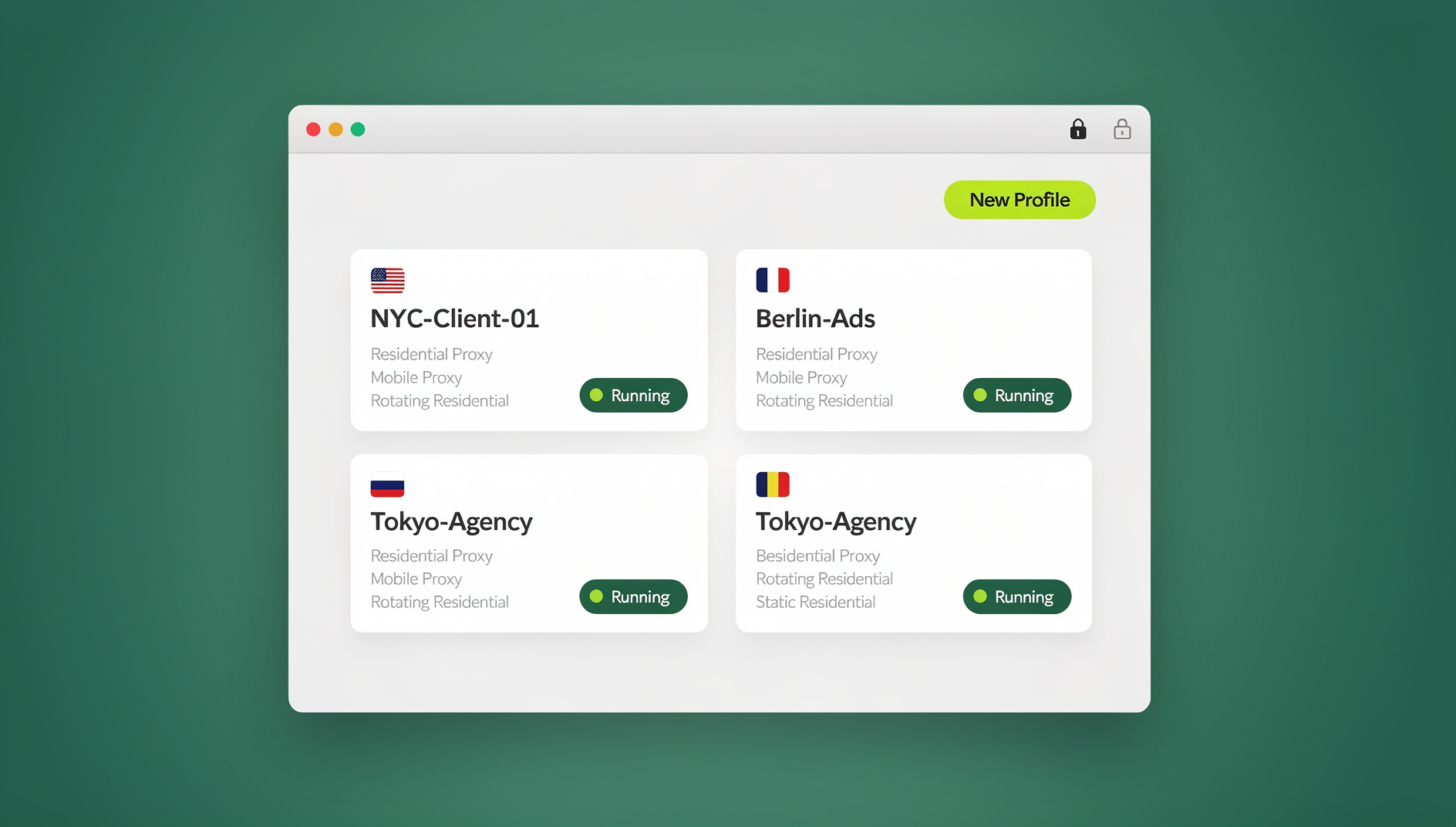
What Is a Virtual Browser?
A virtual browser separates the act of browsing from the hardware you are sitting in front of. Instead of Chrome or Firefox talking directly to your operating system, a virtual browser runs inside an isolated layer — a virtual machine, a container, or a remote server — and only the visual output (or a synced local instance) reaches your screen.
That separation matters because a normal browser shares almost everything with your host system: your IP address, your GPU and font rendering signature, your installed plugins, your clock and locale, and every cookie a site has ever dropped on you. A virtual browser gives each session its own identity for all of that, so websites see a consistent, isolated environment rather than a window into your real machine.
Types of Virtual Browser Solutions
Not all virtual browsers are built the same way. Each approach trades off setup complexity, resource cost, and isolation quality differently.
1. Virtual Machine Browsers
This is the original approach: install VMware, VirtualBox, or Parallels, spin up a full Windows or Linux guest OS, and run a browser inside it.
- Advantages: complete OS-level isolation, full control over the environment, snapshot and rollback capability.
- Disadvantages: heavy RAM and CPU usage (2–4GB per VM minimum), slow to spin up, licensing costs for Windows guests, and real performance overhead.
2. Cloud Virtual Browsers
The browser itself executes on a remote server; your device only receives a video stream of the rendered page and sends back clicks and keystrokes.
- Advantages: zero local resource consumption, works from any device, instant setup, scales to as many sessions as you need.
- Disadvantages: needs a stable internet connection, runs on a subscription, and can introduce latency if the streaming pipeline is poorly optimized.
3. Container-Based Browsers
Docker or LXC containers give each browser instance its own isolated process while sharing the host kernel.
- Advantages: lighter than a full VM, fast startup, efficient resource use.
- Disadvantages: requires technical setup, mostly Linux-oriented, and offers less isolation than a full VM or a dedicated cloud session.
4. Browser Profile Isolation
Chrome profiles, Firefox Multi-Account Containers, and Edge profiles are the free, built-in way to keep sessions apart.
- Advantages: free, easy, no performance overhead.
- Disadvantages: limited isolation — every profile still shares the same IP address and device fingerprint, so it is not enough for serious multi-account work. For a deeper look at how sites actually detect this, see this guide to browser fingerprinting protection.
Why Use a Virtual Browser?
Security Benefits
Because the browsing session is contained, malicious sites and browser exploits can’t reach your real operating system. That makes a virtual browser a safe way to open unfamiliar links, test suspicious downloads, or investigate phishing pages without risking your main machine. Disposable, throwaway sessions also limit the blast radius of a zero-day exploit — close the session and the risk goes with it.
Privacy Advantages
A virtual browser hides your real IP address and gives each session its own device fingerprint, so tracking scripts can’t correlate your activity across sessions the way they would in a single shared browser. This also keeps personal and work browsing fully separate — no shared cookies, no cross-contaminated login state, no accidental leaks between identities.
Multi-Account Management
Platforms link accounts by comparing IP addresses, device fingerprints, and cookies across logins. A properly isolated multi-account browser setup gives every account its own consistent fingerprint and IP, so you can run dozens of profiles on the same platform without them getting flagged as related.
Testing and QA
Developers use virtual browsers to reproduce bugs in a clean state, test how a site behaves for a first-time visitor, or QA a build across different locales and screen sizes without polluting their day-to-day browser profile.
How Send.win Handles Virtual Browsing
Send.win doesn’t force you into one architecture — it offers two ways to run an isolated browser, depending on what the job needs.
The first is Sendwin Browser, a native desktop app for Windows, macOS, and Linux. It’s local-first: the browser actually runs on your machine, so there’s no streaming latency, but your profiles, cookies, and settings sync through encrypted cloud storage, so you can pick up the same session on a different computer without losing state. Because it’s a real local browser, it also supports session isolation the way a proper antidetect tool should — each profile keeps its own canvas, WebGL, audio, and font fingerprint, along with independent cookies and storage. For a broader comparison of how this holds up against other tools in the category, this rundown of best antidetect browsers is worth a read.
The second option is a cloud browser session: a browser that runs entirely on Send.win’s cloud infrastructure and streams to whatever device you’re using, with zero local install. This is metered by cloud browsing time rather than a flat monthly cap on sessions, which makes it a good fit for occasional or high-scale use where you don’t want a heavy local footprint at all — agencies spinning up temporary sessions for clients, for instance, or teams that need to access accounts from a shared or low-powered device.
Both modes plug into proxy assignment per profile (residential or datacenter, with sticky sessions for consistency), and both benefit from consistent session isolation so that cookies, storage, and fingerprint data never bleed between profiles. For teams that need to script repetitive workflows, Send.win also offers an Automation API starting on the Pro plan: it lets you drive the desktop app locally with standard tools like Selenium, Puppeteer, or Playwright, so existing automation scripts can target an isolated Send.win profile the same way they’d target any other local Chromium instance.
Virtual Browser Approaches Compared
| Feature | VM-Based | Browser Profiles | Send.win |
|---|---|---|---|
| Setup complexity | High | Low | Very low |
| Local resource usage | Heavy (GBs of RAM per instance) | Low | None (cloud) / native (desktop app) |
| Fingerprint isolation | Complete but manual | None | Per-profile, automatic |
| Cross-device access | No | No | Yes, via encrypted sync |
| Automation support | Manual scripting only | Manual scripting only | Automation API (Pro plan and up) |
| Starting price | Free – $100+ in licenses | Free | Free 30-day trial, then $19/mo |
Virtual Browser Use Cases
1. E-Commerce Multi-Store Management
Sellers running multiple Amazon, eBay, Etsy, or Shopify storefronts need each store logged in separately, with no shared IP or fingerprint that could link the accounts together and trigger a suspension.
2. Social Media and Agency Work
Agencies managing Facebook Business Manager, Instagram, TikTok, and LinkedIn accounts for multiple clients rely on virtual browsers to keep every client’s login, cookies, and posting activity fully separate from the others.
3. Advertising Account Management
Running Google Ads, Facebook Ads, or TikTok Ads across several manager accounts in one physical browser is a fast way to get accounts linked and suspended together. Isolated sessions keep each ad account’s activity independent.
4. Web Scraping and Automation
Parallel scraping jobs and scripted workflows benefit from running each job in its own isolated session with its own proxy, so rate limits and blocks on one session don’t take down the rest of the operation. This is where the Automation API pairs well with local Selenium, Puppeteer, or Playwright scripts.
5. Privacy-Focused Research
Journalists, researchers, and security analysts use virtual browsers to browse sensitive topics or investigate suspicious sites without exposing their real IP address or device fingerprint.
Best Practices for Using Virtual Browsers
- Organize by purpose. Use descriptive names (“Amazon – Electronics Store”) and group related profiles so you’re not guessing which session is which.
- Match configuration to purpose. Social accounts want residential proxies and persistent sessions; scraping wants rotating proxies; one-off research wants a disposable session you can throw away afterward.
- Keep proxy geography consistent. Proxy location, browser timezone, and account registration details should all point to the same place — mismatches are one of the fastest ways to get flagged.
- Do regular maintenance. Delete unused profiles, clear caches you don’t need, and periodically review which proxies are still assigned where.
- Practice basic security hygiene. Unique passwords per account, two-factor authentication where it’s available, and a password manager instead of a shared notes file.
Common Virtual Browser Mistakes
Underestimating VM resource needs. Running several VM-based browsers at once can eat 2–4GB of RAM each, which quickly overwhelms a normal laptop.
Reusing credentials across profiles. Even perfect fingerprint isolation won’t stop a platform from linking two accounts that share the same recovery email or phone number.
Cheap or shared proxies. Free VPNs and low-quality datacenter proxies get flagged almost immediately by major platforms — the isolation only holds up if the network layer holds up too.
Ignoring browser updates. An outdated browser engine inside a virtual environment is still a security liability, even if the environment itself is isolated.
🏆 Send.win Verdict
If you need isolation without babysitting virtual machines, Send.win is the practical middle ground: a native desktop app with encrypted cloud sync for when you want a fast local browser with real fingerprint isolation, and zero-install cloud sessions for when you’d rather not touch local resources at all. Add proxy support, per-profile fingerprints, and an Automation API on the Pro plan, and it covers everything from a solo seller running three storefronts to an agency juggling client ad accounts.
Try Send.win free today — start your 30-day trial, no credit card required.
Frequently Asked Questions
What’s the difference between a virtual browser and a VPN?
A VPN only changes your visible IP address. A virtual browser goes further, isolating your device fingerprint, cookies, and session data as well. Combining a proxy with an isolated browser session covers both layers at once.
Can I use a virtual browser on mobile devices?
Cloud-based virtual browser sessions can be accessed from a phone or tablet through a web interface, since the actual browsing happens on the server. A native desktop app like Sendwin Browser is designed for Windows, macOS, and Linux rather than mobile.
How many virtual browser profiles can I run at once?
With a VM-based approach you’re limited by RAM, typically five to ten instances on a normal machine. Cloud-based sessions aren’t bound by your local hardware, so the practical limit is whatever your plan allows — Send.win’s Pro plan supports 150 profiles, and Team supports 500.
Does a virtual browser slow down normal browsing?
VM-based setups add real overhead. Cloud-streamed sessions add a small amount of latency depending on your connection, though a well-optimized streaming pipeline keeps this close to unnoticeable. A native desktop app avoids the streaming step entirely since the browser runs locally.
Is a virtual browser legal to use?
Yes, the technology itself is legal. What can get you in trouble is using it to violate a specific platform’s terms of service, which is a contractual issue with that platform rather than a legal one.
Does Send.win offer a free trial?
Yes. Send.win includes a 30-day free trial with no credit card required, so you can test both the desktop app and cloud sessions before choosing between the Pro plan ($19/mo, or $6.99/mo billed annually) and the Team plan ($49/mo, or $20.99/mo billed annually).
Do I need the Automation API to use Send.win with Selenium or Playwright?
You need at least the Pro plan, which includes the Automation API for driving the desktop app locally with tools like Selenium, Puppeteer, or Playwright. It’s not restricted to the Team plan.
What’s the difference between browser profiles and a true virtual browser?
Chrome or Edge profiles keep bookmarks and logins separate, but every profile still shares the same IP address and device fingerprint. A true virtual browser isolates the fingerprint and network signature too, which is the difference that actually matters to platforms trying to detect linked accounts.