To find the best remote browser isolation solutions, you must choose between pixel-streaming security, DOM reconstruction, or containerized browsing. Today’s leading options range from enterprise SASE platforms like Zscaler and Cloudflare to highly accessible multi-profile options like Send.win. By executing code on a remote server, these solutions keep malicious web threats completely off local endpoints.

The Evolution of Web Security and the Rise of Web Isolation
For several decades, cybersecurity strategies relied almost entirely on threat detection. Secure web gateways, antivirus software, and URL filtering tools attempted to categorize the entire internet into safe and unsafe zones. While this approach worked in the early days of the web, it has proven increasingly inadequate against modern cyber threats. Today, attackers deploy highly sophisticated, polymorphic malware, zero-day exploits, and dynamic phishing pages that can bypass signature-based and heuristic detection mechanisms in seconds. A single click on a compromised link can execute malicious code in the background of a user’s browser, leading to session hijacking, credential theft, or ransomware deployment.
This fundamental vulnerability in traditional security paradigms led to the development of browser isolation. Instead of trying to detect whether a web page is safe, browser isolation assumes that all web content is inherently untrusted. By running the browsing session inside a secure, containerized sandbox on a remote cloud server, organizations can prevent web-borne threats from ever reaching the local device. If a user visits a malicious website, the script executes entirely within the remote container. When the session is closed, the container is destroyed along with any malware it contained. In 2026, selecting the best remote browser isolation solutions is no longer just an optional safeguard; it is a core component of a modern zero-trust architecture.
Furthermore, traditional firewalls are blind to many types of web-based attacks, such as scripts executed inside legitimate SaaS platforms or third-party widgets. Antivirus tools are reactive; they cannot protect against zero-day browser vulnerabilities until a patch is released and deployed across all corporate endpoints. Web isolation bypasses this entire race by decoupling content execution from content display. This shift represents a major milestone in enterprise defense, turning security from a game of constant patching into a structure of absolute isolation.
Understanding the Three Technical Models of Web Isolation
When evaluating different solutions, it is crucial to understand the technical architecture they employ. The model chosen will directly impact security, network bandwidth, and the user experience. The three primary methods of implementing this technology are described below.
1. Pixel-Based Streaming (Video-Based Isolation)
In a pixel-streaming architecture, the web page renders entirely on a remote server, and only a visual representation—essentially a stream of images or video frames—is transmitted to the user’s browser. The local browser receives no HTML, CSS, or JavaScript code from the target website.
- Security Level: Absolute. Since zero active code from the website reaches the local machine, there is no vector for web-based malware to exploit the endpoint.
- Performance Impact: High latency. Typing, scrolling, and playing media can feel sluggish because every action requires a round-trip to the remote server to render new pixels.
- Bandwidth Consumption: Very high. Streaming interactive high-definition video consumes substantial network resources, which can strain local connections.
Pixel streaming is highly valued in isolated environments, such as banking terminals or military networks. However, for everyday office environments, users often find the visual lag frustrating, especially when dealing with interactive web tools or complex workflows.
2. DOM Reconstruction (Content Sanitization)
DOM reconstruction runs the website on a remote server, analyzes the Document Object Model (DOM), strips away active scripts, media files, and style overrides that could contain hidden threats, and then builds a sanitized version of the page. This cleaned code is sent to the local browser to render.
- Security Level: Very high. While highly effective at blocking common scripts, it is theoretically possible for an extremely advanced exploit to slip through the sanitization engine.
- Performance Impact: Low. Because the local browser renders standard HTML, the browsing experience feels native, responsive, and fast.
- Bandwidth Consumption: Low. It uses roughly the same amount of data as standard web browsing, making it highly efficient.
Because the local browser still handles basic structure and rendering, the user experience is almost identical to standard web surfing. This makes DOM reconstruction the preferred model for enterprise-wide deployments where worker productivity is a key performance indicator.
3. Remote Container-Based Browser Sessions
This model spins up a full web browser instance inside a secure virtual container, such as a docker browser, on a cloud infrastructure or isolated host. This approach is designed to keep separate browsing contexts entirely isolated from one another, protecting user identities and session data.
- Security Level: Strong. If a website is compromised or attempts an attack, the container is quarantined and destroyed, protecting other sessions.
- Performance Impact: Native. It runs a full browser instance, ensuring maximum compatibility with complex web applications.
- Bandwidth Consumption: Moderate. The bandwidth depends on whether the browser is run locally or in the cloud.
By virtualizing the browser profile rather than just filtering code, containerized solutions provide a versatile environment for developers, security researchers, and teams that need to maintain multiple separate logins on the same web platform without data cross-contamination.
Critical Routing and Infrastructure Setup
To implement these platforms effectively, organizations must pay close attention to network architecture and routing policies. Simply running a remote browser is not enough if all users share a single, static IP address, as this creates a massive tracking footprint and leads to frequent blocks. A proper proxy browser setup is essential to assign unique, geographically accurate IP addresses to each isolated profile. This is particularly important for remote workforces, where employees must access corporate systems from different parts of the world without triggering security flags or location mismatches.
Additionally, understanding the underlying browser isolation technology helps administrators choose between clientless models that run inside a standard browser tab and native desktop apps. While clientless models require zero setup, native desktop clients often provide better integration with local hardware and custom network protocols, creating a more robust layer of protection.
For example, routing through high-quality residential proxies ensures that isolated sessions look like legitimate home users. If a session is established on a cloud server located in Virginia, but the user is representing a transaction in London, routing that cloud container’s outbound traffic through a London proxy is vital. Without this geolocation alignment, modern fraud-detection systems on major websites will instantly flag and restrict the session, undermining the operational benefits of the isolation technology.
The Top Remote Browser Isolation Solutions Reviewed
In 2026, the marketplace for web isolation tools is divided between enterprise security suites and agile multi-account platforms. Below is an in-depth review of the top solutions.
1. Zscaler Cloud Browser Isolation
Zscaler is a dominant player in the enterprise security space, and its browser isolation tool is integrated directly into the Zscaler Zero Trust Exchange. This makes it an ideal fit for large corporations looking to add web isolation to their existing secure web gateway.
Zscaler executes web pages in an isolated cloud container and uses pixel streaming to send the visual output to the client. Its integration with enterprise threat feeds is seamless, allowing risky URLs to be isolated automatically. Its main features include strong copy/paste controls, file download sanitization, and detailed log analysis. However, the platform is complex to deploy, requires a broader enterprise subscription, and does not offer standalone pricing, making it impractical for smaller teams or individual operators.
2. Cloudflare Browser Isolation
Cloudflare leverages its massive global network to offer low-latency browser isolation through a technique called network vector rendering (NVR). Instead of streaming pixels as video frames, NVR streams the draw commands of the page, which the local browser executes in a safe environment.
Because Cloudflare has data centers in hundreds of cities worldwide, the latency is significantly lower than traditional pixel-streaming tools. It integrates cleanly with the Cloudflare Zero Trust dashboard, making it simple to enforce security policies across a distributed workforce. The main limitation is that it requires joining the Cloudflare ecosystem, and some highly interactive web apps can occasionally suffer from rendering glitches.
3. Menlo Security Elastic Edge
Menlo Security was a pioneer in the isolation-first approach. Its platform operates on the principal that all content is malicious until proven otherwise, isolating all active content by default.
Menlo is highly regarded for its transparent user experience and excellent compatibility with complex SaaS applications. It offers powerful data loss prevention controls to prevent copying, pasting, and downloading. It reconstructs the DOM dynamically, stripping malicious payloads while preserving standard layout behaviors. However, Menlo is strictly an enterprise-level tool with custom sales pricing, meaning it is not suitable for startups or independent users who need instant setup.
4. Kasm Workspaces
Kasm Workspaces takes a containerized approach by streaming full desktop environments and web browsers inside Docker containers. It is highly customizable and can be self-hosted on private servers or run via Kasm’s cloud service.
The open-source community edition makes Kasm highly popular among developers and IT hobbyists. It offers complete data sovereignty for organizations that must keep their data on-premises for regulatory compliance. The trade-off is the operational overhead: setting up, scaling, and maintaining the Kubernetes or Docker infrastructure requires dedicated technical expertise and physical server resources.
5. Send.win Cloud Browser Sessions
Send.win provides a modern, user-friendly alternative to heavy enterprise suites. Instead of focusing solely on corporate network security, Send.win combines cloud-based browser isolation with multi-account management and team collaboration features.
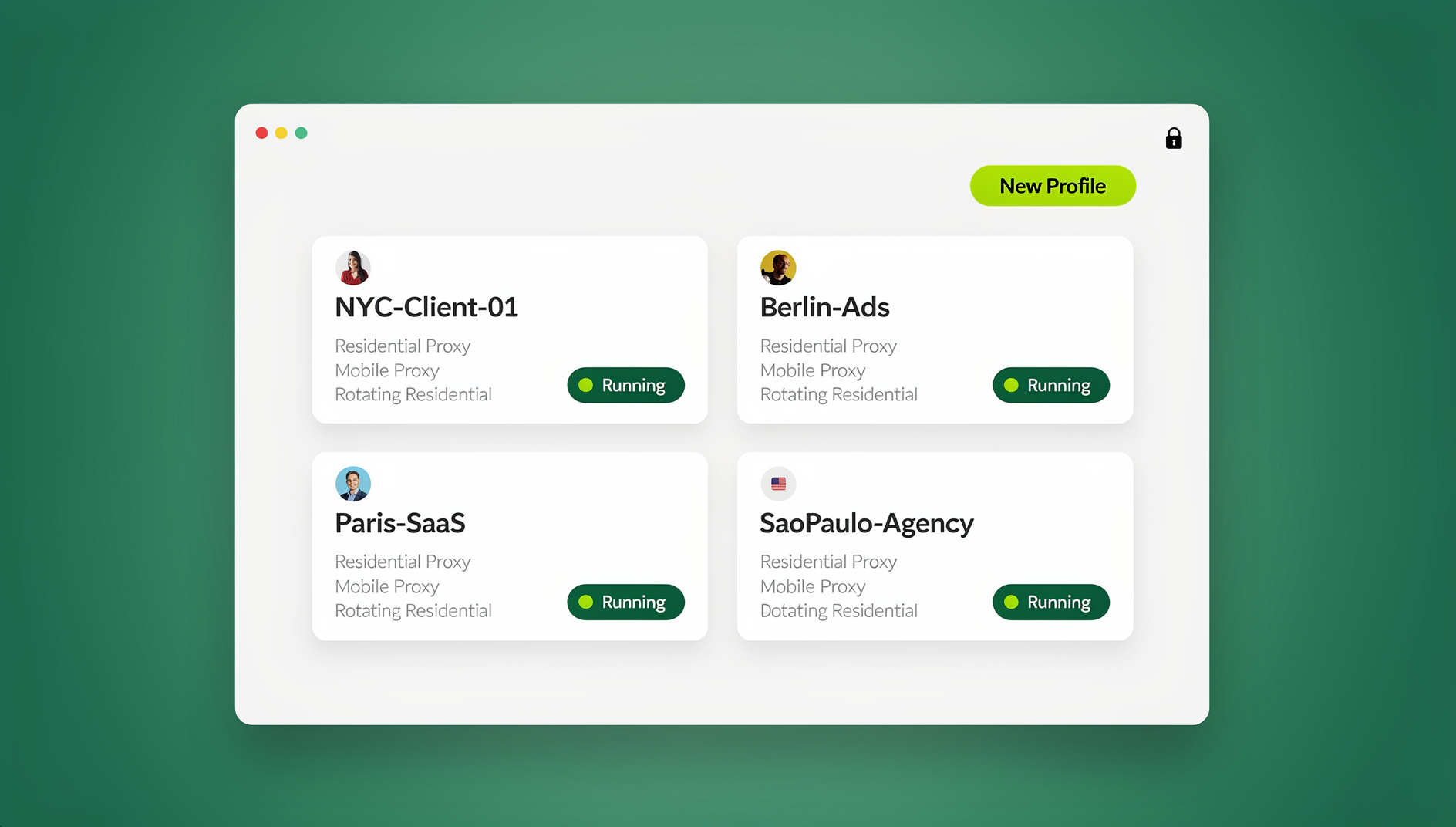
Users can launch isolated browser sessions in the cloud instantly without any complex local setup. Every profile is containerized, meaning cookies, storage, and fingerprints are completely separated. This setup is highly valued by marketing agencies, e-commerce sellers, and teams that need to access multiple online accounts securely, with each profile keeping its own separate cookies, storage and fingerprint. By avoiding the heavy hardware requirements of local tools, Send.win allows users to run hundreds of isolated profiles from any basic device.
Feature Comparison Matrix: Finding the Best Fit
To help you choose the right platform, the table below outlines the core characteristics of each solution:
| Platform | Isolation Model | Target Audience | Deployment Options | Free Option |
|---|---|---|---|---|
| Zscaler | Pixel Streaming | Large Enterprise | Fully Cloud-Managed | No |
| Cloudflare | Vector Rendering | Developers & SMBs | Cloud Edge Network | Limited Tier |
| Menlo Security | DOM Reconstruction | Enterprise | Cloud or Hybrid | No |
| Kasm Workspaces | Docker Containers | Devs & IT Teams | Self-Hosted / Cloud | Community Edition |
| Send.win | Cloud Containers | Agencies & SMBs | Cloud / Desktop Client | No free trial; 7-day money-back guarantee on first card purchase |
Protecting Sensitive Data with Data Loss Prevention
Security is not just about keeping external threats out; it is also about keeping proprietary information in. The best remote browser isolation solutions incorporate powerful Data Loss Prevention (DLP) policies to manage user actions within isolated sessions. Administrators can block actions like copying text, downloading files, uploading attachments, or printing web pages. This is highly effective at preventing employees from uploading confidential data to public artificial intelligence models or downloading client files onto personal machines.
When combined with an application isolation strategy, DLP controls provide a secure environment where users can perform their work without exposing sensitive corporate databases to risk. This ensures regulatory compliance and protects corporate assets, even in modern remote-first or bring-your-own-device (BYOD) work environments.
For instance, an agency worker handling a client’s advertising account might need access to custom creatives but should not be allowed to download raw client lists containing email addresses and physical locations. By setting a granular policy inside the isolated session, the administrator can permit image uploads while blocking all spreadsheet downloads. This fine-tuned control is incredibly difficult to achieve on standard browsers without installing invasive endpoint agent software on the employee’s machine, making remote web isolation the perfect alternative.
Pricing and Access: Comparing Enterprise and Agile Systems
The cost of implementing browser isolation varies dramatically depending on the scale and complexity of the platform. Enterprise platforms require custom sales agreements, multi-year commitments, and extensive setup periods, which can cost thousands of dollars annually. These systems are designed for large IT departments with dedicated security budgets.
For businesses seeking clear, affordable pricing with zero setup delays, Send.win offers a highly accessible model:
– Paid Plans: There is no free trial. The Pro plan is $19 per month (or $83.88 per year), and the Team plan is $49 per month (or $251.88 per year). The first card purchase is covered by a 7-day money-back guarantee.
– Free Cloud Demo: A 3-minute preview of the cloud browser is available without signup, and 10 minutes a day with a free account.
– Pro Plan: Billed at $19 per month (or $83.88 per year), supporting up to 150 profiles and 5GB of proxy bandwidth.
– Team Plan: Billed at $49 per month (or $251.88 per year), offering 500 profiles, 20GB of proxy bandwidth, and 16 team seats.
This flexible model makes secure browser isolation accessible to startups, small businesses, and agencies that cannot afford the high licensing costs of enterprise SASE vendors.
🏆 Send.win Verdict
Selecting the best remote browser isolation solutions depends on your technical needs and organizational budget. While Zscaler and Menlo Security are powerful options for massive corporations with complex firewalls, Send.win provides a modern, fast, and cost-effective alternative for agile teams. With Send.win, you can run isolated browser sessions inside the native Sendwin Browser desktop client or through zero-install cloud sessions, starting at just $6.99/mo on annual plans.
Try Send.win today — paid plans start at $19/mo, with a 7-day money-back guarantee on your first card purchase.
Frequently Asked Questions
What is the main benefit of using the best remote browser isolation solutions?
The main benefit is absolute endpoint protection. By executing untrusted web code on a remote server, browser isolation ensures that malware, drive-by downloads, and browser exploits never execute on the user’s local device, preventing data breaches and device compromises.
Does remote browser isolation slow down internet browsing?
It depends on the technical model. Pixel-streaming solutions can introduce noticeable latency because all interactions must travel to the server and back. DOM reconstruction and advanced vector rendering tools, like Send.win and Cloudflare, minimize this latency to deliver near-native speeds.
How does browser isolation protect against phishing attacks?
Browser isolation protects users by rendering phishing pages in a secure container. Many platforms allow administrators to set these pages to read-only mode, which prevents users from typing sensitive credentials into malicious forms, thereby preventing credential theft.
Do I need to install software to use remote browser isolation?
No, many modern platforms are clientless and run directly in a standard web browser. Send.win offers both options: a lightweight desktop client for local-first performance and cloud browser sessions that run entirely in the cloud with no local installation required.
What is the difference between a VPN and browser isolation?
A VPN only encrypts network traffic between your device and a secure gateway; it does not stop malicious scripts from running once they reach your browser. Browser isolation executes all web scripts on a remote server, ensuring that malicious code never executes locally.
Can browser isolation prevent malware and ransomware?
Yes. Because the active web code runs inside a virtual container on a remote server rather than on the local device, any malware or ransomware attempting to install itself is contained within the remote sandbox and destroyed at the end of the session.
Is remote browser isolation suitable for small business teams?
Yes. While early enterprise platforms were too expensive and complex for small businesses, modern platforms like Send.win provide affordable, zero-install plans starting at just $19 per month, allowing small teams to benefit from the same security standards as large enterprises.