What are the best Browserbase alternatives right now?
Browserbase alternatives split into three groups: managed cloud browsers billed per browser hour (Steel, Hyperbrowser, Browserless), self-hosted open-source stacks (Skyvern, Crawl4AI, Browser Use, Lightpanda), and anti-detect browsers for accounts that stay logged in for months (Send.win). Which group fits comes down to one question: is your job a one-off scrape, or 40 profiles that must keep looking like 40 different people? Below are the prices, concurrency limits and session caps for each, plus the trade-offs vendor pages leave out.

📌 TL;DR Executive Summary
- Core Takeaway: Browserbase bills per browser hour — $20/month for 100 hours on Developer, $99/month for 500 on Startup, with overage at $0.12 and $0.10 per hour. Steel now bills the same unit at $0.10 and $0.08 after its June 2026 repricing. Self-hosted options drop metering altogether.
- Key Risk/Challenge: Stealth depth is plan-gated — Basic starts on Developer, Advanced is Enterprise-only, and the Free tier includes no CAPTCHA solving. Session caps of 15 minutes on entry tiers force you to build resumable jobs.
- Recommended Solution: Match the tool to the workload: hosted browsers for stateless agent jobs, self-hosted stacks for cost control, and Send.win when the accounts themselves are the asset — 30 days free, then Pro at $19/mo.
How Send.win Helps With Browserbase Alternatives
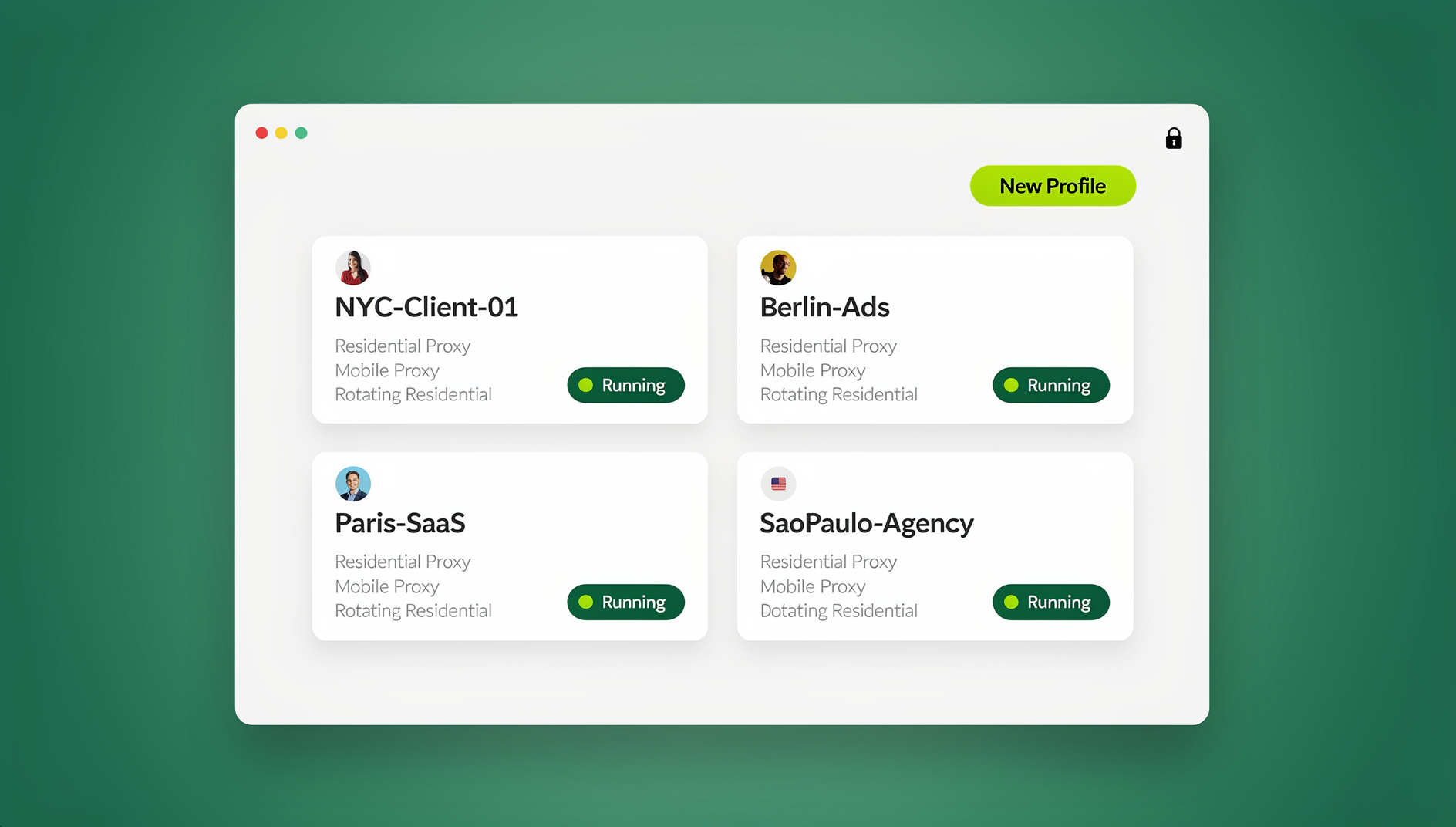
Send.win is an antidetect browser built for exactly this kind of work — every profile is a clean, isolated identity:
- Isolated profiles – unique fingerprint, separate cookies and storage per profile
- Stealth engine – canvas, WebGL, fonts, and audio spoofed at the engine level
- Desktop app + cloud sessions – native app for Windows, macOS, and Linux, or run profiles in the cloud with no install
- Built-in residential proxies – with automatic timezone, locale, and WebRTC matching
- Team features – share logged-in profiles with teammates without sharing passwords
Try the instant cloud browser demo — no install, no signup — or download the desktop app. The 30-day free trial needs no credit card, and paid plans start at $6.99/month billed annually (see pricing).
What Browserbase gives you for $20 to $99 a month
Browserbase runs managed headless Chromium that speaks Playwright, Puppeteer and Selenium, so most teams migrate without touching their framework. The Free tier gives 3 concurrent browsers, 1 browser hour and 15-minute sessions, and it includes no CAPTCHA solving. That is enough to evaluate the API, not to run production on.
Developer costs $20/month for 100 browser hours and 25 concurrent browsers. Startup costs $99/month for 500 hours and 100 concurrent browsers, with a session creation rate limit of 50 per minute. Advanced stealth and 250+ concurrency sit on Enterprise.
Two billing details matter. Allocations are not hard limits — Browserbase’s billing documentation describes browser hours and proxy bandwidth as monthly allowances with pay-as-you-go overage and no cut-offs, so a job that overruns keeps running and the invoice absorbs it. Hosted Functions are free on every plan.
Separate meters sit around the browser itself: Search at $7 per 1,000 requests, Fetch at $1 per 1,000 calls or $4 with proxies, and Extract at $4 per 1,000 calls or $7 with proxies. Managed Browserbase Agents, launched on June 30, 2026, cap at 50 runs per month on Startup.
Why teams start looking for Browserbase alternatives
The switch usually starts with a bill, not a bug. Browser hours bill time inside the session rather than work completed, so an agent that logs in, waits on a one-time code and retries twice spends most of its hour doing nothing.
- Billing unit mismatch. Short parallel jobs fit browser hours. Accounts that stay open all day do not, because idle time bills like clicking.
- Session caps shape architecture. A 15-minute cap forces checkpointing, and a run that dies at minute fourteen still pays for the retry.
- Stealth is plan-gated. Teams assume stealth is included, then find the tier that clears their target starts higher up the ladder.
- Proxies are a second meter. Browser time is quoted per hour while egress is quoted per GB, which makes forecasting awkward. The same trap sits in comparing residential proxy prices without knowing your real bandwidth burn.
- No self-hosting. Browserbase is managed only, so data-residency rules or tight cost predictability push teams toward open-source stacks.
Steel vs Browserbase after the June 2026 repricing
Steel replaced its Starter, Developer and Startups bundles with Launch, Scale and Enterprise in June 2026, moving anti-bot and CAPTCHA work off a subscription gate onto usage metering; existing customers keep legacy plans until they switch. Any comparison quoting $29, $99 or a $250 Scale tier predates that change.
Launch bills $0.10 per browser hour and $10 per GB of proxy traffic, with CAPTCHA solves at $3 per 1,000. Scale bills $0.08 per hour and $6 per GB, CAPTCHA solves at $1 per 1,000, dedicated IPs at $5/IP/month, and Browser Tools such as scrape, screenshot and PDF at $5 per 1,000 calls. Steel’s pricing documentation lists the full unit table.
Session limits differ sharply by tier: 15 minutes on Launch, 1 hour on Scale and up to 24 hours on Enterprise, with concurrency of 10, 100 and 1,000+ respectively. Launch includes a one-time $30 usage credit valid for 90 days and requires a $10 paid deposit before CAPTCHA solving works; Scale includes $100 in credits every month.
Where Steel beats Browserbase
The hourly rate is lower on both entry tiers, proxy bandwidth is cheaper per GB, and CAPTCHA pricing is published in units instead of gated behind an Enterprise conversation. Steel’s core is Apache 2.0, so the same code can run on your own hardware when a contract requires it.
Where Steel is weaker
There is no flat monthly entry price to budget against, so a quiet month is cheap and a busy one is not. Launch caps sessions at 15 minutes, tighter than long agent flows want, and the $10 deposit before CAPTCHA solving works is friction Browserbase does not impose at that point.
Hyperbrowser, Browserless and Bright Data compared
Hyperbrowser bills sessions at 100 credits per hour — about $0.10 — and proxy traffic at $10 per GB, with a free tier of 5,000 credits. Paid plans are reported at $30/month for Startup and $100/month for Scale, and the vendor advertises 10,000+ concurrent sessions and a 99.99% uptime SLA. Test both claims against your own fan-out before you plan around them.
Browserless runs a free tier of 1,000 units per month, paid plans from $25/month up to $350/month on Scale, and a Docker image for self-hosting. If your work is screenshots, PDFs and straightforward scraping rather than agentic decision loops, the unit model is easier to reason about. It publishes no anti-bot or CAPTCHA feature set, so pair it with your own proxy provider.
Bright Data’s Scraping Browser bundles automatic proxy rotation and CAPTCHA handling. Reported pricing appears once as from $9.5 per GB plus $0.10 per hour and once as from $3 per 1,000 requests — different models, so check the vendor page before you put either in a budget.
Open-source and self-hosted Browserbase alternatives
Self-hosting trades the hourly meter for CPU, memory, proxy bandwidth and maintenance time. That is the right trade when volume is steady and someone is on call, and the wrong one when volume spikes without warning.
- Skyvern drives pages with LLMs and computer vision instead of selectors, handles 2FA including TOTP codes and CAPTCHAs, and releases its core under AGPL-3.0. Its reported 85.8% WebVoyager score comes from vendor or aggregator testing, not an independent lab. Managed use is priced around $0.10 per page.
- Browser Use is a Python library that gives an agent real browser control: DOM access, clicking, typing, form filling and extraction from authenticated sessions. It is code-first, with no low-code UI.
- Crawl4AI is an async, self-hostable crawler with an official Docker deployment and no usage metering on the open-source version.
- Firecrawl returns Markdown, JSON or screenshots, ships SDKs for Python, Node.js, Go, Rust, Java and Elixir, and gives 1,000 pages per month free.
- Lightpanda is a headless engine written from scratch in Zig that claims 10x faster performance and 10x lower memory use than Chrome headless — worth testing on your own pages, since engine rewrites handle simple DOM work better than heavy JavaScript applications.
- Apify sits between the camps: a managed platform with more than 4,000 pre-built Actors, scheduling, storage, Playwright and Puppeteer support, a free tier and paid plans from $39/month.
Anti-bot depth and proxy quality: what price tables hide
Two tools can bill the same per browser hour and behave nothing alike on a defended site. What separates them is whether the stealth layer runs at the engine level or as injected scripts, whether the pool is residential or datacentre, and whether exit IPs are shared across customers.
Sites rarely fail you on one signal. They score the whole picture: TLS and HTTP/2 fingerprint, canvas and WebGL output, font lists, hardware, timezone and locale, and how well those agree with your proxy’s exit IP. A profile claiming Frankfurt while its proxy exits in Dallas is flagged long before anyone reads the user agent. That mechanism is behind how sites flag a proxy IP, and it is why the browser and the proxy cannot be bought separately and stitched together later without leaks.
Proxy bandwidth is the quiet cost centre on cloud platforms: Steel charges $10/GB on Launch and $6 on Scale, Hyperbrowser $10/GB. Image- and video-heavy jobs can burn more on egress than on browser hours, especially when retries re-download the same assets. Estimate bytes per successful job, multiply by your retry rate, and compare that with the hourly line.
Send.win vs Browserbase: different jobs, different billing units
Send.win is not a headless cloud API competing for the same job. It is a desktop anti-detect browser for Windows, macOS and Linux, plus a cloud browser that runs profiles on EU and US nodes from any device. The unit of work is a profile, not a session: a saved identity with its own fingerprint, cookies, proxy and logins that you reopen next week without signing in again.
That fits a specific workload: e-commerce sellers keeping storefront, supplier and ad accounts separate, media buyers running dozens of ad accounts, agencies handing a client’s profile to a teammate who opens it already signed in, social media managers running many brand accounts from one machine. When the problem is account survival rather than page extraction, the pricing question shifts from hours to identities.
Three mechanics decide the fit. The Stealth engine spoofs canvas, WebGL, audio, fonts and hardware at the engine level and keeps them coherent, so no two profiles share a fingerprint. Timezone, locale, WebRTC and geolocation follow the proxy’s exit IP automatically instead of being set by hand and drifting out of sync. And every plan ships built-in residential proxies rather than billing them as a separate product. The same criteria show up in how to choose an antidetect browser for multi-account work.
Where it does not compete: hosted Functions, Search, Fetch and Extract have no equivalent here, and the local Automation API is a Team-plan feature for Selenium, Puppeteer and Playwright, not a managed agent runtime. Pricing runs $19/month on Pro or $6.99/month billed annually ($83.88 per year), and $49/month on Team or $20.99/month billed annually ($251.88 per year), with the 30-day trial starting at $0.
What each alternative actually bills you for
| Tool / plan | Billing unit | Entry price | Overage, caps and add-ons |
|---|---|---|---|
| Browserbase Free | Browser hours | $0 | 3 concurrent, 1 hour, 15-min sessions, no CAPTCHA solving |
| Browserbase Developer | Browser hours | $20/mo (100 hours) | $0.12/hour, 25 concurrent, Basic stealth |
| Browserbase Startup | Browser hours | $99/mo (500 hours) | $0.10/hour, 100 concurrent, 50 session creations/min, 50 agent runs/mo |
| Browserbase APIs | Requests and calls | Separate meters | Search $7 per 1,000; Fetch $1 per 1,000 ($4 with proxies); Extract $4 per 1,000 ($7 with proxies) |
| Steel Launch | Hours + proxy GB | $0.10/hour, $10/GB | CAPTCHA $3 per 1,000; 15-min sessions; 10 concurrent; $30 credit for 90 days; $10 deposit for CAPTCHA |
| Steel Scale | Hours + proxy GB | $0.08/hour, $6/GB | CAPTCHA $1 per 1,000; Browser Tools $5 per 1,000; IPs $5/IP/mo; 1-hour sessions; 100 concurrent |
| Hyperbrowser | Credits | 5,000 free credits | 100 credits ($0.10) per browser hour; $10/GB proxy; paid tiers reported at $30/mo and $100/mo |
| Browserless | Units | Free 1,000 units/mo | Paid from $25/mo up to $350/mo on Scale; Docker self-hosting |
| Send.win Free trial | Nothing for 30 days | $0, card required | 10 profiles, 10 residential proxies, 1 GB/mo, unlimited local concurrency |
| Send.win Pro | Profiles + proxy GB | $19/mo, or $6.99/mo billed annually ($83.88/yr) | 150 profiles, 20 proxies, 5 GB/mo; $6/GB and $0.05/profile add-ons |
| Send.win Team | Profiles + proxy GB | $49/mo, or $20.99/mo billed annually ($251.88/yr) | 500 profiles, 20 GB/mo, Automation API (local), 16 seats; same add-ons |
Read the units before the totals. Browser hours, credits, units and pages are not convertible, and the cheaper-looking month can cost more per completed job. The fair comparison is cost per successful outcome on your own workload: per 1,000 pages extracted, per 1,000 accounts checked, per order placed.
Moving a Playwright script off Browserbase
Migration is less work than it sounds, because these platforms all speak the Chrome DevTools Protocol. You keep your Playwright code and swap the endpoint: a hosted provider hands you a WebSocket URL for connect_over_cdp, while a local anti-detect profile gives you a local HTTP endpoint instead. Keep both in environment variables so one script can run against either.
import os
from playwright.sync_api import sync_playwright

# Hosted cloud browser (Browserbase, Steel, Hyperbrowser): provider WebSocket URL.
HOSTED_WS = os.environ.get("CLOUD_BROWSER_WS")

# Local anti-detect profile (Sendwin Browser, Team plan Automation API):
CDP_URL = "http://127.0.0.1:PORT"  # copy it from the profile's automation settings


def run(endpoint: str) -> None:
    with sync_playwright() as p:
        browser = p.chromium.connect_over_cdp(endpoint)

        # Reuse the existing context so the profile keeps its cookies and logins.
        context = browser.contexts[0] if browser.contexts else browser.new_context()
        page = context.pages[0] if context.pages else context.new_page()

        page.goto("https://example.com", wait_until="domcontentloaded")
        print(page.title())

        browser.close()  # disconnect the client; the profile stays as it was


if __name__ == "__main__":
    run(HOSTED_WS or CDP_URL)
Two design points decide how painful the move is. If your provider caps sessions, wrap each job in resumable steps so an interrupted run restarts from the last completed action instead of from login. And decide where state lives: a persistent profile keeps cookies and logins inside the browser, while a fresh session per run means re-authenticating and re-solving CAPTCHAs every time.
Which alternative should you pick?
Stay with Browserbase if you are building an agent product rather than operating accounts. Hosted Functions, Stagehand, Search and Extract are hard to replicate, overage means jobs are never cut off mid-run, and 25 concurrent browsers on the $20 plan covers a lot of production traffic.
Move to Steel for the same hourly model at a lower rate, published CAPTCHA unit pricing, and an Apache 2.0 core you can self-host the day a contract demands it — accepting the 15-minute Launch cap and the absence of a flat monthly entry price. Choose Hyperbrowser for thousands of short parallel sessions, and Browserless when the job is rendering and extraction rather than agent decisions.
Pick Skyvern, Browser Use, Crawl4AI or Firecrawl to own the stack and staff the maintenance yourself. And use an anti-detect browser when the accounts are the asset: Send.win runs profiles locally with no concurrency cap, cloud sync carries logins across devices, and sharing a profile with a paid teammate opens it already signed in with no password changing hands. If profile counts are your main constraint, the tier trade-offs are in this comparison of antidetect browsers with unlimited profiles.
🏆 Send.win Verdict
If your Browserbase bill is driven by sessions that stay logged in, you are paying the wrong meter. Send.win bills per profile and ships built-in residential proxies on every plan, so the identity persists and the hourly clock never runs. The Stealth engine spoofs canvas, WebGL, audio, fonts and hardware at the engine level and keeps them coherent, and timezone, locale, WebRTC and geolocation follow the proxy’s exit IP automatically. It will not replace a hosted agent runtime — the local Automation API is a Team-plan feature for Selenium, Puppeteer and Playwright — but for accounts you operate rather than scrape, it removes the retry-and-re-login loop.
Try Send.win free today — 30 days at $0, card required, cancel anytime. Your profiles stay on your machine, and Pro continues at $19/mo or $6.99/mo billed annually.
Frequently Asked Questions
What is the cheapest Browserbase alternative?
If you need zero spend to start, the free tiers are the answer: Browserless gives 1,000 units per month, Firecrawl 1,000 pages, Hyperbrowser 5,000 credits, and Apify has a free tier with paid plans from $39 per month. For open source, Crawl4AI and Browser Use cost nothing but hosting. Send.win runs free for 30 days with 10 profiles and 10 residential proxies, then continues on Pro.
Is there an open-source Browserbase alternative I can self-host?
Several. Steel’s core is Apache 2.0, Skyvern’s core is AGPL-3.0, Crawl4AI ships an official Docker deployment, and Browserless offers a self-hosted image. You stop paying per browser hour and start paying in servers, proxies and maintenance time.
How does Browserbase pricing compare with Steel and Hyperbrowser?
Browserbase charges $20 per month for 100 browser hours and $99 for 500, with overage at $0.12 and $0.10 per hour. Steel bills $0.10 and $0.08 per browser hour on Launch and Scale, plus $10 and $6 per GB of proxy. Hyperbrowser uses credits at 100 per browser hour, roughly $0.10. All three treat the allowance as an allocation with overage rather than a hard cut-off.
Which Browserbase alternative is best for AI agents?
For managed hosting, Browserbase remains strong: hosted Functions, Stagehand and the managed Agents are hard to match. On the self-hosted side, Skyvern handles 2FA and CAPTCHAs with LLM and vision-driven actions, and Browser Use gives a Python agent direct browser control. Choose based on whether you want to operate the runtime or own it.
Does Browserbase have a free tier, and what does it allow?
Yes: 3 concurrent browsers, 1 browser hour and 15-minute sessions, with no CAPTCHA solving. Stealth also deepens with price — Basic on Developer and Startup, Advanced on Enterprise — so the free tier is for testing an integration, not for sustained workloads.
Can I use Playwright or Puppeteer with these alternatives?
In most cases yes, because they expose the Chrome DevTools Protocol and your framework connects to an endpoint. Steel, Browserless, Hyperbrowser and Apify all document Playwright and Puppeteer support. The same pattern works with a local Send.win profile on the Team plan, where you paste the CDP endpoint from the profile’s automation settings.
Which tool handles anti-bot detection and CAPTCHAs best?
No tool wins universally, because detection scores fingerprints, TLS behaviour, IP reputation and session history together. Browserbase gates stealth by plan, Steel prices CAPTCHA solves by volume, and Bright Data’s Scraping Browser bundles rotation and CAPTCHA handling. Coherent fingerprints plus residential IPs that match your claimed timezone are usually the cheapest reliable path.
Do any alternatives offer 24-hour browser sessions?
Steel’s Enterprise tier runs sessions up to 24 hours, while Launch and Scale cap at 15 minutes and 1 hour. Browserbase caps sessions at 15 minutes on the Free tier. Persistent profiles in Send.win are not sessions at all — they stay saved between launches, so there is no cap to design around.