What Is the Best GeeLark Alternative for Your Accounts?
The right answer depends on whether your accounts need a mobile app session or only a browser session. If you upload from the TikTok app, a cloud phone or a real device is the only honest option. If your work happens in web dashboards — marketplaces, ad consoles, social web logins — an antidetect browser with bundled residential proxies costs less and scales further. Send.win is the strongest GeeLark alternative for browser-first work, while DuoPlus and DistrictDroid cover app-only workflows.
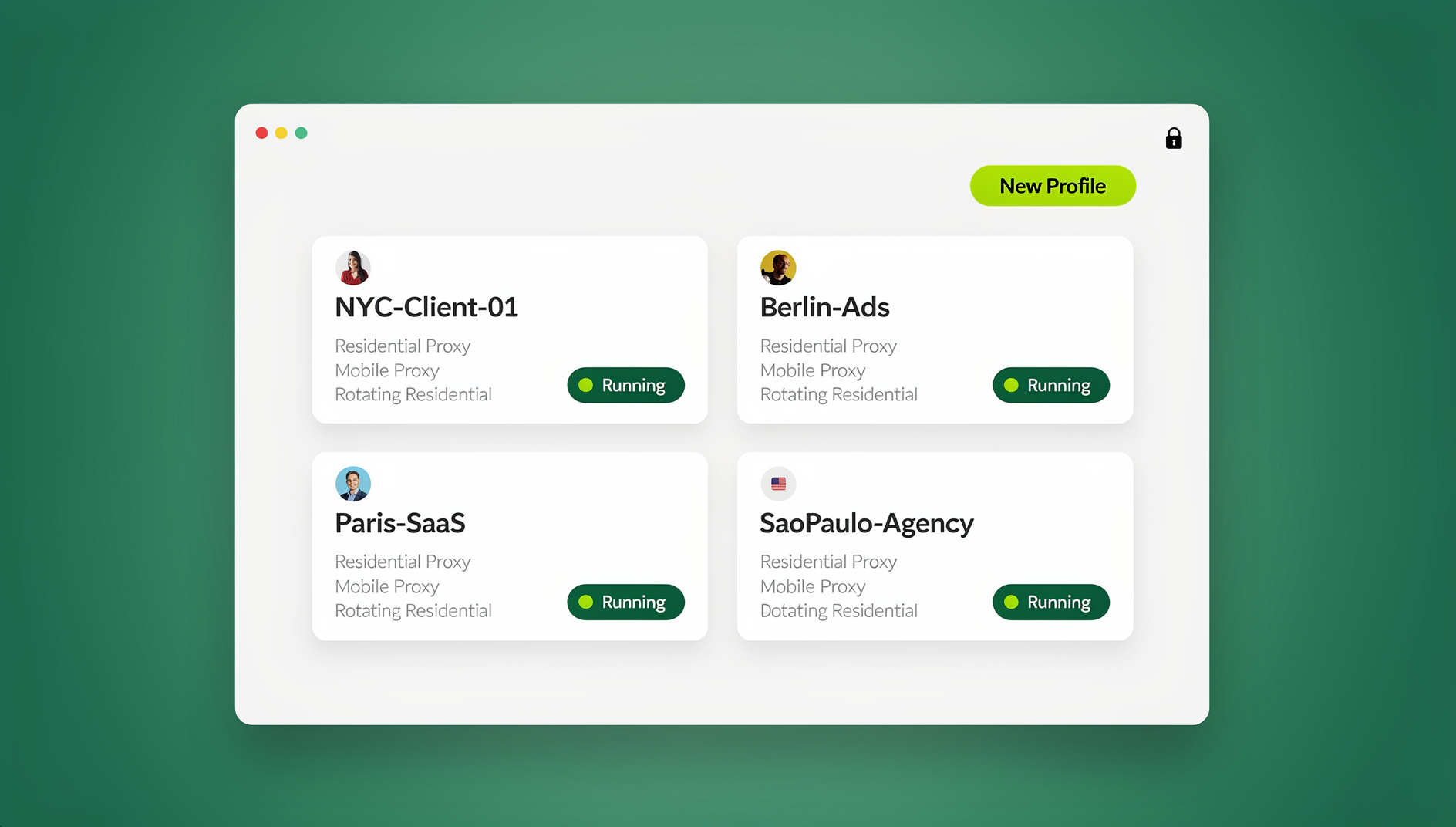

📌 TL;DR Executive Summary
- Core Takeaway: GeeLark is a cloud Android phone platform, not a browser tool. If your accounts live in web dashboards, an antidetect browser does the same job with proxies already included; cloud phones only win when the app itself is the work.
- Key Risk/Challenge: Neither GeeLark nor DuoPlus bundles proxy traffic, so your real monthly bill is device time plus proxies. Hardware-backed attestation like Play Integrity and App Attest also cannot be forged in software.
- Recommended Solution: Send.win for browser-first fleets — 30-day trial, residential proxies on every plan, Pro at $19/month — and keep one cloud phone subscription only for accounts that must open inside a mobile app.
How Send.win Helps With Geelark Alternative
Send.win is an antidetect browser built for exactly this kind of work — every profile is a clean, isolated identity:
- Isolated profiles – unique fingerprint, separate cookies and storage per profile
- Stealth engine – canvas, WebGL, fonts, and audio spoofed at the engine level
- Desktop app + cloud sessions – native app for Windows, macOS, and Linux, or run profiles in the cloud with no install
- Built-in residential proxies – with automatic timezone, locale, and WebRTC matching
- Team features – share logged-in profiles with teammates without sharing passwords
Try the instant cloud browser demo — no install, no signup — or download the desktop app. The 30-day free trial needs no credit card, and paid plans start at $6.99/month billed annually (see pricing).
GeeLark vs DuoPlus vs Multilogin vs Send.win at a Glance
Four tools dominate GeeLark alternative searches, and they solve overlapping but different problems. The table is the short version; the sections below break down pricing, proxies, fingerprint control and automation one at a time.
| Tool | What it runs | Proxy traffic included | Free tier | Best for |
|---|---|---|---|---|
| GeeLark | Virtual Android cloud phones on real ARM architecture, plus browser profiles | No — you source and pay separately | 2 cloud profiles, 1 team seat, 30 minutes of runtime | Mobile app work needing many Android device identities |
| DuoPlus | Cloud phones on Android 15 with real ARM chips, independent MAC and SIM/base station data for 150+ countries | No — bring your own SOCKS5 | 30-minute startup trial | Operations running large Android fleets in parallel |
| Multilogin | Cloud phones and browser profiles in one dashboard | Yes, residential traffic on paid plans | 5 profiles, 200 MB proxy traffic, 30 mobile minutes (rolled out July 2026) | Mixed browser and mobile work billed once |
| DistrictDroid | Real physical Pixel phones on genuine US carrier SIMs in Texas, controlled from your browser | Not applicable — real carrier SIM | None; paid from $20/day | Accounts that must look like a physical US handset |
| Send.win | Sendwin Browser desktop app for Windows, macOS and Linux, plus a cloud browser on EU and US nodes | Yes — residential proxies on every plan | 30-day trial: 10 profiles, 10 residential proxies, 1 GB bandwidth | Browser-first multi-account work with proxies, sharing and sync included |
What GeeLark Actually Does — and Where It Fits
GeeLark’s core product is a fleet of virtual Android phones running on real ARM architecture in the cloud. Each phone carries its own IMEI and MAC address, so two profiles don’t present one device identity to the apps installed inside them. On mobile-first platforms that read device identifiers at signup, that matters more than any browser setting.
Scope has widened since launch: browser profiles, automation, team collaboration and proxy management now sit in the same dashboard, but cloud phones remain the center of gravity. GeeLark supports Android and iOS versions, per-profile proxy assignment and batch profile creation.
Automation arrives mainly through RPA templates — recorded flows you replay across many phones — plus a Synchronizer that mirrors your actions from one phone to the rest. That helps when you repeat the same in-app sequence dozens of times a day.
The ceiling is fingerprint control. You cannot customize fingerprints in GeeLark: each cloud phone ships with a fixed parameter set, and the proxy location is essentially your only input. If you need canvas, WebGL, font or hardware values varied per profile, this is not the platform for it.
Why People Look for a GeeLark Alternative
Per-minute billing makes budgets hard to predict
Cloud phone time is metered. Reviews put GeeLark at roughly $0.007 per minute of runtime, with a reported $1.20 daily cap per device and about $29.90 for a monthly rental. Work in bursts and per-minute pricing is efficient; leave phones running all day and the meter decides your invoice.
The free tier is a test drive, not a working setup: 2 cloud profiles, 1 team seat and 30 minutes of runtime. Testers have reported hitting a balance requirement before a free-tier phone will start, so budget for a paid tier on anything production-facing.
Proxy traffic is not part of the subscription
GeeLark does not bundle proxy traffic. You source proxies yourself, pay for them separately and assign them per profile; DuoPlus works the same way and expects SOCKS5 endpoints. Every extra vendor adds a bill, a support boundary and one more place for the exit IP to disagree with the profile’s timezone.
The device identity is fixed, not tunable
Because each cloud phone has a fixed parameter set, you cannot deliberately vary a fingerprint to separate two accounts using the same phone model. Proxy location is your lever. That is fine for consistency and limiting when you want controlled variation across a large fleet.
Detection now runs at signup and login
Google reported in October 2025 that apps adopting Play Integrity’s stronger threat detection saw an 80% drop in unauthorized usage, with TikTok and Uber named as adopters. Meta actioned 1.1 billion fake Facebook accounts in Q4 2025, and TikTok removed 86.3 million fake accounts in Q1 2026 with 99.3% caught proactively. Device checks no longer wait for a user report.
How Device Fingerprinting and Attestation Actually Work
Platforms rarely need a perfect match to link two accounts. A partial fingerprint match — same GPU string, same installed font set, same screen metrics — combined with similar behavior is enough to conclude that one operator runs both. Coherence matters more than the number of spoofed fields.
Attestation works differently. Play Integrity and App Attest ask the device’s secure hardware to sign a statement about the app and the device. An emulator or a virtualized Android instance has no such hardware, so it either fails the check or returns nothing. That is the mechanism behind the 80% drop Google reported.
Sensors are the quieter tell. Real phones produce accelerometer, gyroscope and battery-drain curves consistent with a handset being carried around; virtual phones generate flat or repeating sensor data that anything collecting those streams can see. And if the exit IP looks like a data-center address, the connection can be flagged before the fingerprint is even parsed — the same pattern behind how sites flag a proxy IP.
Cloud Phones vs Antidetect Browsers: Which Do You Need?
When a cloud phone is the only route
- In-app-only features: native uploaders, mobile-only promotions, in-app messaging and ad formats that never appear on the web version.
- Device signals at onboarding: flows that read IMEI, MAC, carrier or SIM data before an account is created.
- Mobile-first warming: accounts that need mobile session patterns from day one, before you touch a desktop.
- Native app automation: RPA or ADB tasks that operate on tap coordinates inside an Android UI.
When a browser profile is enough
- Seller and ad consoles: marketplace dashboards, campaign managers and analytics tools are web apps, and a browser profile with a matching proxy is all they check.
- Social web logins: posting, scheduling and inbox work on desktop interfaces.
- Back-office tooling: email, support desks, CRM, payments and SaaS dashboards with per-account logins.
Audit your own workflow before renting hardware. Most teams find that the bulk of their day sits in web dashboards and only a fraction of accounts actually needs an app. Where the web side dominates, a browser tool is cheaper than a fleet of virtual handsets — and if you want a mobile-flavored environment without paying per minute for an idle Android instance, an antidetect browser for Android covers the session side.
Proxy Integration and the Real Monthly Cost
Headline prices hide the difference between these tools. Cloud phone platforms meter device time and leave bandwidth to you; browser platforms often bundle traffic. Compare both lines together or you will misjudge the bill.
| Tool | Published pricing | Proxy traffic | Notes |
|---|---|---|---|
| GeeLark | Free: 2 profiles, 1 seat, 30 minutes. Base reported between $8.45 and $9.75/month, Pro around $14.25/month. Cloud phone time ~$0.007/min, reported $1.20/day cap, ~$29.90 monthly rental | Not included | Review sites quote different tier prices; confirm on the vendor page before budgeting |
| DuoPlus | Per-cloud-phone billing based on startup time; 15% off annual payment; 30-minute startup trial. Advertising mentions up to 95.75% off, but only at 10,000 devices | Not included — you supply SOCKS5 | One published model puts device fees near $32 for 20 devices, with the real total reaching roughly $230 once proxy costs are added |
| Multilogin | Free: 5 profiles, 200 MB proxy, 30 mobile minutes, no time limit. Paid plans from $7.08/month; extra proxy $3.50/GB; extra mobile minutes $0.0073 each | Included on paid plans | Cloud phones and browser profiles share one dashboard and one bill |
| DistrictDroid | $20/day, $50/week or $120/month (one page lists $110/month — verify before ordering) | Real US carrier SIM | One physical Pixel per customer; claims about passing every TikTok check are vendor marketing, not independently verified |
| Send.win | 30-day trial at $0. Pro $19/month or $6.99/month billed annually ($83.88/year). Team $49/month or $20.99/month billed annually ($251.88/year) | Included on every plan: 1 GB on trial, 5 GB on Pro, 20 GB on Team. Extra bandwidth $6/GB | Extra browser profiles $0.05 each; 7-day money-back guarantee |
Run the arithmetic on your own numbers before committing. One published model puts 20 DuoPlus devices near $32 in device fees, with the real monthly total reaching roughly $230 once proxy costs are added. A Send.win Pro seat at $19 covers 150 browser profiles with 5 GB of residential traffic inside the price. If you are stacking a proxy vendor on top of a cloud phone subscription, this breakdown of how to compare residential proxy prices keeps you from paying twice for the same gigabytes.
Automation: RPA Templates vs ADB vs Playwright and Selenium
Automation routes differ by what they can reach. RPA templates in GeeLark and DuoPlus record taps inside the mobile UI and replay them across devices — no code, but brittle when layouts shift and limited to what a finger can do. ADB gives direct device control and deeper hooks, at the cost of scripts that break with every app update.
Browser automation targets the other half of the problem. Multilogin documents ADB, API, Selenium, Puppeteer and Playwright support. Send.win ships a local Automation API for Selenium, Puppeteer and Playwright on the Team plan. The practical advantage of the browser route is a stable DOM instead of tap coordinates: selectors survive redesigns far better than pixel positions do.
from playwright.sync_api import sync_playwright

CDP_URL = "http://127.0.0.1:PORT"  # copy it from the profile's automation settings

with sync_playwright() as p:
    browser = p.chromium.connect_over_cdp(CDP_URL)
    page = browser.contexts[0].pages[0]
    page.goto("https://example.com/dashboard")
    print(page.title())
    browser.close()
Whichever route you pick, automation multiplies whatever setup quality you already have. Scripting an inconsistent fingerprint just lets you fail at scale, faster.
Team Seats, Sharing and Handover
Seat limits decide whether a tool survives contact with a real team. GeeLark’s free tier includes one seat, so a second operator means a paid plan. DuoPlus is built for large parallel fleets rather than handovers. Multilogin keeps browser and mobile profiles under one login for mixed teams.
Send.win handles collaboration differently: sharing a profile with a paid teammate opens it already signed in, so no password changes hands. Pro includes 6 seats and Team 16, with cloud sync across 20 profiles on Pro and 100 on Team plus encrypted cloud storage. The cloud browser runs on EU and US nodes from any device, with a 10-minute-per-day free preview and unlimited cloud browsing time on paid plans — useful when a contractor needs one profile without it living on their laptop.
How to Move Off GeeLark Without Losing Sessions
- Inventory first. List every account, its platform, proxy exit location, creation date and warm status. Flag the ones that only ever run inside an app.
- Rebuild the environment instead of approximating it. Match timezone, locale and language to the exit IP and keep the same country as the original proxy. A US account logging in from Germany is a red flag regardless of fingerprint quality.
- Verify the new profile in isolation. Check browserleaks.com, pixelscan.net and whoer.net: WebRTC must show the proxy IP, and Canvas and WebGL values must be unique. Fix problems before the first login, not after.
- Move one low-value account first. Log in once, use it normally for several days, and watch for challenges before migrating in batches.
- Never run both environments at once. Simultaneous sessions from two different devices is the fastest way to link an account to one operator.
- Stagger and retire. Move a few accounts per day, keep the old subscription alive for a full billing cycle, and cancel once nothing depends on it.
Which One Should You Pick?
Match the tool to the constraint that binds you. If you are unsure what your accounts actually check, start with a structured process for choosing an antidetect browser before comparing vendors on price.
Pick GeeLark if
You need Android app sessions across many device identities and RPA templates cover your automation. ARM-based cloud phones and batch creation are the strengths; fixed fingerprints, metered runtime and a two-profile free tier are the limits.
Pick DuoPlus if
You run large Android fleets and want per-phone startup billing so idle devices cost nothing. Android 15 on real ARM chips and SIM and base-station data for 150+ countries are real advantages. Budget proxies separately and ignore the 10,000-device discount headline.
Pick Multilogin if
You want cloud phones and browser profiles on one invoice, with residential traffic bundled and browser automation available. Its free plan — 5 profiles, 200 MB proxy, 30 mobile minutes, no time limit — is the largest free allowance in this group.
Pick DistrictDroid if
A physical handset is non-negotiable: hardware attestation, carrier-linked flows, or accounts that must look like a real US phone. You pay accordingly, from $20 a day with one device per customer, and its “passes every check” claims are vendor marketing.
Pick Send.win if
Your accounts live in web dashboards. Sendwin Browser installs locally on Windows, macOS and Linux, with the stealth engine spoofing canvas, WebGL, audio, fonts and hardware at engine level, and residential proxies on every plan. Timezone, locale, WebRTC and geolocation follow the proxy’s exit IP automatically, so you are not aligning them by hand.
Keep emulators such as NoxPlayer and MuMuPlayer for testing rather than multi-account infrastructure — they solve a narrower version of the same problem and will not pass hardware attestation.
🏆 Send.win Verdict
If your GeeLark workload is honestly browser work — seller dashboards, ad managers, social web logins — Send.win removes the two biggest cost leaks in that stack: proxies you had to buy and wire up separately, and profiles that leak timezone or WebRTC data. It is not a cloud phone and does not pretend to be one, so keep a cloud phone subscription for the accounts that genuinely need an Android app. For everything else, the desktop app holds 150 profiles on Pro with residential traffic included, and sharing a profile with a paid teammate opens it already signed in.
Try Send.win free today — 30 days at $0 with 10 profiles, 10 residential proxies and 1 GB of bandwidth, then $19 a month on Pro. Cancel anytime, and your local profiles stay on your machine.
Frequently Asked Questions
What is the best GeeLark alternative in 2026?
It depends on the session type. GeeLark and DuoPlus serve Android app work with per-minute or per-phone billing, and Multilogin folds cloud phones and browser profiles into one subscription with bundled proxies. Send.win fits best when your accounts run in web dashboards and you want residential proxies and profile sharing included from $19 a month.
Is GeeLark free to use?
There is a free tier with 2 cloud profiles, 1 team seat and 30 minutes of runtime, which works as a test drive rather than a production setup. Testers have reported hitting a balance requirement before a free-tier cloud phone will start, so plan on a paid tier for anything that matters.
How much does GeeLark cost per month?
Cloud phone time runs about $0.007 per minute, with a reported $1.20 daily cap per device and roughly $29.90 for a monthly rental. Review sites quote the Base tier between $8.45 and $9.75 a month and Pro around $14.25, and those figures shift often — check the vendor’s own page before budgeting proxies on top.
Do GeeLark alternatives include proxies in the price?
GeeLark and DuoPlus do not: you source proxies yourself, which adds cost and configuration work to every profile. Multilogin bundles residential traffic on paid plans, and Send.win includes residential proxies on every plan — 1 GB on the trial, 5 GB on Pro and 20 GB on Team, with extras at $6 per GB.
What is the difference between a cloud phone and an antidetect browser?
A cloud phone is a virtualized Android device, so it can run apps and expose device identifiers such as IMEI and MAC in ways a browser cannot. An antidetect browser manages isolated browser profiles with spoofed fingerprint values and matching proxy routing. If the work happens on a website, the browser covers it at a fraction of the device cost.
Can cloud phones pass hardware-backed attestation like Play Integrity?
Not by spoofing. Play Integrity and Apple’s DeviceCheck/App Attest rely on keys held in physical secure hardware that a virtualized Android instance cannot produce. Google reported in October 2025 that apps using the stronger Play Integrity detection saw an 80% drop in unauthorized usage, with TikTok and Uber named as adopters.
Which GeeLark alternative has a real free plan?
Multilogin’s free plan gives 5 profiles, 200 MB of proxy traffic and 30 mobile minutes with no time limit, the largest free allowance among the cloud phone tools here. On the browser side, Send.win runs a 30-day trial with 10 profiles, 10 residential proxies and 1 GB of bandwidth, plus a free 10-minute-per-day cloud browser preview.
Are cloud phones better than antidetect browsers for TikTok?
Only for the parts of TikTok that live in the app — native uploads, in-app notifications and mobile-only features. Web login, scheduling and inbox work run fine in an isolated browser profile with a matching residential IP. Many teams split the load: cloud phones for app-only accounts, browser profiles for everything else.