Understanding the Challenges of Multi-Location Local SEO
Executing successful google business profile management of multiple accounts requires a combination of Google’s official Business Groups for organizational access and Sendwin’s isolated browser sessions for technical isolation. By separating cookies, caching, and hardware identifiers for each local listing, marketing agencies and multi-location franchises can update hours, respond to customer reviews, and publish posts without risking IP-linked listing suspensions.

For local SEO agencies, retail franchises, and service-based brands, Google Business Profile (formerly Google My Business) is the single most important factor for local pack rankings. A well-optimized profile drives customer reviews, direction requests, phone calls, and direct website traffic. However, scaling your optimization efforts across multiple physical locations or multiple client accounts is a complex administrative and technical challenge. Google’s anti-spam algorithms are highly sensitive, checking for identical listing changes, location consistency, and user account footprints. If Google detects suspicious activity on one profile, it can trigger a sweep that suspends every listing managed by that user’s account. This makes strict isolation essential.
This technical isolation is not unique to local search. E-commerce sellers manage risk by using a multiple Amazon accounts setup to isolate separate store brands and protect their sales. The same operational discipline is required when managing multiple search profiles on Google Maps.
Administrative Setup: Google Business Groups
The first step in managing multiple listings is establishing an official administrative structure using Google Business Groups (formerly known as Business Account Organizations). A Business Group acts as a folder or container that allows you to manage access permissions for multiple business profiles under a single organizational dashboard.
Instead of logging in and out of different personal Google accounts, you create a Business Group for your organization and import all your location listings. From this group, you can grant specific roles to team members. For instance, you can assign standard employee access to edit specific locations, while retaining master control over the entire folder. This prevents internal mistakes and simplifies team onboarding.
Google Business Group Member Roles
- Owner: Full control over the Business Group, including the ability to add or remove users, transfer ownership, delete profiles, and edit all business details. Only agency owners or corporate directors should hold this role.
- Manager: Administrative access to edit profile details, post Google updates, upload photos, and respond to client reviews. Managers cannot manage users or delete listings. This is the ideal role for SEO specialists.
- Site Manager: Limited access to respond to customer reviews, update business hours, and publish local posts. Site Managers cannot edit core listing details like address or category. This role is best for local store managers.
Step-by-Step Listing Optimization at Scale
Once your organizational folders are configured, you must implement a structured optimization routine for each profile to maintain high local pack visibility. Optimizing at scale requires systematic processes across several key domains:
1. Consistent NAP (Name, Address, Phone) Profiles
Ensure that each location’s Name, Address, and Phone number are perfectly consistent across Google, your official website, and local directories. Inconsistencies confuse search engines and hurt rankings. Never add keywords to your business name unless they are part of your legal business name, as this is a frequent cause of suspensions.
2. Category Selection
Choose the most specific primary category that describes your business. While all locations of a franchise should share the same primary category, customize secondary categories to reflect specific services offered at individual locations. This ensures relevant local search visibility.
3. Photos and Visual Content
Profiles with regular photo updates receive significantly more clicks. Establish a process for uploading new interior, exterior, and team photos monthly. Avoid using generic stock photos, as Google’s algorithms can detect duplicate image files, and customers prefer authentic local photos.
4. Review Generation and Response Workflow
Reviews are a primary ranking factor in local SEO. Establish a daily routine to respond to all customer reviews within 24-48 hours. Create response templates for common positive and negative reviews, but always personalize each reply. An active response history signals to Google that your business is engaged with its customer base.
Google Business Profile Policies and Compliance Requirements
To avoid sudden suspensions that can instantly erase your local visibility, you must strictly adhere to Google’s terms of service. Google employs automated systems and manual reviewers to verify the legitimacy of business listings. Understanding the most common violation triggers is essential when managing multiple accounts:
- Physical Address Verification: Google requires listings to represent real physical locations that customers can visit. Do not use P.O. Boxes, UPS stores, or virtual offices as your business address. Doing so is an immediate trigger for a hard suspension.
- Service Area Businesses (SAB): If your business serves customers at their locations (such as plumbers, cleaners, or tutors) and does not have a physical storefront, you must hide your address and define a Service Area. Trying to create multiple location pins at residential homes to game the local search rankings will result in bans.
- Avoid Keyword Stuffing: Adding promotional tags, phone numbers, or cities to your business name is a policy violation. Keep the name on the listing exactly matching the name on your storefront signage and legal registration documents.
- Verification Postcards: Google frequently sends postcards containing a 5-digit verification code to the physical location. Ensure your onsite staff is briefed to watch for these postcards and deliver the code to your SEO team immediately.
Collaborative Management Workflows for Agency Teams
Managing multiple listings requires efficient team collaboration. If multiple employees access the same Google account from different locations, Google’s security systems will flag the account for suspicious activity, triggering verification challenges. Agencies should implement these organizational workflows:
First, restrict administrative permissions. Media buyers and SEO copywriters should only be added at the “Manager” or “Site Manager” level for specific client listings. This prevents employees from accidentally transferring ownership or deleting assets. Second, maintain a centralized audit log. Document all changes, such as hour modifications, category adjustments, or phone updates. If a listing is suspended, having a clear log of recent edits makes it much easier to pinpoint the trigger and file a successful reinstatement appeal.
Finally, set up email notification rules. Ensure that notifications for user-suggested edits are routed to your primary SEO dashboard. Google allows public users to “suggest edits” to listings, and competitors often exploit this by suggesting fake closures or incorrect phone numbers. Fast detection is the only way to reject these edits before they go live.
The Risk of Accessing Multiple Accounts on One Device
Many local SEO agencies manage multiple client Google accounts by using standard browsers, relying on separate browser profiles or logging in to multiple accounts simultaneously. This presents a massive operational risk. Standard browser profiles share the same hardware characteristics, operating system details, and IP address. This shared footprint makes it easy for search engine algorithms to link your clients’ profiles.
When you access different client accounts from the same unisolated machine, Google registers your unique hardware signature (including canvas hashes and WebGL details). If one client’s listing is suspended or flagged for a policy violation, Google’s automated compliance checks can link that failure to your management device, potentially leading to suspensions across all other client profiles. To prevent this, using a dedicated cookie management tool is necessary to completely isolate session cookies, browser caches, and tracking details.
Standard tools fall short because they lack fingerprint protection. For a complete guide on standard multi-login challenges, you can read our comparison of chrome multi-account options to understand why standard profiles do not offer the technical isolation needed for paid media buying. Additionally, utilizing an isolated browser for ads management is crucial to keep your client portfolios completely isolated.
Technical Separation: Sandboxed Sessions with Sendwin
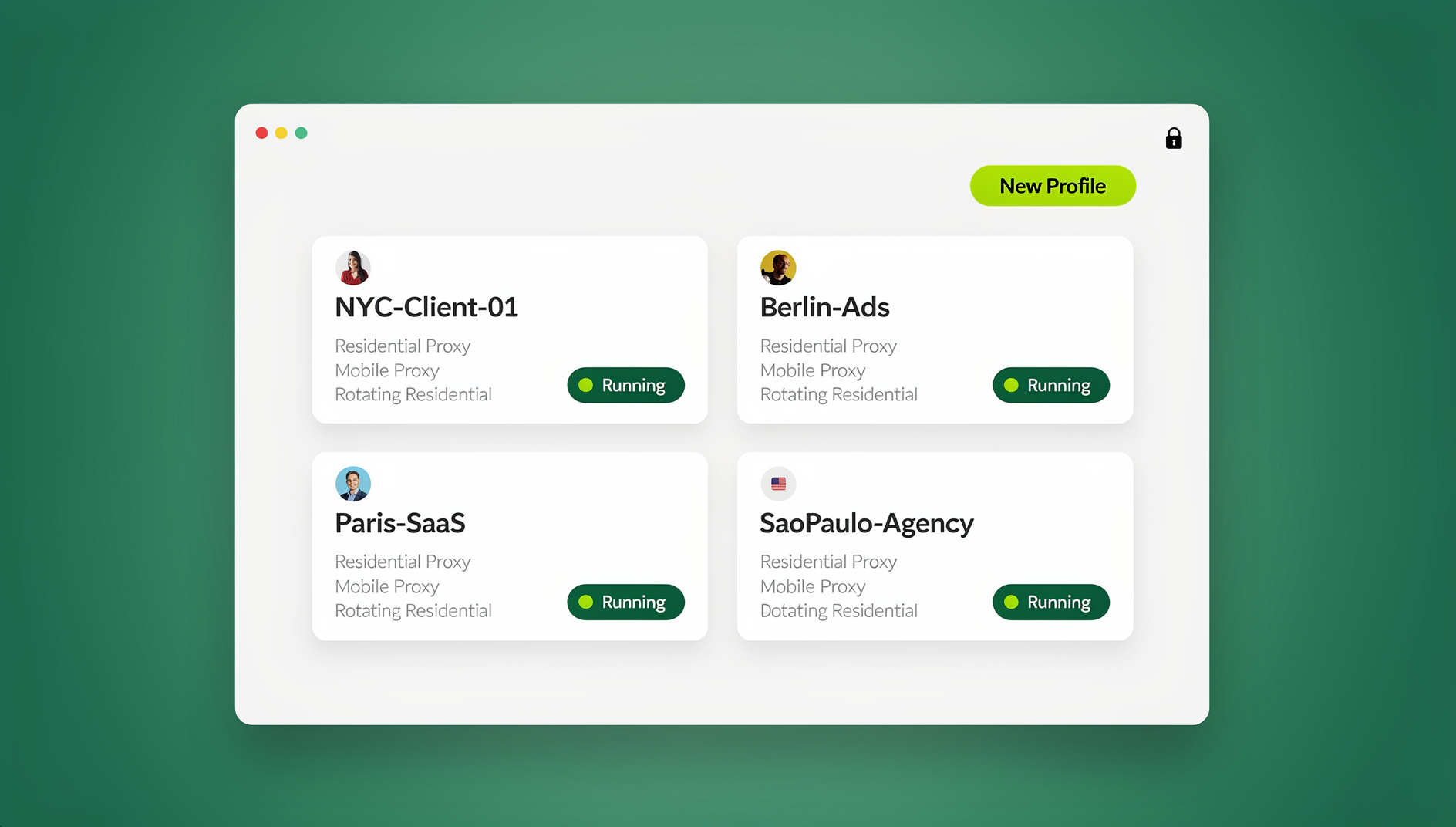
Sendwin provides the technical isolation needed to manage multiple Google Business Profiles safely. Instead of sharing tracking metadata across profiles, Sendwin creates fully isolated virtual browser environments for each account you manage. Sendwin provides two distinct, powerful modes for local search marketing teams:
1. The Sendwin Browser (Desktop App)
The Sendwin Browser is a native desktop client compatible with Windows, macOS, and Linux. It generates a completely unique digital fingerprint for every profile you create, altering your canvas configurations, spoofing your user-agent, and isolating your cookies. This native tool is perfect for media buyers and SEO teams who need fast, local performance while working on client accounts daily.
2. Cloud Browser Sessions
For collaborative teams and access on the go, Sendwin offers cloud browser sessions. These sessions run on remote virtual servers and require absolutely no local installation. You can run, update, and monitor your client profiles directly from any device (including mobile phones and tablets) inside a secure virtual tab. Cloud sessions also allow you to share active logins with remote team members instantly, without sharing passwords or triggering Google’s security blocks.
Pricing and Plans: Choosing the Right Setup
Sendwin offers flexible plans to suit local search agencies of all sizes, beginning with a 30-day free trial with no credit card required. The primary tiers include:
- Pro Plan: Priced at $19/month (or $6.99/month when billed annually). The Pro plan supports up to 150 active profiles, includes 5GB of residential proxy bandwidth, and unlocks Sendwin’s local Automation API for custom scraping and scripts.
- Team Plan: Priced at $49/month (or $20.99/month when billed annually). The Team plan scales your operations to 500 profiles, includes 20GB of proxy bandwidth, the local Automation API, and supports up to 16 team seats for secure collaboration.
🏆 Send.win Verdict
To manage google business profile management of multiple accounts successfully, combining the administrative control of Google Business Groups with the technical session isolation of Sendwin is essential. By sandboxing cookies, canvas signatures, and hardware fingerprints, Sendwin prevents search engine algorithms from linking independent local search listings. This guarantees that a policy issue or verification restriction on one client profile remains isolated and does not disrupt your remaining client operations.
Try Send.win free today — Secure your local search profiles and run your client accounts with confidence.
Frequently Asked Questions
What is the best way to manage multiple Google Business Profiles?
The best way is to combine a Google Business Group for administrative access with Sendwin’s isolated browser sessions for technical safety. This combination ensures that you can manage multiple listings with single-login efficiency while preventing device linking and cascading suspensions.
Can I manage multiple client listings from one dashboard?
Yes. You can manage multiple client listings by having the client invite your Google account as a Manager. The listings will then appear in your dashboard. For secure isolated access, use Sendwin’s isolated sessions to keep client data separated.
How does Sendwin prevent Google from linking my local business profiles?
Sendwin creates isolated browser profiles, each with its own local cookie database, browser cache, and unique hardware signatures. This prevents tracking scripts from identifying that different profiles are accessed from the same computer, ensuring complete technical separation.
What is a Google Business Group?
A Google Business Group is a parent administrative profile that allows agencies and multi-location businesses to link and manage multiple standard Google Business Profiles under a single login. It handles user permissions, bulk updates, and post sharing.
Is it possible to automate posts across multiple Google Business accounts?
Yes. You can use Google Business Profile APIs to programmatically publish posts, update hours, and respond to reviews. Sendwin’s local Automation API supports Puppeteer, Playwright, and Selenium against your sandboxed profiles for secure automation.
Does Sendwin require a desktop download to run?
No. While Sendwin offers the Sendwin Browser as a native desktop application, it also provides cloud browser sessions that run on remote virtual servers. You can access your isolated accounts from any device without installing software.
How many profiles can I manage on Sendwin’s paid plans?
Sendwin’s Pro plan ($19/mo or $6.99/mo annually) supports up to 150 active profiles. The Team plan ($49/mo or $20.99/mo annually) supports up to 500 active profiles, includes 16 seats, and allows you to share active logins with team members safely.
Can I transfer ownership of a Google Business Profile?
Yes. From the business details page, navigate to the users tab, select the invite user option, and choose the Owner role. The receiving user must accept the invite to complete the ownership transfer, which preserves campaign history and reviews.