What Does a Headless Browser for AI Agents Actually Do?
A headless browser for AI agents is the same rendering engine a desktop browser uses, running with no visible window and driven by code instead of clicks. Your agent sends navigation, input and extraction commands over a protocol such as the Chrome DevTools Protocol. The engine renders the page in memory and returns DOM state, network responses and screenshots, so the agent reasons over real page state rather than a text scrape.
📌 TL;DR Executive Summary
- Core Takeaway: A headless browser is the engine minus the window. Playwright, Puppeteer or a managed cloud session drives it over CDP and returns DOM state, network data and screenshots from a genuine render.
- Key Risk/Challenge: Stock headless Chrome leaks automation signals, and a shared profile lets cookies, storage and fingerprints bleed between accounts and between tasks.
- Recommended Solution: Pin a versioned browser build and point the agent at an isolated, already-authenticated profile instead of a disposable browser it logs into from scratch every run.
Headless Is the Same Engine With the Window Removed
A headless browser is not a separate product category. It is Chromium, Firefox or WebKit with the visible window taken away: the page renders faithfully in memory and automation commands drive it. Layout, CSS, JavaScript execution, the network stack and the cookie store behave the way they do in the desktop build, which is why a login that works in your everyday browser also works headless.
Two things change when the window disappears. Memory and CPU per page drop, because nothing is compositing pixels for a display. You also lose the ability to watch the run, so debugging gets harder: most teams build a flow in visible mode, then move the identical script to headless in CI and capture screenshots with step logging to reconstruct what the agent saw when it failed.
Screenshots still come straight from the engine, so vision-based agents keep their visual perception without a window. That matters when the thing the agent must read is a canvas chart, a map tile or a PDF viewer where the DOM says nothing useful.
Under the Hood: Three Layers in an Agent Browser Stack
Every agent browser stack has the same three layers, and most production failures come from blurring them together.
Layer 1 — the engine
The engine does layout, JavaScript execution and painting. Chromium dominates because CDP exposes deep control, but it is no longer the only serious option. Lightpanda is a browser engine written in Zig from scratch — not a Chromium fork, not a patched WebKit — that executes JavaScript and skips graphical rendering entirely. Obscura is a Rust engine that runs JavaScript on V8, speaks CDP, and slots into existing Puppeteer and Playwright scripts in place of headless Chrome; it ships four builds (plain rendering, -stealth, -no-render and -no-render-stealth) plus a distroless Docker image that runs as an unprivileged user. If you want the full field, this roundup of headless Chrome alternatives works through the trade-offs engine by engine.
Layer 2 — the driver and the protocol
The driver translates your code into protocol calls. Playwright gives you one API across Chromium, Firefox and WebKit, with locators, auto-wait, tracing and codegen, and ships for JavaScript/TypeScript, Python, Java and .NET. Puppeteer is Node-first: a high-level Chrome API plus direct CDP access, WebDriver BiDi support for wider compatibility, and experimental Firefox support. Both talk to the engine over a socket, which is why the same script runs against a local binary or a remote session.
Layer 3 — the agent runtime
Above the driver sits the part that decides what to do next. Stagehand is an MIT-licensed SDK offering act, extract, observe and agent primitives; it still needs a browser binary or a connection string underneath. agent-browser takes another route, assigning simple reference IDs such as @e1 and @e2 to elements in a page snapshot, which cuts down on selector hallucination. The runtime’s job is to turn intent into driver calls and read the result back.
Playwright, Puppeteer, Lightpanda, Obscura and the Cloud Tier Compared
| Runtime | Engine | Protocol | Best fit | Watch out for |
|---|---|---|---|---|
| Playwright | Chromium, Firefox, WebKit | CDP, WebDriver BiDi | Cross-engine flows in JS/TS, Python, Java, .NET | Extra abstraction over bare protocol calls |
| Puppeteer | Chromium (Firefox experimental) | CDP, WebDriver BiDi | Node-first agents that want raw CDP access | Chrome-centric by design |
| Lightpanda | Own Zig engine, no rendering | CDP on port 9222 | High-volume DOM and text work at low cost | No native Windows binary, glibc-linked builds, still beta |
| Obscura | Rust with V8 | CDP | Drop-in swap for headless Chrome in existing scripts | Young project; managed cloud is waitlisted |
| Cloud BaaS (Browserbase, Browserless, Steel) | Vendor-managed Chromium | WSS connect | Fleets that need scale without running infrastructure | Metered billing and session time caps |
| Send.win | Patched Chromium, Sendwin Stealth engine built in | Automation API (local, Team plan) | Agents that must stay signed in across many accounts | Not a headless engine; the local API is Team-only |
The table hides a bigger decision: run the runtime on your own machine, or rent it by the hour? The short version of headless browser vs cloud browser comes down to who owns the failure — you debug the binary yourself, or you file a ticket about someone else’s node pool.
Where lightweight engines win
Lightpanda’s published benchmarks put peak memory for 100 pages at 123MB against 2GB for headless Chrome, and execution at 5 seconds against 46 seconds — vendor tests on their own hardware, so treat the multipliers as directional rather than guaranteed. Obscura publishes 30 MB memory and an 85 ms page load against 200+ MB and roughly 500 ms for headless Chrome, under an Apache-2.0 licence with no feature gating.
The trade-offs show up at packaging time. Lightpanda has no native Windows binary, so on Windows you install it inside WSL2, where localhost:9222 is forwarded to the host automatically. Its Ubuntu builds link against glibc, which means the binary fails on musl distributions such as Alpine with “cannot execute: required file not found”. Third-party reviews also note that it remains in beta, with no stealth layer of its own and partial support for complex single-page apps.
Where cloud runtimes win
Moving the runtime to a vendor pool keeps connect-time changes small: replace launch with connect against a browserWSEndpoint and the rest of the script stays as it was. Lightpanda exposes a hosted tier at wss://euwest.cloud.lightpanda.io/ws that you reach with puppeteer.connect. It meters browser hours by the second, returns HTTP 429 when you exceed your concurrency limit, closes a CDP connection after 15 minutes regardless of plan, and drops an idle MCP session after 5 minutes — all documented under Lightpanda Cloud limits.
Browserbase meters agents on browser compute and API calls rather than seats, and its docs publish overage rates the pricing page omits: Search at 1,000 calls and 2 RPS, Fetch at 1,000 calls with $1 per 1k overage and $4 per 1k with proxies, and proxy bandwidth at $12/GB on Developer and $10/GB on Startup. Self-serve plans run $0, $20 and $99 a month, with Scale priced on request and no per-seat fees. Steel offers a similar shape as open source, with hosted cloud and Docker self-hosting, Puppeteer and Playwright sessions, and optional CAPTCHA and proxy helpers; its credits run from $29 to $499 a month by tier. Browserless provides WebSocket connect plus REST endpoints for scrape, screenshot and PDF, and BrowserQL for harder anti-bot routes, with session limits that vary by tier.
Why It Matters: Detection, Session State and Cost per Action
Three things decide whether an agent fleet survives contact with real sites.
Detection mechanics you cannot ignore
Headless Chrome gives itself away in a handful of well-documented places: navigator.webdriver set to true, an empty plugin list, a user agent that literally says HeadlessChrome, CDP artifacts in the JS environment, and behavioural signals such as perfectly linear mouse paths and machine-fast typing. Modern defences combine those with TLS and JA3 fingerprints plus IP reputation, so no single patch makes you invisible. A headless browser detection bypass that holds up keeps every signal coherent with the machine you claim to be, rather than fixing one flag and leaving the rest mismatched.
Session state is the real bottleneck
Real tasks are multi-step: log in, navigate, submit, confirm. Persistent sessions keep cookies, localStorage and logins alive between steps, which is exactly what an agent completing an authenticated task needs. The damage happens when teams reuse one persistent profile across unrelated accounts or jobs — one poisoned cookie jar or cached token leaks into every later run, and the failure looks random because it is.
Cost per successful action, not per browser hour
Vendors bill in different units, and the unit you buy shapes how you write retries. An agent that fails halfway through a five-minute flow costs the same as one that completes it, so a cheap hour that needs three attempts can cost more than a dearer hour that succeeds first time.
| Runtime | What is metered | Published rates |
|---|---|---|
| Self-hosted Chrome | Your own CPU, RAM and ops time | No vendor meter; you pay in maintenance |
| Lightpanda Cloud | Browser hours by the second, plus concurrency | Hourly credits; HTTP 429 past your concurrency cap |
| Browserbase | Browser compute plus API calls | $0 / $20 / $99 per month; Fetch $1 per 1k ($4 per 1k with proxies); proxies $12/GB Developer, $10/GB Startup |
| Steel | Monthly session credits | $29 to $499 per month by tier |
| Send.win | Plan plus proxy bandwidth and extra profiles | Pro $19/mo or $6.99/mo billed annually ($83.88/yr); Team $49/mo or $20.99/mo billed annually ($251.88/yr); add-ons $6 per GB and $0.05 per extra profile |
Practical Checklist: Wiring an Agent to an Isolated Profile
- Pin the browser build. Use Chrome for Testing binaries, which are versioned and downloadable in line with Chrome releases instead of an auto-updating desktop install, so your laptop, CI runner and long-running worker behave identically.
- Pick the driver for the job. Playwright when you want one API across engines and languages; Puppeteer when you are Node-first and want direct CDP access.
- Decide local or managed before you write session logic. Cloud runtimes bill by minutes and concurrency and add session time caps, which changes your retry design.
- Give every account its own profile. One login, one profile directory, one identity.
- Match the network to the identity. If the login was created through a German exit IP, keep running it there; the IP, timezone, locale and geolocation should tell one story.
- Keep sessions alive between steps, not between accounts. Reuse the context for a multi-step task, then discard it.
- Log a screenshot on every failure. Pair it with the step name and current URL; that trio resolves most “the agent went crazy” reports in minutes.
- Set hard timeouts. A hung navigation that waits forever burns browser hours and blocks a worker slot.
- Watch memory per concurrent agent. Multiply your per-page footprint by the number of parallel profiles before you size the box.
- Close contexts deterministically. A leaked context holds a profile lock, and the next run fails with a confusing error about the directory being in use.
Here is the connect step for a profile-based setup. The address is a placeholder — copy the real one from the profile’s automation settings in your browser rather than guessing it:
from playwright.sync_api import sync_playwright

CDP_URL = "http://127.0.0.1:PORT"  # copy it from the profile's automation settings

with sync_playwright() as p:
    # Attach to an already-authenticated profile instead of launching a clean browser.
    browser = p.chromium.connect_over_cdp(CDP_URL)
    context = browser.contexts[0]

    page = context.new_page()
    page.goto("https://example.com/dashboard", wait_until="domcontentloaded")

    if page.locator("[data-testid=login-form]").count():
        raise RuntimeError("Profile is not signed in - stop before you trip a login challenge")

    page.get_by_role("button", name="Export report").click()
    page.wait_for_selector("[data-testid=export-ready]", timeout=30_000)
    page.screenshot(path="export-ready.png")

    page.close()
    browser.close()  # closes the connection, not the profile
Common Mistakes That Break Agent Runs
- Randomising fingerprints per run. A profile should look like one stable machine across sessions. Variety belongs between profiles, not inside one.
- Treating stealth flags as a complete fix. Hiding navigator.webdriver while your TLS fingerprint and IP say “data centre” fools nobody. The signals have to agree.
- Swapping proxies mid-session. Change the exit IP halfway through and the timezone, locale and WebRTC values no longer match the connection that created the session.
- Letting Chrome auto-update. A silent engine change on a Tuesday can break a selector or a stealth assumption you validated weeks earlier.
- Assuming the DOM is the truth. Prices, stock and eligibility are often rendered client-side or drawn to canvas; read the network response or take a screenshot instead.
- Ignoring how detection keeps moving. Bot defences now score behaviour across a whole session, so staying ahead of AI bot detection means reviewing your flows on a schedule, not once at launch.
- No retry budget. An agent that retries forever on a hard block will hammer the same account until something locks. Cap attempts and escalate.
Automate Headless Browser For Ai Agents With Send.win
Send.win pairs isolated, fingerprint-managed browser profiles with a full Automation API, so your scripts run in profiles that look and behave like real, separate users:
- Selenium, Puppeteer & Playwright support – drive any profile programmatically (Team plan)
- Isolated profiles – each with its own fingerprint, cookies, and storage
- Built-in residential proxies – with automatic timezone, locale, and WebRTC matching
- Desktop app for Windows, macOS & Linux – plus cloud sessions when you don’t want a local install
Try the instant cloud browser demo — no install, straight from your browser. Then compare plans: a 30-day free trial with no credit card, and paid plans from $6.99/month billed annually.
Keeping Identity Coherent Across Many Agent Accounts
Detection is only half the problem. When one operator runs agents against many accounts, the failure mode is usually identity rather than rendering: the same cookie jar, the same fingerprint and the same exit IP showing up behind ten different logins. Isolation has to live at the profile level, not inside your script.
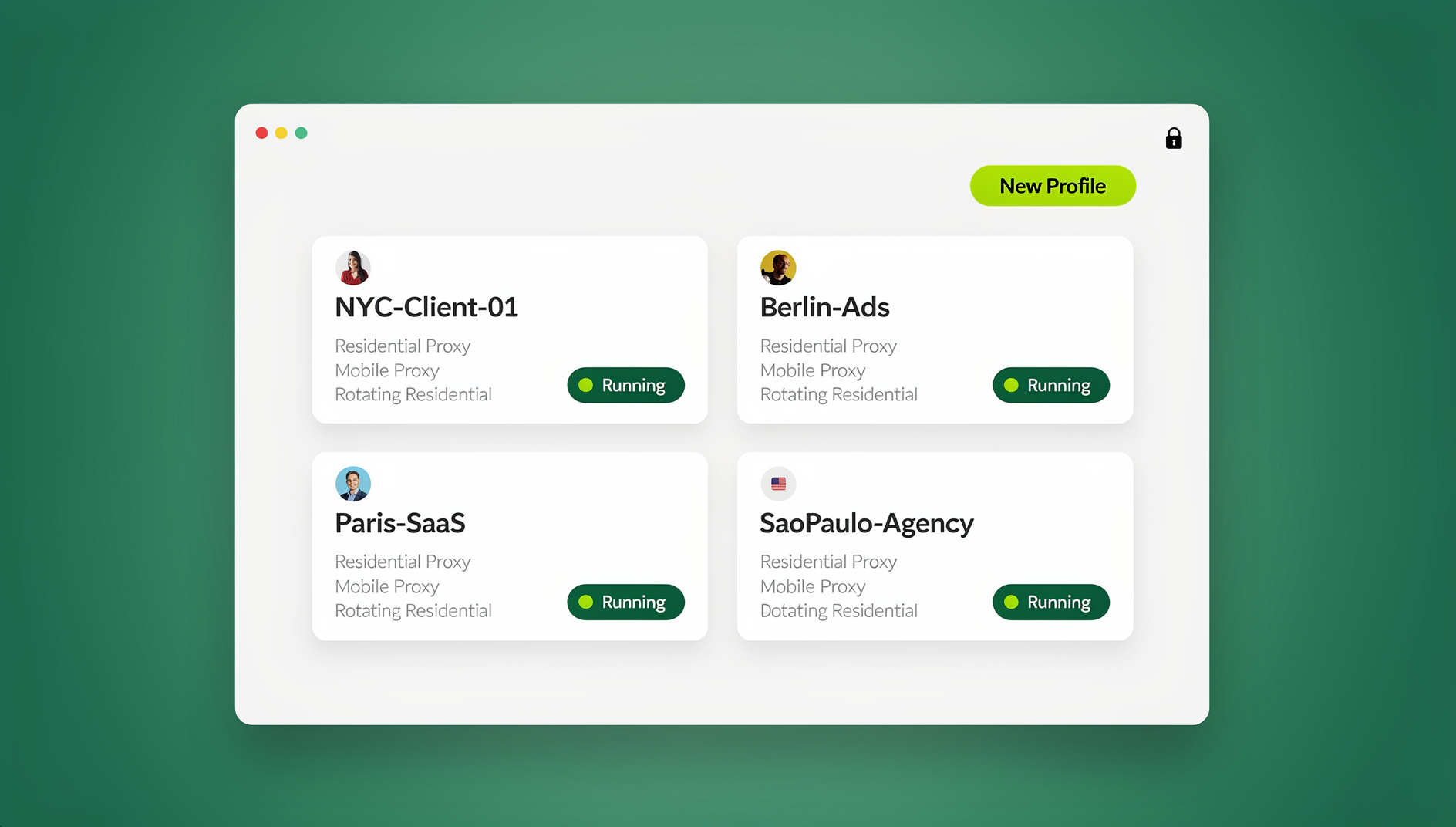
Send.win approaches it with a profile-isolated browser — the Sendwin Browser desktop app for Windows, macOS and Linux, plus a cloud browser that runs the same profiles on EU and US nodes from any device with nothing to install and a free 10-minute-per-day preview. Each profile carries its own coherent fingerprint, with canvas, WebGL, audio, fonts and hardware spoofed at the engine level rather than patched in by scripts, and no two profiles share one. Residential proxies are included on every plan, and timezone, locale, WebRTC and geolocation follow the proxy’s exit IP, so a profile does not appear to jump continents between runs. On the Team plan the local Automation API exposes profiles to Selenium, Puppeteer and Playwright, which is what lets an agent attach to an already-authenticated profile instead of logging in from scratch on every run.
🏆 Send.win Verdict
A headless browser for AI agents solves rendering and control. It does not solve identity, and identity is where multi-account agent work actually fails. Send.win supplies that half: a separate, coherent fingerprint per profile, residential proxies included on every plan, and a local Automation API on Team that lets Selenium, Puppeteer and Playwright attach to a profile that stays signed in. You keep the driver you already know; you stop rebuilding the account on every run.
Try Send.win free today — 30 days for $0, cancel anytime, and your profiles stay on your machine.
Frequently Asked Questions
What is a headless browser for AI agents?
It is a standard browser engine — Chromium, Firefox or WebKit — running without a visible window and controlled by code over a protocol such as CDP. Your agent issues navigation, input and extraction commands and receives DOM state, network responses and screenshots. The page renders exactly as it would on screen; only the display layer is missing.
Is headless Chrome detectable by websites?
Yes, stock headless Chrome is detectable. It exposes navigator.webdriver, a thin plugin list, a HeadlessChrome user agent and various CDP artifacts, and those combine with TLS fingerprints and IP reputation into a risk score. Passing means correcting all of those signals together and keeping them consistent with the machine you claim to be.
Lightpanda vs Playwright: which should I use?
They are different layers, so the real question is which engine sits under your driver. Playwright is the driver, with one API across Chromium, Firefox and WebKit. Lightpanda is an unusually small engine that speaks CDP and loads fast with no rendering, which suits high-volume DOM work. It has no native Windows binary, its Ubuntu builds need glibc, and third-party reviews note it is still in beta with partial support for complex single-page apps.
Can a headless browser take screenshots for vision agents?
Yes. Screenshots come straight from the engine, so a vision model gets the same pixels a human would see, minus the window. This is often more reliable than parsing HTML when the content you need is drawn to canvas, rendered inside an iframe, or exposed only after client-side hydration.
How do I keep a login session alive across agent steps?
Keep the browser context and profile directory alive for the duration of the task, and attach to that same profile on the next step rather than launching a fresh browser. Persistent sessions retain cookies, localStorage and logins. The rule that keeps you safe is one account per profile — reuse within a task, never across identities.
Is there a headless browser that is not Chromium?
There are a few. Playwright drives Firefox and WebKit through the same API. Lightpanda is a Zig engine built from scratch rather than a Chromium fork or WebKit patch. Obscura is a Rust engine running JavaScript on V8 that speaks CDP and works as a drop-in replacement for headless Chrome. Each trades feature coverage for size, speed or packaging constraints.
Do I need a cloud browser, or can I self-host?
Self-hosting gives you full control and no per-hour meter, but you own patching, scale and memory tuning. Cloud and BaaS runtimes move the runtime to a vendor pool, so you replace launch with connect and let billing scale with usage — at the cost of session time caps, concurrency limits and metered rates you should read before you commit.
How do I debug a headless agent that fails?
Reproduce the flow in visible mode first; most failures are timing or selector problems, not detection. Then add screenshots on failure plus step logging, and capture the network response for the request that went wrong. If it only fails headless and never headed, the difference is in what the page or the server can see.