Which Edge Privacy Settings Actually Matter in 2026?
The most important edge browser privacy settings 2026 to change are tracking prevention level (set it to Strict), disabling telemetry and diagnostic data, revoking unnecessary site permissions, switching your default search engine away from Bing, and turning off sync for sensitive data types. These eleven settings, changed together, dramatically reduce how much data Microsoft and third-party trackers collect while you browse. Below is a step-by-step walkthrough of every toggle that matters.

Why Edge Needs Manual Hardening
Microsoft Edge ships with privacy defaults tuned for convenience, not protection. Out of the box, tracking prevention sits at Balanced, diagnostic data flows back to Microsoft, and dozens of site permissions are left on “Ask.” That is fine for casual browsing, but it leaves fingerprinting surface area, ad-tracking cookies, and telemetry channels wide open.
Edge is built on Chromium, so it inherits the same extension ecosystem and rendering engine as Chrome. The difference is Microsoft’s own data collection layer on top. Hardening Edge means tackling both the Chromium base and the Microsoft-specific telemetry — something most “just flip this one switch” guides skip entirely.
1. Set Tracking Prevention to Strict
Open edge://settings/privacy and find Tracking prevention. Edge offers three levels:
| Level | What It Blocks | Breakage Risk |
|---|---|---|
| Basic | Known malicious trackers only | None |
| Balanced (default) | Trackers from sites you haven’t visited | Low |
| Strict | Most trackers across all sites | Moderate — some sites may break |
Switch to Strict. Yes, a handful of sites will lose embedded content or social widgets. That is a feature, not a bug — those widgets were tracking you. If a specific site breaks, add it to the exceptions list rather than downgrading the global level.
2. Clear Browsing Data Automatically
Navigate to edge://settings/clearBrowsingDataOnClose. Toggle on:
- Cookies and other site data
- Cached images and files
- Browsing history
- Download history
- Autofill form data (optional, depending on your workflow)
This ensures each session starts relatively clean. It is not a substitute for true session isolation — cookies cleared on close still leave your browser fingerprint unchanged — but it removes the easiest cross-session tracking vector.
3. Audit and Revoke Site Permissions
Go to edge://settings/content. Review every permission category:
- Location — set to “Don’t allow sites to see your location”
- Camera / Microphone — block by default, allow per-site only when needed
- Notifications — block. Almost no site legitimately needs push notifications
- Motion or light sensors — block. These are used in advanced fingerprinting
- Clipboard — block by default
- Payment handlers / USB / Bluetooth / Serial — block all unless you have a specific device workflow
Each granted permission is both a privacy leak and a fingerprinting surface. The fewer APIs a site can query, the less unique your browser looks.
4. Disable Microsoft Telemetry and Diagnostic Data
This is the setting most guides gloss over, and it is arguably the most important for Edge specifically.
In Edge Settings
- Go to edge://settings/privacy → Optional diagnostic data — turn it off
- Turn off Improve Microsoft products by sending crash reports and data about how you use the browser
- Turn off Web service suggestions — this sends every keystroke in the address bar to Microsoft
- Turn off Personalization & advertising → Allow Microsoft to save your browsing activity…
In Windows Settings
Edge telemetry is partially controlled at the OS level. Open Settings → Privacy & security → Diagnostics & feedback and set diagnostic data to Required (the minimum Windows allows without enterprise policies).
5. Configure InPrivate Mode Properly
InPrivate mode (Ctrl+Shift+N) deletes cookies, history, and form data when you close the window. But it does not:
- Change your IP address
- Mask your browser fingerprint
- Prevent your ISP or employer from seeing your traffic
- Block all trackers (it inherits your tracking prevention level)
Treat InPrivate as a convenience for shared computers, not a privacy tool. For genuine anonymous browsing, you need isolated profiles with distinct fingerprints and separate IP addresses.
6. Manage SmartScreen and Typosquatting Protection
SmartScreen sends URLs you visit to Microsoft for reputation checking. It is a legitimate security feature, but it is also a browsing-activity log.
The trade-off:
| Setting | Privacy Impact | Security Impact |
|---|---|---|
| SmartScreen ON | Microsoft sees every URL | Blocks known phishing/malware sites |
| SmartScreen OFF | No URL leakage to Microsoft | You lose real-time phishing protection |
If you use a third-party DNS resolver with malware filtering (Quad9, NextDNS, or Cloudflare’s 1.1.1.2), you can safely disable SmartScreen. Otherwise, leave it on and accept the privacy trade-off — phishing protection matters. For deeper guidance on balancing safety and privacy, see our safe browsing guide.
7. Switch Your Default Search Engine
Edge defaults to Bing, which ties searches to your Microsoft account and advertising profile. Switch to a privacy-respecting engine:
- DuckDuckGo — no search history stored, no user profiles built
- Brave Search — independent index, no tracking
- Startpage — Google results proxied without Google tracking
To change: edge://settings/search → Search engine used in the address bar → select your preferred engine. Also disable Search suggestions to stop keystroke-by-keystroke data from flowing to Bing in the background.
8. Lock Down Sync Settings
Edge Sync backs up bookmarks, passwords, history, extensions, and open tabs to your Microsoft account. That is convenient — and it puts everything in Microsoft’s cloud.
Go to edge://settings/profiles/sync and disable sync for:
- History
- Open tabs
- Extensions (sync installs extensions across devices, exposing your extension fingerprint everywhere)
- Collections
Keep sync on for passwords and bookmarks only if you genuinely use multiple devices. For everything else, disable it.
9. Disable Copilot and AI Features
Edge now integrates Copilot, sidebar AI, and “intelligent” features that send page content and prompts to Microsoft’s servers. For privacy:
- Turn off Copilot in the sidebar (right-click the icon → Hide from toolbar)
- Disable Show shopping features (sends product page data to Microsoft)
- Disable Show suggestions to follow creators
- Disable Edge Bar and Discover
Each of these features communicates with Microsoft’s servers in real time, transmitting context about the pages you visit.
10. Install Privacy Extensions
Edge’s built-in protections have limits. Add these extensions from the Chrome Web Store (Edge supports them natively):
- uBlock Origin — blocks ads and trackers at the network level, far more effective than Edge’s built-in tracker blocking
- Privacy Badger — learns which third parties track you and blocks them automatically
- Cookie AutoDelete — deletes cookies for tabs you’ve closed, preserving cookies for sites you’re actively using
After installing, go to edge://extensions and enable Allow in InPrivate for each extension so they work in private windows too.
11. Disable Hardware and Canvas Fingerprinting APIs
Edge exposes Canvas, WebGL, AudioContext, and other APIs that websites use for fingerprinting. No built-in toggle disables these — you need the Canvas Blocker extension or similar. But understand the trade-off: blocking these APIs can itself make you more fingerprintable (a browser that blocks Canvas stands out from the 98% that don’t).
The more effective approach is not blocking fingerprinting APIs but spoofing them — presenting a plausible but fake fingerprint for each session. This is exactly what antidetect browsers and session isolation tools do: each profile gets a unique, internally consistent fingerprint, separate cookies, and optionally a separate proxy.
The Limits of Edge Privacy Settings
Even with all eleven settings hardened, Edge has fundamental limitations:
- Single fingerprint — every tab shares the same Canvas hash, WebGL renderer, screen resolution, timezone, and language. Cross-site trackers can link your sessions together.
- Single IP — without a VPN or proxy, every site sees the same IP address. InPrivate mode does nothing about this.
- No session isolation — cookies, localStorage, and IndexedDB are shared across all tabs. Logging into one Google account leaks that identity to every tab running Google scripts.
- Microsoft’s data pipeline — even with telemetry minimized, Edge still communicates with Microsoft servers for CRL checks, Safe Browsing updates, and extension updates. You can reduce the volume, but you cannot eliminate it.
When You Need More Than Settings
If your privacy requirements go beyond “reduce casual tracking” — if you manage multiple accounts, run ad campaigns, do competitive research, or need genuine anonymity — browser settings alone are not enough. You need isolated browser profiles with distinct fingerprints, separated storage, and independent network identities.
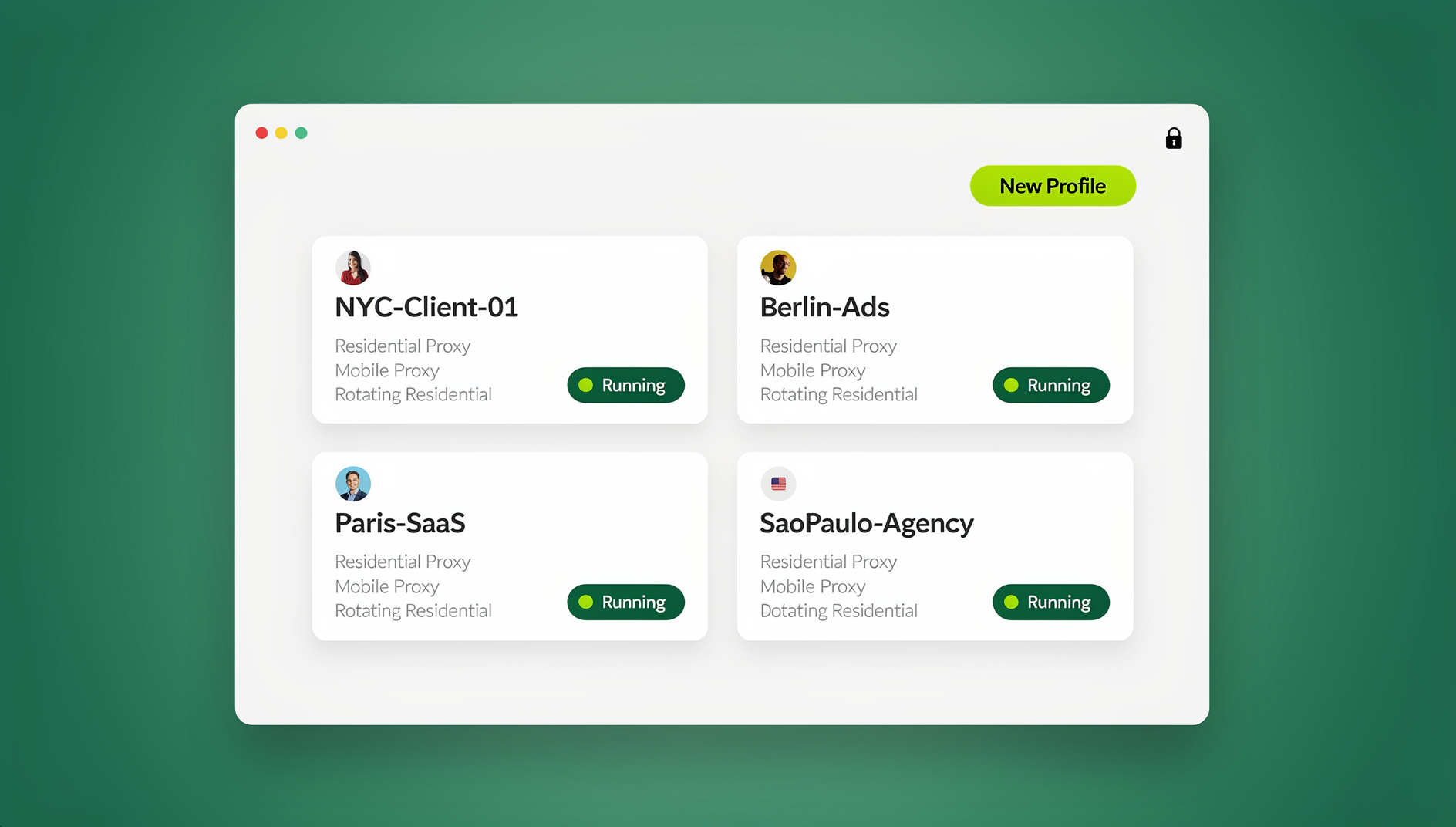
That is the gap antidetect browsers fill. Each profile runs in its own sandbox with a spoofed fingerprint and optional proxy, making sessions unlinkable. Tools like Send.win’s Sendwin Browser provide this through a native desktop app with per-profile fingerprint management, while cloud browser sessions let you run profiles remotely without installing anything locally.
🏆 Send.win Verdict
Hardening Edge’s eleven privacy settings is a solid first step — it kills the most obvious tracking vectors and cuts telemetry significantly. But Edge still runs one fingerprint, one IP, and one cookie jar across all your tabs. When you need genuine session isolation — separate fingerprints, proxies, and storage per profile — Send.win’s Sendwin Browser (desktop app) and cloud browser sessions pick up where browser settings leave off. The Pro plan starts at $19/month or $83.88/year, and the first card purchase is covered by a 7-day money-back guarantee. You can also try the free cloud demo at https://send.win/demo-browser/.
Try Send.win free today — 150 isolated profiles with unique fingerprints, starting at $6.99/mo.
Frequently Asked Questions
Is Microsoft Edge safe for privacy in 2026?
Edge is safer than its defaults suggest, but only after manual hardening. Out of the box, it sends substantial telemetry to Microsoft, defaults to Balanced tracking prevention, and leaves dozens of permissions open. With the eleven settings above changed, Edge becomes reasonably private for everyday browsing — though it still cannot match dedicated privacy browsers or antidetect tools for session isolation.
Does InPrivate mode make Edge private?
InPrivate mode deletes cookies and history when you close the window, but it does not change your IP address, mask your browser fingerprint, or prevent your ISP from seeing your traffic. It is a session cleanup tool, not a privacy tool. For genuine anonymity, you need separate profiles with distinct fingerprints and IP addresses.
Should I disable SmartScreen in Edge?
SmartScreen sends every URL you visit to Microsoft for phishing checks. If you use a DNS-level malware filter like Quad9 or NextDNS, you can safely disable it. Otherwise, the phishing protection is worth the privacy trade-off for most users.
Can Edge prevent browser fingerprinting?
Not effectively. Edge does not include built-in fingerprint randomization. Extensions like Canvas Blocker can interfere with some APIs, but blocking (rather than spoofing) fingerprinting surfaces can make you more identifiable. True fingerprint protection requires spoofing — generating a plausible, unique fingerprint per session — which is what antidetect browsers provide.
What is the best search engine for privacy in Edge?
DuckDuckGo, Brave Search, and Startpage are the top privacy-respecting alternatives to Bing. DuckDuckGo stores no search history and builds no user profiles. Startpage proxies Google results without Google’s tracking. Switch via edge://settings/search.
Does Edge Strict tracking prevention break websites?
Some websites lose embedded social widgets, comment sections, or third-party payment forms on Strict mode. Add those specific sites to the exceptions list rather than downgrading the global level. Most everyday browsing works fine on Strict.
How does Edge compare to Firefox for privacy?
Firefox offers stronger built-in protections — Enhanced Tracking Protection, Total Cookie Protection (per-site cookie jars), and fingerprinting resistance — without the Microsoft telemetry layer. Edge’s advantage is its Chrome extension compatibility and tighter Windows integration. For pure privacy, Firefox with hardened settings edges out Edge, but neither browser provides true session isolation across multiple profiles.
Can I use Edge for managing multiple accounts privately?
Edge’s profile system lets you create separate browser profiles, but they share the same fingerprint, the same IP address, and no spoofing. Platforms that use fingerprinting or device-level signals can link your profiles together. For multi-account management that resists detection, you need isolated profiles with unique fingerprints and proxies — which is what tools like Send.win provide.
How Send.win Helps With Edge Browser Privacy Settings 2026
Send.win is a browser profile manager built for exactly this kind of work — every profile is a clean, isolated identity:
- Isolated profiles – unique fingerprint, separate cookies and storage per profile
- Per-profile fingerprint – each profile keeps its own consistent browser fingerprint, including canvas, WebGL, fonts, and audio
- Desktop app + cloud sessions – native app for Windows, macOS, and Linux, or run profiles in the cloud with no install
- Built-in residential proxies – with automatic timezone, locale, and WebRTC matching
- Team features – share logged-in profiles with teammates without sharing passwords
Try the instant cloud browser demo — no install, no signup — or download the desktop app. There is no free trial; paid plans start at $19/month, and the first card purchase is covered by a 7-day money-back guarantee (see pricing).