Manage multiple accounts in the same browser without constantly logging out, clearing cookies, or juggling five different browser windows — that’s the problem this guide solves. Back in 2022 we published a quick roundup of free extensions for this exact job. A lot has changed since then: two of the original extensions have become unreliable, SessionBox has raised its prices significantly, and dedicated multi-login browsers have matured into the real solution most professionals now use. This is the fully updated 2026 version, with an honest look at what still works, what to avoid, and what to use instead.
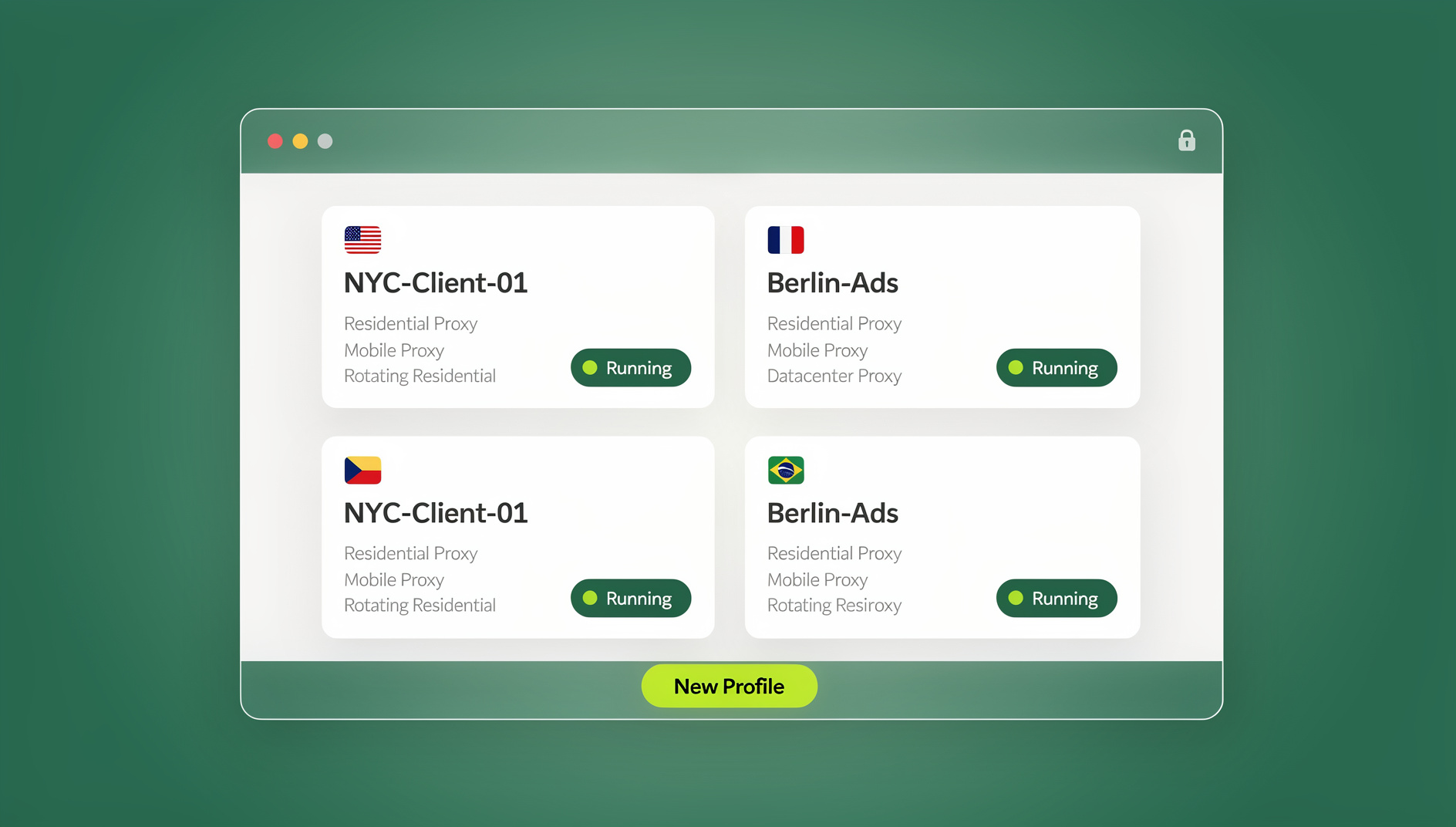
What Does It Mean to Manage Multiple Accounts in the Same Browser?
By default, a browser ties every tab to one shared session. Open Gmail, Instagram, or Amazon in a second tab and you’re still logged into the same account — there’s no native way to be “you” in one tab and a second identity in another, on the same site, at the same time.
Managing multiple accounts in the same browser means adding a layer on top of that default behavior so each account gets its own isolated identity — its own cookies, local storage, and (in more advanced tools) its own browser fingerprint — while still running inside a single browser window instead of five separate ones.
There are three broad ways to achieve this in 2026, and they are not interchangeable:
- Cookie-swapping extensions — save and restore a cookie jar for one account at a time. Simple, free, but fragile.
- Container tabs — sandbox cookies per tab (Firefox’s native approach). Free and reasonably safe, but limited to Firefox and to cookie-level separation only.
- Multi-login / anti-detect browsers — create fully isolated browser profiles, each with its own cookies, storage, and fingerprint, that can be reopened, shared, or automated independently. This is the category tools like Send.win belong to.
Why People Need to Run Multiple Accounts at Once in 2026
This isn’t a niche need. Some of the most common reasons people search for this today include:
- Social media managers and agencies running client accounts on Facebook, Instagram, and TikTok in parallel.
- E-commerce sellers operating multiple storefront accounts on Amazon, eBay, or Etsy without triggering “linked account” bans.
- Affiliate marketers and media buyers running several ad accounts side by side.
- Freelancers and consultants juggling multiple client logins for the same platform (Google Ads, Ahrefs, project tools).
- QA and developer teams testing how an app behaves for different user roles at once.
- Regular users who simply have a personal and a work account on the same service and are tired of logging in and out.
How Multi-Account Extensions and Tools Actually Work
Cookie-Swapping Extensions
The oldest and simplest method. The extension exports the current tab’s cookies into a saved “slot,” clears them, and lets you reload a different saved cookie jar later. It works, but because it’s rewriting your live browser cookie store, a bad save/restore cycle can corrupt your session data and force a full cookie reset. Most of these extensions also restrict you to one active identity per tab — you can’t run two logged-in sessions side by side without opening extra windows.
Container Tabs
Firefox’s Firefox Multi-Account Containers approach color-codes tabs and gives each one its own cookie jar, all inside one browser window. It’s genuinely useful, free, and safe — but it only isolates cookies, not your canvas/WebGL/font fingerprint, and it’s Firefox-only, so it won’t help if your workflow depends on Chrome-based extensions or tooling.
Multi-Login / Anti-Detect Browsers
This category — which includes Multilogin, SessionBox, and Send.win — creates persistent, independently isolated browser profiles. Each profile behaves like a completely separate physical browser with its own storage, cookies, and (in the more advanced tools) its own fingerprint parameters, so platforms see each profile as a different device rather than flagging them as the same user logging in twice.
Comparison Table: Best Tools to Manage Multiple Accounts in 2026
| Tool | Type | Free Option | Multi-Tab / Parallel Use | Fingerprint Isolation | Best For |
|---|---|---|---|---|---|
| Easy Account Switcher | Cookie-swap extension | Yes | No (one tab only) | No | Very light, occasional Google/Facebook switching |
| Cookie Account Switcher | Cookie-swap extension | Yes | Limited (manual new-tab trick) | No | Casual multi-site switching |
| Firefox Multi-Account Containers | Native browser containers | Yes | Yes, within Firefox | No | Firefox users who only need cookie isolation |
| SessionBox | Session-sharing extension | Very limited free tier | Yes | Partial | Small teams already using Chrome/Edge |
| Multilogin | Anti-detect browser | Trial only, no free tier | Yes | Yes, advanced | Agencies needing deep fingerprint control |
| Send.win | Browser profile manager + Desktop app | No free trial; paid plans from $19/mo, first card purchase covered by a 7-day money-back guarantee; free cloud demo available | Yes, unlimited parallel profiles | Yes, unique fingerprint per profile | Teams, marketers, and sellers wanting affordable, easy multi-account management |
The Best Extensions and Tools to Manage Multiple Accounts, Reviewed
1. Easy Account Switcher
Easy Account Switcher is a free Chrome extension that saves cookies for Google and Facebook profiles so you can log back in with one click. It’s easy to install but comes with two real drawbacks: it can mess up your browser’s cookie settings badly enough that you need to clear all data and reset the browser, and it only supports one active account per tab — no true parallel sessions.
2. Cookie Account Switcher
A step up from the above — it isn’t limited to Google and Facebook, and you can right-click to open a saved session in a new tab. Still, by default it doesn’t support opening multiple sessions in parallel tabs, so you’re doing a lot of manual right-clicking to get real multitasking.
3. Firefox Multi-Account Containers
If you’re already a Firefox user, this is the safest free option. Because it’s built by Mozilla rather than a third-party extension rewriting your cookie jar, there’s no risk of the corruption issues that plague cookie-swap tools. The tradeoff is that it’s Firefox-only and doesn’t touch fingerprinting — sites that specifically check for duplicate device fingerprints can still connect your accounts.
4. SessionBox
SessionBox was, for years, the most widely installed multi-login extension, and its interface is still solid. The catch in 2026 is pricing — SessionBox’s paid tiers have climbed noticeably, and the useful features (unlimited sessions, team sharing) all sit behind those higher-priced plans. If you’re evaluating it, it’s worth comparing it directly against a SessionBox alternative before committing to a subscription.
5. Multilogin
Multilogin remains a serious tool for agencies that need granular control over browser fingerprints — canvas, WebGL, fonts, timezone, and more. It’s powerful, but there’s no free plan, the learning curve is steeper, and pricing is aimed at power users running dozens of profiles professionally. Teams that find it overkill for their scale often look at a lighter Multilogin alternative instead.
6. Send.win
Send.win takes the multi-login browser concept and makes it accessible without an agency-level learning curve or price tag. Each profile you create gets its own isolated cookies, local storage, and unique browser fingerprint, so you can be logged into unlimited accounts on the same platform at once — in separate tabs, side by side, without tripping “same device” detection.
What makes Send.win different from the older extensions on this list is that it isn’t fighting your browser’s cookie jar — it’s a purpose-built multi-login environment, not an extension bolted onto your existing browser. You get it two ways: a full native Sendwin Browser desktop app for Windows, macOS, and Linux for anyone managing profiles daily, or a cloud browser session that runs entirely online with zero local install, so you can jump into an isolated profile from any machine without setting anything up. Sessions sync across devices under your account, so you can start a session on one machine and continue it on another. For agencies and dev teams, the Team plan adds team sharing and collaboration across dozens of isolated profiles instead of clicking through them by hand.
Step-by-Step: Setting Up Send.win to Manage Multiple Accounts
Here’s the actual workflow, whether you use the native desktop app or a cloud browser session:
- Start with a paid plan. Go to send.win and choose a paid plan — the first card purchase is covered by a 7-day money-back guarantee. You can also preview the cloud demo for free.
- Choose your access point. Download the native Sendwin Browser desktop app (Windows, macOS, or Linux) if you want a dedicated multi-profile workspace, or start a cloud browser session straight from your account for quick access with zero local install.
- Create your first profile. Each profile is a fully isolated environment — give it a name (e.g., “Client A – Instagram”) so you can find it instantly later.
- Attach a proxy (optional but recommended). If the accounts belong to different regions or clients, assign each profile its own residential or datacenter proxy so the IP matches the account’s expected location.
- Log into the account inside that profile. From this point on, that login lives inside the isolated profile — it won’t mix with any other account’s cookies or fingerprint.
- Repeat for each account you need. Open as many profiles as your plan allows, side by side, in separate tabs or windows.
- Share profiles with your team, if needed. Rather than handing out the password, share the session itself so teammates get access without ever seeing the credentials.
- Scale with team sharing (Team plan). Share isolated profiles with your team and work across many profiles together instead of manually switching between them.
Extension vs. Dedicated Multi-Login Browser: Which Should You Choose?
The honest answer depends on scale. If you occasionally need to check a second Gmail account, a free cookie-switcher or one of the lighter Chrome extensions for managing multiple login sessions is probably enough. But the moment you’re managing client work, running more than two or three accounts on the same platform, or worried about a platform linking your accounts together, a dedicated tool built for isolation is the safer and faster path.
| Situation | Recommended Approach |
|---|---|
| Personal + work account, same platform, occasional switching | Firefox Multi-Account Containers or a basic cookie-switcher |
| Managing 3+ client or store accounts on the same site | A multi-login browser like Send.win |
| Agency running dozens of ad or social accounts | Send.win Team plan with proxy assignment and shared access |
| QA/dev team needing scripted logins across profiles | Send.win has no automation interface (no API, SDK, headless mode or Selenium/Puppeteer/Playwright support) |
Risks to Watch Out For With Free Cookie-Switcher Extensions
- Cookie corruption. A bad save/restore cycle can force you to clear all browser data and start fresh, losing every saved session.
- Single-tab limitation. Most free switchers can’t run two logged-in sessions in parallel tabs — you’re still switching back and forth, just with fewer clicks.
- No fingerprint isolation. Cookie-level tools don’t touch canvas, WebGL, or device fingerprinting, so platforms that check for duplicate devices can still connect your accounts even after you swap cookies.
- Broad permissions. Any extension that can read and rewrite your cookies technically has access to your session tokens — only install cookie-switching extensions from developers you trust, and review permissions before installing.
- No team-sharing controls. If you need to hand access to a teammate, cookie-switchers offer no safe way to do that without literally sharing your password.
🏆 Send.win Verdict
Free cookie-switching extensions can work for the occasional one-off account swap, but they’re fragile, single-tab, and offer zero fingerprint protection — exactly the gaps that get accounts flagged or sessions corrupted. Send.win replaces all of that with unlimited isolated profiles, a native Desktop app, built-in proxies, and team sharing for teams that need to manage logins at scale.
Try Send.win today — choose a paid plan, with the first card purchase covered by a 7-day money-back guarantee, and manage every account you need from one clean browser.
Frequently Asked Questions
What’s the difference between a browser extension and a multi-login browser for managing accounts?
A cookie-switching extension saves and restores one cookie jar at a time inside your existing browser, which limits you to one active session per tab. A multi-login browser like Send.win creates fully separate, persistent profiles — each with its own cookies, storage, and fingerprint — so you can run several accounts on the same site simultaneously in different tabs without any of them interfering with each other.
Are cookie-switching extensions like Easy Account Switcher safe to use?
They’re generally safe for light, occasional use, but they carry real risk: a failed save/restore cycle can corrupt your browser’s cookie store and force you to clear all data. They also request broad permissions to read and modify cookies, so only install one from a developer you trust.
Can I open two accounts on the same website in two tabs without an extension?
Not with a standard browser window — both tabs share the same cookie jar by default. You’d need either your browser’s native private/incognito mode (only good for two accounts total, and clumsy for anything more), a containers feature, or a dedicated multi-login tool that isolates each tab’s session independently.
Do I need to pay to manage multiple accounts in one browser?
Not necessarily — Firefox’s Multi-Account Containers and basic cookie-switcher extensions are free. But free tools only isolate cookies, not fingerprints, and don’t scale well past two or three accounts. If you’re managing accounts professionally, Send.win’s paid plans (first card purchase covered by a 7-day money-back guarantee) let you test the paid-grade features before committing.
What is Send.win and how is it different from Multilogin or SessionBox?
Send.win is a multi-login browser that gives every profile its own unique fingerprint, isolated cookies and storage, built-in proxy support, and team-sharing controls. Compared to Multilogin, it’s built to be far easier to set up for non-technical users at a lower price point; compared to SessionBox, it includes fingerprint isolation plus a native desktop app and cloud browser sessions, instead of relying on a browser extension at all.
Does Send.win have a desktop app, or is it just a browser extension?
Send.win does not have a browser extension. It works two ways: a full native Sendwin Browser desktop app for Windows, macOS, and Linux for a dedicated multi-profile workspace, and cloud browser sessions that run entirely online with zero local install, so you can access an isolated profile from any machine without downloading anything, with sessions syncing across devices.
Can I automate logins across multiple profiles with Selenium or Playwright?
No — Send.win has no automation interface: no API, SDK, headless mode or Selenium/Puppeteer/Playwright support on any plan. You manage isolated profiles through the desktop app or cloud browser instead.
Is it against platform terms of service to manage multiple accounts?
It depends entirely on the platform and the reason. Many platforms explicitly allow multiple accounts for legitimate uses like separate personal/business profiles or agency client management, while others restrict it for specific reasons like preventing review manipulation or spam. Always check the specific platform’s terms before running multiple accounts for commercial purposes, and use isolated profiles to avoid unrelated accounts being mistakenly linked together.
How many accounts can I realistically manage at once with Send.win?
Send.win’s Pro plan supports up to 150 profiles, and the Team plan scales to 500 profiles with 16 seats — more than enough for most agencies, sellers, and social media managers running multiple client or store accounts in parallel.