Why You Need to Secure Your Multi-Account Setups in 2026
This comprehensive antidetect browser privacy multi account guide 2026 9 details how to configure isolated browser profiles to run multiple digital identities without detection. By manipulating hardware parameters such as canvas rendering, graphics engines, and audio signatures, antidetect browsers prevent tracking platforms from linking accounts. In this guide, we provide nine critical tips for setting up secure multi-account environments, avoiding common detection traps, and utilizing cloud-based isolation for maximum reliability.
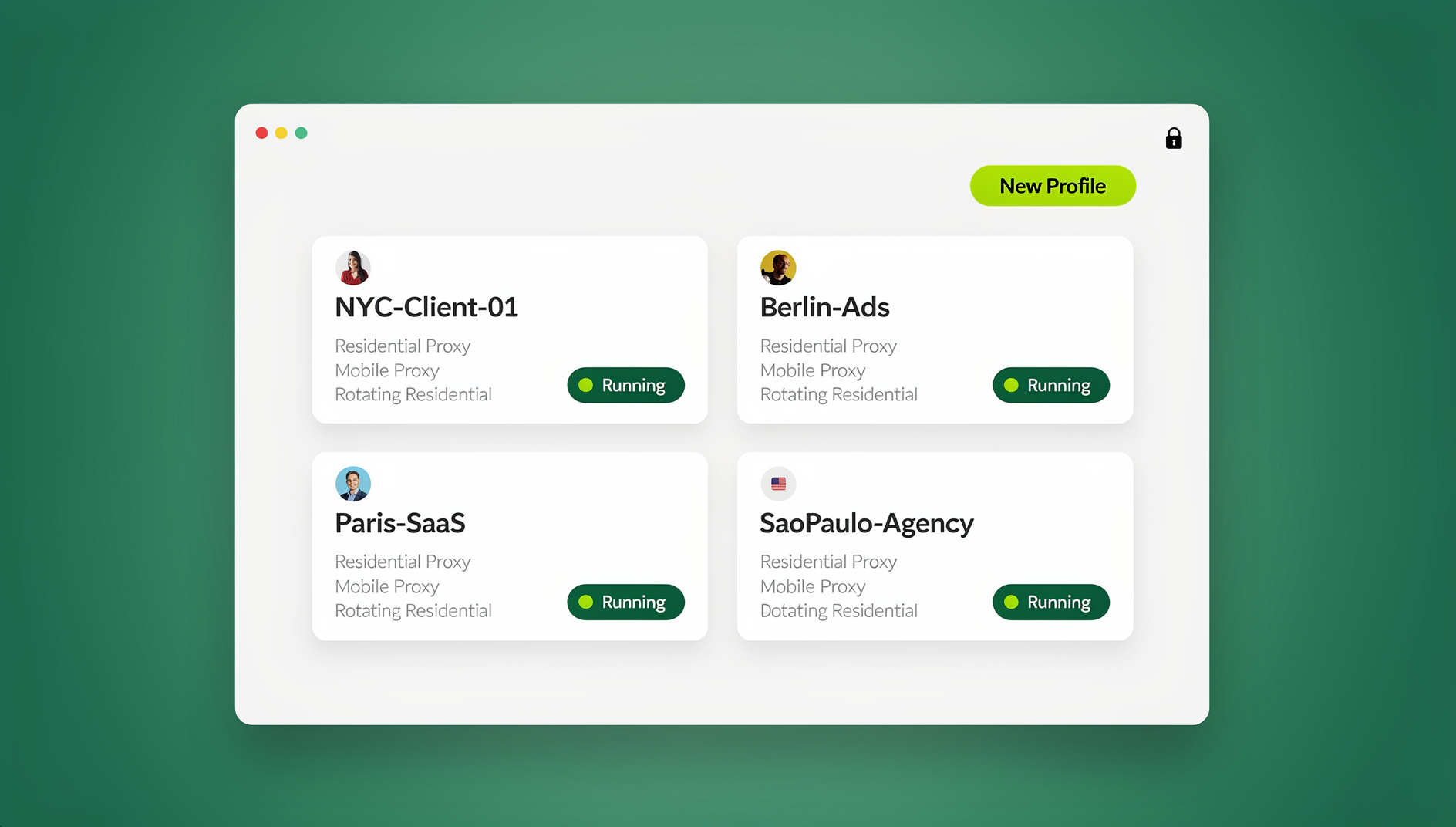

Web platforms have deployed highly sophisticated anti-fraud and tracking systems that monitor browser signatures in real-time. If you attempt to operate multiple storefronts on Amazon, run separate Facebook ad profiles, or manage distinct client accounts using normal web browsers, platforms will immediately detect the shared hardware parameters. Once linked, these accounts are flagged for multi-account abuse, resulting in instant suspensions and lost revenue. To protect your operations, you must implement a structured multi-profile strategy that covers every aspect of your digital footprint.
An anti-detect browser provides the foundational technology for this separation. By running modified browser engines, these tools allow you to create distinct profiles, each with its own isolated cookies, local storage, and hardware fingerprint. However, simply downloading the software is not enough. You must configure your profiles correctly to ensure they remain consistent and bypass verification checks. The following nine tips cover the technical configurations required to secure your digital identities.
Understanding these details is particularly important for agencies handling high client volumes. If one client’s account is flagged due to a signature mismatch, it can compromise other profiles run from the same system. This cascading suspension effect can destroy months of marketing work. By following the tips outlined in this antidetect browser privacy multi account guide 2026 9, you can ensure that each profile remains completely anonymous and isolated from others.
Tip 1: Choose the Right Isolation Architecture
When selecting a platform, choose one that offers both local and cloud-based isolation. A desktop client gives you direct control over your profiles, while cloud browser sessions run the browser on remote servers. Running sessions in the cloud ensures that no local host parameters are exposed, and allows you to access your accounts from any device without installing heavy client software. This choice impacts both your team’s agility and the security of your setups.
Cloud-native sessions run in isolated containers on remote server farms. This means that even if a platform runs low-level operating system checks, it will only see the standardized server hardware of the cloud host, entirely hiding your physical computer’s parameters. This makes cloud-based isolation highly secure against aggressive detection mechanisms.
Tip 2: Deploy Mobile or Residential Proxies
Your network IP address is the first line of defense. Datacenter proxies are cheap but easily detected by security systems because they belong to known server ranges. Always use residential or mobile proxies for your high-value profiles. Mobile proxies are particularly effective because they share IP pools with thousands of cellular users, making them highly trusted by web platforms. They also feature rotating IPs, which further obfuscates your footprint.
When setting up proxies, make sure to use SOCKS5 or HTTP protocols that support keep-alive connections. This prevents the connection from dropping during sensitive tasks. A high-quality proxy provider will ensure that DNS requests are resolved at the proxy end, preventing DNS leaks that reveal your home ISP country and location.
Tip 3: Configure Timezones and Language Settings
Your browser’s internal timezone and language settings must align with the geographic location of your proxy IP. If your proxy resolves to Tokyo, but your browser queries return a New York timezone, platforms will flag the mismatch immediately. Ensure your profile configuration is set to automatically match browser timezone and language headers to your proxy coordinates. This prevents the location leakage that exposes spoofed profiles.
Website security systems query the browser via the JavaScript `Intl.DateTimeFormat().resolvedOptions().timeZone` API. If this value does not match the geographic timezone of the IP, it is a high-risk indicator. Advanced anti-detect browsers dynamically override this API response to match the proxy IP, keeping your profile’s geographic footprint perfectly consistent.
Tip 4: Implement Canvas and WebGL Graphics Spoofing
Canvas and WebGL fingerprinting analyze how your graphics hardware renders shapes and 3D scenes. Ensure your anti-detect browser is configured to add consistent mathematical noise to these rendering APIs. Adding noise alters the generated hash, preventing platforms from identifying your actual graphics card model and driver version. This noise must remain stable for the same profile over time to avoid inconsistency flags. If a site queries your canvas hash three times in the same session, it must get the exact same noisy output every time, otherwise the session will be flagged for active tampering.
In addition to canvas noise, you must configure your WebGL parameters. This includes spoofing the GL_RENDERER and GL_VENDOR strings. If you are simulating a Windows device, report a common GPU like Intel UHD Graphics or NVIDIA GeForce, and ensure the WebGL parameters and capabilities match that GPU profile. Matching the shader precision format and hardware float limits is also required to maintain profile consistency.
Tip 5: Mask Your Audio Fingerprint and Media Device Lists
Websites can fingerprint your device by generating silent audio signals and measuring how your hardware processes them. They can also query your media device list to see your microphones and speakers. Your browser profiles should spoof these lists and add subtle noise to the Web Audio API to prevent audio-based tracking. This ensures that every profile has a unique audio rendering profile that cannot be matched to other sessions.
The Web Audio API allows websites to analyze audio node dynamics, which reveals minor hardware variances in your audio card. By injecting a constant, non-audible noise buffer into the audio node output, you mask your physical audio hardware signature while presenting a realistic, functioning audio system to the website. The media device enumeration list should also return common labels (like Realtek High Definition Audio) and matching device IDs to make the profile look completely organic.
Tip 6: standardise System Font Lists
Websites check the list of fonts installed on your computer to identify your system. Because designers and professionals install custom font packages, your font list can be highly unique. Configure your profiles to use a standardized font list that matches the target operating system (e.g., standard Windows or macOS font lists) to blend in with normal traffic. Never let a profile reveal a rare font that points back to your host machine.
This tracking is done by rendering text strings in different fonts inside hidden divs and measuring their width and height. If a font exists, the text box size will change. By restricting the fonts queryable by the browser to a predefined safe list, you blend into the crowd of standard internet users. It is also important to spoof the CSS system font fallbacks and Unicode character ranges to match your profile’s language settings.
Tip 7: Match WebRTC Parameters to Network IPs
WebRTC leaks can expose your real local IP address even if you are using a proxy. Ensure your profile’s WebRTC settings are configured to spoof your local interfaces and route all WebRTC traffic exclusively through your proxy IP, preventing any direct leaks to web servers. This is critical for preventing platforms from finding your home network details.
WebRTC uses the STUN protocol to discover local and public IP addresses for direct peer-to-peer connections. A basic browser will leak your private LAN IP (like 192.168.1.50) and your actual home public IP. Anti-detect tools override this by blocking WebRTC entirely or forcing it to resolve only to the proxy’s IP, eliminating leaks.
Tip 8: Control Screen Resolution and Viewport Geometry
Ensure that your profile’s reported screen resolution matches the viewport dimensions of the browser window. A common mistake is spoofing a 1920×1080 display while running the browser in a smaller window, creating an obvious inconsistency that automated checks will spot. The browser viewport, available height, available width, and color depth must tell a consistent story.
Security scripts check properties like `screen.availHeight` (screen size minus taskbar) and `window.outerHeight` (browser window size). If you maximize your window, the outer height should match the available screen height. Anti-detect browsers automatically adjust these values in their window sizing algorithms to prevent mismatch flags.
Tip 9: Move to Cloud Browser Sessions to Remove Local Risks
For the highest security, move your profiles to cloud browser sessions. By running the browser on a remote cloud server, you remove any possibility of local hardware leaks. Even the most aggressive tracking scripts will only see the clean, server-grade hardware of the cloud instance, ensuring your real device remains completely isolated and free from detection. It also offloads all memory overhead from your local computer.
Cloud sessions are executed on containerized server infrastructure. Because the code is executed remotely, local scripts cannot access your physical machine’s drivers or hardware. This physical separation is the absolute defense against modern digital identification algorithms, allowing scalable management of sensitive business accounts.
Comparison of Isolation Technologies
To help you choose the right approach for your privacy requirements, let us compare the different methods of protecting your browser sessions:
| Protection Method | IP Protection | Fingerprint Spoofing | Setup Complexity | Scalability |
|---|---|---|---|---|
| VPN Only | ✅ High (Shared IP) | ❌ None | Low | Low (Single IP per device) |
| Desktop Anti-Detect Client | ✅ High (Per-profile proxy) | ✅ High (API Spoofing) | Medium | Medium (Bound to local RAM/CPU) |
| Cloud Browser Isolation | ✅ High (Per-session proxy) | ✅ Critical (Genuine Remote HW) | Low | ✅ High (Infinite cloud scaling) |
This comparison illustrates the progression of privacy tools. A VPN only secures your network connection, leaving your device hardware wide open. A desktop client begins to spoof these hardware signals, but remains limited by local hardware constraints. Cloud isolation provides a clean break, running real browsers in remote server pools where there is no local profile data to discover. This makes cloud isolation the gold standard for high-security multi-account workflows.
How to Secure and Test Your Infrastructure
Implementing a secure profile environment requires regular testing and validation. You must ensure that your settings do not leak any identifying parameters before accessing your business accounts.
To establish a secure baseline, configure a reliable browsing protection strategy. Pair this with a dedicated proxy browser setup to isolate your network requests. For deeper technical isolation, you can implement browser isolation technology, which sandboxes your profiles and prevents cross-site scripts from querying device metadata. This multi-layered approach ensures that even if one layer fails, your actual location and identity remain secure.
Use public checkers like CreepJS, Pixelscan, and BrowserLeaks to verify your setup. If the checkers show green indicators and do not flag any inconsistencies, your profile is safe. If any warnings appear, adjust your profile configurations (such as user-agent version or WebGL renderer) until the fingerprint is perfectly clean. Make this verification check a mandatory part of your team’s account management workflow.
🏆 Send.win Verdict
Managing multiple accounts requires a secure, consistent approach to privacy. Send.win provides this through isolated cloud browser sessions that run on secure remote servers. Each profile keeps its own cookies, storage and consistent browser fingerprint, so profiles do not share one browser identity. Send.win has no free trial; paid plans start at $19/month (or $83.88/year) for Pro, and the first card purchase is covered by a 7-day money-back guarantee. The only free option is the cloud demo at https://send.win/demo-browser/.
Try Send.win free today — secure your multi-account operations with cloud-based browser isolation.
Frequently Asked Questions
What is an antidetect browser?
It is a browser designed to let you manage multiple profiles with different fingerprints. It spoofs hardware and software characteristics so that websites treat each profile as a unique physical device, allowing safe multi-account management.
How do I run multiple accounts safely?
To run multiple accounts safely, assign a dedicated residential or mobile proxy to each browser profile. Make sure the profile’s timezone, language, and WebRTC settings match the proxy’s location to prevent identity flags.
Do I need to pay for an antidetect browser?
Many providers offer limited free plans for a few profiles. However, for commercial use, you will need a paid plan. Send.win plans start at $19/month (or $83.88/year), and the first card purchase is covered by a 7-day money-back guarantee.
What is the difference between local and cloud-based isolation?
Local isolation modifies browser parameters on your physical machine. Cloud isolation runs real browser instances on remote cloud servers. Cloud isolation is more secure because it has no local hardware parameters to leak, and it uses less local CPU and RAM.
Can websites detect antidetect browsers?
Yes, websites look for inconsistencies in browser parameters (like canvas anomalies or version mismatches). To avoid detection, you must use high-quality tools that maintain internal parameter consistency and keep their engines updated.
Does Send.win support browser automation?
Send.win does not offer an automation interface: there is no API, SDK, headless mode or Selenium/Puppeteer/Playwright support on any plan.
What is the refund policy for Send.win?
Send.win has no free trial. The only free option is the cloud demo at https://send.win/demo-browser/. If you choose to subscribe and need to cancel, you can manage your plan directly in your billing portal.
Conclusion
Bypassing modern tracking systems requires a deep understanding of browser fingerprinting and network security. By following this antidetect browser privacy multi account guide 2026 9 and implementing our nine tips, you can build a secure, scalable multi-account browsing setup. Moving your workflows to cloud-native browser isolation, such as the sessions provided by Send.win, is the most reliable way to secure your operations, protect your digital assets, and collaborate with your team without the risk of suspensions. Continuous testing and adaptation are key to keeping your digital profiles safe in this evolving arms race.