What Is the Best Browser Fingerprinting Solution for Modern Web Security?
The best browser fingerprinting solution for most online organizations is Fingerprint (formerly FingerprintJS Pro) due to its 99.5% identification accuracy and developer-friendly APIs. However, companies requiring full data residency control often select the open-source FingerprintJS library, while security teams seeking to manage multiple distinct digital profiles use isolated environments like Sendwin. Selecting the right solution depends heavily on whether your primary objective is fraud prevention, user analytics, or secure account operations.
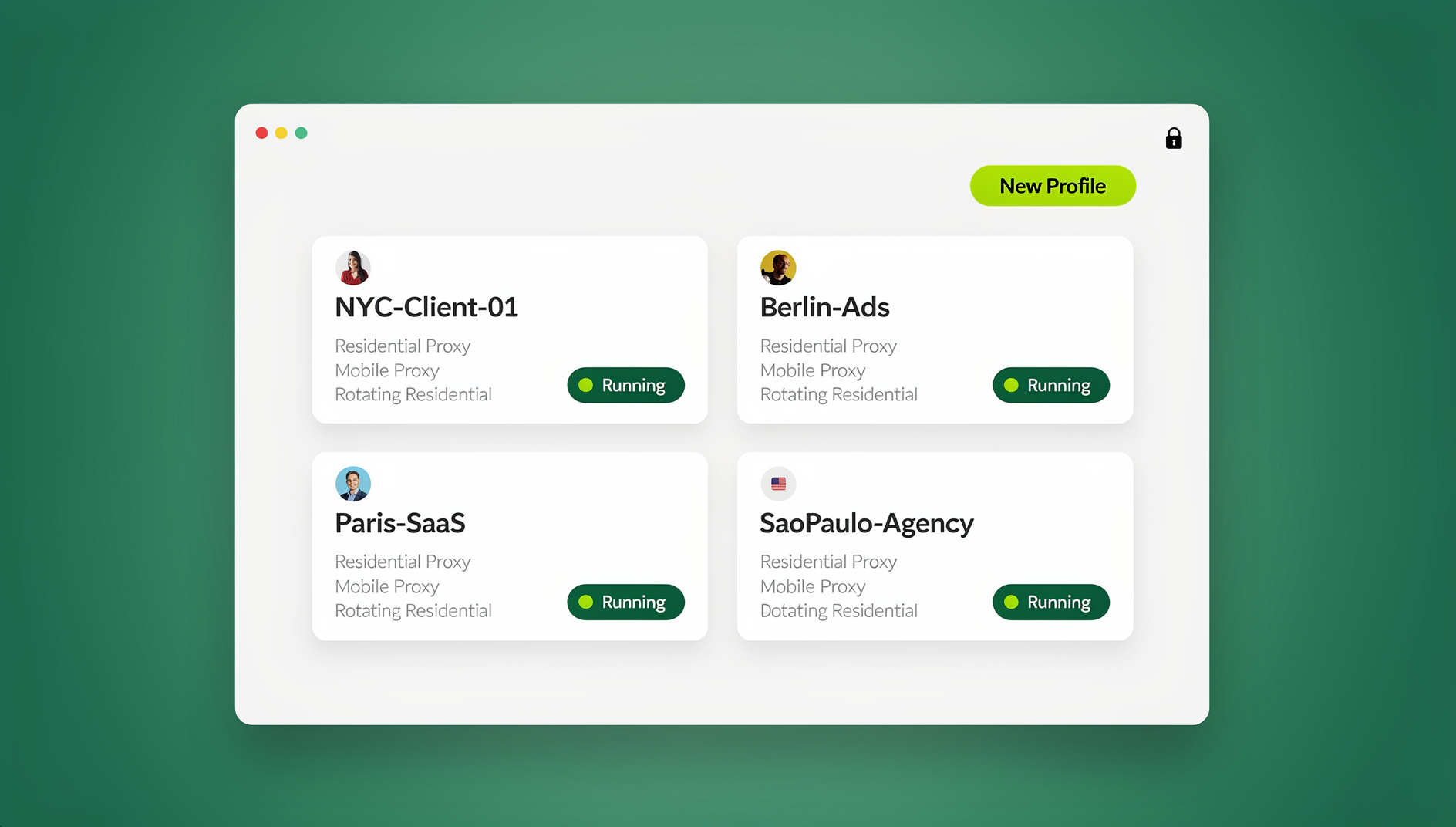

Comparison: The Best Browser Fingerprinting Solutions at a Glance
When selecting an identification system, you must weigh accuracy against cost, latency, and integration complexity. The table below compares the industry-leading solutions based on their operational profiles and target use cases:
| Fingerprinting Solution | Accuracy Rate | Key Use Case | Proxy Support | Pricing Model |
|---|---|---|---|---|
| Fingerprint | 99.5% | Universal visitor identification & fraud prevention | No (API only) | SaaS (starts at $99/mo) |
| ThreatMetrix | Very High | Enterprise banking & high-volume fintech protection | No (Consortium API) | Enterprise contract only |
| FingerprintJS OSS | 60-70% | Basic client-side analytics without cookie tracking | No (Local library) | Free (MIT License) |
| SEON | High | Transaction monitoring & fraud scoring | No (Platform API) | Usage-based pricing |
| Sendwin | 100% (Genuine Nodes) | Multi-account management & profile isolation | Yes (Built-in proxy) | Starts at $19/mo (annual $6.99/mo) |
The Evolution of Device Identification: From Cookies to Fingerprints
To appreciate the current landscape of tracking technologies, it is helpful to look at how device identification has evolved over the past decade. Traditionally, websites relied almost exclusively on HTTP cookies to recognize returning visitors. A cookie is a simple piece of text stored on the user’s hard drive. However, as users became more privacy-conscious, browsers introduced strict cookie-blocking features, and users regularly cleared their local storage. This shift forced security and marketing teams to develop probabilistic identification methods that did not rely on local files.
Browser fingerprinting emerged as the answer to this challenge. Instead of writing a file to the user’s storage, fingerprinting systems read queryable properties directly from the web browser. These properties include system configurations, hardware characteristics, and software versions. By combining these signals, fingerprinting engines generate a highly unique hash that serves as a persistent device signature. Today, the technology has progressed from basic client-side scripts to complex machine learning platforms that process signals on remote servers to ensure accuracy even through browser updates and hardware alterations.
Key Evaluation Criteria for Fingerprinting Technologies
To determine the best browser fingerprinting solution for your business, it is essential to understand the technical metrics that govern identification. Rather than looking purely at marketing claims, security teams must evaluate three main aspects: signal entropy, persistence, and spoofing resistance.
Identification Accuracy and Stability
Accuracy measures the system’s ability to consistently identify a returning visitor while avoiding false positives (identifying two separate users as the same entity). The best systems combine client-side signal collection with server-side machine learning. This hybrid approach ensures that minor browser updates or changes in network conditions do not break the visitor identifier, providing a stable long-term tracking mechanism.
Stability is particularly challenging because browsers are highly dynamic. A user might update their operating system, install a new font package, change their preferred language, or update their browser version. A basic client-side script will generate an entirely new hash after any of these events. The best fingerprinting APIs use fuzzy matching and historical device linking algorithms to associate these changing profiles back to a single master visitor ID.
Anti-Bot and Spoofing Detection
Modern fraud prevention requires more than just tracking; it requires detecting when a browser is actively hiding or manipulating its identity. Sophisticated bots and automated frameworks (such as Puppeteer, Playwright, or Selenium) can modify their user agents and canvas hashes. A high-quality fingerprinting solution must run consistency checks to identify mismatched parameters and detect canvas poisoning or WebGL randomization techniques.
For example, if a browser claims to be running Safari on macOS, but its audio latency matches a Linux kernel, the system must detect this inconsistency. Furthermore, if a browser reports that it has no installed fonts or presents a randomized canvas signature every time it is queried, the system must flag it as an automated anti-tracking tool rather than a genuine user browser.
Developer SDKs and Implementation Ease
An API is only as good as its integration path. Developers look for comprehensive documentation, official SDKs for major programming languages (including JavaScript, React, Node.js, Python, and Go), and robust webhooks that deliver real-time risk scores. The latency of the API call also matters; client-side scripts should load asynchronously and complete their telemetry collection in under 100 milliseconds to avoid degrading page performance.
Additionally, developers require comprehensive debugging tools. When testing a fingerprinting API in staging environments, it is crucial to trace exactly how the identification decision was reached. Clear dashboards that display the individual confidence scores for each collected signal help engineers calibrate their security thresholds without blocking legitimate customers.
Detail Review of the Top 5 Fingerprinting Solutions
Evaluating the top browser fingerprinting solutions reveals that each occupies a distinct niche in the security and analytics ecosystem. Below, we analyze their capabilities, primary architectures, and operational differences.
1. Fingerprint (FingerprintJS Pro)
Fingerprint has established itself as the market leader for developer-centric visitor identification. Unlike basic client-side libraries, Fingerprint operates a hybrid platform. When a user visits your site, a client-side agent collects over 100 raw signals and transmits them to a cloud-based server. The server processes these signals using machine learning models, compares them against historical visits, and generates a persistent, unique identifier.
Because the heavy computational lifting happens on the server, Fingerprint achieves an industry-leading 99.5% accuracy. The identifier survives incognito browsing, cookie deletion, operating system updates, and even VPN changes. Additionally, the Pro platform provides advanced smart signals, which detect when a user is running a headless browser, utilizing a virtual machine, or spoofing their hardware characteristics.
Furthermore, Fingerprint provides excellent server-side SDKs that allow you to verify the token sent from the client. This prevents malicious actors from intercepting the client payload and injecting fake identifiers into your API requests. It also supports first-party cookie integration, which bypasses ad-blockers and privacy shields that typically block third-party tracking scripts.
2. ThreatMetrix (LexisNexis Risk Solutions)
ThreatMetrix is an enterprise-grade digital identity platform designed for global financial institutions, large e-commerce marketplaces, and payment processors. It relies on the LexisNexis Digital Identity Network, which aggregates billions of transactions across thousands of global sites. This consortium-based approach means that if a device is flagged for fraud on a banking portal, it is immediately recognized as high-risk when it attempts to check out on an e-commerce platform using ThreatMetrix.
ThreatMetrix does not merely generate a device ID; it integrates behavioral biometrics (analyzing mouse movements, typing cadences, and swipe patterns) and cross-correlates them with global identity metadata. While its protection is unmatched in scale, the integration process is complex, requiring weeks of development, custom rule mapping, and enterprise contract negotiations.
This solution also features dedicated fraud analysts who assist large organizations in building personalized rule engines. For instance, you can construct logic that flags transactions where the device fingerprint indicates a different location than the user’s billing address, or where the device is attempting to log into multiple bank accounts within a short window.
3. SEON (Fraud Intelligence Platform)
SEON takes a modular, intelligence-led approach to device fingerprinting. Instead of focusing solely on device parameters, SEON combines its device profiling with real-time digital footprint checks. When a visitor triggers a request, SEON collects hardware and software characteristics while simultaneously performing lookup checks on the visitor’s email address and phone number.
This multi-dimensional analysis allows SEON to build a complete risk profile. For example, if a device fingerprint looks normal, but the email address is only two hours old and has no linked social media accounts, the system flags the transaction. SEON is ideal for online platforms that require both device identification and automated risk scoring without the heavy integration footprint of traditional enterprise suites.
It also features a highly flexible scoring system where you can customize the weight of each risk factor. If you operate in a high-risk sector, you can raise the security threshold, forcing users who present suspicious device configurations to undergo multi-factor authentication before completing their actions.
4. FingerprintJS Open Source
For projects that require device tracking without external dependencies, the open-source FingerprintJS library remains a highly popular choice. It is a client-side library that runs entirely within the visitor’s browser. It queries standard browser APIs to collect signals like installed fonts, screen resolution, canvas rendering patterns, and language preferences, hashing them into a single device identifier.
Because it operates entirely on the client, FingerprintJS OSS is free and respects user privacy by design, as no data is sent to a third-party server. However, its accuracy is limited to 60-75%. Because it lacks server-side machine learning, the generated hash will change if the user updates their browser, adjusts their screen scaling, or installs new system fonts. It also offers no protection against fingerprint spoofing or bot automation.
Despite these limitations, it serves as an excellent tool for basic front-end telemetry. Many developers deploy the open-source library to detect simple bots or gather aggregate device analytics without paying for costly commercial subscriptions.
5. Sendwin (Profile Isolation and Management)
Sendwin provides a fundamentally different answer to the fingerprinting puzzle. While the other solutions are designed to help websites track and identify visitors, Sendwin is built to help users manage, control, and isolate their digital identities. Instead of trying to detect a fingerprint, Sendwin runs clean, isolated browser profiles where each session has its own cookies, storage and consistent fingerprint settings.
By using isolated nodes, Sendwin allows agencies, marketers, and e-commerce sellers to run multiple distinct accounts on the same website without them being linked. Every profile runs inside its own sandbox, meaning cookies, local storage, and hardware signals never leak across sessions. For teams managing multiple digital identities, Sendwin represents the most reliable path to avoiding tracking-based account flags.
Sendwin achieves this by leveraging two primary environments: a native client for local execution and remote cloud browser sessions that run on host nodes. This cloud architecture ensures that your local computer’s hardware configuration is never exposed to tracking scripts, providing an unbreakable barrier between your real device and the web.
Honest Pros and Cons of Leading Identification Platforms
No security tool is perfect. To make an informed decision, you must examine the drawbacks of each approach as honestly as their advantages.
Fingerprint (FingerprintJS Pro)
- Pros: Exceptional accuracy (99.5%), rapid API response times (under 100ms), and excellent developer tools.
- Cons: Monthly pricing escalates rapidly with API call volume, making it expensive for high-traffic sites with low average order value.
ThreatMetrix
- Pros: Access to a massive global fraud consortium and deep behavioral biometrics integration.
- Cons: Extremely high pricing, long sales cycles, and complex implementation requirements that put it out of reach for small and medium businesses.
FingerprintJS OSS
- Pros: Completely free, open-source, and does not share user data with external servers, simplifying regulatory compliance.
- Cons: Low long-term accuracy, easily bypassed by privacy-conscious users, and lacks automated bot detection.
SEON
- Pros: Combines device tracking with email, phone, and social lookup details for comprehensive risk scoring.
- Cons: The device fingerprinting aspect is less customizable compared to dedicated standalone platforms.
How Users Protect Themselves Against Fingerprint Tracking
As browser fingerprinting technologies have grown more sophisticated, user awareness of privacy tracking has risen. Many professionals, developers, and privacy advocates employ advanced configurations to protect their digital footprints from being merged by tracking networks.
Implementing a secure proxy browser setup is a vital first step, as it masks the user’s geographical location and prevents exit IP addresses from linking multiple accounts together. Additionally, adopting modern browser isolation technology ensures that every session runs inside a containerized sandbox where trackers cannot access host parameters. Advanced setups might even utilize a docker browser setup to run headless instances on remote nodes. However, for most organizations, full application isolation represents the most secure approach, preventing local hardware parameters from being exposed to the web in the first place.
Deciding Which Fingerprinting Method to Implement
To choose the best browser fingerprinting solution, map your specific business goals to the capabilities of each category. If you are building a SaaS application and need to prevent trial abuse or account sharing, Fingerprint’s API offers the ideal balance of accuracy and developer integration. If you are protecting a bank or online payment gateway, the consortium data of ThreatMetrix is essential for detecting advanced financial crime. If you are a solo developer or privacy-first startup, starting with FingerprintJS Open Source lets you gather basic analytics without compromising compliance.
Conversely, if your goal is not to track others, but to prevent your own operations from being tracked, isolated browsers are the correct path. When you manage ad campaigns for multiple clients or run separate Amazon storefronts, you need to ensure the target platforms cannot link your profiles. In this scenario, running isolated sessions ensures that each identity remains separate, protecting your business from collateral suspensions.
By shifting your multi-account workflow into a dedicated browser environment, you gain full control over the digital footprints exposed to each platform. This proactive approach eliminates the need to constantly adjust local settings or worry about the security of third-party tracking APIs. Your profiles are isolated by design, giving you absolute peace of mind as you scale your online operations.
🏆 Send.win Verdict
Browser fingerprinting can track users across the web with alarming accuracy, linking separate accounts and exposing business operations to account bans. Send.win addresses this by running isolated browser profiles, either locally via the Sendwin Browser desktop client or in the cloud through secure cloud browser sessions. This keeps tracking scripts from linking your accounts. With plans starting at $19/month (annual pricing at $83.88/year), Send.win offers enterprise-grade session isolation that fits your budget.
Try Send.win today — protect your digital identity with plans from $19/mo, backed by a 7-day money-back guarantee on your first card purchase, and experience true multi-account isolation.
Frequently Asked Questions
What is the best browser fingerprinting solution for small businesses?
For small businesses needing to detect fraud or duplicate accounts, Fingerprint (formerly FingerprintJS Pro) offers the best combination of accuracy and affordable entry-level pricing. For teams managing multiple digital identities who want to avoid being tracked, Sendwin provides the ideal isolated environment starting at $6.99/month on the annual plan.
Can browser fingerprinting identify users in private or incognito mode?
Yes. Private and incognito modes delete cookies and history, but they do not alter the underlying hardware and software parameters (such as CPU cores, GPU canvas rendering, and system fonts). Advanced fingerprinting solutions can identify returning incognito users with over 99% accuracy.
How does canvas fingerprinting work?
Canvas fingerprinting works by instructing the user’s browser to draw a hidden, complex image or text snippet on an HTML5 canvas element. Because different graphics cards, drivers, and operating systems render fonts and shapes slightly differently, the resulting pixel data is hashed into a unique device signature.
Is browser fingerprinting compliant with GDPR and CCPA?
Under GDPR and CCPA, browser fingerprints are classified as personal data because they can be used to identify a unique individual. Businesses using these tracking technologies must disclose their use in their privacy policies, obtain appropriate user consent, and ensure they have a lawful basis for data processing.
Can a VPN prevent browser fingerprinting?
No. A VPN masks your IP address and encrypts your network traffic, but it does not change your browser’s internal parameters, such as installed fonts, screen resolution, language settings, or canvas rendering profiles. Tracking scripts bypass network changes to identify the device itself.
How do antidetect tools bypass fingerprinting?
Traditional antidetect tools attempt to bypass tracking by spoofing or randomizing browser parameters. However, advanced APIs can often detect these randomizations because they create internally inconsistent fingerprints. Sendwin avoids this issue by running genuine, isolated browser instances in the cloud.
What is the difference between a cookie and a browser fingerprint?
A cookie is a physical text file stored on your device that holds a specific tracking ID. Users can easily view, block, or delete cookies. A browser fingerprint is a probabilistic identifier calculated based on your device’s unique hardware and software configurations, leaving no physical trace on your machine.
How much does a commercial fingerprinting API cost?
Commercial fingerprinting APIs typically charge based on monthly request volume. Free tiers are common for up to 20,000 requests. Paid tiers start around $99/month for 100,000 requests, while enterprise solutions require custom contracts that can scale to thousands of dollars per month.
Conclusion
The quest to find the best browser fingerprinting solution requires matching your security or tracking needs to the right technical architecture. For application developers who need to verify identity and block fraud, deploying a hybrid API like FingerprintJS Pro provides the highest accuracy. For large enterprises, integrating consortium-based solutions like ThreatMetrix offers maximum protection against global fraud syndicates. And for privacy-focused developers, open-source libraries provide a cost-effective starting point.
However, when your goal is protecting your own operations from aggressive web tracking, tracking tools are not the answer. You need a dedicated session isolation environment. By using a platform like Sendwin, you can run containerized browser profiles with dedicated proxies, ensuring your multi-account workflows remain private, secure, and entirely separated from tracking networks.