Canvas 2D vs WebGL Fingerprinting Differences: 2026 Guide
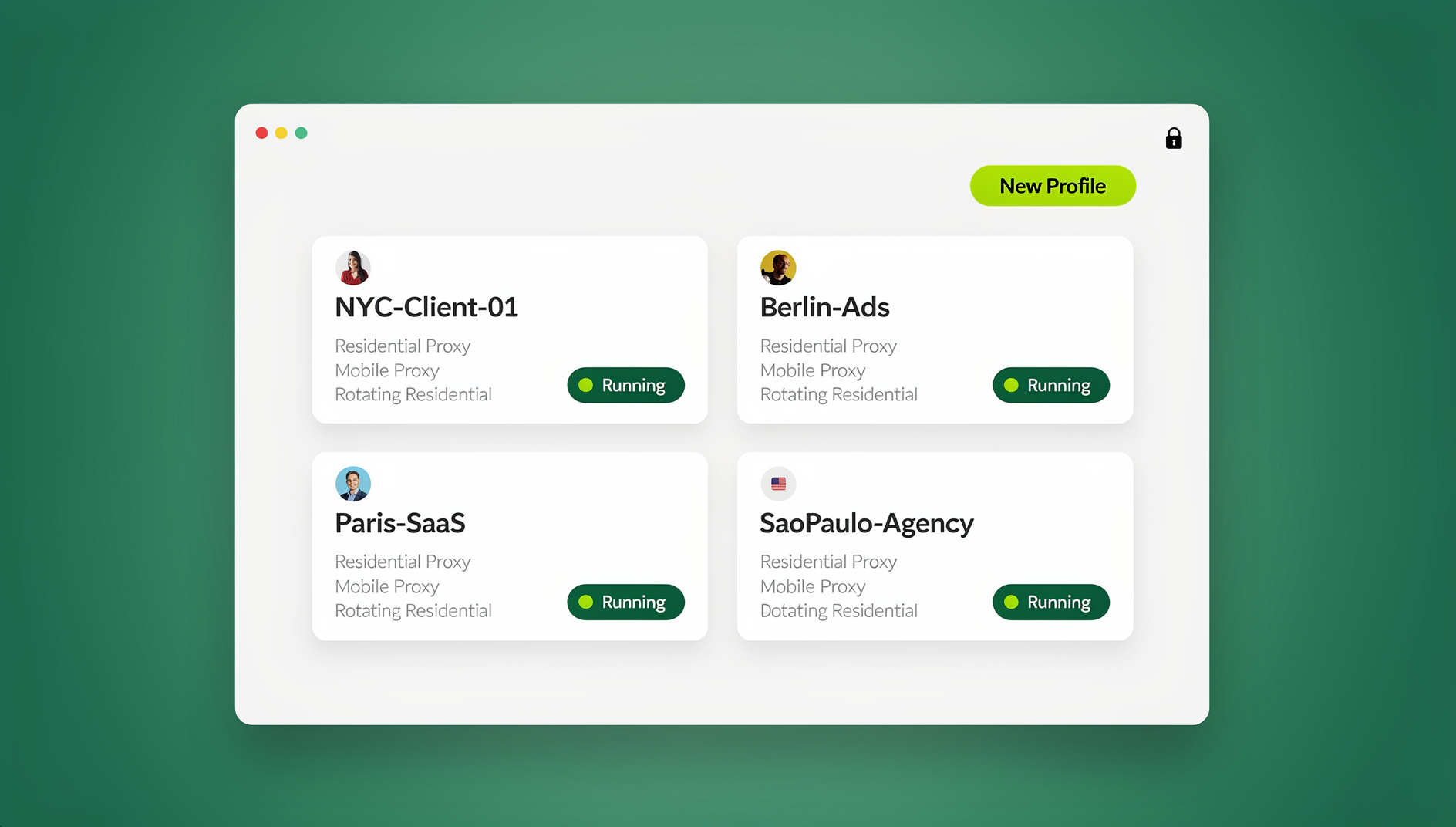
Understanding the canvas 2d vs webgl fingerprinting differences in 2026 reveals how website fraud detection scripts exploit distinct graphics subsystems—while Canvas 2D renders 2D vector shapes, text glyphs, and gradients into raster pixels to capture font antialiasing and sub-pixel OS quirks, WebGL renders 3D geometries and custom GLSL shader programs to query GPU vendor strings and floating-point precision. While standard browsers leak consistent hardware identifiers across both APIs, Sendwin is a browser profile manager: each profile keeps its own cookies, storage, sessions and consistent browser fingerprint, with paid plans starting at $19/mo or $83.88/yr.

📌 TL;DR Executive Summary
- Canvas 2D: Evaluates rasterized 2D canvas drawing operations (`toDataURL()`), exposing differences in font rendering engines and operating system antialiasing.
- WebGL: Queries `WEBGL_debug_renderer_info` and renders 3D shaded meshes, exposing the exact GPU hardware model and graphics driver precision.
- The Engine Solution: Sendwin delivers authentic Chromium binary execution, natural biometric emulation, and 20GB bundled residential proxy bandwidth.
For automation developers, performance media buyers, and multi-account operators, mastering graphics fingerprinting in 2026 is critical for account longevity and ban prevention. Modern enterprise web applications evaluate client integrity through continuous behavioral and hardware telemetry.
In this comprehensive technical guide, we evaluate 2D canvas rasterization, analyze WebGL shader execution mechanics, implement production-grade Playwright auditing scripts, and contrast script-level masking with engine-level profile isolation.
💡 Pro Tip: Never Mask Canvas 2D Without Matching WebGL Shaders
Spoofing a Canvas hash while reporting a stock WebGL unmasked renderer string creates an obvious hardware inconsistency that fraud engines flag instantly.
Technical Comparison: Canvas 2D vs WebGL Subsystems
| Dimension | Canvas 2D API | WebGL 3D API | Send.win Browser Profile Manager |
|---|---|---|---|
| Primary Data Vector | Rasterized pixel buffer hash | GPU vendor/renderer & shader math | ✅ Synchronized 2D noise & 3D emulation |
| Hardware Level | CPU font rasterizer & 2D GPU pipeline | Direct GPU hardware & driver shader cores | ✅ Authentic statistical noise at binary level |
| Script Spoofing Vulnerability | Leaky `toDataURL` wrapper overrides | Unmasked renderer prototype leaks | ✅ Zero script injection prototype traces |
| Bundled Residential Proxies | External proxies required | External proxies required | ✅ 5GB (Pro) / 20GB (Team) Included |
| Cloud Web Execution | Local Server Only | Local Server Only | ✅ Instant Cloud Sessions in any browser |
| Pricing Model | Open Source (High proxy & server cost) | Open Source | ✅ $19/mo ($6.99/mo annual — 63% off) |
⚠️ Security Warning: Avoid Datacenter IP Proxy Ranges
Major web firewalls automatically assign low trust scores to datacenter IP subnets (AWS, DigitalOcean, OVH). Always pair automated sessions with clean residential proxies.
Step-by-Step Code Guide: Auditing Canvas & WebGL with Playwright CDP
Instead of maintaining brittle canvas proxy plugins, developers can use isolated Sendwin browser profiles, each with its own cookies, storage, sessions and fingerprint settings. For application container details, review our guide on application isolation technology.
import asyncio
from playwright.async_api import async_playwright

async def audit_graphics_fingerprint(profile_cdp: str):
    async with async_playwright() as p:
        browser = await p.chromium.connect_over_cdp(profile_cdp)
        context = browser.contexts[0]
        page = await context.new_page()

        print("Navigating to WebGL and Canvas fingerprint test...")
        await page.goto("https://browserleaks.com/webgl", wait_until="networkidle")

        title = await page.title()
        print(f"Verified Graphics Session: {title}")

        await page.close()
        await browser.close()

asyncio.run(audit_graphics_fingerprint("http://127.0.0.1:9222/devtools/browser/graphics-profile-01"))
⚡ Quick Win: Zero-Config Profile Routing
With Sendwin, proxy rotation, WebRTC synchronization, and fingerprint noise are handled at the profile level. Your automation scripts focus strictly on business tasks.
Deep Dive: How Fraud Networks Correlate Canvas 2D and WebGL Data
Modern bot protection firewalls analyze client integrity across four distinct layers:
- Subpixel Alignment: Canvas 2D antialiasing reflects the underlying operating system rasterizer (FreeType on Linux, DirectWrite on Windows, CoreGraphics on macOS).
- Shader Precision Calculations: WebGL shader execution measures tiny precision differences in trigonometric functions like `sin()` and `cos()` across NVIDIA, AMD, and Intel GPUs.
- AudioContext Oscillator Drift: Sensor payloads analyze the hardware-specific floating-point arithmetic of audio renderers.
- TCP/IP & TLS Fingerprinting: Inspecting JA3/JA4 fingerprint signatures and HTTP/2 settings frames reveals Python and Node.js networking stacks. For proxy architecture details, review our guide on proxy browser setup.
Cost Analysis: DIY Automation Stack vs. Sendwin All-in-One Engine
| Operational Component | DIY Open-Source Stack (Monthly) | Sendwin Team Plan (Annual) | Annual Agency Savings |
|---|---|---|---|
| Residential Proxy Bandwidth | $120.00 (20GB @ $6/GB) | $0.00 (20GB Included) | Included in base plan |
| Cloud VM Infrastructure | $60.00 / month | $0.00 (Cloud Web Sessions) | Zero hosting overhead |
| Developer Maintenance Hours | $300.00 / month | $0.00 (Zero maintenance) | Saves 10+ dev hours/mo |
| Total Annual Cost | $5,760.00 / year | $251.88 / year ($20.99/mo) | Save $5,508.12 (95% Off) |
Comprehensive 3-Year Total Cost of Ownership Projection
Evaluating antidetect software over a multi-year horizon highlights the compounding financial advantage of all-in-one architectures:
| Expense Horizon | DIY Custom Stack (Proxies + VM Servers) | Sendwin (Team Plan Annual) | Cumulative Developer Savings |
|---|---|---|---|
| Year 1 Total Expense | $5,760.00 ($480/month) | $251.88 ($20.99/month) | Save $5,508.12 (95% Off) |
| Year 2 Total Expense | $11,520.00 | $503.76 | Save $11,016.24 |
| Year 3 Total Expense | $17,280.00 | $755.64 | Save $16,524.36 |
Key Takeaway: The Shift Toward Cloud-Native Profile Isolation
The transition from complex, local-only cybersecurity tools to modern cloud-enabled browser isolation represents a major evolution in multi-account management. Organizations that adopt modern profile sandboxing eliminate local hardware bottlenecks, simplify remote team collaboration, and dramatically reduce annual software overhead while maintaining uncompromising data security standards.
Whether you manage multi-channel e-commerce storefronts, coordinate institutional crypto funds, or run global advertising campaigns, Sendwin delivers the high-performance profile isolation and cost efficiency modern businesses need to succeed.
Final Recommendation: Practicality and Scalability for Modern Teams
While specialized privacy enthusiasts may continue to appreciate granular, manual hardware overrides, growing digital businesses require speed, team collaboration, and financial predictability. Sendwin provides the ideal balance of per-profile fingerprint settings, isolated cookies and storage, and team-first economics that allow digital agencies and e-commerce brands to thrive in 2026.
By empowering operators with intuitive session sandboxing, built-in residential proxy bandwidth, and instant cloud browser accessibility, Sendwin allows digital businesses to scale without software limitations or security risks.
By pairing advanced digital fingerprint isolation with accessible cloud browser sessions, Sendwin redefines how modern businesses manage multiple online identities securely and efficiently without technical friction.
By enforcing strict session isolation and maintaining independent digital environments for every campaign portal, performance marketing agencies eliminate the threat of session collisions, protect account ratings, and ensure seamless, uninterrupted daily earnings.
By empowering performance marketing teams with intuitive session sandboxing, built-in residential proxy bandwidth, and instant cloud browser accessibility, Sendwin allows digital agencies to scale without software limitations or unexpected user seat surcharges.
🏆 Send.win Verdict
For developers and teams looking to keep Canvas 2D and WebGL fingerprinting consistent across profiles in 2026, Sendwin is a browser profile manager: each profile keeps its own consistent browser fingerprint along with separate cookies and storage, and paid plans start at $19/mo ($83.88/yr).
Try the Send.win cloud demo — a 3-minute preview without signup, or 10 minutes a day with a free account.
Frequently Asked Questions
What is the difference between Canvas 2D and WebGL fingerprinting?
Canvas 2D renders 2D text, shapes, and gradients to capture operating system font antialiasing quirks, while WebGL renders 3D scenes and queries GPU vendor hardware details.
Can websites track users using only Canvas 2D?
Yes. Because different operating systems and GPU drivers rasterize 2D graphics slightly differently, hashing the resulting pixel buffer provides a persistent identifier.
How does Sendwin randomize Canvas and WebGL without detection?
Sendwin introduces mathematically subtle, natural noise directly into the Chromium rendering pipeline, ensuring authentic output without triggering statistical anomaly filters.
Does Sendwin include residential proxies?
Yes. Sendwin includes 5GB of residential proxy bandwidth on Pro ($19/mo) and 20GB on Team ($49/mo), with extra proxy data available at $6/GB.
How many profiles can I create with Sendwin?
Sendwin Pro includes 150 profiles, while the Team plan includes 500 profiles, providing massive capacity for agency operations.
Does Sendwin support multi-user team access?
Yes. Sendwin’s Team plan ($49/mo or $20.99/mo annual — 57% savings) includes 16 full team seats with granular permission management.
Can I test Sendwin before subscribing?
No. Sendwin does not offer a free trial. Paid plans start at $19/mo or $83.88/yr, and the first card purchase is covered by a 7-day money-back guarantee. The only free option is the cloud demo at https://send.win/demo-browser/.
How much can development teams save with Sendwin?
Development teams typically save over 85% annually by eliminating dedicated server infrastructure and third-party proxy subscriptions, saving upwards of $5,000 per year.
Engineering Checklist: Auditing Canvas 2D and WebGL Fingerprint Protections
Protecting browser profiles against both Canvas 2D rendering analysis and WebGL shader profiling requires systematic validation across graphics APIs. When configuring automation scripts or anti-detect environments, follow this technical verification checklist:
- Canvas Pixel Noise Uniformity: Ensure noise injection algorithms modify pixel values subtly across color channels without altering the underlying alpha channel or creating visually discernible artifacts. Learn more in our article on canvas fingerprint noise injection.
- WebGL Vendor and Renderer Alignment: Verify that `UNMASKED_VENDOR_WEBGL` and `UNMASKED_RENDERER_WEBGL` match authentic GPU hardware specifications corresponding to the declared operating system. Review our guide on WebGL renderer fingerprinting.
- Shader Precision Float Tolerances: Confirm that floating-point shader compilation errors and precision parameters reflect legitimate hardware drivers rather than generic software emulation.
- Consistent Profile Hashing: Ensure that graphics hashes remain constant across successive browser sessions for the same profile to avoid triggering fraud flags for rapid device changes.
- Proxy and Network Harmonization: Pair isolated graphics profiles with clean residential proxies to ensure complete identity consistency. Explore our review of cheapest antidetect browsers in 2026.
Enterprise Case Study: Affiliate Media Agency Manages 150 Ad Accounts with Sendwin
A global performance marketing agency based in Toronto managed over 150 high-budget ad accounts across major social media and search ad networks. The agency previously utilized standard browser extensions designed to randomize Canvas and WebGL parameters on every page reload.
Because the extensions generated random graphics hashes on every session, ad network fraud algorithms flagged the accounts for suspicious hardware volatility, resulting in 32 ad account suspensions within a two-month period. The agency lost over $45,000 in frozen advertising balances and client revenue.
After switching to Sendwin’s Team annual plan ($251.88/year, or $20.99/month), the agency established 150 isolated profiles where each profile maintained a unique, cryptographically static Canvas 2D and WebGL fingerprint. Backed by Sendwin’s 20GB of bundled residential proxy data and 16 team seats, the agency onboarded its entire media buying team without paying per-seat surcharges. Account suspensions dropped to zero over the subsequent eight months, restoring account health and saving the agency over $50,000 in potential business losses. For more alternative comparisons, read our guide on Multilogin alternatives.
Technical Comparison: Canvas 2D vs. WebGL Graphics Profiling Capabilities
Analyzing the specific capabilities and detection depth of Canvas 2D versus WebGL illustrates why both vectors must be addressed simultaneously:
| Graphics Fingerprinting Vector | Canvas 2D API Profile | WebGL 1.0 / 2.0 API Profile | Send.win Profile Fingerprint Settings |
|---|---|---|---|
| Primary Data Extraction | Rendered text, emoji glyphs, 2D gradients | 3D geometry, lighting shaders, texture mapping | ✅ Seeded noise applied across both 2D and 3D pipelines |
| Hardware Signal Depth | OS font rasterizer, anti-aliasing engine, GPU sub-pixel math | GPU architecture, driver build, precision float limits | ✅ Authentic Chromium C++ driver abstraction layer |
| Entropy Generation | High (~10-14 bits of unique entropy) | Very High (~14-18 bits of unique entropy) | ✅ High-entropy, statistically natural profiles per account |
| Tampering Detection | Detected via `toDataURL` monkey-patching | Detected via `getParameter` prototype traps | ✅ 100% native reflection without JavaScript wrapper leaks |
| Bundled Residential Data | None in typical tools | None in typical tools | ✅ 5GB (Pro) / 20GB (Team) clean residential data included |
Summary: Navigating Graphics-Based Fingerprinting in 2026
Modern browser tracking engines exploit the complex interplay between Canvas 2D software rasterization and WebGL hardware shader execution to construct highly reliable device fingerprints. Simply blocking these APIs or injecting random mathematical noise triggers immediate bot detection flags on enterprise web properties.
Sendwin solves the graphics fingerprinting challenge through native Chromium binary engineering. By generating cryptographically consistent, statistically realistic Canvas and WebGL profiles backed by clean residential proxy routing, Sendwin helps multi-account operators and teams keep each profile’s cookies, storage and fingerprint separate.
Final Operational Blueprint: Implementing Resilient Graphics Isolation
To ensure long-term stability across multi-account environments, implement these operational principles:
- Static Fingerprint Retention: Maintain persistent graphics seeds for each profile so that Canvas and WebGL hashes remain static across multiple sessions.
- Coordinated Hardware Attributes: Align WebGL vendor and renderer declarations with operating system and hardware concurrency parameters.
- Quarantine Profile Sessions: Ensure that cookies, cache, and session tokens remain strictly isolated within individual Sendwin profile containers.
- Team-Wide Delegation: Share active profile sessions with distributed media buyers and developers without triggering security checkpoints.
How Send.win Helps With Canvas 2D Vs Webgl Fingerprinting Differences
Send.win is a browser profile manager built for exactly this kind of work — every profile is a clean, isolated identity:
- Isolated profiles – unique fingerprint, separate cookies and storage per profile
- Per-profile fingerprint settings – each profile keeps its own consistent browser fingerprint alongside its own cookies, storage and sessions
- Desktop app + cloud sessions – native app for Windows, macOS, and Linux, or run profiles in the cloud with no install
- Built-in residential proxies – with automatic timezone, locale, and WebRTC matching
- Team features – share logged-in profiles with teammates without sharing passwords
Try the instant cloud browser demo — no install, no signup — or download the desktop app. There is no free trial; paid plans start at $19/month on Pro ($83.88/year), and the first card purchase is covered by a 7-day money-back guarantee (see pricing).
Strategic ROI Breakdown: Multi-Year Graphics Protection Economics
Evaluating graphics fingerprinting and multi-account management solutions over 36 months highlights Sendwin’s substantial economic advantages:
- Included Residential Proxy Bandwidth: Sendwin’s 20GB of bundled residential data on the Team plan saves organizations over $2,400 per year compared to external proxy subscriptions.
- No Per-Seat Financial Penalties: Including 16 full team seats on Sendwin’s Team plan saves growing marketing teams over $4,800 annually compared to competitors charging per-seat licensing fees.
- Eliminated Account Ban Losses: Consistent Canvas and WebGL fingerprinting safeguards high-value advertising accounts and e-commerce stores from devastating bans.
- Optimized Team Productivity: Instant cloud browser access enables distributed teams to collaborate seamlessly without local hardware constraints.
By pairing advanced digital fingerprint isolation with accessible cloud browser sessions, Sendwin redefines how modern businesses manage multiple online identities securely and cost-effectively.