How to Set Up Google Password Manager Multiple Accounts
To set up google password manager multiple accounts, you must create distinct Chrome profiles for each Google account on your device. Since Chrome syncs credentials strictly to the logged-in Google profile, keeping your profiles separated ensures that work, personal, and project passwords never cross-contaminate. This guide walks you through configuration, device syncing, and safe multi-account password management.

Understanding Google Password Manager’s Architecture
Google Password Manager is an integrated solution that simplifies password storage by saving your login credentials directly into your active Google account. It works seamlessly within the Google ecosystem, but it is built on a simple premise: one Google account equals one vault. There is no native support for multi-account partitioning within a single browser container.
When working with google password manager multiple accounts, the software stores credentials in two places: locally in the specific Chrome user directory, and in the cloud at passwords.google.com. Chrome matches your saved credentials to the account that is currently syncing in that specific window. If you use a single Chrome profile but log into multiple Google accounts in different tabs, Chrome will still save all new passwords to the primary syncing account. This architecture makes active profile management crucial.
DPAPI and Keychain Encryption
On local machines, Chrome secures your saved passwords using operating system-level encryption. On Windows, this is handled via the Data Protection API (DPAPI), which encrypts the password database (a local SQLite file) using keys tied to your Windows user account. On macOS, Chrome stores these credentials in the system Keychain Access. Because the encryption keys are tied to your desktop OS user profile, simply copying a Chrome user profile directory to another machine will not copy the passwords. They will remain locked unless you log into the corresponding Google account to trigger cloud synchronization. This ensures local security but complicates manual password migration.
Why Users Need to Separate Passwords Across Multiple Accounts
Juggling work, personal life, and side projects within a single password manager is a recipe for security vulnerabilities and administrative confusion. Here are the primary reasons why users choose to set up separate vaults:
- Professional Security Compliance: Corporate security policies often prohibit saving work credentials alongside personal logins. Keeping them in separate accounts ensures you comply with security audits.
- Freelance and Agency Operations: Managing passwords for client platforms requires clean boundaries. If a client offboards, you should be able to disconnect their vault without affecting your other credentials.
- Preventing Auto-Fill Contamination: When multiple accounts share a vault, the browser’s auto-fill system can suggest personal logins on business sites, which leads to accidental account links and errors.
- Safe Sharing with Team Members: Separating passwords allows you to share project-specific Google accounts with team members without exposing your private, personal vault.
5 Ways to Set Up Google Password Manager Multiple Accounts
To organize your google password manager multiple accounts, follow these configuration steps and choose the method that best fits your workflow requirements:
Method 1: Creating Dedicated Chrome Profiles (Recommended)
The most effective native way to manage multiple vaults is by using Chrome profiles. Each profile acts as an independent browser instance with its own sync configuration:
- Open Chrome and click the profile avatar icon in the top-right corner.
- Select “Add” at the bottom of the profile switcher list.
- Click “Sign In” and enter the credentials for your secondary Google account.
- Give the profile a custom name and select a bright color theme to distinguish it.
- Ensure Sync is turned ON. Chrome will now save and sync passwords specifically to this secondary account.
This level of separation is similar to how e-commerce operators control multiple amazon accounts without triggering fraud alerts.
Method 2: Switch Google Accounts at passwords.google.com
If you need to view or edit saved passwords on another account without launching a new profile, you can use the web interface:
- Navigate to passwords.google.com in your web browser.
- Click your profile picture in the top-right corner of the page.
- Select the other Google account from the dropdown list (or click “Add Account”).
- Authenticate the switch. You can now add, delete, or modify credentials inside that specific Google vault.
Method 3: Configure Android and iOS System-Wide Autofill
Google Password Manager can autofill credentials on mobile devices. If you have multiple Google accounts logged into your mobile OS:
- On Android: Open Settings -> Passwords & Accounts. Select Google under autofill service. Tap settings and choose the specific account to use as the primary autofill vault.
- On iOS: Install the Google app or Chrome, go to iOS Settings -> Passwords -> Autofill Passwords, and enable Chrome. Log into the desired Google profile within the Chrome app to sync.
Method 4: Dual-Password Manager Hybrid Setup
For users who want to keep Google Password Manager for personal sites but need a professional tool for work, a hybrid setup is ideal. You can use Google Password Manager in your personal Chrome profile and install a dedicated tool (like Bitwarden or 1Password) for business tasks. This prevents cross-contamination between personal autofill and corporate directories, giving you the best of both worlds.
Method 5: Isolated Browser Profiles via Send.win
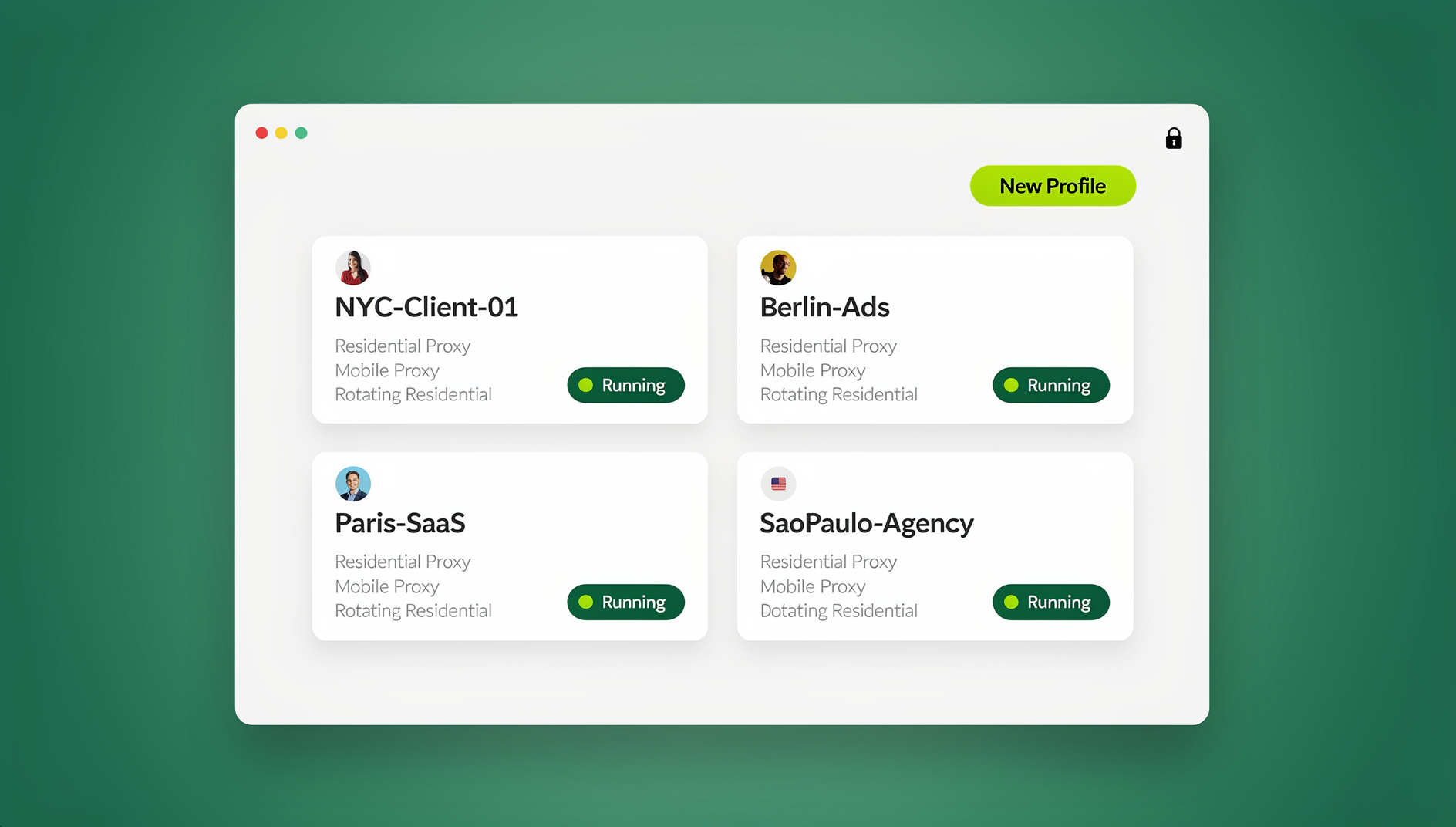
For users managing high-risk accounts or client assets, standard Chrome profiles are insufficient. Standard profiles share your IP address and hardware fingerprint, which can lead to accounts being linked by third-party tracking scripts. Using a secure multi-login browser like Send.win allows you to run multiple isolated profiles, each with its own local password storage, distinct IP address, and unique hardware identity. This prevents platforms from recognizing that the profiles belong to the same person, keeping your operations secure.
How Google Password Manager Synchronizes Across Devices
Synchronization is the core benefit of Google’s manager, allowing you to access credentials across laptops, phones, and tablets. Here is how Google handles sync mechanics:
When you add a new login in Chrome, the password is encrypted and uploaded to Google’s cloud servers. Devices signed into that same Google profile poll the cloud periodically and download updates. If you are offline when updating a password, Chrome caches the update locally and syncs once a connection is re-established.
If conflicts occur (e.g., you change a password on your phone and a different one on your laptop while offline), Google Password Manager resolves the conflict by keeping the most recently updated entry, though it may occasionally create duplicate entries for the same URL, which requires manual cleanup.
Google Password Manager vs. Dedicated Tools
Google Password Manager is highly convenient, but it has distinct differences when compared to dedicated vault tools:
| Feature | Google Password Manager | Bitwarden / 1Password |
|---|---|---|
| Pricing | Free (tied to Google account) | Free tier / Paid plans from $3-$5/mo |
| Sharing | Limited to Google Family groups | Advanced team sharing, shared vaults |
| Browser Compatibility | Optimized for Chrome | Works on all browsers and devices |
| Profile Separation | Requires Chrome profile switching | Switch vaults within the same profile |
| Storage Type | Google Cloud and local sync | Encrypted zero-knowledge database |
For a deeper dive into e-commerce operations, check out our multiple amazon accounts complete guide. It shows why simple browser profile management is not always enough for business setups.
Security Considerations and Best Practices
The main security risk with google password manager multiple accounts is profile cross-contamination. If you save credentials into the wrong profile, it will sync to that account’s cloud vault, potentially exposing professional logins to personal profiles. Follow these best practices:
- Enable 2FA: Enable two-factor authentication on every Google profile you maintain. Since your Google account controls your password vault, a compromised Google profile exposes all your credentials.
- Use Distinct Themes: Assign a different, bright color theme to each Chrome profile. This gives you an immediate visual cue so you always know which profile’s vault is active.
- Audit Saved Credentials: Review your saved credentials quarterly. Delete duplicates and move misplaced credentials to the correct vault.
- Avoid Shared PCs: Never log into multiple Google accounts on a public or shared computer, as Chrome may cache profile files locally.
If you want to protect your digital identity, managing multiple accounts with isolated setups is the gold standard. It ensures that your private credentials and business profiles remain secure and independent.
How to Export and Import Passwords Safely
If you decide to migrate passwords between Google accounts or move to a dedicated manager, you must handle the export files with extreme caution:
- Navigate to passwords.google.com and click the settings icon in the top-right corner.
- Click “Export Passwords” and confirm using your device password or biometrics.
- Save the generated CSV file. Note that this file contains all your usernames and passwords in plain text.
- Import the CSV file into your target Google account profile or password manager vault immediately.
- Once the import is verified, delete the CSV file from your computer. Empty the recycling bin and run a file shredder if available to prevent local recovery.
How Send.win Enhances Multi-Account Security
While Chrome profiles help organize passwords, they share network details and tracking parameters. Choosing the best browser for multiple accounts can save you hours of manual profile switching. Send.win takes multi-account management to the next level:
- Sendwin Browser (Desktop Client): This native application allows you to create separate browser sessions locally on your computer. Each profile has isolated cookies and local password storage, meaning you can manage multiple online accounts simultaneously without any data leaks.
- Cloud Browser Sessions: Run your profiles in secure cloud environments. There is no software to install locally, and you can share profiles with team members in one click without sharing passwords.
Send.win pricing features a 30-day free trial (no credit card required). The Pro plan costs $19/mo (or $6.99/mo billed annually — 63% off) and includes 150 profiles, 5GB bandwidth, and the local Automation API. The Team plan costs $49/mo (or $20.99/mo billed annually — 57% off) for 500 profiles, 20GB bandwidth, and 16 team seats. Extra proxy bandwidth can be purchased at $6/GB, and extra profiles cost $0.05 per profile.
🏆 Send.win Verdict
Managing multiple Google password vaults is easy using Chrome profiles, but it lacks IP and hardware fingerprint isolation. For professional, agency, or e-commerce workflows, standard browser profiles are insufficient. Send.win provides isolated local and cloud environments that keep your logins and digital footprints completely separated.
Try Send.win free today — Start your 30-day free trial now to experience secure, isolated multi-profile browsing.
Frequently Asked Questions
Can I merge passwords from two Google accounts?
No, Google does not support merging accounts directly. However, you can export your passwords as a CSV file from one account’s settings page and import them into another Google account. Ensure you delete the plain-text CSV file immediately after importing.
Does Google Password Manager work in Firefox or Safari?
Google Password Manager is optimized for Chrome. On other browsers, you can access your saved credentials by logging into passwords.google.com, but automatic autofill and background syncing will not work. For cross-browser support, a dedicated password manager is recommended.
How do I change the default account for autofill on my phone?
On Android, go to Settings -> Passwords & Accounts -> Autofill Service, and choose the specific Google account or dedicated tool you want to set as your default. On iOS, configure Autofill Passwords in the system settings and select Chrome as the provider.
Is Google Password Manager secure enough for enterprise use?
For basic individual use, it is secure. For enterprises, it lacks detailed audit logs, secure team sharing, role-based access controls, and emergency access recovery, making a dedicated enterprise password manager a better choice.
What should I do if a password saves to the wrong Google account?
Log into passwords.google.com with the incorrect account, find the credential, and delete it. Then, switch to the correct Chrome profile or Google account and log in again, making sure to accept the prompt to save the password in the correct vault.
Does Send.win have a browser add-on for password management?
No, Send.win does not offer a browser add-on. It operates as the native Sendwin Browser desktop application for local profile containment or via cloud browser sessions that execute on secure remote servers with zero local requirements.
Can I export my passwords from Google Password Manager?
Yes, go to passwords.google.com, click the settings icon in the top-right corner, and select “Export Passwords”. You will be prompted to authenticate before saving the CSV file to your local computer. Keep this file highly secure.
Conclusion
Setting up google password manager multiple accounts is the best way to organize your credentials and prevent data contamination. While Chrome profiles provide a free and convenient layout for separation, professional or high-risk tasks require the hardware and network isolation that only a dedicated multi-login tool can provide. By using Send.win, you can manage unlimited profiles and credentials safely in both local and cloud environments.