5 Critical Rules for How to Manage Multiple Prop Firm Accounts
To successfully learn how to manage multiple prop firm accounts, traders must run independent trading platform installations (like MT4 or MT5) in separate directories and access dashboards via isolated browser sessions. This setup prevents IP conflicts, device linking, and violations of prop firms’ strict copy-trading rules. This guide explains how to establish a secure multi-account trading infrastructure, configure proper risk parameters, and organize payouts safely.

The Proprietary Trading Landscape in 2026
Proprietary trading firms (commonly known as prop firms) have transformed the retail trading industry by providing independent traders with access to substantial capital. By passing multi-stage evaluation challenges, traders can secure funded accounts ranging from $10,000 to $400,000 or more. These accounts allow traders to retain up to 80-90% of their generated profits without putting their own capital at risk. However, as the market matures, smart traders realize that relying on a single firm exposes them to structural risks, such as payout delays or sudden policy updates.
This realization drives the strategy of capital diversification. By running several funded profiles across different platforms, you can protect your cash flow and mitigate the impact of individual platform failures. However, operating several trading environments requires a high level of organization and technical preparation. Understanding the primary rules when figuring out how to manage multiple prop firm accounts is to understand the platform rules and build a reliable, compliant setup.
The Risks and Rules of Managing Multiple Funded Accounts
Prop firms operate under strict risk management guidelines to protect their capital pool. The most important rule to monitor is the ban on copy-trading across accounts. While many firms allow you to execute trades on multiple profiles, they explicitly prohibit using automated trade copiers to mirror the exact entries, exits, and lot sizes across different accounts. If the firm’s security software detects identical trade execution times down to the millisecond, it will flag the accounts for a terms-of-service violation.
Additionally, prop firms track connection data and device fingerprints. If you log into different dashboards using the same web browser, security scripts can link your accounts. If one profile is flagged for a drawdown breach or policy violation, the firm can audit and suspend all other profiles associated with the same hardware signature. This linking process makes standard web setups highly risky for professional traders who need to separate their accounts.
Technical Setup: Configuring Your Trading Infrastructure
To operate multiple accounts compliant with prop firm guidelines, you must separate your trading software and web access. This requires custom installations and profile separation.
First, install separate instances of MetaTrader 4 (MT4) or MetaTrader 5 (MT5) on your computer. When running the installer, select “Settings” and choose a unique directory for each instance (for example, `C:\MT5_FirmA` and `C:\MT5_FirmB`). This ensures that each platform runs as an independent process with its own cache, indicator presets, and login credentials, preventing any terminal cross-talk. You can rename the desktop shortcuts to identify them instantly, such as “Firm A Scalp” or “Firm B Trend”.
Second, isolate your web-based access to the prop firm dashboards. Traders can benefit from using a reliable cookie management tool to store their credentials securely across different prop dashboard portals. This prevents cookies from overlapping and keeps your browser from saving shared session details. Using a standard Chrome multi account setup is not secure enough for funded traders who need deep session isolation, as standard profiles still share background fingerprint data and the same external IP address.
The Mathematical Reality of Drawdown Rules
Drawdown limits are the primary rules that traders breach. Prop firms enforce two types of drawdown limits: daily drawdown and maximum total drawdown. Daily drawdown is typically calculated based on either your daily starting balance or daily starting equity. Equity-based drawdown is the most dangerous, as it includes floating losses from active trades. If your open positions hit the floating drawdown threshold for even a millisecond, the account is auto-breached, regardless of whether the trade eventually turns profitable.
When running a multi-account portfolio, you must calculate your aggregate risk across all profiles. If you have four $100,000 accounts, each with a 5% daily drawdown limit, your combined daily risk limit is $20,000. However, if your strategies are correlated, a single market move could breach all four accounts simultaneously. Therefore, you must manage your portfolio correlation dynamically. This involves tracking your open margin requirements and adjusting stop-loss levels to ensure your total floating loss never approaches the aggregate drawdown threshold.
Automated Execution vs. Manual Discretionary Trading
Traders often debate whether to use automated Expert Advisors (EAs) or execute trades manually when managing multiple profiles. EAs offer high speed and emotional discipline, allowing you to monitor dozens of setups simultaneously. However, running EAs across multiple prop profiles presents serious compliance risks. If you buy a commercial EA and run it on different accounts, other traders are likely running the identical software. The prop firm’s security servers will flag these matching trade sequences, resulting in immediate account closures for copy-trading.
If you choose to use EAs, they must be highly customized or privately developed. Manual discretionary trading is often safer for multi-account operators because it naturally introduces execution delay and entry variance. Even if you follow the same setup on different profiles, your manual entries will occur at slightly different times and price points, preventing security systems from flagging your accounts for automated copy-trading violations. Additionally, manual trading allows you to adjust lot sizing dynamically to match the specific rules of each individual firm.
Choosing the Right Virtual Private Server (VPS) for Prop Trading
For traders running automated strategies or keeping terminals open 24/7, using a Virtual Private Server (VPS) is highly recommended. A VPS is a remote virtual computer that runs continuously in a professional data center, ensuring that your trading software never disconnects due to local power outages or home internet dropouts. High-quality VPS providers, such as ForexVPS or Beeks Financial Cloud, position their servers inside the same data centers used by major liquidity providers and brokers, reducing execution latency to under 2 milliseconds.
When setting up multiple prop firm terminals on a single VPS, ensure the virtual machine has sufficient resources. Each active MT4 or MT5 terminal consumes approximately 150MB to 300MB of RAM and a portion of CPU capacity. For four distinct terminal installations, you should select a VPS with at least 4GB of dedicated RAM and 2 CPU cores. Keep each terminal isolated in its own folder structure on the VPS hard drive, and configure automatic system reboots to maintain performance, making sure your terminals restart automatically with the correct profile credentials after updates.
Managing News Events and Volatility Spikes
High-impact economic announcements, such as Non-Farm Payrolls (NFP), Consumer Price Index (CPI) releases, and central bank interest rate decisions, create massive volatility spikes in the financial markets. Many proprietary firms enforce strict news-trading restrictions, banning any trade execution within a 5-minute window before and after these scheduled events. Breaching this rule, even accidentally, can result in the forfeiture of profits or immediate account suspension.
When managing multiple active profiles, you must synchronize your news calendar. If you run different strategies across accounts, you must identify which accounts hold positions that could be impacted by an upcoming release. Discretionary traders should either close their short-term positions or widen their stop-loss levels to avoid premature exits due to spread widening. Remember that during high-impact releases, broker feeds experience slip page, meaning your stop-loss order might execute at a much worse price than planned, potentially causing a daily drawdown breach across several linked accounts at once.
Deploying Sendwin Browser for Prop Firm Operations
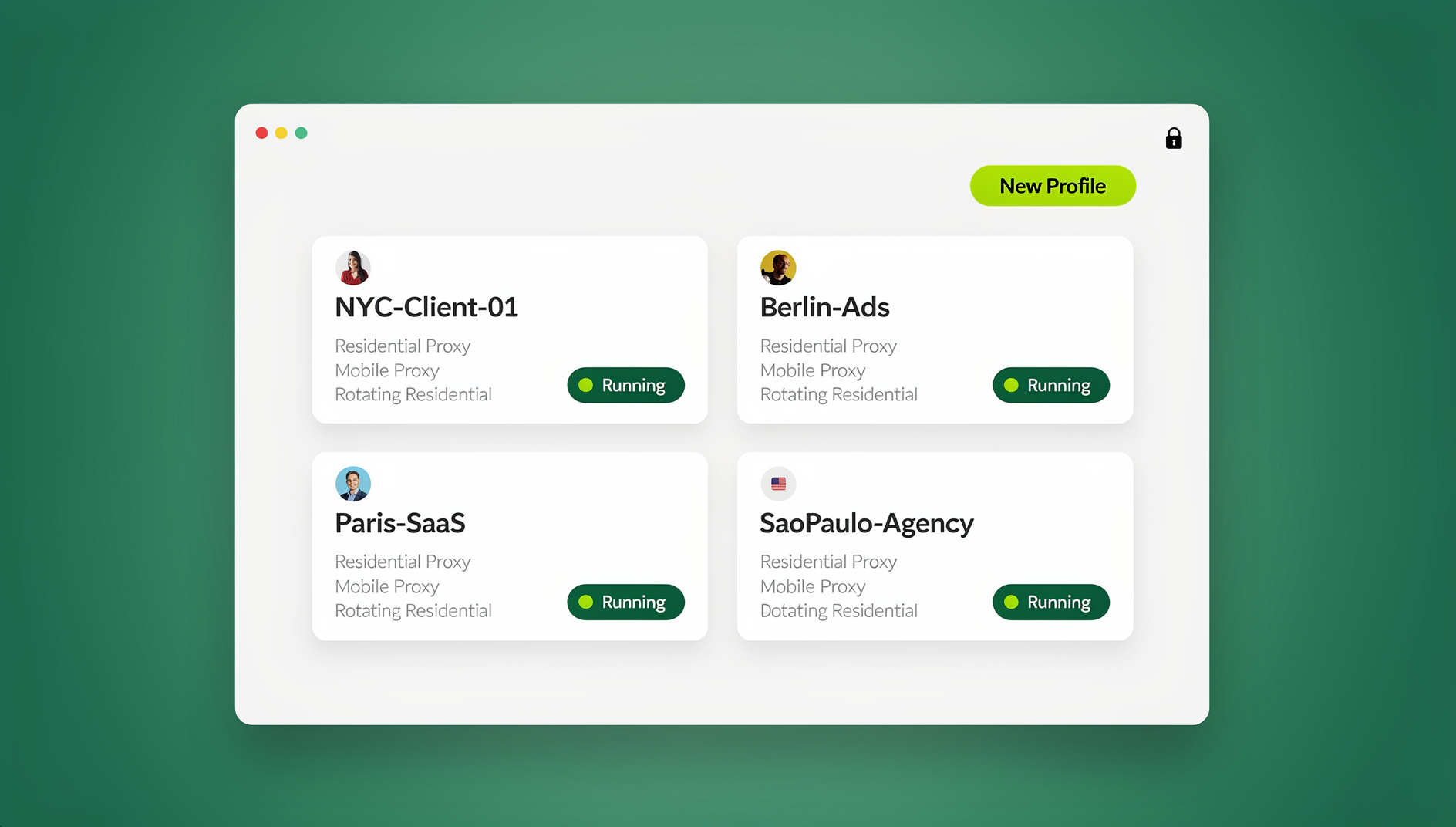
For traders who operate across several prop firm dashboards, Sendwin Browser provides a secure, sandboxed environment. Acting as a native desktop client, it lets you create separate profiles for each prop firm. Each profile is generated with a unique browser fingerprint, including distinct canvas, WebGL, and font signatures, making it impossible for platform scripts to link your dashboard sessions.
Through Sendwin Browser, you can also bind specific proxies to individual profiles. This is critical for matching your account’s verified KYC country. If your account is registered under a UK address, your profile should connect via a stable UK proxy, preventing location-jumping flags. Just as digital marketers require a dedicated browser for ads management to run separate ad assets, traders need segregated profiles for their prop accounts. This isolation setup mirrors the strategies used by merchants to handle multiple Amazon accounts without triggering system alerts.
Sendwin Browser offers a 30-day free trial without a credit card. The Pro plan costs $19/mo (or $6.99/mo annual — 63% off) and supports 150 profiles, and the Team plan is $49/mo (or $20.99/mo annual — 57% off) and supports 500 profiles and 16 seats. Both plans include the Automation API, allowing you to script database checks or payout requests. If you prefer to avoid local installations, cloud browser sessions are available directly via the web dashboard, enabling safe access from any phone or laptop.
Risk Allocation and Portfolio-Level Trade Coordination
A central aspect of how to manage multiple prop firm accounts is the risk allocation. You must ensure that your accounts run non-correlated strategies to maintain compliance and diversify market exposure. If you execute the identical trades on three different accounts, you are essentially copy-trading, which will trigger suspensions. Instead, you must allocate specific strategies to each account.
| Account Identity | Assigned Prop Firm | Trading Style | Focus Instruments | Target Risk Per Trade |
|---|---|---|---|---|
| Profile 1: Swing | FTMO | H4 Trend Following | EUR/USD, GBP/USD | 0.5% of balance |
| Profile 2: Mean Reversion | MyFundedFX | M15 Grid Trading | USD/JPY, AUD/USD | 0.25% of balance |
| Profile 3: Scalp | FundedNext | M1 Breakouts | Gold (XAU/USD), US30 | 1.0% of balance |
| Profile 4: Macro | True Forex Funds | D1 Fundamentals | Crude Oil, Silver | 0.5% of balance |
This strategy matrix keeps you compliant with prop rules and protects your total capital. If one market undergoes an unexpected volatility spike (such as a news event affecting Gold), your swing profiles on standard currencies will remain unaffected, shielding your broader portfolio from hitting daily loss limits.
Documenting and Journaling Across Accounts
With multiple active accounts, keeping manual logs is essential. You must track daily drawdown limits, trailing drawdown levels, and payout schedules across all firms. It is highly recommended to design a master risk spreadsheet that pulls your daily P&L and updates your total exposure. If you fail to log your active trades, you run the risk of breaching daily drawdown limits due to correlated open positions. Additionally, use professional journaling software like TradeZella or Tradervue to track the win rate of your individual strategies, helping you optimize allocation over time.
🏆 Send.win Verdict
Managing multiple prop firm accounts requires technical separation of trading software and secure, isolated web access to firm dashboards. Relying on simple browser logins and shared devices will trigger automated risk audits and jeopardize your funded capital. Sendwin Browser offers the ideal workspace for professional traders, providing complete profile sandboxing, dedicated proxy routing, a native desktop client, and cloud browser sessions, ensuring your trading operation remains compliant and secure.
Try Send.win free today — start your 30-day free trial with no credit card required and secure your multi-account trading infrastructure.
Frequently Asked Questions
Is it legal to have multiple prop firm accounts?
Yes. Having funded accounts at multiple prop trading firms is entirely legal. Most firms explicitly allow it, provided you follow their individual rules about copy trading and maximum capital limits. It is a highly recommended diversification strategy for funded traders to spread risk across different companies.
Can I trade the same currency pair on different accounts?
You can trade the same currency pair across accounts, but the entries, exits, and strategies must be independently derived. Taking the exact same trades at the exact same times across accounts violates most firms’ copy trading rules. Using different timeframes and styles (like scalping on one, swing trading on another) keeps you compliant.
How many prop firm accounts should I manage at once?
For most traders, managing 2 to 4 accounts is the sweet spot. It provides enough capital diversification without making the technical setup too complex to monitor manually. You should only scale beyond 4 accounts if you have structured daily routines and automated risk monitoring spreadsheets in place.
What happens if I breach a drawdown limit on one account?
If you breach a rule on one account, that specific account will be suspended by the prop firm. If your accounts are properly isolated, your other funded profiles at different firms will remain completely active and unaffected. Always withdraw profits regularly to ensure your earnings are safe.
Do I need different computers for different prop firm accounts?
No, you do not need multiple physical computers. You can run multiple MT4 or MT5 terminals on a single PC by installing them in separate folders. Use browser isolation tools like Sendwin Browser to manage the corresponding prop firm dashboards securely without cross-contamination.
Does Sendwin Browser support proxies for MT4/MT5 terminals?
Sendwin Browser isolates web sessions and dashboard connections. For your actual MT4 or MT5 terminal connections, you can configure proxies directly within the terminal settings under Tools -> Options -> Server -> Proxy, matching the geographic location of your browser profile proxies.
How do cloud browser sessions help in prop firm management?
Cloud browser sessions allow you to access your prop firm dashboards securely from any device, including smartphones and tablets, without needing to install native software locally. The session runs in an isolated sandbox on virtual servers, ensuring your login tokens and security fingerprints remain consistent.