What Does Secure Browsing Mean on a Claims Desk?
Secure browsing for insurance adjusters means giving each carrier portal, claims platform and licensing site its own isolated browser profile — separate cookies, storage, fingerprint and exit IP — instead of stacking every login into one window. That separation stops sessions bleeding between carriers, keeps WebRTC and geolocation from exposing your real network, and leaves policyholder data out of a shared cache. Send.win runs those profiles in the Sendwin Browser desktop app or on its EU and US cloud nodes, with residential proxies on every plan.
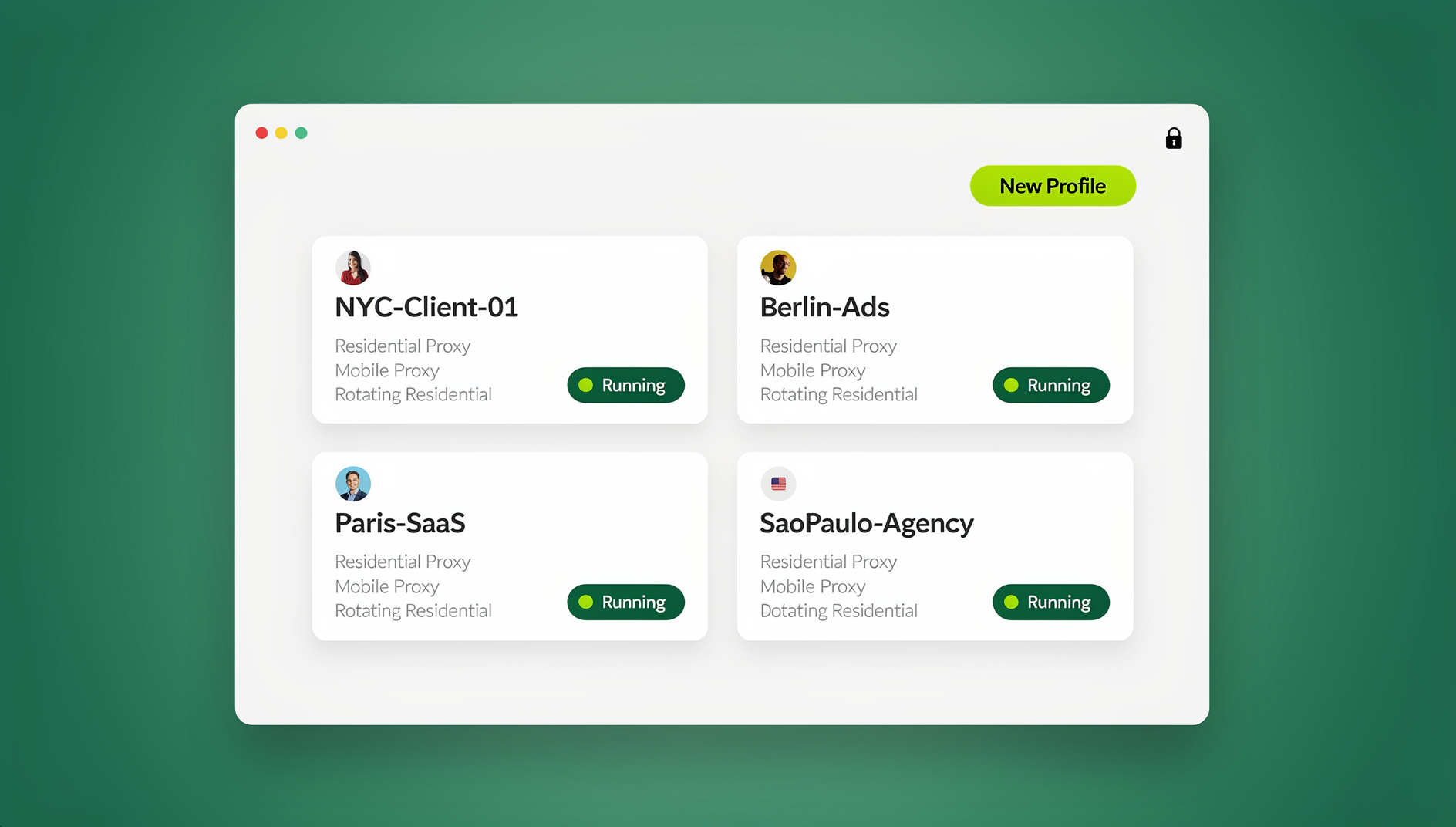
📌 TL;DR Executive Summary
- Core Takeaway: One isolated profile per carrier, TPA or licensing system — separate cookies, storage, canvas/WebGL fingerprint and exit IP — is what stops cross-site tracking between claims logins and keeps nonpublic information out of a shared cache.
- Key Risk/Challenge: Unmanaged BYOD laptops, passed-around carrier credentials and a single device fingerprint touching every portal drive re-verification loops, account linking, and the 72-hour determination clock under NAIC #668 and the third-party obligations in NYDFS 23 NYCRR 500.
- Recommended Solution: Sendwin Browser (Windows, macOS, Linux) or the Send.win cloud browser, with built-in residential proxies, engine-level fingerprint spoofing, profile blocking, and password-free profile sharing for paid teammates.
A Claims Day: Where Sessions Break Down
Most adjusters do not run one clean browser. They run four portals with four authentication rules on a laptop that also holds personal email, and the browser treats all of it as one identity. Secure browsing for insurance adjusters starts by splitting those portals apart rather than adding a VPN on top of the same shared session. Three moments in the day show where the shared identity breaks.
Morning: three carrier portals in one window
You sign into a carrier claims portal, a policy admin system and a TPA’s legacy interface where half the forms still break. Each login writes cookies, localStorage entries and device signals into the same browser. By the third tab, every site can read the same canvas rendering, font list and screen metrics — the shared signals fraud analytics use to decide whether two logins belong to one person or to a credential that gets passed around.
Midday: uploads, screenshots and the clipboard
Photos, a damage report and a signed proof of loss arrive from a phone, get downloaded on the office tablet, then pasted and screenshotted into a second portal. Clipboard contents and screenshot captures are two of the easiest ways nonpublic information leaves a claims workflow without anyone intending it. If you want the underlying mechanics, this secure browsing guide walks through how browsers accumulate and expose that data.
Afternoon: licensing sites and everything personal
Then it is a license renewal through NIPR, where states typically take 7–10 days to review, a continuing-education course, a personal banking check, and back to the carrier portal because a supervisor wants a status update. Do all of that in one browser and a mismatched timezone or a half-wiped cookie set is enough to trigger the “verify this device” loop — twenty minutes gone, plus a flag on the account nobody can explain later.
The Risks That Are Specific to Claims Work
Secure browsing for insurance adjusters has to cover five failure modes that a general-purpose browser never addresses. Each one leaves a different trace on the carrier’s side, and each one points back to the same missing control: separate identities.
Cross-carrier device linking
Carrier portals run device-intelligence scripts alongside the login form. They hash your canvas rendering, WebGL vendor string, audio stack, font list and hardware concurrency, then store that result against the account. Log into two carrier accounts from one browser and the portal can see one device behind both. That is the mechanism behind re-verification prompts that seem to arrive for no reason: the environment shifted just enough for the risk score to move.
Shared logins and desk coverage
Claims desks run on coverage. Someone is out, someone covers the queue, and credentials get passed along. Two people on one carrier login from two machines means two devices on one account — and the same account hopping between cities inside an hour looks worse. Where a carrier permits delegated desk access, the cleaner pattern is to share accounts without passwords: hand over an already-authenticated profile instead of the credential itself.
BYOD laptops outside MDM and VPN
Independent adjusters, brokers and BPO claims teams often reach carrier systems from devices no IT team manages. No device baseline, no Conditional Access policy, no VPN. That widens the exposure surface, and it means one phished session on a personal laptop can reach every carrier the adjuster works with.
Phishing, extensions and third-party scripts
Insurance is a targeted sector because claim management systems hold so much usable data. Extensions like uBlock Origin or Bitdefender TrafficLight cut ads, trackers and known phishing domains, but they run inside the same session where your carrier cookies live. A 2025 Electronic Frontier Foundation analysis counted an average of 11 external trackers per page — a lot of third-party code sitting next to a claims login.
Leaks that bypass the tunnel
WebRTC can hand a page your real IP address even while a VPN is active, and DNS queries can resolve outside the tunnel unless the browser prevents it. On public Wi-Fi — a hotel, a loss site, a client’s conference room — that is the difference between a masked connection and an exposed one.
What Regulators Expect From the Browser Layer
Two frameworks shape how adjusters work day to day. The NAIC Insurance Data Security Model Law (#668) requires notifying the insurance commissioner of a cybersecurity event no later than 72 hours from determination, and states have adopted it on a rolling basis — the NAIC adoption charts were updated through summer 2025. Knowing which system held which data, and when, is what makes that determination possible at all.
For New York-licensed entities, NYDFS 23 NYCRR 500 §500.11 requires a written third-party service provider security policy covering risk assessment, due diligence, periodic assessment, and contractual guidelines for access controls including MFA and encryption of nonpublic information in transit and at rest. The regulation was substantially amended effective November 2023, adding expanded encryption expectations, a preference for phishing-resistant MFA, enhanced continuous monitoring, a 24-hour ransom payment notification window, and extra controls for Class A companies. Entities with fewer than 20 employees and contractors, under $7.5 million in New York gross annual revenue and under $15 million in year-end total assets may qualify for the limited exemption. Enforcement is not theoretical: penalties have included $30 million for Robinhood in 2022, $4.5 million for EyeMed Vision Care, and $4.25 million for OneMain Financial in 2023. The regulation text is here: 23 NYCRR 500.11.
| Requirement | Where it comes from | What it looks like in your browser setup |
|---|---|---|
| 72-hour cyber-event notification | NAIC Model Law #668 | A profile inventory that maps carrier to profile, so you can reconstruct which system held the affected data and when. |
| Written third-party provider policy | NYDFS 500 §500.11 | Document the browser and proxy vendors in a claims workflow, with a review cadence and a data-path description. |
| MFA on access to nonpublic information | NYDFS 500 §500.11 | Keep carrier MFA per person. Only use pre-authenticated profile sharing where the carrier’s terms allow delegated desk access. |
| Encryption in transit | NYDFS 500 §500.11 | HTTPS everywhere, plus no WebRTC or DNS leaks that would expose network data outside the tunnel. |
| Continuous monitoring for anomalies | November 2023 amendments | Stable, documented exit IPs per carrier so impossible-travel flags mean something instead of firing on every session. |
Why Extensions and Consumer Secure Browsers Fall Short
Consumer privacy browsers solve consumer problems. Tor Browser hides your location by pushing traffic through volunteer relays, whose exit IPs carrier portals frequently flag — MFA challenges then misfire or the portal refuses the login. Mullvad Browser delivers strong anti-fingerprinting through uniformity, which is the opposite of what secure browsing for insurance adjusters needs when two accounts must not look like one machine. Brave and hardened Firefox forks, LibreWolf included, give you tracker blocking and cookie isolation, but the browser is still a single identity with a single cookie jar. For the wider comparison of device-level versus browser-level isolation in regulated environments, see browser isolation for insurance companies.
| Approach | Session isolation | Fingerprint control | Exit IP / geo control | Fit for carrier portals |
|---|---|---|---|---|
| Mainstream browser + extensions | Shared cookies and storage across all sites | Minimal — extensions harden scripts, not identity | None unless you add a VPN | Works, but every login shares one device identity |
| Hardened Firefox or LibreWolf | Per-site cookie protection | Generic anti-fingerprinting, not per-profile | None unless you add a VPN | Works, still one machine identity |
| Tor Browser | Strong per-site isolation | Uniform across all users | Relay exit IPs rotate and are often flagged | Poor — MFA and fraud checks misfire |
| Enterprise secure browsers | Strong, policy-driven session isolation | IT-managed | Managed centrally | Strong, but usually needs an enterprise rollout |
| Sendwin Browser profiles | One profile per carrier with its own cookies and storage | Canvas, WebGL, audio, fonts and hardware spoofed at engine level, kept coherent per profile | Built-in residential proxies or your own HTTP/SOCKS5; timezone, locale, WebRTC and geolocation follow the exit IP | Built for many logins from one machine |
Step-by-Step: Setting Up Send.win for a Claims Workflow
- Pick your runtime. Install Sendwin Browser on Windows 10/11, macOS 12+ or Linux, or open the cloud browser to run profiles on EU and US nodes without installing anything. The cloud option matters when you are on a client’s machine or a locked-down BPO desktop.
- Create one profile per system, not per person. Name them plainly: “Carrier A — claims”, “Carrier B — policy”, “TPA legacy portal”, “NIPR licensing”, “Personal”. Separate profiles mean separate cookie jars, and no portal can read another portal’s storage — the foundation of secure browsing for insurance adjusters.
- Attach the proxy. Keep the built-in residential proxy or connect your own HTTP/SOCKS5. Match the region to the portal you sign into — a Florida state portal should see a Florida exit IP, not a Frankfurt one.
- Verify the environment before the first login. Inside the profile, check a WebRTC test page, a timezone readout and a geolocation lookup. Timezone, locale, WebRTC and geolocation follow the proxy’s exit IP automatically, so a leak here means the proxy was not applied.
- Keep the fingerprint surface consistent. Do not run one extension stack in your claims profile and a different one in your licensing profile — mismatched extension sets change what a portal sees. Send.win spoofs canvas, WebGL, audio, fonts and hardware at the engine level, so you do not need privacy extension stacks at all.
- Log in and let the session persist. Cookies and logins are stored inside the profile. On paid plans, cloud sync makes those logins follow you across devices without exporting a cookie file by hand.
- Block profiles you are not using. Available on every plan, including the free trial. A blocked profile means a background tab or a borrowed laptop cannot reach the carrier session.
- Share by profile, not by password. On Pro and Team, share a profile with a paid teammate and it opens already signed in — up to 20 paid members on Pro and 50 on Team. Live cloud sessions can be shared the same way. Team adds the ability to block or redirect pages inside a shared session.
Automating claim-status pulls (Team plan)
Claims operations teams on Team can drive profiles with the local Automation API for Selenium, Puppeteer and Playwright. The profile keeps its own proxy, cookies and fingerprint, so the script inherits the same identity a human would use.
from playwright.sync_api import sync_playwright

# Copy the CDP URL from the profile's automation settings in Sendwin Browser.
# It points at the profile that is already running, with its proxy and cookies loaded.
CDP_URL = "http://127.0.0.1:PORT"

with sync_playwright() as p:
    browser = p.chromium.connect_over_cdp(CDP_URL)
    context = browser.contexts[0]
    page = context.pages[0] if context.pages else context.new_page()

    page.goto("https://portal.example-carrier.com/claims")
    page.wait_for_load_state("networkidle")
    print(page.title())  # confirms the session is authenticated

    # Detaches Playwright only; the Sendwin profile keeps running.
    browser.close()
Scaling Tips: More Carriers, More Adjusters, Fewer Machines
The plan limits tell you how far one workstation can go. The free trial includes 10 isolated profiles, 10 built-in residential proxies and 1 GB of bandwidth, with no cap on how many profiles run at once. Pro moves that to 150 profiles, 20 proxies, 5 GB per month, cloud sync across 20 profiles, 1 GB of encrypted cloud storage, 3 concurrent cloud sessions and 20 saved cloud sessions. Team goes to 500 profiles, 20 proxies, 20 GB, 16 seats, 100 synced profiles, 15 GB of storage and 9 concurrent cloud sessions. Extra bandwidth is $6 per GB and extra profiles are $0.05 each on both paid plans, so adding a carrier does not force a tier change.
- Standardise naming and ownership. Profile name, carrier, adjuster seat, proxy region. When someone leaves, revoke the shared profile instead of rotating a carrier password four people know.
- Split personal from claims permanently. One profile for banking, email and shopping; nothing else touches it. That single habit removes most cross-contamination risk on a mixed-use laptop.
- Budget bandwidth realistically. Portal work is light; photo and document downloads are not. A field team pulling evidence images will burn through gigabytes faster than a desk queue, and 5 GB on Pro or 20 GB on Team is a real ceiling to plan around.
- Layer it with what your carrier requires. Browser isolation does not replace device baselines, Conditional Access or MDM. If you are building the wider policy, these steps to implement zero trust browsing map the browser layer into a larger control set.
- Test before you commit. The desktop trial runs 30 days at $0 today with a card, continues on Pro afterwards, and carries a 7-day money-back guarantee. Run your real carrier logins through it during the trial rather than a synthetic test page.
🏆 Send.win Verdict
Send.win solves one specific problem well: keeping a dozen carrier and claims logins from collapsing into a single browser identity on one machine. That separation is the whole job of secure browsing for insurance adjusters, and the separate profiles with coherent engine-level fingerprints, proxy-matched geolocation and WebRTC handling address the session-bleed and device-linking issues that trigger re-verification loops. The cloud browser keeps claim data off unmanaged laptops entirely. Be clear about what it is not — it is not a DLP platform, it does not redact PHI from a screenshot, and it does not replace the carrier’s own access controls or an MDM baseline on a managed device. Use it as the identity isolation layer inside a wider claims-security posture.
Try Send.win free today — 30 days at $0, cancel anytime, with 10 isolated profiles and residential proxies included so you can test your real carrier portals before you pay.
Frequently Asked Questions
What is the most secure browser for claims adjusters?
There is no single winner, because the right answer depends on the problem. Secure browsing for insurance adjusters is really about isolation between logins, so if you juggle multiple carrier accounts from one laptop, a profile-isolating browser with per-profile proxies does more for you than a tracker blocker. If the gap is enterprise enforcement, an IT-managed enterprise browser or a device baseline covers it. Many claims desks end up running both.
How do you keep policyholder PII and PHI out of a shared browser?
Give each carrier or claims system its own profile so cookies, storage and cache never overlap with personal browsing. Block the profile when you step away, avoid pasting PHI between windows, and do not screenshot into a profile you share with someone else. Also confirm the profile is not sitting on a shared operating-system account.
Can independent adjusters use BYOD devices securely?
BYOD is workable when the controls travel with the browser rather than the device. Managed fleets can apply device baselines and Conditional Access through tools like Intune or Workspace ONE. Where there is no MDM at all, running the claims session in a cloud browser keeps claim data off the laptop entirely — Send.win’s cloud browser needs nothing installed and gives a free 10-minute daily preview, with unlimited cloud time on Pro and Team.
What does NAIC #668 require for a 72-hour breach notice?
Where a state has adopted the model law, an insurer must notify the insurance commissioner of a cybersecurity event no later than 72 hours from the moment it is determined. The clock starts at determination, so knowing which system and which profile touched the affected data is the practical part. The NAIC state adoption charts track which states have enacted it.
What does NYDFS 23 NYCRR 500 §500.11 require from third-party providers?
Covered entities need a written policy for service providers covering risk assessment, due diligence, periodic assessment, and contractual guidelines that include access controls such as MFA and encryption of nonpublic information in transit and at rest. That reaches the vendors you add to a claims workflow, not just your own staff. Smaller entities may qualify for the limited exemption below 20 employees and contractors, $7.5 million in New York gross revenue and $15 million in year-end total assets.
Is Tor Browser a reasonable option for carrier portals?
Usually not. Tor routes traffic through volunteer relays, so portals see rotating exit IPs that fraud checks frequently flag, and MFA challenges misfire. Its fingerprint uniformity also means every Tor user looks identical, which is the opposite of what separate adjuster accounts need. Use it for research, not for carrier logins.
How do you stop WebRTC IP leaks on public Wi-Fi?
Test for leaks before you log in, not after. In Sendwin Browser, WebRTC, timezone, locale and geolocation follow the profile’s proxy exit IP automatically, so your real network address stays out of the page when you work from a hotel or airport connection. On an ordinary browser, WebRTC can expose your actual IP address even while a VPN is active.
How many browser profiles does a claims desk need?
A practical starting rule is one profile per carrier or claims system, one per role when an adjuster also covers a supervisor queue, and one clearly labelled personal profile. Send.win’s free trial includes 10 profiles, Pro covers 150 and Team 500, with extra profiles available as an add-on on both paid plans.
How Send.win Helps With Secure Browsing For Insurance Adjusters
Send.win is an antidetect browser built for exactly this kind of work — every profile is a clean, isolated identity:
- Isolated profiles – unique fingerprint, separate cookies and storage per profile
- Stealth engine – canvas, WebGL, fonts, and audio spoofed at the engine level
- Desktop app + cloud sessions – native app for Windows, macOS, and Linux, or run profiles in the cloud with no install
- Built-in residential proxies – with automatic timezone, locale, and WebRTC matching
- Team features – share logged-in profiles with teammates without sharing passwords
Try the instant cloud browser demo — no install, no signup — or download the desktop app. The 30-day free trial needs no credit card, and paid plans start at $6.99/month billed annually (see pricing).