Is Device Fingerprinting Legal? The Straight Answer
Yes, with conditions. Is device fingerprinting legal depends on two stacked tests: whether data protection law gives you a lawful basis for the processing, and — in the EU and UK — whether ePrivacy Article 5(3) lets you read information from a visitor’s device at all. Consent usually comes first. Narrow strictly-necessary exemptions cover security and fraud prevention, and they are tighter than most teams assume.

📌 TL;DR Executive Summary
- Core Takeaway: Fingerprinting is lawful with a documented purpose, a lawful basis and — in the EU and UK — consent collected before the first signal is read. Fraud prevention has a legitimate-interest route under GDPR Recital 47, but that never switches off ePrivacy.
- Key Risk/Challenge: Regulators fine the mechanics, not the concept. France’s CNIL issued 83 sanctions in 2025 totalling €486.8 million, 21 of them over cookies and other trackers.
- Recommended Solution: Inventory every signal, split purposes, write the necessity argument down before the script ships, and test the live banner from a clean browser profile in each region.
What Counts as Device Fingerprinting in Legal Terms
Device fingerprinting collects attributes from a browser or device and combines them into an identifier stable enough to recognise the same visitor again. No file is written to the device and no name is attached, which is exactly why teams assume it sits outside privacy law. It does not. The question “is device fingerprinting legal” is really a question about purpose: the same canvas hash can be a security control or an advertising identifier depending on why you compute it.
Under GDPR, personal data covers information relating to an identified or identifiable person. A fingerprint that singles out one browser across visits makes that browser’s user identifiable, even if you never learn who they are. For the signal-by-signal mechanics, see what a browser fingerprint is.
Signals that fall inside the definition
- Rendering output: canvas and WebGL results, which vary with GPU, drivers and font stacks.
- Audio and media: AudioContext output and the media devices a browser enumerates.
- Environment: screen geometry, colour depth, timezone, locale, hardware concurrency, device memory, font and codec lists.
- Network: IP address, HTTP header order, TLS handshake parameters.
- Behaviour: request timing, pointer cadence, and whether a script is blocked at all.
Pseudonymous is not exempt
A hashed or keyed identifier stays personal data when it can be linked back to a device. The CJEU settled the IP-address question in Breyer (C-582/14), and the Article 29 Working Party had already treated device fingerprinting as functionally equivalent to a cookie ID in Opinion 9/2014. That equivalence is why cookie rules, not advertising rules, are the ones that bite.
How Fingerprinting Works — and Why the Collection Point Matters
The legal analysis shifts with where the signal is read. Two collections that look identical in a dashboard can sit under different rules.
Client-side: scripts reading the device
A JavaScript bundle calls dozens of browser APIs and hashes the results: it draws to a canvas, queries WebGL extensions, renders audio, enumerates fonts and media devices, then ships one payload. This is the case regulators picture — code executing in the browser and reading information from the terminal equipment.
Server-side: signals you never ask for
Your server also sees the IP address, header order and casing, and the parameters offered in the TLS handshake, without executing anything in the page. For that layer in detail, see TLS fingerprinting.
You might assume a server-side set escapes Article 5(3) because nothing is read from storage. The EDPB closed that gap. Guidelines 2/2023 apply a three-element test — information, terminal equipment, and storage or access — and confirm that passively reading device characteristics counts as gaining access, and therefore needs consent. Adopted on 7 October 2024 and updated in August 2025, the guidelines explicitly cover URL and pixel tracking, IP-only tracking, local processing and unique identifiers.
| Signal | Where it is read | Article 5(3) position | Practical step |
|---|---|---|---|
| Canvas and WebGL output | Client-side JavaScript | Access to terminal equipment — consent needed | Gate the script behind the consent callback |
| Font, plugin and media-device lists | Client-side JavaScript | Same treatment | Disclose the purpose and gate on consent |
| Cookie or localStorage ID | Client-side | The original Article 5(3) case | Consent unless strictly necessary |
| IP address | Network and server | Covered — the EDPB addresses IP-only tracking | Do not treat it as neutral metadata |
| TLS handshake and header order | Network and server | In scope when used to single out a device | Document the purpose; disclose it |
The EU and UK: Consent First, Lawful Basis Second
Two laws stack. ePrivacy Article 5(3) governs access to the terminal equipment and demands prior consent. GDPR governs the processing that follows and demands a lawful basis, transparency and data-subject rights. Clearing one does not clear the other.
The strictly-necessary exemption is narrow
Article 5(3) recognises two exemptions only: what is needed to transmit a communication, and what is strictly necessary to provide a service the user explicitly requested. Strictly necessary is read tightly — a purpose that is merely useful, or that mainly serves the site owner’s commercial interest, does not qualify.
Fraud prevention: legitimate interest, not a free pass
GDPR Recital 47 says processing strictly necessary for fraud prevention is a legitimate interest of the controller. That is a real route, and it is the one security teams rely on when they score a login against a fingerprint. But it answers a GDPR question only. Citing legitimate interest does not satisfy ePrivacy, and no regulator has drawn a bright line saying fingerprinting for fraud is strictly necessary under Article 5(3). You need a written balancing test: which signals, why each is needed, how long you keep them, what you exclude, and what happens to a visitor who refuses.
What valid consent looks like
- Before the first read: nothing loads until the visitor acts.
- Refusal parity: reject as prominent and as fast as accept. The EDPB Cookie Banner Taskforce flagged pre-ticked boxes and buried reject buttons as dark patterns in January 2023.
- Granularity: security, analytics and advertising are three purposes; Article 4(11) requires specific consent, so a single accept-all fails.
- Withdrawal: as easy as granting, and it actually stops collection.
- Records: who consented, when, to which purpose, on which banner version.
The UK runs a parallel regime under UK GDPR and PECR, with the same consent-first structure and its own regulator guidance. An EU banner configuration cannot simply be copied across without checking the local text.
The US: No Federal Ban, but Opt-Out Duties and FTC Scrutiny
Is device fingerprinting legal in the US without consent? Federal law does not ban it outright. The bounds come from state privacy laws, FTC Act section 5 and sector rules such as COPPA and GLBA/FCRA, and the risk is usually about what you said, not what you collected.
California names fingerprints directly
CCPA/CPRA lists device fingerprints under unique personal identifiers. The model is opt-out of sale or sharing rather than opt-in consent: visitors have rights to know and delete, you must honour the Global Privacy Control signal, and a fingerprint used for cross-context behavioural advertising triggers opt-out duties. Fingerprinting used only for internal fraud prevention and security is generally not a sale or a share, which keeps that purpose outside the opt-out — provided the data stays internal and is not repurposed.
Deception, wiretap statutes and biometric data
FTC exposure comes from a privacy notice that misdescribes collection, or an opt-out that does not actually stop the tracking. California’s CIPA and similar two-party consent statutes have produced litigation over client-side scripts that read visitor data and transmit it to third parties. Where device attributes cross into biometric data, state biometric statutes add their own consent and retention rules; in October 2026 a federal judge largely rejected Apple’s bid to avoid trial in an Illinois biometric class action.
| Regime | How fingerprinting is treated | Consent model | What you must do |
|---|---|---|---|
| EU/EEA (GDPR + ePrivacy) | Personal data; device access under Article 5(3) | Prior opt-in, narrow strictly-necessary exemption | Consent before the first read; documented necessity test for fraud |
| UK (UK GDPR + PECR) | Same structure, separate regulator guidance | Prior opt-in | Consent-first banner; PECR applies whatever your GDPR basis |
| California (CCPA/CPRA) | Named unique personal identifier | Opt-out of sale or sharing; notice at collection | Honour GPC; disclose; keep security use internal |
| Other US states | Comprehensive privacy laws with varying definitions | Mostly opt-out | Check the state definition and any sensitive-data consent rule |
| Switzerland (nFADP), Türkiye (KVKK) | Personal data | Consent broadly required, limited security bases | Local variations are real; don’t reuse an EU-only banner |
Enforcement in Practice: What Regulators Actually Fine
France is the clearest signal. The CNIL recorded 259 decisions in 2025, including 83 sanctions totalling €486.8 million, and sanctioned 21 entities specifically over cookies and other trackers — for storing without consent, giving inadequate information, or ignoring refusal and withdrawal. The fines follow broken mechanics, not the existence of a fingerprint.
Private litigation moves on the same facts. In July 2026 a lawsuit accused Toyota of continuing to fingerprint users after they rejected cookies. That is an allegation, not a finding of liability, but it shows where plaintiffs look: whether the reject button actually stopped collection.
This is why the risk lands on engineers rather than lawyers. The tag configuration, the consent callback and the retention job decide the outcome; the privacy notice only describes it.
Testing a Consent Flow from a Clean Profile
Most non-compliance is discovered by accident, because teams test the banner in the browser they use every day — signed in, carrying cookies from a dozen prior visits, sometimes behind an extension that quietly hides the tag. What they see is not what a first-time visitor in another region sees.
A repeatable test needs four things:
- A first-visit state: no cookies, no storage, no cached consent string.
- An exit IP in the region under test, because geo-targeting changes which banner and which tags load.
- Matching timezone and locale, so the localisation path is exercised too.
- A recorded network log covering page load, the Reject click and a reload.
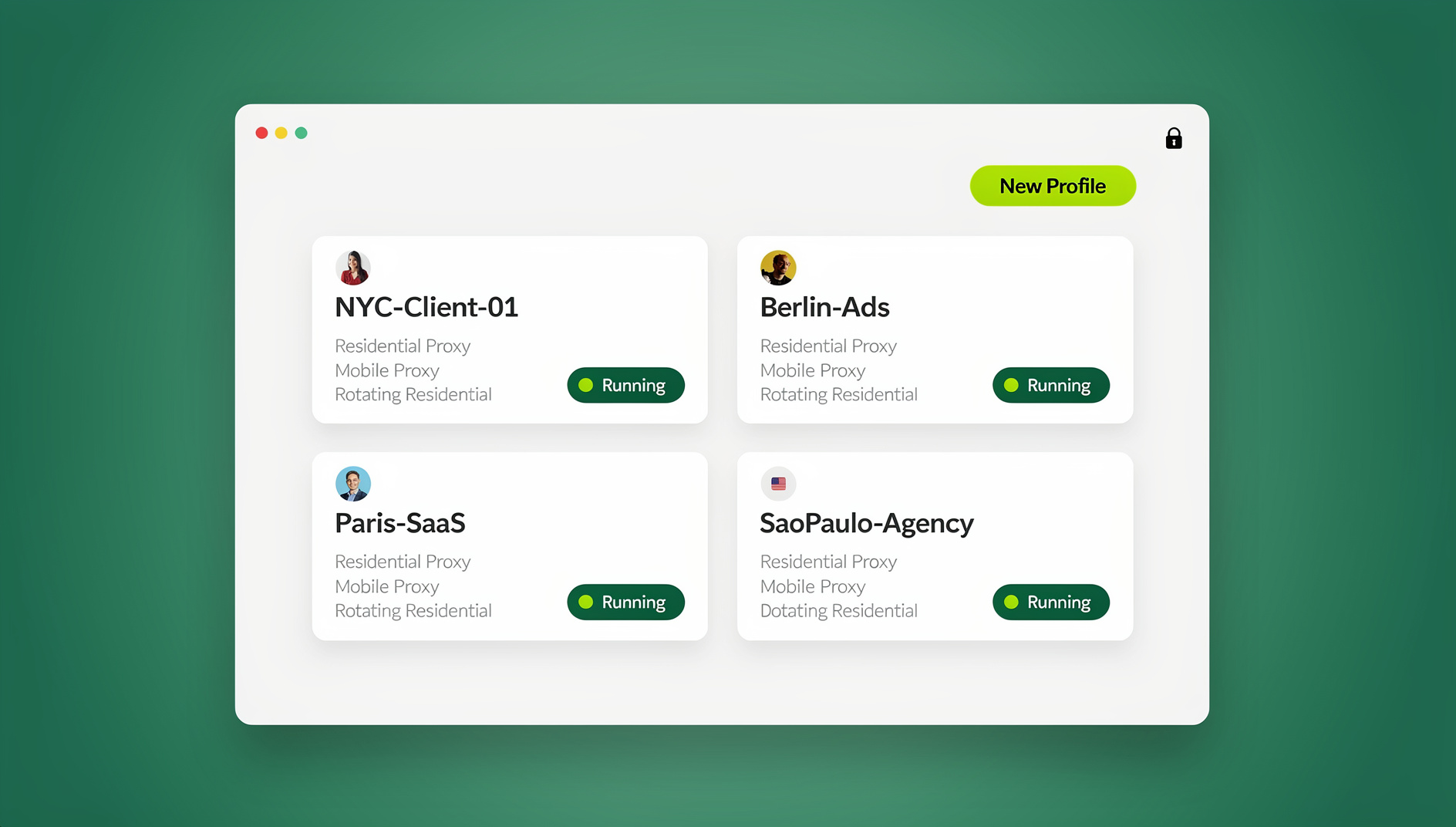
Send.win is built for the first three. The Sendwin Browser desktop app on Windows, macOS and Linux runs isolated browser profiles, each with its own cookies, storage, sessions, fingerprint settings and proxy, so an EU test starts from the same clean state every time and a California test does not inherit the EU one. Timezone, locale, WebRTC behaviour and geolocation follow the proxy’s exit IP, which matters when the banner changes by country. Sharing a profile with a paid teammate opens it already signed in, so a reviewer sees the real session rather than a screenshot.
For a region you cannot reach from your own machine, the cloud browser runs on Send.win’s server in Helsinki, Finland, from any device with nothing to install; the free cloud demo gives you 10 minutes a day to check a page load and a Reject click. Run browser fingerprint test tools first if you want to see what your own browser already exposes before you add another signal to the page.
A Practical Compliance Checklist
Work through this in order. Each step produces a document or a log you can hand to a regulator, a client or your own security team.
- Inventory. List every client-side script that reads device attributes, plus every server-side signal you retain — including tags fired by the tag manager, not just code you wrote.
- Assign a purpose to each. Security, analytics, advertising and personalisation carry different rules.
- Choose the regime per purpose. Consent for anything not strictly necessary; the exemption only where you can defend it line by line.
- Document necessity for fraud. Which signals, why each one, how long you keep them, who has access, and what breaks without it.
- Fire nothing early. Confirm the fingerprint call sits behind the consent callback, not in the page head.
- Check banner mechanics. Reject as easy as accept, no pre-ticked boxes, granular purposes, withdrawal in one click.
- Honour opt-out signals. Global Privacy Control and state-level opt-out preferences must stop cross-context use immediately.
- Minimise and expire. Hash or key identifiers, set a retention window, delete on request. Vendors publish retention numbers; confirm them in the contract, not the blog post.
- Test as a visitor. Clean profile per region, network log from load to Reject, as described above.
- Review annually. The EDPB updated 2/2023 in 2025, and national regulators keep issuing decisions.
Common Mistakes That Turn Lawful Fingerprinting Into a Fine
Most of these failures happen before anyone reads a privacy notice. “Is device fingerprinting legal” is settled by your tag configuration and your banner mechanics, not by the wording of the policy.
- Treating “no cookies” as “no consent needed”. Article 5(3) is technology-neutral; the storage medium was never the point.
- Assuming legitimate interest replaces ePrivacy. It answers the GDPR question only, and only with a documented test.
- Letting the banner fire the script. Pre-consent collection cannot be repaired retroactively.
- Bundling purposes into one accept. Fails the specificity requirement in Article 4(11).
- Making reject harder than accept. A documented dark pattern since the taskforce report.
- Ignoring refusal and withdrawal. Several of the CNIL’s 2025 tracker sanctions were about exactly this.
- Keeping identifiers indefinitely. Indefinite retention is hard to defend as strictly necessary for anything.
- Not describing a vendor’s cross-customer device graph. If your provider links devices across its whole customer base, the notice has to say so and the processing agreement has to survive it.
- Letting QA traffic pollute production analytics. Test sessions should never land in the dataset you use to justify the processing.
That last point is the quiet one. Separating browser fingerprinting and isolation in your test setup is the difference between checking your memory of the flow and checking the flow.
🏆 Send.win Verdict
Legality is decided by your inventory, your balancing test and your banner — not by tooling. But the evidence that your banner behaves the way the notice says comes from testing in clean, region-appropriate browser environments, and that is where Send.win earns its place. Isolated profiles with their own cookies, storage and consistent per-profile fingerprint settings, proxies whose exit IP drives timezone and locale, a shared session a reviewer can open already signed in: enough to prove a Reject click stops collection in Frankfurt, London and Sacramento. It will not write your necessity assessment, and it is not an audit product.
See Send.win plans — Pro from $19/mo with residential proxies included, Team for agencies, or check a page load first with the free cloud demo.
Frequently Asked Questions
Is device fingerprinting illegal under GDPR?
No. It is processing of personal data, so GDPR requires a lawful basis, transparency and respect for data-subject rights, but nothing in the regulation bans it. In the EU and UK the extra hurdle is ePrivacy Article 5(3), which requires prior consent for reading information from a visitor’s device unless a narrow exemption applies.
Do I need consent for fingerprinting used only for fraud prevention?
It depends on the jurisdiction and on how strictly necessary the collection really is. Recital 47 gives you a legitimate-interest basis under GDPR, but that does not satisfy ePrivacy on its own, and no regulator has published a bright line. Document why each signal is required, keep the data to security use, cap retention, and expect the answer to differ between regulators.
How is fingerprinting treated differently from cookies legally?
Functionally not at all. The Article 29 Working Party treated it as equivalent to a cookie ID in Opinion 9/2014, and the EDPB’s 2023 guidelines kept that line. The practical difference is user control: people can clear cookies, but there is no reset button for a fingerprint, which is why consent gets more weight, not less.
Is browser fingerprinting legal in the US without consent?
No federal statute bans it, so collection without consent is not automatically unlawful. State law sets the terms: California treats fingerprints as unique personal identifiers with notice, opt-out and Global Privacy Control duties. FTC Act section 5 risk comes from misdescribing the practice or running an opt-out that does not stop tracking.
Does legitimate interest exempt me from ePrivacy consent?
No. They are separate tests. Legitimate interest is a GDPR lawful basis for the processing; Article 5(3) governs access to the terminal equipment and looks only at consent or the strictly-necessary exemptions. A documented balancing test strengthens your GDPR position and your necessity argument, but it does not replace consent by itself.
What must a compliant consent banner do for fingerprinting?
Collect consent before the first signal is read, offer rejection as easily as acceptance, keep purposes granular rather than bundling security with advertising, allow withdrawal in one click, and record what each visitor agreed to. Pre-ticked boxes and hidden reject links are treated as dark patterns.
Can users opt out of fingerprinting the way they delete cookies?
Not directly; there is no equivalent reset control, which is why regulators focus on consent and on opt-out signals such as Global Privacy Control. Your obligations are to honour objection and deletion requests, stop collection when consent is withdrawn, and not re-derive the same identifier from data you were asked to delete.
Is IP-only tracking covered by ePrivacy Article 5(3)?
Yes, according to EDPB Guidelines 2/2023, which bring IP-only tracking and passive reading of device characteristics into scope. IP addresses were already personal data where linkable to an individual under the CJEU’s Breyer ruling, so an IP reputation check is not outside privacy law just because no cookie is involved.
How Send.win Helps With Is Device Fingerprinting Legal
Send.win is a browser profile manager for professionals and teams: every account gets its own isolated browser profile.
- Isolated profiles – separate cookies, storage and sessions per profile
- Fingerprint protection – each profile keeps its own consistent browser fingerprint, so profiles never share one browser identity
- Desktop app + cloud browser – native app for Windows, macOS and Linux, or run profiles in the cloud with no install
- Residential proxies included – on Pro and Team, with timezone and locale matched to the proxy
- Team sharing – share a signed-in profile with a teammate without sharing the password
Try the free cloud demo — no install — or download the desktop app. Paid plans start at $19/month, and your first card purchase is covered by a 7-day money-back guarantee (see pricing).