Understanding Browser Fingerprinting and How to Prevent It
Browser fingerprinting is a tracking method that collects unique hardware and software parameters—like canvas rendering, WebGL details, and installed fonts—to identify your device without cookies. You can protect your privacy using a browser profile manager like Send.win, which runs sessions in isolated cloud environments, or by using privacy-focused browsers like Brave or Tor. This article details the top techniques to beat fingerprinting, compares their effectiveness, and shows how to stay anonymous online.
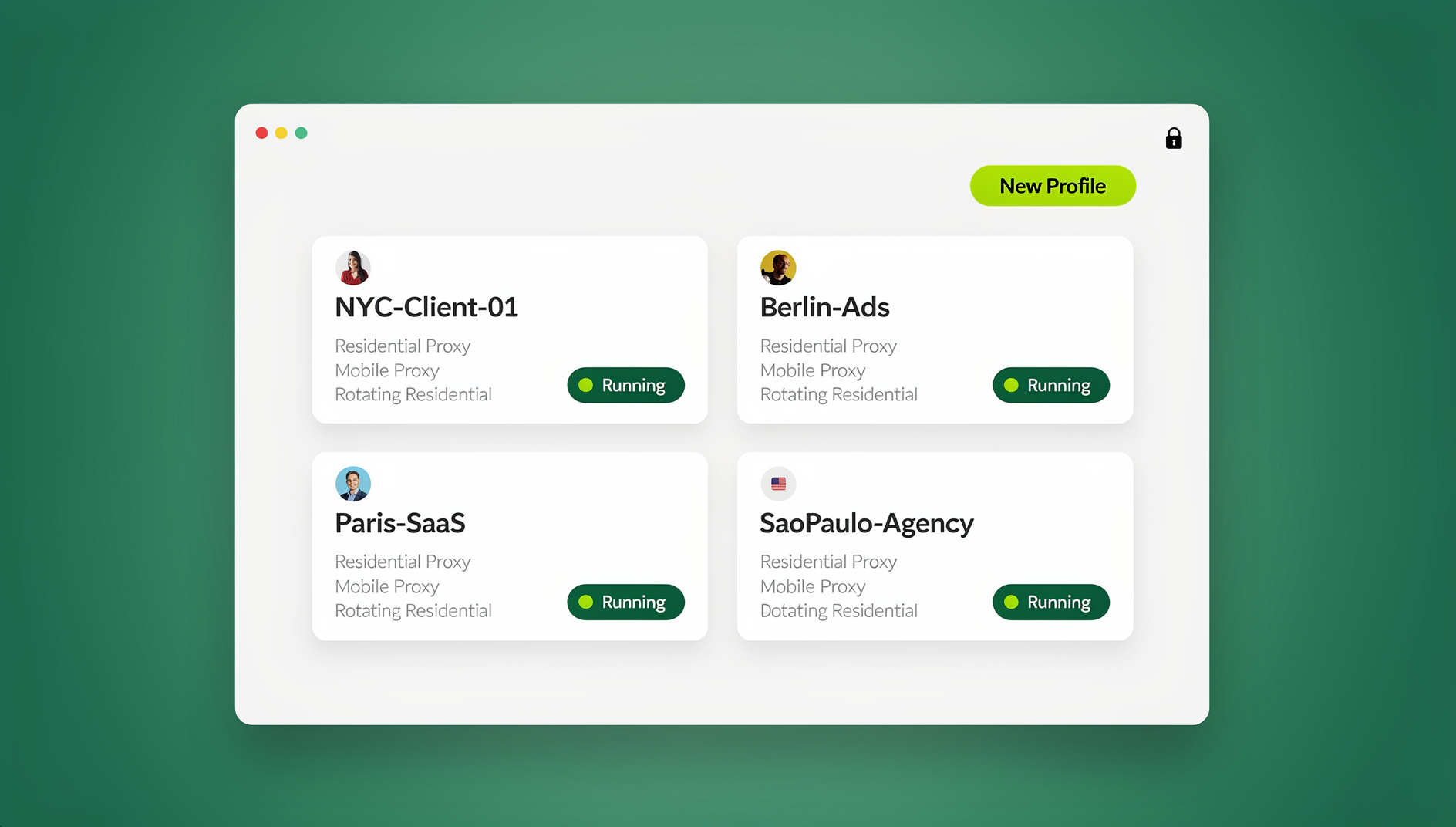

As privacy regulations tighten around the world, advertising networks and data brokers are moving away from traditional tracking methods. Because cookies are easy to block and delete, websites have shifted to a stateless tracking method known as browser fingerprinting. Instead of storing a file on your computer, websites run scripts that analyze your hardware, operating system, graphics card, audio setup, and browser version to create a highly accurate, unique digital ID. In this guide, we explore the technical mechanisms behind this tracking and present eight proven methods to protect your online identity.
How Browser Fingerprinting Gathers Your Data
When you visit a website, your browser must exchange data to render pages correctly. Fingerprinting scripts exploit these standard web APIs to gather specific data points. The script combines these values into a single hash that serves as your digital fingerprint.
The Key Data Points Collected by Trackers
| Data Point | API / Source | Uniqueness Contribution | Description |
|---|---|---|---|
| Canvas Rendering | HTML5 Canvas API | Very High | Measures microscopic variations in pixel rendering on your GPU. |
| WebGL Details | WebGL API | Very High | Identifies your graphics card manufacturer, renderer, and drivers. |
| Font Enumeration | CSS/JS dimension checks | High | Scans the exact list of fonts installed on your local computer. |
| Audio Context | Web Audio API | High | Analyzes hardware-level variations in how your system processes sound. |
| User-Agent String | HTTP Headers | Medium | Reveals your browser type, version, and operating system. |
| WebRTC Details | WebRTC API | High | Exposes your real IP addresses, bypassing standard VPNs. |
Because the mathematical combination of these parameters is so detailed, over 94% of browsers with JavaScript enabled are completely unique. This means trackers can follow you across the internet even if you use private browsing mode, clear your cache, or use a VPN.
Deep Dive: Advanced Fingerprinting Tactics Explained
Canvas Fingerprinting Under the Hood
The HTML5 Canvas API allows websites to draw 2D and 3D graphics on the fly. Fingerprinting scripts write a hidden, complex string of text and shapes onto this canvas element, colored with specific gradients and shadows. When the browser renders this image, it does so using your graphics card’s physical layout, display drivers, and operating system anti-aliasing configurations. Microscopic differences in sub-pixel rendering mean that two different graphics cards will output slightly different image hashes. This output is then converted into a text hash, uniquely identifying your hardware.
WebGL Fingerprinting Under the Hood
Similar to canvas, WebGL allows for rendering 3D graphics. Fingerprinting scripts exploit the WebGL API to query your browser for hardware specifications. It extracts information like your GPU vendor (e.g., NVIDIA, AMD, Intel), graphics card model, driver versions, and specific WebGL performance metrics. This exposes a massive amount of device-specific information that cannot be hidden by standard network-masking tools like VPNs.
Font Fingerprinting and Enumeration
Websites can detect which fonts are installed on your machine by using JavaScript to render a standard text string in various font families and measuring the width and height of the bounding box. If the box size changes, the font is installed. Because different programs (like Microsoft Office, Adobe Creative Suite, or PC games) install unique sets of fonts, the exact combination of fonts on your system is highly unique, making it an excellent tracking point.
Web Audio API Fingerprinting
The Web Audio API allows scripts to process and synthesize audio in the browser. Trackers use this API to generate a specific, sub-audible audio signal (like a sine wave) and measure how your hardware processes it. The math of the audio compression, your audio card drivers, and the digital-to-analog converter will introduce tiny, hardware-specific distortions. These distortions are analyzed and turned into a hash, contributing another layer of entropy to your device profile.
Understanding Entropy in Browser Tracking
Entropy, in information theory, measures the level of surprise or uncertainty. In the context of browser tracking, the entropy of a parameter refers to how much identifying information it provides. For instance, knowing someone’s timezone narrows down the global population significantly, providing a few bits of entropy. Knowing their exact installed font list narrow things down even further, providing over 8 bits of entropy. When you combine dozens of independent parameters, the total entropy easily exceeds 33 bits. Since 2 raised to the power of 33 is approximately 8.5 billion, 33 bits of entropy is mathematically sufficient to identify every single individual on Earth. This is why standard spoofing is so difficult: changing only one parameter without matching the others creates an inconsistent fingerprint, which anti-fraud systems flag instantly.
8 Methods to Beat Browser Fingerprinting in 2026
To keep your accounts separate and protect your identity, you must implement defenses that neutralize or randomize these data points. Here are the top eight methods ranked by effectiveness.
Method 1: Use a Cloud Browser Profile Manager (Send.win)
The most effective way to counter fingerprint tracking is using a dedicated browser profile manager like Send.win. Rather than blocking fingerprinting APIs—which tells the website you are trying to hide—Send.win gives each profile its own consistent browser fingerprint, so profiles do not share one browser identity.
Send.win operates both a native desktop client (Sendwin Browser) and fully isolated cloud browser sessions. By executing your browsing sessions on remote servers, your local hardware is never exposed to tracking scripts. Each session presents a completely different GPU, font list, and audio signature, allowing you to run multiple profiles safely. To learn more about setting up isolated connections, check out our guide on proxy browser setup.
Method 2: Use Brave Browser for Randomization
Brave Browser approaches fingerprint protection by randomizing specific API outputs. When a script requests your canvas or WebGL details, Brave injects subtle, random noise that changes on every page load. This prevents trackers from linking your visits together. However, Brave does not allow you to run multiple isolated accounts simultaneously in the same way an antidetect tool does, limiting its use for commercial operations.
Method 3: Utilize the Tor Browser for Uniformity
Tor Browser uses a strategy called “uniformity.” Instead of randomizing fingerprints, Tor tries to make every user look exactly the same. All Tor users present the same canvas hash, User-Agent, and font list. While highly secure, many commercial websites block Tor traffic entirely because it is associated with anonymous activity, and the routing network can significantly slow down your connection speeds.
Method 4: Enable Firefox Fingerprint Resistance
Firefox includes a built-in feature called privacy.resistFingerprinting (available via the about:config panel). This setting standardizes many browser parameters, rounds screen dimensions, and spoofs your timezone to UTC. While effective, it can occasionally break layout rendering on complex, modern web applications, making it less ideal for everyday commercial use.
Method 5: Deploy Secure Proxy Networks
A proxy changes your IP address but does not alter your hardware profile. However, combining a high-quality proxy with fingerprint spoofing is essential for complete isolation. Using SOCKS5 residential proxies ensures your network location matches your spoofed browser settings, preventing geographic leaks. You can learn more about these mechanisms in our guide to browser isolation technology.
Method 6: Implement Docker-Based Browsing
For technical teams and developers, launching browser instances inside Docker containers provides clean, isolated operating system environments. This sandboxes your local files and resets the local software signature on every launch, though it requires scripting skills to set up correctly. To see how to configure this setup, read our guide on building a Docker browser.
Method 7: Utilize Application Isolation
Operating system-level sandboxing (such as Sandboxie on Windows or native virtual machines) runs your browser in an isolated workspace. This prevents tracking scripts from reading files on your primary hard drive, though it does not fully spoof hardware parameters like WebGL and canvas hashes unless paired with antidetect tools. Check our article on application isolation for more details.
Method 8: Disable JavaScript (Extreme Measure)
Since almost all advanced fingerprinting scripts require JavaScript to run, disabling JS in your browser settings will block fingerprinting entirely. However, this is an impractical solution for most users, as disabling JavaScript breaks the functionality of nearly every modern website, including Google, Facebook, and Amazon, rendering the browser almost useless for normal daily activities.
Evaluating Your Fingerprint Protection Strategy
Choosing the right method depends on your objectives. If you are a casual surfer looking to reduce tracking, Brave or Firefox’s resistFingerprinting is often sufficient. If you are a developer, digital marketer, or e-commerce operator managing multiple commercial accounts, you need the strict profile separation and per-profile fingerprint settings provided by a browser profile manager like Send.win.
Why Send.win is the Best Protection Against Tracking
Many anti-tracking methods require complex configurations, cause website breakage, or slow your connection to a crawl. Send.win offers a simple, powerful, and affordable solution. By combining a native desktop application with zero-install cloud browser sessions, Send.win delivers complete fingerprint isolation without compromising usability.
Send.win operates on a clear, transparent subscription model. There is no free trial; plans start at $19/month, and your first card purchase is covered by a 7-day money-back guarantee. You can also preview it for free in the cloud demo. Our plans include:
- Pro Plan: $19/month (or $83.88/year). Includes 150 isolated profiles and 5GB of proxy bandwidth.
- Team Plan: $49/month (or $251.88/year). Includes 500 isolated profiles, 20GB of proxy bandwidth, and 16 team seats.
Send.win does not offer an automation interface: there is no API, SDK, headless mode or Selenium/Puppeteer/Playwright support on any plan. Each profile keeps its own separate cookies, storage and fingerprint settings, so you can organise multiple accounts and workflows without profiles sharing one browser identity.
🏆 Send.win Verdict
Standard privacy tools like VPNs and standard browsers fail to stop modern browser fingerprinting because they do not protect your hardware signature. Send.win provides strong protection by running your browser profiles in fully isolated cloud environments. With pricing starting at $19/month and a 7-day money-back guarantee on your first card purchase, Send.win lets you keep each profile’s cookies, storage and fingerprint separate and manage multiple accounts on any device.
Try Send.win today — Plans start at $19/mo, and your first card purchase is covered by a 7-day money-back guarantee. You can also preview it free in the cloud demo.
Frequently Asked Questions
What is browser fingerprinting?
Browser fingerprinting is a tracking method that collects technical details about your device’s hardware, software, and configuration (such as screen size, installed fonts, GPU specs, and audio setup) to create a unique identifier that tracks you across websites without using cookies.
Can a VPN block browser fingerprinting?
No. A VPN only changes your IP address and encrypts your network connection. It does not alter your device’s hardware properties, meaning tracking scripts can still identify and follow your browser fingerprint even when your IP is masked.
Does incognito mode protect against browser fingerprinting?
No. Incognito/private browsing mode only prevents your local browser from saving search history, cookies, and form data. It does not block websites from running fingerprinting scripts that read your device’s hardware configuration.
What is the difference between Send.win’s Pro and Team plans?
The Pro plan ($19/month or $83.88/year) includes 150 profiles and 5GB of proxy bandwidth. The Team plan ($49/month or $251.88/year) scales up to 500 profiles, 20GB of proxy bandwidth, and supports up to 16 team seats.
How does Send.win isolate browser fingerprints?
Send.win runs profiles in isolated cloud sessions on remote servers. This means websites interact with remote hardware signatures instead of your actual physical device, ensuring your home computer’s fingerprint remains completely hidden.
Does Send.win offer an Automation API?
No. Send.win has no automation interface on any plan: there is no API, SDK, headless mode or Selenium/Puppeteer/Playwright support. Plans start at $19/month (or $83.88/year), and the first card purchase is covered by a 7-day money-back guarantee.
Does Send.win require a local software installation?
While Send.win offers a native desktop client (Sendwin Browser), it is not required. You can launch, run, and manage your isolated profiles via cloud browser sessions that run directly in your existing web browser on any device.