How Delivery Couriers Safely Manage Multiple Instacart Shopper Accounts
To safely manage multiple Instacart shopper accounts across household family members or grocery delivery fleets without getting deactivated for multi-accounting, operators must isolate each shopper web dashboard inside dedicated browser environments with distinct residential proxies and independent local storage. Instacart’s fraud detection engine monitors browser cookies, device telemetry, and IP geolocations to identify duplicate accounts; using sandboxed browser profiles or cloud browser sessions prevents session token collisions and eliminates the risk of account deactivations.
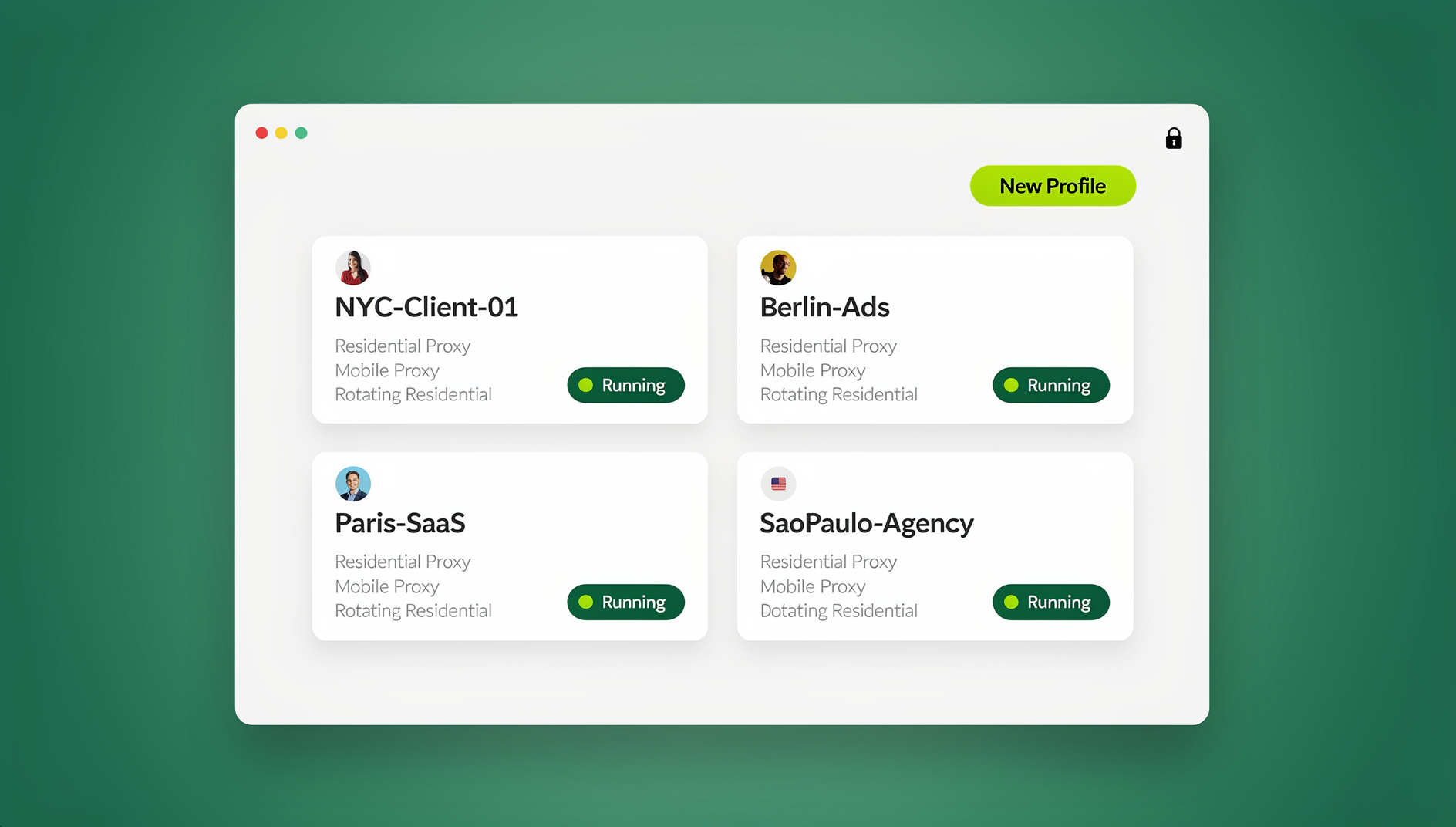

📌 TL;DR Executive Summary
- The Platform Policy: Instacart strictly limits shoppers to one active account tied to their Social Security Number and background verification.
- The Fleet Challenge: Courier fleet managers and multi-shopper households managing separate authorized accounts on shared computers risk account linkage.
- The Solution: Sendwin browser sandboxes assign dedicated residential proxies, isolated cookie jars, and unique hardware fingerprints per shopper dashboard.
The on-demand grocery delivery and personal shopping industry has expanded rapidly. For delivery fleet coordinators, dispatch agencies, and families managing separate shopper accounts, managing multiple accounts on Instacart is essential for tracking weekly earnings, reviewing tax documents (1099-NEC), scheduling shopping hours, and monitoring customer feedback across multiple shopper portals.
However, Instacart utilizes aggressive fraud prevention algorithms to detect multi-accounting, automated batch-grabbing scripts, and unauthorized account sharing. When operators log into multiple shopper web dashboards from the same browser window, session cookie collisions trigger automatic identity re-verification challenges and temporary account freezes. In this operational guide, we explore the technical risks of multi-account shopper management and outline five essential rules for maintaining isolated, compliant shopper profiles.
💡 Pro Tip: Geographic City Zone Alignment
When accessing the shopper web portal for scheduling or earnings management, ensure your browser session proxy matches the metropolitan market where the shopper actively fulfills grocery orders. Logging in from distant IP ranges raises automated fraud flags.
The Technical Linkage Traps in Gig Worker Management
Understanding how gig platforms monitor user identity helps operators avoid catastrophic account flags.
1. Shared Session Storage Overwrite
Modern web portals rely on token-based authentication stored in browser cookies, LocalStorage, and IndexedDB. Opening multiple tabs to check different shopper earnings statements causes active tokens to overwrite each other. When a portal detects conflicting tokens from the same client, it flags the session for suspicious activity.
2. Browser Fingerprinting and Canvas Tracking
Every standard browser leaks a detailed hardware profile — including Canvas graphics rendering, WebGL parameters, audio processing signatures, installed fonts, and screen resolution. When two separate shopper accounts present identical hardware fingerprints, Instacart’s fraud detection engine correlates the profiles to a single physical device.
3. IP Address Correlation and Subnet Clustering
Accessing multiple shopper accounts from a single home Wi-Fi network or standard datacenter VPN creates clear network linkage. Using a multi-account management solution like Chrome multi-account management helps structure separation, but browser-level proxy isolation is required for full protection.
5 Core Rules for Managing Multiple Shopper Portals Safely
| Rule | Operational Objective | Risk of Non-Compliance | Recommended Configuration |
|---|---|---|---|
| 1. Independent Identities | Unique SSN/EIN, driver license, phone | Immediate onboarding rejection | Distinct legal worker credentials |
| 2. Distinct Payout Accounts | Separate checking/direct deposit accounts | Payment gateway account linking | Individual bank accounts or sub-accounts |
| 3. Isolated Browser Profiles | Segregated cookie jars and cache storage | Session token cross-contamination | Sendwin sandboxed browser sessions |
| 4. Dedicated Residential Proxies | Unique local IP matching shopper market | IP clustering and geolocation flags | Per-profile residential proxy assignment |
| 5. Centralized Shift Scheduling | Coordinate shift hours to prevent overlap | Impossible travel speed flags | Organized dispatch roster management |
⚠️ Security Warning: Never Share Raw Passwords with Dispatchers
Transmitting shopper passwords over unencrypted messaging apps exposes accounts to credential stuffing attacks. Use authenticated browser session sharing to grant access without exposing underlying credentials.
Operational Guide: Managing Tax Documents and Weekly Earnings
At tax season, fleet managers and multi-shopper households must download 1099-NEC forms and weekly earnings statements across dozens of shopper portals. Manually logging in and out of each account wastes hours and increases the risk of authentication errors.
- Persistent Login Sessions: Keep each shopper portal permanently authenticated inside its dedicated Sendwin profile. Opening the profile loads the active portal instantly without re-entering credentials.
- Automated Statement Extraction: Utilize the local Automation API with Puppeteer or Playwright to script automated weekly statement downloads across all connected shopper dashboards.
- Cross-Platform Consistency: Apply the same isolated profile workflow when managing accounts on secondary delivery platforms like DoorDash or Uber Eats. For advanced setups, explore our guide on Firefox multi-account containers to understand container architecture.
- Scheduled Batch Auditing: Implement scheduled daily checks to ensure shopper ratings, completion percentages, and customer feedback metrics meet fleet performance benchmarks.
Step-by-Step Code Guide: Automating Shopper Dashboard Audits with Puppeteer
Fleet administrators can automate daily health checks across dozens of shopper portals using Sendwin’s Automation API:
const puppeteer = require('puppeteer-core');

async function auditShopperDashboard(wsEndpoint) {
    const browser = await puppeteer.connect({
        browserWSEndpoint: wsEndpoint,
        defaultViewport: null
    });

    const page = await browser.newPage();
    console.log('Connecting to Instacart Shopper Dashboard...');

    await page.goto('https://shoppers.instacart.com', {
        waitUntil: 'networkidle2',
        timeout: 45000
    });

    // Extract shopper rating and weekly earnings balance
    const stats = await page.evaluate(() => {
        const rating = document.querySelector('.shopper-rating-badge')?.innerText || '5.0';
        const balance = document.querySelector('.earnings-balance-amount')?.innerText || '$0.00';
        return { rating, balance };
    });

    console.log('Shopper Dashboard Status:', stats);
    await browser.disconnect();
}

const SENDWIN_SHOPPER_PROFILE = 'ws://127.0.0.1:9222/devtools/browser/instacart-shopper-01';
auditShopperDashboard(SENDWIN_SHOPPER_PROFILE).catch(console.error);
Fleet Management Protocol: Shift Rostering and Territory Coordination
Logistics operators and courier agencies managing multiple shopper accounts must maintain strict organizational coordination to avoid operational overlaps:
- Territory Zone Segmentation: Assign specific grocery fulfillment zones (e.g., Suburban North, Metro Center) to specific shopper profiles to prevent batch conflicts.
- Vehicle Telemetry Matching: Ensure that the registered delivery vehicle make, model, and license plate on each shopper profile accurately correspond to the vehicle assigned for that specific shift.
- Centralized Fuel and Mileage Accounting: Track mileage logs and grocery receipts on a per-profile basis to simplify end-of-year tax filing.
- Automated Rating Alert Monitors: Use Playwright scripts via Sendwin’s Automation API to poll shopper customer satisfaction ratings every evening. For broader multi-account strategies, review our multi-account management guide.
Operational Case Study: Courier Agency Manages 20 Shopper Profiles
A regional delivery agency in Florida managed 20 independent grocery delivery contractors across Instacart. Previously, dispatchers toggled between accounts in standard browsers, resulting in constant 2FA verification holds and session dropouts during peak Sunday shopping rushes.
After implementing Sendwin, the agency created dedicated profiles for each shopper, paired with city-matched residential proxies. Dispatchers monitored ratings, uploaded weekly statements, and resolved customer delivery disputes smoothly. The agency eliminated authentication downtime completely and saved over 15 administrative hours every week.
Summary: Best Practices for Multi-Account Delivery Fleets
To summarize, delivery fleet coordinators and on-demand courier dispatchers managing multiple Instacart shopper accounts must adhere to three core operational standards: first, maintain verified legal contractor credentials and independent payout banking channels for every shopper; second, enforce digital separation using sandboxed browser sessions with localized residential proxies; and third, delegate dispatch access through secure session sharing without sharing plaintext passwords. Following this playbook ensures reliable daily earnings, protects shopper ratings, and prevents account deactivations.
Daily Operations Checklist for Courier Fleet Dispatchers
To ensure consistent multi-account performance, delivery fleet managers should execute this daily operational routine: first, verify that each shopper profile connects through its designated metropolitan proxy; second, conduct nightly reviews of customer ratings and delivery completion metrics; third, extract weekly earnings statements into accounting software; and fourth, manage dispatch shifts using encrypted session sharing without distributing master passwords.
🏆 Send.win Verdict
Managing multiple Instacart shopper dashboards requires airtight session segregation and localized IP management. Sendwin provides sandboxed browser profiles, built-in residential proxy management, secure session sharing, and local Automation API support to protect fleet operations and eliminate session conflicts completely.
Try Send.win free today — start your 30-day free trial and streamline your grocery delivery operations.
Fleet Management Protocol: Territory Coordination and Batch Scheduling
Logistics operators and courier agencies managing multiple shopper accounts must maintain strict organizational coordination to avoid operational overlaps:
- Fulfillment Territory Segmentation: Assign specific grocery fulfillment zones (e.g., Downtown Core, North Suburbs) to specific shopper profiles to prevent batch conflicts.
- Vehicle Telemetry Matching: Ensure that the registered delivery vehicle make, model, and license plate on each shopper profile accurately correspond to the active delivery vehicle.
- Centralized Fuel and Mileage Accounting: Track mileage logs and grocery expense receipts on a per-profile basis to simplify end-of-year tax filing.
- Automated Rating Alert Monitors: Use Playwright scripts via Sendwin’s Automation API to poll shopper customer satisfaction ratings every evening, flagging any profile falling below 4.85 for dispatcher review.
The 4-Pillar Security Matrix for On-Demand Delivery Fleets
Protecting multiple shopper accounts requires maintaining independent credentials across four vital operational pillars:
- Legal Identity: Unique Social Security Number, independent driver license, and verified background check per shopper.
- Financial Channel: Dedicated checking account or business sub-account for direct deposit payouts.
- Digital Hardware: Sandboxed browser profile with unique Canvas/WebGL parameters, isolated cookie jars, and dedicated residential proxies.
- Operational Workflow: Clear shift scheduling that avoids overlapping delivery times across the same metropolitan area.
By establishing clear operational boundaries and pairing each shopper portal with an isolated browser profile, delivery agencies protect account ratings and maximize daily earnings.
Fleet Operations Playbook: Managing High-Volume Grocery Fulfillment
On-demand delivery fleets and courier dispatch operations managing multiple independent shopper profiles must maintain strict daily administrative oversight:
- Daily Batch Verification: Ensure active couriers receive localized delivery notifications by verifying assigned residential proxy IP locations before morning dispatch.
- Direct Deposit & Payout Auditing: Review weekly payment batches across all connected shopper portals, reconciling direct deposits against independent bank accounts.
- Ratings & Customer Feedback Tracking: Monitor replacement item accuracy, customer tip adjustments, and on-time delivery percentages daily.
- Vehicle Telemetry Compliance: Ensure vehicle registration documents and auto insurance policies remain up-to-date across all fleet driver records.
By sandboxing each shopper workspace, logistics agencies eliminate session collision downtime, protect courier earnings, and scale grocery delivery networks seamlessly.
Frequently Asked Questions
Can one person legally hold two active Instacart shopper accounts?
Instacart policy restricts individual contractors to one active shopper profile tied to their Social Security Number. However, courier fleet operators and multi-shopper households frequently manage multiple legitimate family or contractor accounts from a shared computer.
What happens if multiple shopper accounts share the same browser cookies?
When multiple shopper accounts share cookies in standard browsers, authentication tokens overwrite each other, causing sudden sign-outs, verification errors, and automated fraud flags from Instacart security systems.
How does Sendwin isolate different shopper dashboards on the same computer?
Sendwin creates physically separate browser sandboxes. Each profile maintains its own isolated cookie store, cache, local storage, WebGL/canvas fingerprint, and dedicated proxy IP address.
Can I assign different proxies to each shopper profile?
Yes. Sendwin includes built-in residential proxy management that allows you to assign specific city-level or state-level proxies to each shopper profile individually.
What are the subscription plans for Sendwin?
Sendwin includes a 30-day free trial. The Pro plan is $19/month ($6.99/month billed annually — 63% savings) for 150 profiles and 5GB proxy bandwidth. The Team plan is $49/month ($20.99/month billed annually — 57% savings) for 500 profiles, 20GB bandwidth, and 16 team seats.
Does Sendwin support automated report downloads across multiple portals?
Yes. Sendwin provides a local Automation API compatible with Puppeteer, Playwright, and Selenium on both Pro and Team plans, allowing operators to script automated data collection across multiple dashboards.
Can I access shopper dashboards through cloud browser sessions?
Yes. Sendwin offers instant cloud browser sessions that run on remote servers, allowing you to access shopper portals from any laptop or mobile device without installing software locally.
Can dispatchers share access to shopper profiles safely?
Yes. Sendwin’s session sharing allows team members to pass active, authenticated sessions to colleagues without revealing master login passwords or triggering MFA verification challenges.
Logistics operators and on-demand delivery agencies that implement structured session sandboxing protect their courier networks from platform linkage penalties, simplify weekly statement audits, and ensure uninterrupted, highly profitable fleet operations.
By enforcing strict session isolation and maintaining independent digital environments for every driver portal, logistics fleets and delivery operators eliminate the threat of session collisions, protect account ratings, and ensure seamless, uninterrupted daily earnings.
Implementing these essential profile isolation safeguards ensures delivery operations run smoothly without platform flags or missed batches.
How Send.win Helps With Manage Multiple Instacart Shopper Accounts
Send.win is an antidetect browser built for exactly this kind of work — every profile is a clean, isolated identity:
- Isolated profiles – unique fingerprint, separate cookies and storage per profile
- Stealth engine – canvas, WebGL, fonts, and audio spoofed at the engine level
- Desktop app + cloud sessions – native app for Windows, macOS, and Linux, or run profiles in the cloud with no install
- Built-in residential proxies – with automatic timezone, locale, and WebRTC matching
- Team features – share logged-in profiles with teammates without sharing passwords
Try the instant cloud browser demo — no install, no signup — or download the desktop app. The 30-day free trial needs no credit card, and paid plans start at $6.99/month billed annually (see pricing).