Your IP Got Banned — What the Block Actually Means
An IP ban is a server-side rule that refuses every request from your address, so the site behaves as if it is down. Most blocks are narrower than that: a CDN access rule, a fail2ban entry on the origin, an ASN or country filter, or a fingerprint flag that keeps firing after you change address. Fixing it starts with identifying which layer you hit, because a new IP alone rarely clears a fingerprint-based block.
📌 TL;DR Executive Summary
- Core Takeaway: confirm the block sits at the IP layer before changing anything — a fresh address will not fix a cookie link, a TLS flag or a behaviour score.
- Key Risk/Challenge: rotating IPs while keeping the same fingerprint, cookies and click timing creates a linkable pattern that platforms flag faster than the original.
- Recommended Solution: one identity per isolated browser profile on a sticky residential session, with timezone, locale and WebRTC following the exit IP.
What Counts as an IP Ban — and What People Usually Mean
An IP ban is a network-level configuration that blocks requests from specific addresses. Admins reach for it against brute-force logins, scraping floods, spam signups and anything threatening to overload a server. It can be as simple as an entry in a hosts file, a line in /etc/hosts.deny handled by a TCP wrapper, or a rule inside Fail2ban or DenyHosts — the two Linux tools companies and schools commonly run to block unauthorized remote access while leaving approved connections alone.
Commercial blocks work the same way at a larger scale. Cloudflare IP Access rules can allow, block or challenge traffic by IP address, ASN or country, with a ceiling of 50,000 rules per account across every plan. Behind that layer, tools like IPBan watch log files and the Windows Event Viewer for failed logins and add offending addresses to a firewall block automatically.
Here is the catch that shapes everything below. Because ISPs hand out addresses dynamically, blocking one abusive user often means blocking whole ranges — and behind carrier-grade NAT (RFC 6598), hundreds or thousands of mobile subscribers share a small pool of public IPv4 addresses through dynamic port multiplexing. One ban lands on everybody behind that address, including you.
Symptom Check: IP Ban, Account Block or Fingerprint Flag?
Before you touch your router or buy a proxy, read the symptom. These blocks look similar from the outside and behave very differently once you change something.
| What you see | Likely layer | What happens after you change IP |
|---|---|---|
| Every page on the domain returns 403, a Cloudflare error page or “Access denied” | IP, ASN or country rule | Access usually returns on a clean address |
| Site loads fine, but your account cannot log in | Account or identity block | Nothing — the account is flagged, not the address |
| CAPTCHA loops, then a hard block | Risk score climbing before the block | Temporary relief; the score rebuilds if behaviour is unchanged |
| Same block on a new IP, same browser | TLS, HTTP header or browser fingerprint | Nothing — you were never blocked for the address |
| Works in a fresh browser, blocked in yours | Cookies or local storage | Nothing — the cookie re-identifies you instantly |
CAPTCHAs usually appear before a full ban. Solve one and the address is often whitelisted for a short window; fail repeatedly and the block turns permanent. That progression is a useful signal: challenges rather than hard denials mean you still have room to change behaviour before the threshold trips. If you want to see what an automated system actually reads from a connection, this breakdown of how sites flag a proxy IP is a good map.
Why You Got Banned: Reputation, Shared Ranges and Behaviour
Datacenter and VPN ranges start pre-blocked
Risk teams classify addresses by the network they belong to. Ranges owned by hosting providers and commercial VPNs are known and commonly blocked by default, because the same ranges carry scrapers, bots and abuse. VPNs add a second problem: they present a consistent TLS fingerprint to every site you visit, which makes the whole provider’s traffic easy to group and flag.
Shared residential addresses get burned by neighbours
ISP-assigned shared addresses can be banned because of someone else’s actions, or because malware on a device on that network sent spam. You inherit a reputation you never built, and there is usually no appeal path through the ISP. This is the most common reason a plain home connection fails on a site you never used before.
Your own volume and timing
High-volume data collection, repeated failed logins and server overload protection are the classic triggers. A block is often a side effect of crossing a threshold rather than an accusation about intent — which is why a site that tolerates a slow manual session will cut you off the moment your request pattern turns mechanical.
It is also worth checking the address itself before you buy anything. Blocklist aggregators publish their feed counts and refresh windows, so you can see whether your IP is currently listed and whether it has been listed historically. Historical entries matter more than current ones: some risk engines keep scoring an address long after the public feed has cleared it, and some feeds are assembled from dozens of sources plus honeypot traffic.
Fixes in Order of Effort, Starting With the Free Ones
1. Restart your router
Restarting a home router often forces the ISP to assign a new dynamic IP. It takes a minute, costs nothing and defeats basic address blocks — and only those. If the block came from fingerprinting, cookies or behaviour, you will hit the same wall within minutes, now with a freshly burned address.
2. Deal with the identity layer
If you can afford to, clear cookies and site storage for that domain, or open it in a separate browser profile. If this is a work account, do not clear anything — you would lose the session you are trying to protect. Isolate the session instead of resetting it.
3. Stop the pattern that triggered it
Rotation backfires when the replacement looks identical. A new IP carrying the same fingerprint, the same cookies and the same action timing is a linkable pattern, and platforms flag it faster than the original connection. Slow down, vary your paths, and stop retrying the same endpoint in a loop before you change anything else.
4. Move to a sticky residential session, one per identity
For account work, use one sticky residential or ISP session per identity for the whole of a believable browsing flow, rotating only at natural session boundaries — the end of a task, the end of a working day. Residential IPs are real ISP-assigned addresses and carry far more trust than datacenter ranges, though they are slower and more expensive. If you are comparing tools for this, the criteria in picking an antidetect browser matter more than the size of a proxy pool.
| IP type | Who owns it | Trust signal | Best for |
|---|---|---|---|
| Datacenter | Hosting provider ASN | Low — ranges are widely pre-blocked | Public pages where you never log in |
| ISP / static residential | Real ISP, hosted infrastructure | Higher and stable over time | Logged-in accounts that need a fixed address |
| Residential, rotating | Real subscriber devices | Good, with accurate geolocation | Broad collection at low concurrency |
| Residential, sticky | One real subscriber device | Best fit for account flows | One identity, one session, natural rotation |
| Mobile | Carrier CGNAT pool | High, but shared by many strangers | Mobile-only checks and apps |
| Commercial VPN | VPN provider ranges | Poor — known ranges, uniform TLS fingerprint | Casual privacy, not account work |
5. Ask the site, and clear blacklist listings
Many bans are automated, so a short, factual support message sometimes gets a rule lifted — particularly for corporate or campus networks where the block was collateral. If you are listed on a threat feed, request delisting from the feed operator; some entries expire on their own. Note that not every block is appealable: a CDN-level rule can only be changed by the site’s own security team, not by you or your ISP.
Why a New IP Alone Doesn’t Work: TLS, Headers and the Site’s Rules
Changing address fails whenever the block was never about the address. TLS fingerprinting reads the details of the handshake and reveals the client library behind the connection: a Python script using the requests library looks nothing like a real browser, and it stays blocked after the IP changes. HTTP/2 and HTTP/3 header order and values form a client profile of their own, and a mismatch against the browser the site expects triggers flagging immediately. The mechanics are worth understanding in detail if you automate at all — this walkthrough of TCP/IP fingerprinting covers what leaks at each layer.
Behaviour scoring runs on top of that. Sites score mouse movement, scroll speed and typing cadence, so a script that clicks too fast produces a confident bot verdict even from a fresh, clean residential IP. This is why the order matters: fix the identity and the fingerprint, then the address.
It also helps to understand the rule that is rejecting you. Cloudflare now steers admins toward WAF custom rules for IP and country blocking, with the Skip action replacing the legacy Allow action, and Allow rules deliberately kept out of Security Events. IP Access rules bypass custom rules, rate limiting and legacy firewall rules but not WAF Managed Rules — which is why the same request can pass one layer and fail the next. Country blocking itself relies on IP geolocation, so VPN, proxy, mobile and corporate NAT users can appear to come from somewhere they do not; it is a policy layer, not identity proof. The Cloudflare IP Access rules documentation lays out the exact behaviour and limits.
One more thing to weigh before you treat a block as a technical puzzle. In Craigslist v. 3Taps (2013), a US federal judge held that circumventing an address block to access a site violates the Computer Fraud and Abuse Act as unauthorized access. Regulated automated access is also expanding: North Carolina’s ticket-bot ban took effect on October 1, 2026. Moving to isolated, consent-based account access is a different activity from defeating a block on a site that has told you to leave.
Preventing the Next IP Ban: One Identity, One Isolated Profile
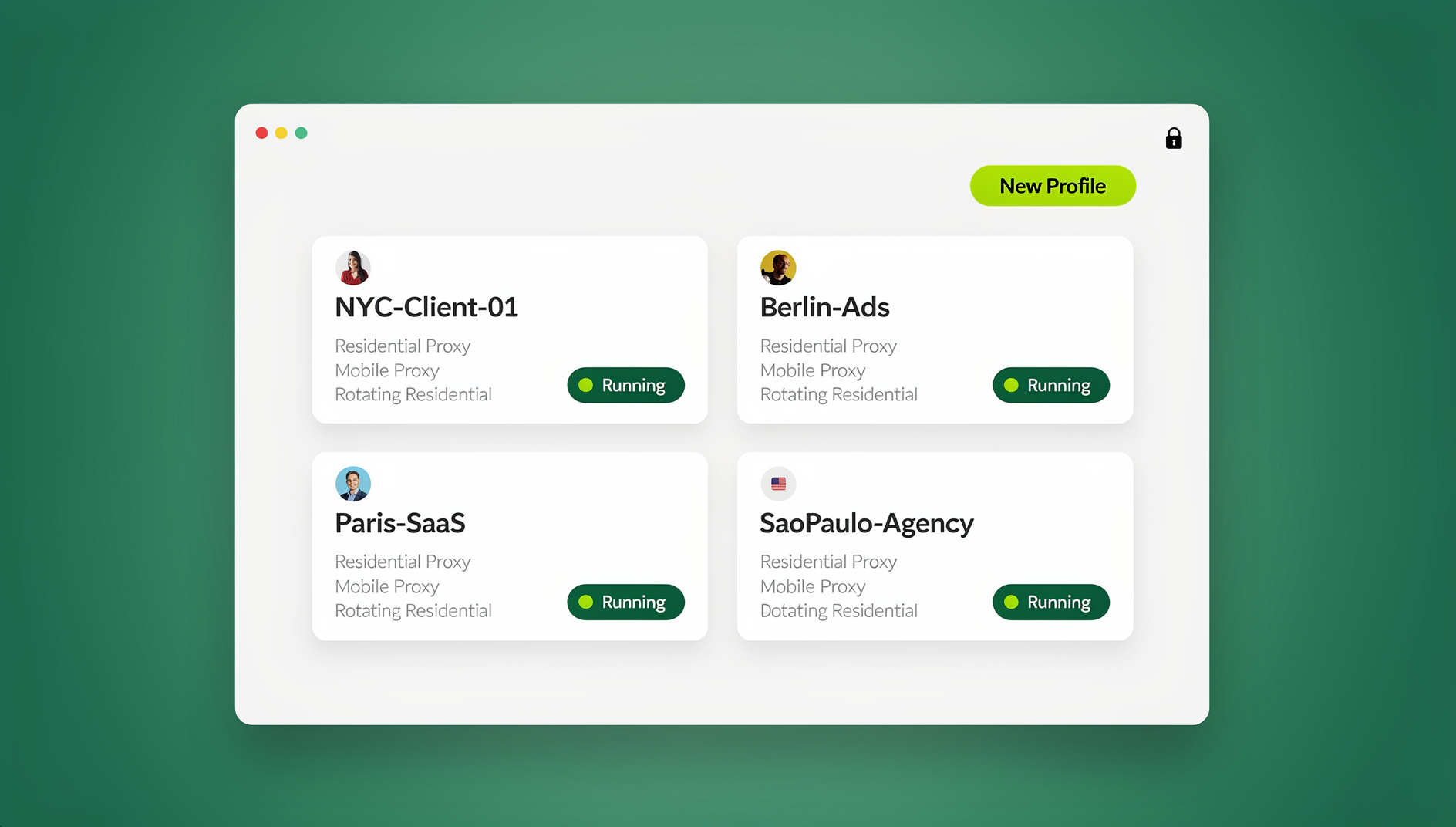
Repeat bans almost always trace back to the same structural fault: several identities sharing one browser, one fingerprint and one address. Fix that and most of the tactical problems disappear.
Each identity should live in its own browser profile with its own cookies, storage, canvas and WebGL output, its own fonts and hardware signals, and its own exit IP. Those signals have to agree with each other. A profile reporting US English, New York time and a Windows GPU while sitting behind a Frankfurt proxy is a contradiction, and contradictions are what risk engines score highest.
Send.win handles that pairing at the engine level. The desktop app for Windows, macOS and Linux runs a patched-Chromium engine with the Sendwin Stealth engine built in, spoofing canvas, WebGL, audio, fonts and hardware inside the engine rather than through brittle script injection — and it keeps every profile’s signals coherent, so no two profiles share a fingerprint.
Timezone, locale, WebRTC and geolocation follow the proxy’s exit IP automatically, which removes the mismatch problem entirely. That last one is where a lot of setups quietly fail; if you want to verify your own browser before trusting it with an account, this guide to WebRTC leak protection shows what a leak looks like from the site’s side.
Every plan includes built-in residential proxies, and you can bring your own HTTP or SOCKS5 endpoints if you already have them. If you prefer not to install anything on the machine doing the work, the cloud browser runs profiles on Send.win’s EU and US nodes from any device, with a free 10-minute daily preview and unlimited cloud browsing time on Pro and Team.
Post-unban hygiene: the first hour back
Getting access back is the easy half. What you do next decides whether the block returns:
- Do not repeat the exact action that triggered the ban, in the same order, at the same speed. Change the sequence, not just the address.
- Change the session as well as the IP: fresh profile, fresh cookies, and a normal browsing flow before you touch the task that failed.
- Keep the new address sticky for the whole session. Rotating mid-flow is what turns a fix into a second ban.
- Write down what you changed. Without a record you cannot tell which variable carried the fix and which one made things worse.
If you automate, attach your tool to a profile that is already running instead of launching a fresh browser each time, so the fingerprint and the proxy stay identical between manual and scripted sessions. Playwright, Puppeteer and Selenium all connect over CDP for this. The local Automation API that exposes it sits on the Team plan.
from playwright.sync_api import sync_playwright

CDP_URL = "http://127.0.0.1:PORT"  # copy it from the profile's automation settings

with sync_playwright() as p:
    browser = p.chromium.connect_over_cdp(CDP_URL)
    context = browser.contexts[0]          # the profile's existing context
    page = context.pages[0] if context.pages else context.new_page()
    page.goto("https://example.com")
    print(page.title())
    browser.close()                        # disconnects from the profile
🏆 Send.win Verdict
An IP ban is rarely only about the IP. Once you have confirmed the block sits at the address layer, the durable fix is pairing a trusted residential exit with a browser that does not contradict it. Send.win does both in one place: built-in residential proxies on every plan, and a stealth engine that spoofs canvas, WebGL, audio, fonts and hardware per profile while timezone, locale and WebRTC follow the exit IP automatically. Profiles open locally in the desktop app or on EU/US cloud nodes, and paid teammates can open a shared profile already signed in.
Try Send.win free today — the 30-day trial costs $0 today and your profiles stay on your machine; if you would rather not install anything, the cloud preview runs in a browser tab with nothing to set up.
Frequently Asked Questions
How long does an IP ban last?
It depends entirely on who applied it and with what tool. Automated systems like Fail2ban typically release an address after a configured window, while a manual CDN or firewall rule stays until someone removes it. No reliable average exists across sites, so treat any specific number you read as guesswork and test your address instead.
Does restarting my router fix an IP ban?
Often yes for basic address blocks, because the ISP reassigns a new dynamic IP when the lease renews. It is free and takes a minute, so it is worth trying first. It will not help if the block came from your TLS fingerprint, your cookies or your behaviour, and it can burn the new address if you resume the same activity immediately.
Will a VPN fix an IP ban?
Usually not. Commercial VPN ranges are well known and widely blocked, and every customer shares one TLS fingerprint, which makes the whole provider easy to flag as a group. A VPN is fine for casual privacy, but it is a poor tool for account work on sites that score connection trust.
What is the difference between an IP ban and an account ban?
An IP ban blocks the network address, so it hits every account and every visitor behind it. An account ban blocks a specific identity through cookies, login history and device signals, and it follows that identity to a new address. If the site loads normally but your login fails, you have an account problem, not an IP problem.
Can I get banned because of someone else on my IP?
Yes, and it is common. Because ISPs reuse addresses dynamically, one abusive user, an infected device sending spam or a shared carrier-grade NAT pool can get an address listed. Blocking that single user often means blocking whole ranges, which is exactly how innocent users get caught.
How do I check whether my IP is blacklisted?
Look it up on a blocklist aggregator that also shows history, then test the site from a completely different network, like mobile data, to see whether the block is address-based at all. If both come back clean but the site still blocks you, look at cookies and fingerprint instead. Aggregated feeds are refreshed frequently, but historical listings can persist in scoring systems long after they clear.
Is bypassing an IP block illegal?
In Craigslist v. 3Taps (2013), a US federal judge held that circumventing an address block to access a site violates the Computer Fraud and Abuse Act as unauthorized access — see the IP ban overview for the case summary. The outcome depends heavily on the facts, and regulated limits on automated access are spreading, including North Carolina’s ticket-bot ban effective October 1, 2026. This is general information, not legal advice.
Do residential proxies work better than datacenter proxies?
For anything involving a login, yes. Residential addresses are assigned by real ISPs and carry normal consumer trust, while datacenter ranges are classified as hosting and frequently pre-blocked. The trade-offs are speed and cost: residential is slower and more expensive, so use datacenter only for public pages where no account is involved.
How Send.win Helps With Ip Ban
Send.win is an antidetect browser built for exactly this kind of work — every profile is a clean, isolated identity:
- Isolated profiles – unique fingerprint, separate cookies and storage per profile
- Stealth engine – canvas, WebGL, fonts, and audio spoofed at the engine level
- Desktop app + cloud sessions – native app for Windows, macOS, and Linux, or run profiles in the cloud with no install
- Built-in residential proxies – with automatic timezone, locale, and WebRTC matching
- Team features – share logged-in profiles with teammates without sharing passwords
Try the instant cloud browser demo — no install, no signup — or download the desktop app. The 30-day free trial needs no credit card, and paid plans start at $6.99/month billed annually (see pricing).