How to Harden Your Browser for Real Privacy in 2026
This browser privacy hardening guide 2026 walks you through 14 concrete steps to reduce tracking, block fingerprinting, encrypt DNS, kill telemetry, and lock down Chrome, Firefox, Edge, and Brave against the surveillance techniques sites actually deploy today. No vague advice — every step includes the exact setting toggle or config flag, what it does, and what breaks if you enable it. At the end, we cover where hardening hits its ceiling and what to do when you need full session separation.

Step 1: Switch to a Privacy-Respecting Default Search Engine
Your search engine sees every query you type. Google retains search history tied to your account and IP by default. Switching your default engine is a one-minute change that eliminates a major data collection point.
Recommended Alternatives
| Engine | Privacy Model | Result Quality | Notable Feature |
|---|---|---|---|
| DuckDuckGo | No tracking, no search history | Good (Bing index) | !bangs for quick site searches |
| Brave Search | Independent index, no tracking | Good and improving | Goggles for custom result filtering |
| Startpage | Google results via proxy | Excellent (Google index) | Anonymous View for proxy browsing results |
| SearXNG | Self-hosted metasearch | Variable (aggregated) | Full control via self-hosting |
| Kagi | Paid, no ads, no tracking | Excellent | Personalized ranking without profiling |
How to Change
- Chrome: Settings → Search engine → Manage search engines → Set default
- Firefox: Settings → Search → Default Search Engine
- Edge: Settings → Privacy, search, and services → Address bar and search → Search engine used in the address bar
- Brave: Settings → Search engine (already defaults to Brave Search)
Step 2: Enable DNS-over-HTTPS (DoH)
Standard DNS queries are sent in plaintext, letting your ISP (and anyone on the same network) see every domain you visit. DNS-over-HTTPS encrypts these lookups, closing a significant privacy gap.
Browser-Level Configuration
- Chrome: Settings → Privacy and security → Security → Use secure DNS → Select provider (Cloudflare 1.1.1.1, Google, NextDNS, or custom)
- Firefox: Settings → Privacy & Security → DNS over HTTPS → Max Protection → Choose provider
- Edge: Settings → Privacy, search, and services → Security → Use secure DNS → Choose provider
- Brave: Settings → Privacy and security → Security → Use secure DNS
How Send.win Helps With Browser Privacy Hardening Guide 2026
Send.win is a browser profile manager built for exactly this kind of work — every profile is a clean, isolated identity:
- Isolated profiles – unique fingerprint, separate cookies and storage per profile
- Per-profile fingerprint – each profile keeps its own consistent browser fingerprint, including canvas, WebGL, fonts, and audio
- Desktop app + cloud sessions – native app for Windows, macOS, and Linux, or run profiles in the cloud with no install
- Built-in residential proxies – with automatic timezone, locale, and WebRTC matching
- Team features – share logged-in profiles with teammates without sharing passwords
Try the instant cloud browser demo — no install, no signup — or download the desktop app. There is no free trial; paid plans start at $19/month on Pro ($83.88/year), and the first card purchase is covered by a 7-day money-back guarantee (see pricing).
Recommended DoH Providers
- Cloudflare (1.1.1.1) — Fast, purges logs within 24 hours, audited
- NextDNS — Configurable blocking lists, optional logging, free tier
- Quad9 (9.9.9.9) — Threat-blocking DNS, no logging, nonprofit-backed
- Mullvad DNS — No logging, operated by the Mullvad VPN team
For a deeper look at how DNS leaks contribute to browser identification, our browser fingerprint guide explains the full spectrum of tracking signals.
Step 3: Harden Cookie and Storage Settings
Cookies remain the primary tracking mechanism on the web. Third-party cookies enable cross-site tracking; first-party cookies persist login sessions but can also carry tracker IDs.
Chrome
- Settings → Privacy and security → Third-party cookies → Block third-party cookies
- Settings → Privacy and security → Site settings → Cookies → Block third-party cookies in Incognito (already default)
Firefox
- Settings → Privacy & Security → Enhanced Tracking Protection → Strict (blocks third-party cookies, cryptominers, fingerprinters, tracking content)
- Consider:
about:config→network.cookie.cookieBehavior= 5 (total cookie protection — isolates cookies per site)
Edge
- Settings → Privacy, search, and services → Tracking prevention → Strict
- Settings → Cookies and site permissions → Manage and delete cookies → Block third-party cookies
Brave
- Shields → Block cross-site cookies (default in Aggressive mode)
- Already blocks third-party cookies by default
Storage Partitioning
Modern browsers are adopting storage partitioning (CHIPS in Chrome, State Partitioning in Firefox), which isolates cookies, localStorage, IndexedDB, and caches per top-level site. This breaks cross-site tracking without breaking functionality as aggressively as blocking all cookies. Verify it’s active:
- Firefox:
about:config→privacy.partition.serviceWorkers= true - Chrome: Enabled by default since Chrome 115
Step 4: Install Essential Privacy Extensions
Browser settings alone leave gaps. A small set of well-maintained extensions closes them.
| Extension | Purpose | Browser Support | Notes |
|---|---|---|---|
| uBlock Origin | Ad and tracker blocking | Chrome*, Firefox, Edge | Use filter lists: EasyList, EasyPrivacy, Peter Lowe’s, uBlock filters. *Limited on Chrome MV3 |
| Privacy Badger | Automatic tracker learning | All major browsers | Complements uBlock; learns tracking behavior dynamically |
| ClearURLs | Strips tracking parameters from URLs | Firefox, Chrome, Edge | Removes fbclid, utm_*, gclid, etc. |
| Cookie AutoDelete | Automatic cookie cleanup | Firefox, Chrome | Deletes cookies when tabs close; whitelist essential sites |
| LocalCDN / DecentralEyes | Local CDN resource delivery | Firefox, Chrome | Serves common libraries locally instead of from CDN trackers |
| Skip Redirect | Bypasses redirect tracking | Firefox | Skips intermediate tracking redirects |
Extension Hygiene Rules
- Fewer is better. Every extension increases your fingerprint surface. The installed extension list itself is a fingerprinting vector.
- Avoid redundant tools. Running uBlock Origin + AdBlock Plus + Privacy Badger + Ghostery is counterproductive — they conflict and increase fingerprint entropy.
- Review permissions. Extensions requesting “read all site data” should be from trusted, open-source projects only.
For broader strategies beyond browser hardening, our guide to safe browsing practices covers operational security habits that complement technical hardening.
Step 5: Disable Telemetry and Usage Reporting
Every major browser phones home with usage data by default. Disabling these reduces data leakage to browser vendors.
Chrome
- Settings → Privacy and security → Turn off “Help improve Chrome’s features and performance”
- Settings → Privacy and security → Turn off “Make searches and browsing better”
- Settings → You and Google → Turn off “Allow Chrome sign-in” (prevents accidental profile linking)
- Settings → Privacy and security → Ad privacy → Turn off Topics, Site-suggested ads, Ad measurement
Firefox
- Settings → Privacy & Security → Firefox Data Collection and Use → Uncheck all boxes
about:config→toolkit.telemetry.enabled= falseabout:config→datareporting.healthreport.uploadEnabled= falseabout:config→browser.ping-centre.telemetry= false
Edge
- Settings → Privacy, search, and services → Turn off “Help improve Microsoft products by sending optional diagnostic data”
- Turn off “Personalize your web experience”
- Turn off “Web service suggestions” (Cortana/Copilot integration)
Brave
- Settings → Privacy and security → Turn off “Allow privacy-preserving product analytics (P3A)”
- Turn off “Automatically send daily usage ping to Brave”
Step 6: Disable Sync or Encrypt It
Browser sync sends your bookmarks, passwords, history, tabs, and settings to the vendor’s cloud servers. This is convenient but creates a centralized record of your browsing life.
- Option A: Disable entirely. Chrome: Settings → You and Google → Turn off sync. Firefox: Settings → Sync → Disconnect.
- Option B: Use encrypted sync. Firefox sync is end-to-end encrypted by default. Chrome sync can be encrypted with a custom passphrase (Settings → You and Google → Sync → Encryption → Encrypt synced data with your own sync passphrase).
- Option C: Use a local password manager. Replace browser password sync with KeePassXC or Bitwarden (self-hosted) for credential management without cloud dependency.
Step 7: Enable Fingerprint Resistance
Fingerprinting uses dozens of browser APIs — canvas, WebGL, audio, fonts, screen dimensions — to create a unique device ID that survives cookie deletion. Hardening against fingerprinting requires multiple layers.
Firefox: privacy.resistFingerprinting
Firefox’s most aggressive anti-fingerprinting flag, borrowed from the Tor Browser project:
about:config→privacy.resistFingerprinting= true- Effects: Spoofs timezone to UTC, rounds
performance.now()to 20ms, reports generic screen dimensions, limits font list, spoofshardwareConcurrencyto 2, normalizes canvas readback - Breakage warning: Some sites detect the uniform values and block access or show CAPTCHAs more frequently
Firefox: Fingerprinting Protection (fpp, new in 2025+)
A less aggressive alternative that randomizes fingerprinting signals per session instead of normalizing to uniform values:
about:config→privacy.fingerprintingProtection= true- Less breakage than resistFingerprinting while still disrupting tracking
Brave: Built-In Fingerprint Randomization
- Shields → Fingerprinting → Block (randomizes canvas, WebGL, audio fingerprints per session per domain)
- Unique approach: instead of normalizing (looking identical to all Tor/Firefox RFP users), Brave randomizes so every session looks like a different device
Chrome and Edge
Neither Chrome nor Edge offers native fingerprint resistance settings. You rely on extensions (Canvas Blocker) or accept that Google’s business model conflicts with anti-fingerprinting measures.
Step 8: Configure HTTPS-Only Mode
Forcing HTTPS prevents passive network eavesdropping on page content (though DNS queries still leak without DoH, which you addressed in Step 2).
- Chrome: Settings → Privacy and security → Security → Always use secure connections
- Firefox: Settings → Privacy & Security → HTTPS-Only Mode → Enable in all windows
- Edge: Settings → Privacy, search, and services → Security → Automatic HTTPS
- Brave: Settings → Shields → HTTPS upgrades (enabled by default)
Step 9: Audit and Remove Unnecessary Permissions
Websites accumulate permissions over time — location, camera, microphone, notifications, clipboard. Periodic audits prevent forgotten permissions from becoming data leaks.
- Chrome: Settings → Privacy and security → Site settings → Review each permission category
- Firefox: Settings → Privacy & Security → Permissions → Check each category
- All browsers: In the address bar, click the lock/shield icon on any site to see and revoke its specific permissions
High-Risk Permissions
- Location: Only allow for mapping sites, deny all others
- Camera/Microphone: Deny by default, allow per-session for video calls
- Notifications: Block all except essential services
- Clipboard read: Almost never needed — deny globally
- Serial/USB/Bluetooth: Deny unless you specifically use web-based hardware tools
Step 10: Manage Autofill and Saved Data
Autofill data — addresses, credit cards, passwords — is stored locally and can be exfiltrated by malicious scripts or leaked via form pre-filling attacks.
- Disable autofill for addresses and payment methods in all browsers (Settings → Autofill → turn off)
- Use a dedicated password manager (Bitwarden, 1Password, KeePassXC) instead of browser-stored passwords
- Periodically clear saved form data: Settings → Privacy and security → Clear browsing data → Autofill form data
Step 11: Tighten JavaScript and Content Settings
Selectively restricting JavaScript and content loading reduces attack surface and tracking capability, at the cost of site functionality.
NoScript / uBlock Origin Medium Mode
For advanced users, uBlock Origin’s medium mode blocks all third-party scripts and frames by default, requiring manual whitelisting per site. This breaks many sites initially but dramatically reduces tracking after a setup period.
Practical Content Restrictions
- Block JavaScript for sites where you only read content (news, documentation)
- Block third-party iframes globally (Settings → Site settings → Iframes) — breaks some embeds but eliminates a major tracking vector
- Disable WebRTC: Firefox
about:config→media.peerconnection.enabled= false (prevents IP leak via STUN requests, breaks video calls)
Step 12: Use Container Tabs (Firefox)
Firefox’s Multi-Account Containers extension isolates cookies, storage, and sessions into color-coded containers. This provides lightweight session separation within a single browser.
- Install the Multi-Account Containers extension from Mozilla
- Create containers: Work, Shopping, Social, Banking, etc.
- Assign sites to specific containers (right-click tab → “Always Open in” → select container)
- Facebook Container (separate Mozilla extension) automatically isolates Facebook/Instagram/WhatsApp tracking
Limitations
Containers share the same browser fingerprint — they isolate cookies and storage but NOT hardware signals, canvas output, fonts, or WebGL. For fingerprinting protection, containers alone aren’t sufficient. They’re a useful complement to the other steps in this guide, not a substitute.
Step 13: Regular Maintenance Habits
Hardening isn’t a one-time event. Browser updates change defaults, new tracking techniques emerge, and accumulated browsing data creates linkability over time.
Weekly Checklist
- Clear browsing data (cookies for non-whitelisted sites, cache, download history)
- Review and remove unused extensions
- Check for browser updates and apply them
- Review site permissions and revoke any you don’t recognize
Monthly Checklist
- Test your fingerprint uniqueness at BrowserLeaks.com or AmIUnique.org
- Verify DoH is still active (ISP updates sometimes reset it)
- Check that uBlock Origin filter lists are up to date
- Review password manager for breached credentials (Bitwarden and 1Password offer breach scanning)
Step 14: When Hardening Isn’t Enough
Browser hardening protects your primary browsing session. But it has fundamental limits that no amount of settings toggles can fix.
The Single-Profile Problem
A hardened browser is still one browser with one fingerprint, one set of cookies (even if regularly cleared), and one IP address. Every hardening step you apply creates a distinctive configuration — ironically, a heavily hardened browser can be more unique than a stock one because so few users change these settings.
To understand why a unique configuration can work against you, read our breakdown of anonymous browsing techniques and the paradox of fingerprint uniqueness.
Multi-Account and Professional Use Cases
Hardening fails entirely when you need to:
- Manage multiple accounts on the same platform without them being linked
- Test localized content from different geographic locations with matching fingerprints
- Run automation across accounts with distinct, stable identities
- Share account access with team members without passing around credentials
- Isolate client work in agency environments where cross-contamination is a legal risk
Firefox containers offer partial isolation (cookies/storage) but share the same fingerprint. Separate browser profiles are better but still share the same hardware signals and require manual management. Neither scales past a handful of sessions.
The Antidetect Browser Approach
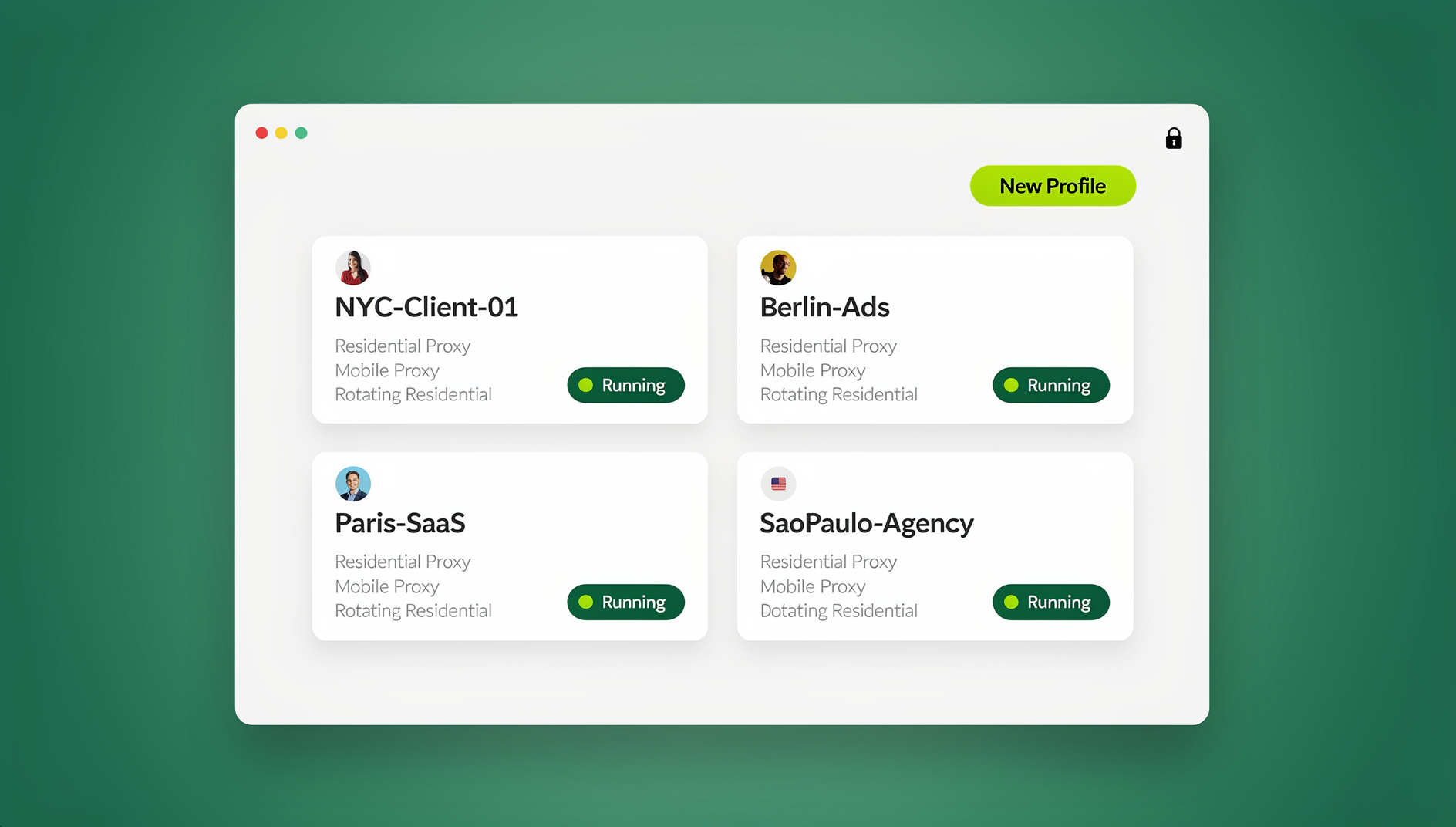
For scenarios where true session isolation matters — separated fingerprints, independent network identities, unique hardware profiles per session — you need purpose-built tooling. Sendwin Browser creates isolated browser profiles where each session has its own fingerprint, cookies, storage, proxy configuration, and hardware signals. Unlike hardening a single browser, each profile is a distinct, consistent identity that doesn’t share any linkable signals with your other profiles.
Cloud browser sessions let you run profiles without installing anything locally — useful for teams or when accessing sensitive accounts from shared machines. Each profile keeps its own cookies, storage and fingerprint settings, so sessions stay separate.
🏆 Send.win Verdict
Browser hardening is essential baseline hygiene — every step in this guide makes you harder to track. But hardening a single browser has a ceiling: you’re still one profile, one fingerprint, one identity. For multi-account management, professional use, or situations where you need truly separate sessions, Send.win picks up where hardening leaves off. Each profile gets its own fingerprint, storage, proxy, and hardware signals — fully isolated, not just partitioned. Start with Send.win on desktop (Windows, macOS, Linux) or spin up cloud browser sessions when you need access from anywhere without a local install. Pro plan starts at $19/mo or $83.88/yr, and the first card purchase is covered by a 7-day money-back guarantee.
Try the free Send.win cloud demo — a 3-minute preview without signup, or 10 minutes a day with a free account.
Frequently Asked Questions
Is browser hardening enough to prevent fingerprinting?
It significantly reduces fingerprinting effectiveness but cannot eliminate it entirely. Hardening steps like enabling Firefox’s resistFingerprinting or Brave’s fingerprint randomization disrupt common techniques, but sophisticated trackers use dozens of signals simultaneously. The paradox is that a heavily hardened browser can become uniquely identifiable because so few users change these settings. For most personal browsing, hardening is sufficient. For multi-account or professional use, you need isolated browser profiles.
Which browser is the most private out of the box?
Brave offers the strongest default privacy among mainstream browsers — it blocks ads, trackers, third-party cookies, and fingerprinting attempts without any configuration. Firefox is a close second with its Enhanced Tracking Protection on Strict. Chrome and Edge require significant manual hardening to reach comparable levels, and even then, they send more telemetry to their respective vendors.
Does using a VPN replace browser hardening?
No. A VPN hides your IP address and encrypts network traffic but does nothing about cookies, fingerprinting, telemetry, autofill data leaks, or tracking parameters in URLs. VPNs and browser hardening address different threat vectors — you need both for comprehensive privacy. A VPN without browser hardening still leaks your identity through cookies and fingerprints.
Will browser hardening break websites?
Some steps will. Blocking third-party cookies breaks federated logins on some sites. resistFingerprinting in Firefox changes timezone and window dimensions, breaking location-dependent features. NoScript-style JavaScript blocking makes many modern sites unusable until whitelisted. Start with the less aggressive settings (Enhanced Tracking Protection Strict, DoH, telemetry off) and add stricter measures gradually, whitelisting sites as needed.
How often should I clear my browsing data?
For strong privacy: clear cookies for non-whitelisted sites weekly and all cached data monthly. Better yet, use Cookie AutoDelete to clear cookies automatically when tabs close, with whitelists for sites where you want to stay logged in. The goal is to prevent long-lived tracking identifiers from accumulating while keeping essential sessions intact.
Are privacy-focused search engines slower or worse?
Result quality has improved dramatically. DuckDuckGo and Startpage (which proxies Google results) deliver comparable quality for most searches. Brave Search has its own independent index that’s steadily improving. Kagi (paid) consistently matches or exceeds Google for technical queries. You may occasionally need to fall back to Google for very niche searches, but for 90%+ of queries, private alternatives are indistinguishable in quality.
Should I use Tor Browser instead of hardening a regular browser?
Tor Browser provides the strongest anonymity for general browsing — all traffic is routed through the Tor network, and the browser is configured to resist fingerprinting uniformly. However, Tor is significantly slower, many sites block Tor exit nodes, and using Tor can itself attract attention. For daily browsing, a hardened Firefox or Brave is more practical. Use Tor when anonymity is critical, hardened browsers for everyday privacy.
Can I harden my mobile browser the same way?
Partially. Mobile browsers offer fewer customization options than desktop versions. Firefox for Android supports extensions (uBlock Origin, Privacy Badger) and has Enhanced Tracking Protection. Brave on mobile includes its full Shields feature set. Safari on iOS has Intelligent Tracking Prevention enabled by default. Chrome on Android offers fewer privacy controls than its desktop counterpart. Focus on DoH, search engine changes, and cookie settings — these work across all mobile browsers.