Is WebRTC Exposing Your Real IP Address Right Now?
Probably. WebRTC — the technology that powers video calls and file sharing in your browser — can leak your real public and local IP addresses even when you’re behind a VPN or proxy. This webrtc ip leak fix guide 2026 walks you through exactly how the leak works, how to test for it in under 60 seconds, and the specific steps to fix it in Chrome, Firefox, Edge, and Brave. You’ll also learn why VPNs alone can’t fully solve the problem and when you need profile-level control from a browser profile manager like Send.win.

What Is WebRTC and Why Does It Exist?
WebRTC (Web Real-Time Communication) is an open-source framework built into every major browser — Chrome, Firefox, Edge, Safari, Brave, and Opera. It enables peer-to-peer connections for video calls, voice chat, screen sharing, and file transfers directly in the browser, without plugins or external software.
Google originally developed WebRTC for Google Hangouts and open-sourced it in 2011. Today it powers Zoom’s web client, Google Meet, Discord’s browser mode, Facebook Messenger calls, and thousands of other services. It’s genuinely useful technology — the problem is a side effect of how it establishes connections.
How WebRTC Connections Work (ICE, STUN, TURN)
To connect two browsers directly, WebRTC needs to discover each peer’s network address. It does this through a process called ICE (Interactive Connectivity Establishment), which gathers “candidates” — possible IP addresses and ports the browser can use. ICE uses two types of servers:
- STUN servers — discover your public IP by asking an external server “what IP do you see me as?” The response reveals your real public IP.
- TURN servers — relay traffic when direct connection fails. TURN servers see your IP but don’t expose it to the peer.
The leak happens because WebRTC generates ICE candidates before the browser applies proxy or VPN routing rules. JavaScript on any webpage can trigger this process and read the resulting candidates, which include your real public IP and sometimes your local network IP (192.168.x.x, 10.x.x.x). A VPN changes your apparent IP for HTTP traffic, but WebRTC’s STUN requests bypass the VPN tunnel on many configurations, revealing the IP your VPN was supposed to hide.
How to Test for WebRTC IP Leaks
Testing takes 30 seconds and requires no technical knowledge. Do this before and after applying any fix to verify it worked.
Step 1: Note Your Real IP
Disconnect your VPN (temporarily) and visit whatismyipaddress.com. Write down the IP address shown. This is your real, ISP-assigned IP.
Step 2: Connect Your VPN
Turn your VPN back on. Verify that whatismyipaddress.com now shows the VPN server’s IP, not your real one.
Step 3: Run a WebRTC Leak Test
Visit browserleaks.com/webrtc while your VPN is active. The page will list all ICE candidates your browser generates. Look for:
- Public IP — if this shows your real IP (from Step 1), you have a WebRTC leak.
- Local IP — if this shows your LAN address (192.168.x.x), you have a local network leak. Less severe but still a privacy concern.
- “No leak detected” — your WebRTC is either disabled or properly contained.
Alternative Test Tools
If you want a second opinion, these tools also detect WebRTC leaks:
- ipleak.net — tests WebRTC alongside DNS and geolocation leaks in one page.
- ExpressVPN’s WebRTC leak test — simple pass/fail result with clear explanations.
- Mullvad’s connection check — tests WebRTC, DNS, and browser fingerprint simultaneously.
Fix WebRTC Leaks in Chrome
Chrome is the most widely used browser and, unfortunately, one of the hardest to fully fix. Google has intentionally limited users’ ability to disable WebRTC because it powers their own products (Meet, Duo, Hangouts).
Method 1: Chrome Flags (Limited)
Navigate to chrome://flags and search for “WebRTC.” In current Chrome versions (2026), Google has removed most WebRTC-related flags. The old #disable-webrtc-stun-origin flag is gone. The only remaining option is WebRTC IP Handling Policy, which you can set to “Disable non-proxied UDP” — but this only works if you’re using a system-level proxy, not a VPN.
Method 2: Browser Extensions
Since Chrome doesn’t offer a native off switch, extensions are the practical solution:
- WebRTC Leak Prevent — the most popular option. It modifies the
RTCPeerConnectionAPI to prevent leaking local and public IPs. Set the “IP handling policy” to “Disable non-proxied UDP (force proxy)” for maximum protection. - uBlock Origin — under Settings → Privacy, enable “Prevent WebRTC from leaking local IP addresses.” This blocks the local IP leak but may not fully prevent public IP exposure in all configurations.
- WebRTC Control — a simple toggle that disables WebRTC entirely. Convenient but breaks any site that needs video/voice calls.
How Send.win Helps With Webrtc Ip Leak Fix Guide 2026
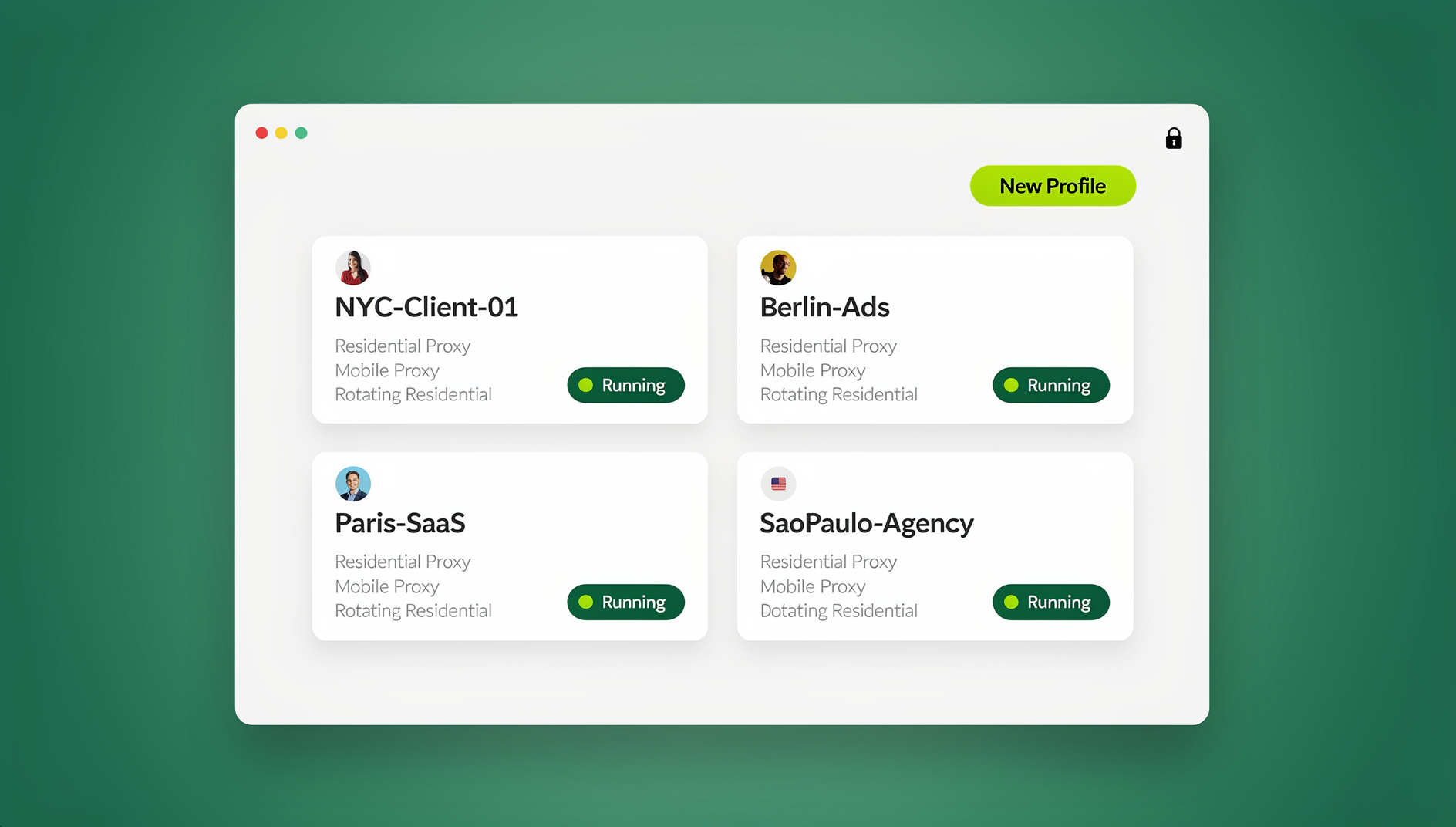
Send.win is a browser profile manager built for exactly this kind of work — every profile is a clean, isolated identity:
- Isolated profiles – unique fingerprint, separate cookies and storage per profile
- Per-profile fingerprint settings – canvas, WebGL, fonts, and audio configured per profile
- Desktop app + cloud sessions – native app for Windows, macOS, and Linux, or run profiles in the cloud with no install
- Built-in residential proxies – with automatic timezone, locale, and WebRTC matching
- Team features – share logged-in profiles with teammates without sharing passwords
Try the instant cloud browser demo — no install, no signup — or download the desktop app. There is no free trial; paid plans start at $19/month, and the first card purchase is covered by a 7-day money-back guarantee (see pricing).
Important caveat: Chrome extensions operate within the browser’s permission model. A determined tracker can detect the presence of WebRTC-blocking extensions by testing whether RTCPeerConnection behaves normally. This detection itself becomes a browser fingerprint signal — a paradox where protecting yourself makes you more identifiable.
Method 3: Enterprise Policy (Advanced)
System administrators can enforce WebRTC restrictions via Chrome enterprise policies:
// Windows Registry (HKLM or HKCU)
[HKEY_LOCAL_MACHINE\SOFTWARE\Policies\Google\Chrome]
"WebRtcIPHandling"="disable_non_proxied_udp"
"WebRtcUdpPortRange"="10000-10000"
This restricts WebRTC to proxied connections only and limits the UDP port range, reducing leak surface. It’s effective but requires admin access and affects all Chrome profiles on the machine.
Fix WebRTC Leaks in Firefox
Firefox gives you the most control of any mainstream browser. You can completely disable WebRTC without extensions.
Method 1: about:config (Recommended)
- Type
about:configin the address bar and press Enter. - Accept the “proceed with caution” warning.
- Search for
media.peerconnection.enabled. - Double-click to set it to false.
That’s it. WebRTC is now completely disabled. No ICE candidates will be generated, no STUN requests will fire, and no IP leak is possible. The trade-off: any website that requires WebRTC (video calls, screen sharing) will not work until you re-enable it.
Additional Firefox Hardening
For extra protection without fully disabling WebRTC, set these preferences in about:config:
| Preference | Value | Effect |
|---|---|---|
media.peerconnection.turn.disable |
true | Disables TURN relay connections |
media.peerconnection.use_document_iceservers |
false | Ignores page-specified STUN/TURN servers |
media.peerconnection.video.enabled |
false | Blocks video-specific WebRTC |
media.peerconnection.identity.timeout |
1 | Forces identity check timeout (prevents delayed leaks) |
These settings let you keep basic WebRTC functionality (text-based data channels) while blocking the IP-leaking components. Users focused on safe browsing often combine these settings with Firefox’s Enhanced Tracking Protection for a strong baseline.
Fix WebRTC Leaks in Microsoft Edge
Edge is Chromium-based, so most Chrome fixes apply here too — but Edge adds a few extra options.
Method 1: Edge Flags
Navigate to edge://flags and search for “WebRTC.” Edge retains slightly more WebRTC flags than Chrome. Set “WebRTC IP Handling Policy” to “Disable non-proxied UDP” to limit leak exposure.
Method 2: Browser Settings
Edge includes a built-in setting under Settings → Privacy, search, and services → Prevent WebRTC IP leaking. Toggle this on. It’s less granular than about:config but requires no technical knowledge.
Method 3: Extensions
Edge supports Chrome extensions from the Chrome Web Store. Install WebRTC Leak Prevent or WebRTC Control exactly as described in the Chrome section. The same caveats about extension detection apply.
Fix WebRTC Leaks in Brave
Brave is the easiest mainstream browser to fix, because it was built with privacy in mind.
Built-In WebRTC Policy
Navigate to Settings → Privacy and security → WebRTC IP handling policy. Brave offers four options:
- Default — standard WebRTC behavior, may leak.
- Default public and private interfaces — exposes local and public IPs.
- Default public interface only — hides local IP but may still expose public IP through STUN.
- Disable non-proxied UDP — the safest option. WebRTC only works through a proxy, and no direct IP exposure occurs.
Select option 4. Unlike Chrome, Brave actually enforces this setting at the engine level, making it more reliable than extension-based approaches.
Brave’s Fingerprinting Protection
Brave’s built-in Shields also randomize certain fingerprinting signals. While this doesn’t directly address WebRTC IP leaks, it reduces the overall value of any data a tracker collects during a WebRTC probe — your canvas hash, font list, and audio context will all be randomized.
Browser-Level vs. Extension-Level vs. Antidetect-Level Solutions
Not all WebRTC fixes are created equal. Here’s how the three tiers compare.
| Approach | Stops IP Leak | Detectable | Breaks Video Calls | Per-Profile Control |
|---|---|---|---|---|
| Browser settings (about:config, flags) | ✅ Yes (if available) | ⚠️ Some fingerprint signals | ✅ Usually yes | ❌ No — applies globally |
| Extensions (WebRTC Leak Prevent, etc.) | ✅ Usually | ⚠️ Extension presence detectable | Depends on config | ❌ No — same for all tabs |
| Browser profile manager (Send.win) | ✅ Yes | ✅ Consistent per-profile fingerprint | ❌ No — configurable per profile | ✅ Yes — per-profile WebRTC policy |
The critical difference is per-profile control. Browser settings and extensions apply to your entire browsing session. If you manage multiple accounts, every account sees the same WebRTC configuration — which itself becomes a linking signal. Antidetect browsers let you set WebRTC policy independently per profile: one profile can have WebRTC fully disabled (for privacy-sensitive work), another can have it enabled with a spoofed IP (for video calls on a managed account), and a third can use the profile’s assigned proxy as its apparent WebRTC IP.
Why VPNs Alone Don’t Fix WebRTC Leaks
This is the single most important concept in this guide, and the one most users get wrong.
A VPN creates an encrypted tunnel for your network traffic. When you visit a website, the HTTP request travels through the tunnel, and the site sees the VPN server’s IP instead of yours. This works perfectly for normal web traffic.
WebRTC, however, uses a different protocol stack. STUN requests are UDP packets that, depending on your OS and VPN configuration, may travel outside the VPN tunnel. Here’s why:
- Split tunneling — many VPNs default to split tunneling, where only HTTP/HTTPS traffic goes through the VPN. UDP traffic from WebRTC takes the direct route, exposing your real IP.
- DNS resolution timing — WebRTC resolves STUN server addresses before the VPN has fully initialized, creating a brief window where your real IP is visible.
- IPv6 leaks — even if your VPN tunnels all IPv4 traffic, it may not cover IPv6. WebRTC can discover your IPv6 address through STUN and expose it even when your IPv4 is hidden.
- Local IP exposure — VPNs hide your public IP but typically don’t mask local network addresses (192.168.x.x). WebRTC exposes these, which can be used for device fingerprinting and network topology analysis.
Some premium VPNs (Mullvad, ProtonVPN, IVPN) include WebRTC leak protection in their browser extensions. But this protection is an extension-level override — it has the same detection and consistency limitations as any other extension. For comprehensive protection that covers WebRTC alongside all other fingerprint surfaces, you need profile-level isolation.
When You Need Send.win-Level Control
Browser fixes and extensions are sufficient for single-identity privacy browsing. But certain use cases demand more.
Multi-Account Management
If you run multiple accounts on platforms that actively detect shared identities (Amazon, Facebook, Instagram, Google Ads), WebRTC leaks are just one of many signals they cross-reference. Fixing WebRTC in your browser protects your IP, but if all your accounts share the same canvas hash, font list, and timezone, the platform links them anyway. Send.win’s Sendwin Browser creates fully isolated profiles with independent fingerprints — including WebRTC configuration, IP assignment via per-profile proxies, and consistent OS-level parameters.
Automation at Scale
Developers running Selenium, Puppeteer, or Playwright scripts against WebRTC-enabled sites need programmatic control over ICE candidates. Send.win does not offer an automation interface — no API, SDK, headless mode or Selenium/Puppeteer/Playwright support on any plan — so WebRTC behavior is configured per profile in the app rather than through scripts. Pro is $19/mo or $83.88/yr. Each profile keeps its own consistent WebRTC identity that matches its assigned proxy and fingerprint.
Remote Access Without Local Footprint
Send.win’s cloud browser sessions run profiles entirely in the cloud — no local browser, no local network interfaces, no local IP leakage path. WebRTC in a cloud session sees only the cloud instance’s network, not yours. This is the most thorough WebRTC leak prevention possible: the leak surface simply doesn’t exist on your machine. For professionals who need to access sensitive accounts from untrusted networks (hotel WiFi, coworking spaces, client offices), cloud sessions eliminate the risk at the infrastructure level.
Session Isolation for Teams
When multiple team members access the same accounts, each person’s different WebRTC behavior becomes a detection vector. If one team member’s browser leaks a Los Angeles IP and another’s leaks a London IP — for the same account — that inconsistency triggers fraud alerts. With Send.win’s Team plan at $49/mo or $251.88/yr — 500 profiles, 20GB storage and 16 seats — each team member uses the same profile with the same WebRTC configuration, presenting a consistent identity regardless of who’s operating it. For a deeper understanding of how this works, explore our guide to session isolation.
Common Mistakes When Fixing WebRTC Leaks
Even privacy-conscious users make these errors. Avoid them.
Mistake 1: Assuming Your VPN Handles It
As covered above, most VPNs don’t block WebRTC by default. Always test with a dedicated WebRTC leak tool after connecting your VPN. Never assume — verify.
Mistake 2: Disabling WebRTC and Forgetting About It
Browser updates can reset your settings. Chrome flags are explicitly labeled “experimental” and may disappear in any update. Firefox’s about:config preferences are more stable but can still be overwritten by major version upgrades. After every browser update, re-test for WebRTC leaks.
Mistake 3: Using Multiple Extensions That Conflict
Running WebRTC Leak Prevent, WebRTC Control, and uBlock Origin’s WebRTC blocking simultaneously can create unpredictable behavior. Extensions may fight over the RTCPeerConnection API, causing some leak paths to slip through. Pick one WebRTC extension and configure it properly.
Mistake 4: Ignoring Local IP Leaks
Many users focus only on public IP leaks and ignore the local address exposure. Your local IP (192.168.1.x) reveals your network configuration — specifically, which subnet you’re on, whether you’re behind a corporate router, and sometimes even your device type. Combined with other fingerprinting data, local IPs contribute to cross-session tracking. Practicing anonymous browsing means addressing both public and local leak vectors.
Mistake 5: Fixing WebRTC but Ignoring Other Leak Vectors
WebRTC is one of many ways your IP and identity can leak. DNS leaks, HTTP referrer headers, and browser fingerprinting all contribute to tracking. A WebRTC fix without a DNS leak test is incomplete. A DNS fix without fingerprint management is inadequate. Security is only as strong as its weakest vector.
WebRTC Leak Prevention Checklist
Use this checklist to verify your setup is complete:
- Test for WebRTC leaks at browserleaks.com/webrtc — note your current status.
- Apply the fix for your specific browser (see sections above).
- Re-test at browserleaks.com/webrtc — verify “no leak detected.”
- Connect your VPN and test again — confirm only the VPN’s IP appears.
- Test on ipleak.net for DNS leaks alongside WebRTC.
- Bookmark browserleaks.com/webrtc and re-test after every browser update.
- For multi-account work, verify each browser profile independently.
🏆 Send.win Verdict
WebRTC IP leaks are a solvable problem — but the solutions range from fragile (browser flags that reset on updates) to robust (architecture-level isolation). For single-browser personal use, Firefox’s about:config toggle or Brave’s built-in policy are reliable. For multi-account professionals who need per-profile WebRTC control, consistent fingerprints, and protection that doesn’t depend on extensions or manual configuration, Send.win’s Sendwin Browser provides the most complete solution — each profile gets independent WebRTC settings, a dedicated proxy IP, and a coherent fingerprint that doesn’t flag detection systems.
Try the free Send.win cloud demo — a 3-minute preview without signup, or 10 minutes a day with a free account. Fix WebRTC leaks across every profile in minutes, not hours.
Frequently Asked Questions
What is a WebRTC IP leak?
A WebRTC IP leak occurs when the WebRTC protocol in your browser reveals your real public or local IP address to websites, even when you’re using a VPN or proxy. It happens because WebRTC’s STUN requests can bypass your VPN tunnel and expose the IP your VPN was supposed to hide.
Does disabling WebRTC break any websites?
Yes. Any website that uses real-time communication features — video calls (Google Meet, Zoom web client), voice chat (Discord browser mode), screen sharing, and peer-to-peer file transfers — will stop working if WebRTC is fully disabled. If you need these features, use a browser or profile with WebRTC enabled and a separate one with it disabled for privacy-sensitive work.
Can WebRTC leak my IP on mobile devices?
Yes. Mobile browsers (Chrome for Android, Safari for iOS) support WebRTC and are subject to the same leak vulnerabilities. On iOS, Safari’s WebRTC implementation can leak your IP even with a VPN active. On Android, Chrome’s behavior mirrors the desktop version. Mobile VPN apps vary in their WebRTC protection — always test independently.
Is the WebRTC leak a bug or a feature?
It’s an unintended consequence of a deliberate design choice. WebRTC needs to discover your IP to establish peer-to-peer connections — that’s by design. The “leak” occurs because this discovery process is accessible to JavaScript on any webpage, not just pages that legitimately need WebRTC. Browser vendors consider this an acceptable trade-off for WebRTC functionality; privacy advocates disagree.
How do I fix WebRTC leaks in Safari?
Safari on macOS restricts WebRTC ICE candidate generation by default, exposing only the active network interface’s IP to authorized (camera/microphone-permitted) sites. For most users, Safari’s default behavior is already more restrictive than Chrome or Edge. To further harden it, go to Safari → Settings → Advanced → Show features for web developers, then disable “WebRTC mDNS ICE Candidates” in the Develop menu’s experimental features.
Do all VPNs protect against WebRTC leaks?
No. Most VPNs do not block WebRTC leaks by default. Some premium VPNs (Mullvad, ProtonVPN, NordVPN, ExpressVPN) offer WebRTC leak protection through their browser extensions, but this must be explicitly enabled and is still extension-level — not as robust as browser-native or antidetect-level solutions. Always verify with a leak test regardless of your VPN provider’s claims.
Can I fix WebRTC leaks without installing anything?
In Firefox, yes — the about:config method requires no extensions or software. In Brave, yes — the built-in WebRTC policy setting is sufficient. In Chrome and Edge, you’ll need either an extension or a registry/enterprise policy change — there’s no simple built-in toggle that fully prevents leaks in those browsers as of 2026.
What’s the difference between a public IP leak and a local IP leak?
A public IP leak exposes your ISP-assigned Internet address — the one that identifies you on the open internet and reveals your approximate geographic location. A local IP leak exposes your private network address (like 192.168.1.105), which reveals your network topology and device position on the local network. Public leaks are more immediately dangerous for privacy; local leaks contribute to long-term fingerprinting and device tracking.