The Modern Bot Detection Landscape and Headless Leaks
To bypass modern anti-bot systems, you must configure puppeteer extra plugin stealth to patch the fingerprint leaks left behind by headless Chromium. This open-source Node.js package overrides browser attributes like navigator.webdriver, WebGL signatures, hardware concurrency, and canvas properties to match genuine human browsing footprints. Below, we explain how to install, configure, and optimize this stealth layer, and when to upgrade to a cloud-based desktop client.
In the digital landscape of 2026, web scraping and browser automation have become essential tools for price comparison, brand monitoring, and data collection. However, websites protect their content using advanced security services like Cloudflare, Akamai, and DataDome. These systems analyze incoming connections for telltale signs of automation, instantly blocking standard Puppeteer scripts. For instance, if you are automating e-commerce store logins, you will need to understand the mechanics of stealth eBay accounts.
When you launch a standard Puppeteer browser in headless mode, it leaves behind dozens of diagnostic properties that make it incredibly easy for scripts to detect. The most obvious indicator is the navigator.webdriver property, which is natively set to true in automated browsers. If a website’s scripts see this flag, they immediately serve CAPTCHAs or block the connection outright. Bypassing these checks requires a comprehensive patching strategy that modifies the browser’s runtime environment.
Furthermore, standard headless browser settings leak default system-level paths and properties, such as unique Chromium execution paths and missing media codecs. Anti-bot scripts analyze these variables instantly to determine whether a browser is controlled by a human or a background process. Running automated actions without triggering detection is critical to maintaining anonymous selling without bans.
How the Stealth Package Patches Headless Signatures
The puppeteer extra plugin stealth is designed specifically to address these browser leaks. It acts as a modular framework, applying dozens of individual patches to Chrome’s JavaScript environment before any page scripts can execute. By replacing default headless properties with realistic values, it makes the automated session indistinguishable from a real user browsing on a standard desktop client.
The stealth package includes modules for key browser variables:
- navigator.webdriver: Completely removes this property or sets it to undefined, eliminating the most basic bot check.
- navigator.languages: Spoof a realistic array of user languages, preventing the blank lists typical of automated Linux environments.
- navigator.plugins: Injects a realistic list of standard browser plugins (like PDF viewers), matching a real user’s setup.
- chrome.runtime: Adds the standard
chromeobject and its runtime properties, which headless Chrome normally lacks. - WebGL Vendor and Renderer: Overrides the default software renderer strings (which leak virtual machine info) with standard graphics card signatures.
These modifications occur at the very beginning of the page lifecycle, before any external scripts run. This timing is critical, as modern security scripts inspect these properties immediately. By ensuring that the browser responds with consistent, realistic data, the plugin successfully passes most basic fingerprinting tests. By mimicking natural mouse movements and keystrokes, your scripts protect the core parameters of your stealth eBay account identity.
In addition to these modules, the stealth library intercepts and patches the behavior of frames and cross-origin iframes. In standard automated configurations, iframe content windows behave differently compared to standard headed browsers, which serves as a strong detection indicator. The plugin aligns these iframe execution contexts, ensuring that nested page elements render in a fully standard, consistent manner.
Step-by-Step Installation and Basic Integration
Setting up a stealthy Puppeteer script requires installing a few core packages. You will need Node.js installed on your local machine, after which you can initialize your project folder and run the installation command:
npm install puppeteer-extra puppeteer-extra-plugin-stealth puppeteerOnce the packages are installed, you can integrate the stealth plugin into your automation code. Below is a complete, syntactically valid script that demonstrates the basic setup, launching a headless browser and taking a screenshot to verify that it passes basic bot detection checks:
const puppeteer = require('puppeteer-extra');
const StealthPlugin = require('puppeteer-extra-plugin-stealth');

// Enable the stealth plugin
puppeteer.use(StealthPlugin());

(async () => {
  const browser = await puppeteer.launch({
    headless: true,
    args: ['--no-sandbox', '--disable-setuid-sandbox']
  });

  const page = await browser.newPage();
  await page.setViewport({ width: 1920, height: 1080 });

  // Navigate to a bot detection test site
  await page.goto('https://bot.sannysoft.com');
  await page.screenshot({ path: 'bot-test-results.png' });

  await browser.close();
})();
This simple configuration applies all default evasion modules. For most basic scraping tasks, this script is sufficient to access pages without getting blocked. However, as web security checks grow more complex, you may need to configure individual modules or combine them with proxy rotation layers to maintain access.
Advanced Configuration: Module Control and Add-Ons
In some scenarios, you may want to disable specific evasion modules if they conflict with your automation goals or cause page errors. The stealth plugin allows you to selectively enable or disable components using its configuration options. This is highly useful for debugging scripts on complex target platforms.
For example, if a specific web application checks your window dimensions or requires a custom WebGL configuration, you can disable the default stealth WebGL override and apply your own parameters manually. This level of granularity gives developers the flexibility needed to target highly protected sites. Furthermore, you should combine the stealth plugin with other tools in the puppeteer-extra ecosystem, such as ad blockers and proxy managers.
Routing your automated traffic through high-quality residential proxies is essential, as data center IPs are flagged immediately by anti-bot services, regardless of how clean your browser’s JavaScript environment looks. For a detailed walkthrough on setting up secure profiles for seller marketplaces, see our resource on how to create a stealth eBay account.
In addition, configuring user-agent rotation is a critical step. While the stealth plugin patches the properties, if you run multiple instances with the exact same user-agent string, the target website will note the duplication. Developers should implement user-agent spoofing algorithms that dynamically assign realistic, contemporary agent details matching the underlying OS parameters. This ensures that every script run appears as a unique client device.
Real-World Testing and Bot Evasion Efficacy
To verify the efficacy of your stealth configuration, you must test your scripts against public detection test suites. Sites like SannySoft, CreepJS, and BrowserLeaks analyze your browser’s signatures and report any discrepancies. A clean stealth script should show no traces of the navigator.webdriver flag, report a realistic screen resolution, and display consistent WebGL details.
However, real-world platforms use behavioral analysis in addition to static fingerprint checks. If your script scrolls pages instantly, clicks buttons at identical millisecond intervals, or performs repetitive navigation flows, it will be flagged as an automated bot. To pass these checks, you must write code that simulates realistic human interaction, including random delays, variable typing speeds, and curved mouse movements.
Furthermore, anti-bot services frequently update their detection scripts to identify new evasion patterns. This means a script that works today might get blocked tomorrow. To maintain access, developers must actively monitor their success rates and update their dependencies regularly, which can become a significant maintenance burden for growing projects. This is especially true for complex checkout flows or dynamic forms that implement interactive bot defense scripts.
Another common vector evaluated by bot detectors is the integrity of the browser’s font list and CSS media query responses. If a script requests a list of available system fonts and receives a generic response, it flags the session. The stealth plugin attempts to address this by injecting standard font configurations, but discrepancies can still emerge if the host operating system differs from the target profile configuration.
To prevent these issues, developers should verify that the simulated timezone matches the proxy location. If your proxy server routes traffic through a specific European city but the JavaScript execution environment reports a local timezone matching a different continent, security systems will flag this mismatch as an automation signature, triggering immediate challenge pages.
In addition to geographical alignment, developers should monitor TCP/IP packet configuration signatures. If a request claims to originate from macOS but exhibits packet structures characteristic of Linux, advanced anti-bot algorithms will flag the connection. Achieving complete consistency between physical device variables and network headers is the ultimate goal of modern stealth engineering.
The Technical Limits of JavaScript Fingerprint Spoofing
While the puppeteer extra plugin stealth is an excellent open-source tool, it has fundamental technical limitations. Because it operates inside Chrome’s JavaScript layer, it can only modify properties that JavaScript can access. It cannot change network-level signatures, such as the SSL/TLS handshake (JA3/JA4 fingerprints) or the HTTP/2 frame configuration, which are managed by the browser engine itself.
Modern anti-bot systems analyze these low-level signatures to verify if the web request is coming from a genuine desktop browser. A headless Chrome instance, even with javascript overrides, will still send a distinct TLS signature that differs from a real user’s Chrome client. If the TLS signature does not match the user-agent header, the connection is instantly flagged as automated.
Additionally, local hardware leaks represent a persistent challenge. Headless browsers often rely on software rendering rather than physical GPUs, producing pixel hashes that reveal the virtualized environment. Bypassing these advanced checks requires a solution that operates at the browser’s engine level, rather than applying JavaScript patches on top of a default automation client.
Furthermore, managing browser session cookies and local storage state across dozens of automated nodes is extremely complex. Open-source automation scripts must implement manual saving and loading protocols to preserve sessions, which leads to frequent corruption errors and cookie expiration locks. Operating with pre-configured, persistent browser profiles resolves this management overhead.
Scaling Browser Profile Management with Send.win
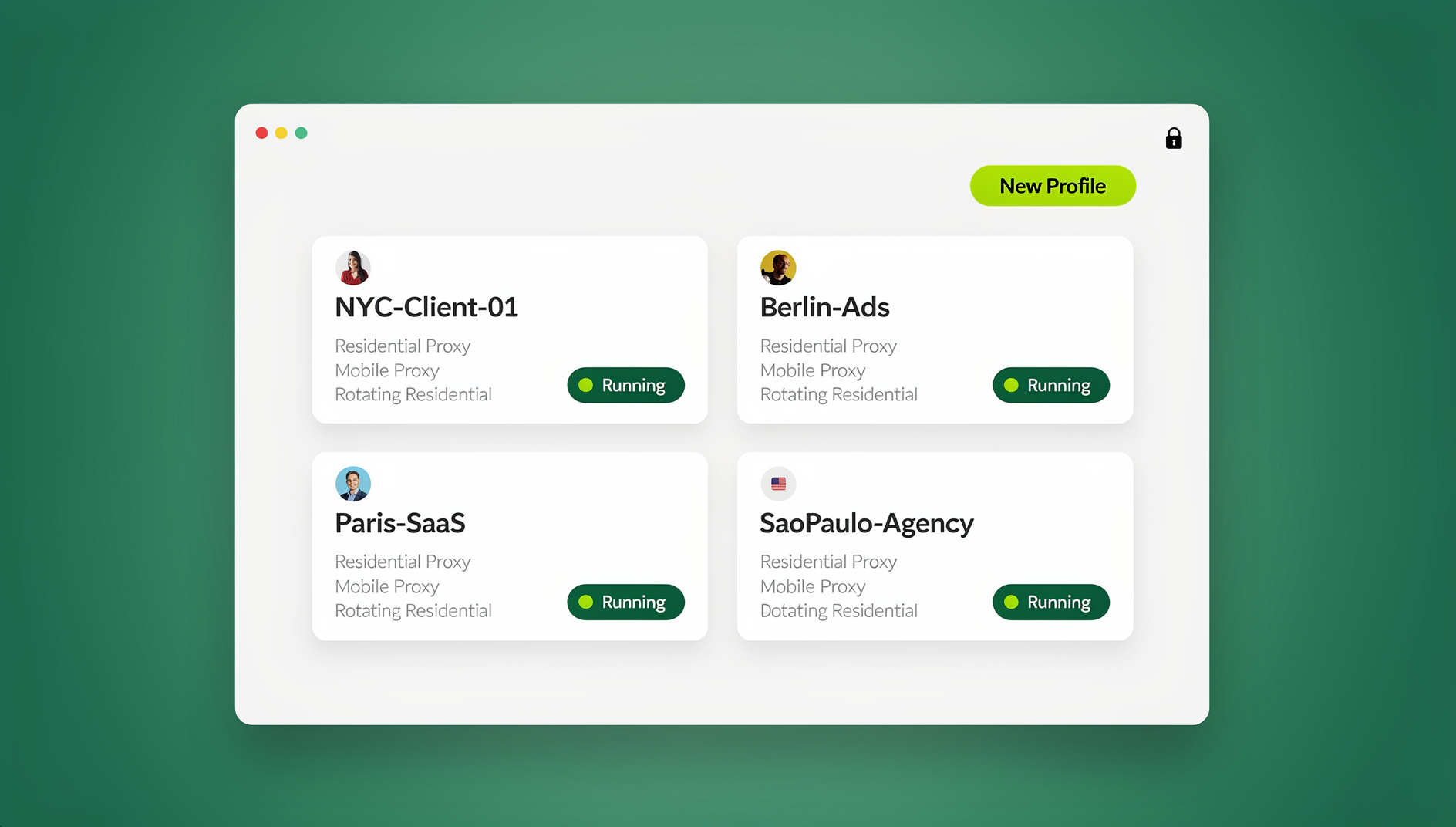
For professional teams and developers who need a robust, low-maintenance solution for managing many browser profiles, Send.win provides a powerful alternative. Instead of requiring you to constantly patch and update open-source stealth libraries, Send.win gives each profile its own consistent browser fingerprint, along with separate cookies and storage, so profiles do not share one browser identity.
Send.win operates using a native desktop application, available for Windows, macOS and Linux, plus a cloud browser that runs on Send.win’s server in the EU. Each profile routes traffic through its own proxy and keeps its own consistent browser fingerprint, with separate cookies and storage.
For larger operations, the Team plan costs $49/month ($251.88/year) and is built for teams that need many isolated profiles. By running your profiles in Send.win’s native desktop client or cloud browser sessions, you can organise your work without maintaining manual stealth plugins.
🏆 Send.win Verdict
While Puppeteer Extra Plugin Stealth is a valuable free utility for basic automation tasks, it suffers from JavaScript-level limitations and requires constant maintenance. Send.win offers a different approach by giving each profile its own consistent browser fingerprint and separate cookies and storage, so profiles do not share one browser identity.
Try the Send.win cloud demo — Preview it in about 3 minutes without signup, or get 10 minutes a day with a free account.
Frequently Asked Questions
Why does standard Puppeteer get detected so easily?
Standard Puppeteer runs headless Chromium, which exposes several default signatures like the navigator.webdriver property set to true, empty language lists, missing plugin arrays, and virtual graphics card details. Anti-bot scripts analyze these variables instantly to detect and block automated traffic.
What does the stealth plugin actually modify?
The stealth plugin modifies key browser variables in JavaScript, such as hiding the webdriver property, injecting realistic browser plugins and languages, spoofing WebGL vendor details, and adding runtime structures that match standard desktop Chrome installations.
Can Cloudflare detect Puppeteer Extra Plugin Stealth?
Yes, advanced systems like Cloudflare can detect the stealth plugin because they analyze network-level signals, such as TLS handshakes and HTTP/2 settings, which the JavaScript stealth plugin cannot modify. They also monitor mouse movement and page interaction patterns.
Does the stealth plugin work in headless mode?
Yes, the plugin is designed to run in both headless (invisible) and headful (visible) modes. However, headful mode naturally passes more checks because it uses a real rendering window, which helps avoid certain advanced detection systems.
How do I solve CAPTCHAs while using the stealth plugin?
The stealth plugin itself does not solve CAPTCHAs. To handle challenges automatically, you should combine it with third-party CAPTCHA solving packages (like puppeteer-extra-plugin-recaptcha) or route your automation through high-quality residential proxies to reduce challenge rates.
What plans does Send.win offer?
Send.win offers a Pro plan ($19/month, or $83.88/year) and a Team plan ($49/month, or $251.88/year). The first card purchase is covered by a 7-day money-back guarantee.
Is there a way to run Playwright with similar stealth features?
Yes, developers can use community libraries like playwright-stealth or custom launch arguments to replicate some stealth functions in Playwright. Send.win itself does not provide an automation interface, but its desktop app and cloud browser let you work in isolated profiles with their own cookies, storage and fingerprint.
By understanding the capabilities and limits of the puppeteer extra plugin stealth, you can design highly resilient automation pipelines. For simple projects, the open-source plugin is an excellent free starting point, while complex, commercial operations may benefit from Send.win’s managed profile environment for keeping profiles isolated.