A stealth eBay account identity is a seller profile built so that eBay’s fraud-detection systems cannot connect it to your other accounts — combining an isolated browser profile, a dedicated residential proxy, unlinked payment details, and consistent behavior. Sellers usually need this after an unfair suspension or when running multiple legitimate stores, and the safest way to build one today is a dedicated browser profile tool like Send.win rather than incognito tabs or a shared machine.
What Is a Stealth eBay Account Identity?
A stealth eBay account is a seller profile created and operated in a way that keeps it separate from your previous or existing accounts in the eyes of eBay’s detection systems. Sellers turn to this approach after a suspension they believe was unfair, or because they run several stores and don’t want one policy strike to take down their entire business. The word “stealth” doesn’t mean fraud — it means identity separation: making sure the browser, network, payment method, and personal details behind Account B don’t visibly trace back to Account A.
Doing this properly requires attention to five things eBay actively monitors: browser fingerprint, IP address, payment method, personal information, and behavioral pattern. Miss any one of them and the other four won’t matter.
Why Sellers Build Stealth eBay Identities
There are several recurring, legitimate reasons sellers maintain more than one eBay identity:
- Suspension recovery — continuing to trade under a new store while appealing an incorrect or disputed suspension on the original account
- Multi-store operations — testing different product categories, price points, or brand identities without cross-contaminating performance metrics
- Geographic expansion — running separate storefronts for different countries or marketplaces
- Risk diversification — avoiding a single point of failure where one policy violation ends the whole business
- New-seller limits — working within category or volume caps that eBay applies to accounts still building a track record
How eBay Detects Linked Accounts
eBay’s Trust and Safety systems combine several independent signals to link accounts, and a stealth identity has to hold up against all of them at once.
1. Browser Fingerprinting
Every browser session exposes a set of characteristics that, combined, form a near-unique signature: canvas rendering, WebGL and GPU details, installed fonts, audio processing quirks, and screen resolution. Clearing cookies or switching from Chrome to Firefox does nothing to change these — the underlying device and browser engine still render the same way. This is why browser fingerprinting is the first thing any stealth setup needs to address, not the last.
2. IP Address Tracking
eBay logs the IP behind every login. Multiple accounts sharing an IP, an IP previously tied to a suspended account, sudden country-hopping, or obviously flagged datacenter/VPN ranges are all red flags that get an account reviewed.
3. Payment Method Signals
Shared credit cards, bank accounts, or PayPal profiles linked by email or phone number are among the most reliable ways eBay connects two “unrelated” sellers. Billing address overlap is checked too.
4. Personal Information Overlap
Name variations, phone numbers, email addresses (even across different providers), shipping addresses, and tax IDs (SSN/EIN) are cross-referenced automatically across every account eBay has ever seen.
5. Behavioral Pattern Matching
Machine-learning models compare listing titles, photo reuse, pricing structure, shipping timing, and customer-message style across stores. Two accounts that “sound” and “look” identical get flagged even with perfect technical isolation.
Building a Stealth eBay Account Identity, Step by Step
Step 1: Start With an Isolated Browser Profile
Regular Chrome or Firefox profiles — even in incognito mode — share the same underlying device fingerprint, so they don’t solve the problem. What you actually need is a tool built around per-profile isolation, where each store gets its own cookies, cache, and identifying signals, none of which bleed into another profile.
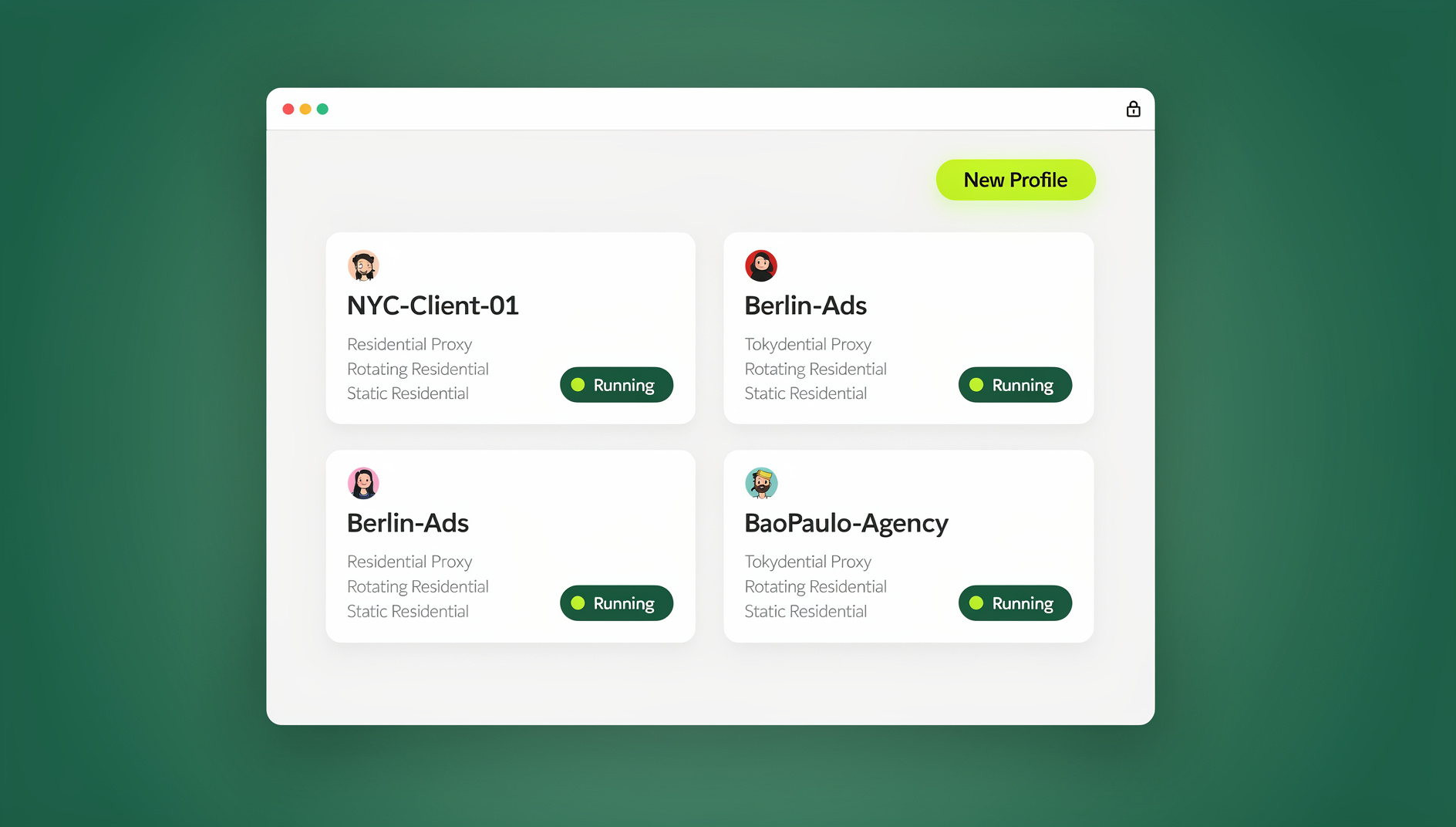
This is exactly the gap Send.win fills, and it now works in two ways depending on how you like to operate. Sendwin Browser is a native desktop app for Windows, macOS, and Linux — it’s local-first, so each browser profile lives on your machine, with encrypted cloud sync keeping everything backed up and available if you switch computers. If you’d rather not install anything at all, Send.win also runs entire cloud browser sessions — the browser itself executes in the cloud, nothing touches your local device, and usage is metered by cloud browsing time instead of a subscription tied to device count. Either way, every profile keeps its own isolated environment, which is the foundation any stealth identity strategy is built on.
Step 2: Assign a Dedicated Residential Proxy
Never use your home IP or a free VPN for a stealth account. Requirements for a proxy that actually holds up:
- Residential IPs only — datacenter ranges get flagged almost immediately
- Sticky sessions — the same IP should persist for a given account across logins
- Geographic match — the proxy location should match where the account was registered
- Clean history — avoid IPs previously tied to any eBay account, suspended or not
Send.win lets you attach a proxy to a profile in a couple of clicks rather than configuring it manually in browser settings, and the Pro plan includes 5GB of proxy bandwidth (20GB on Team) if you’d rather not manage a separate proxy subscription for every store. Budget for $50–150/month per account if you’re sourcing residential proxies independently from providers like Bright Data, Smartproxy, or Oxylabs.
Step 3: Use Fresh, Unlinked Payment Methods
Payment overlap is the single easiest way to get two accounts connected. A few working patterns:
Virtual cards: services like Privacy.com or Revolut generate a unique card number per account, and prepaid options like Netspend keep spending off your main bank entirely.
Separate PayPal accounts: a fresh account name (ideally a distinct business entity), its own email and phone number, and a virtual card as the funding source — never the same bank account behind two PayPal profiles.
Business banking: a dedicated checking account under an LLC name, at a different bank from your personal accounts, keeps things clean if eBay or a payment processor ever asks for verification.
Step 4: Build Unique Personal Information
The most durable version of this step is forming a real, separate LLC per store — it gives you a legal name and EIN to register with, plus a legitimate reason for separate business banking, address, and phone. Around that:
- Address — a virtual mailbox service (Anytime Mailbox, PostScanMail) or a UPS Store box that issues a real street address, not a PO Box
- Phone — a Google Voice number from a fully separate Google account, or a dedicated prepaid line
- Email — a different provider per store (Gmail, Outlook, ProtonMail), never reused across accounts
Step 5: Maintain Behavioral Consistency
Perfect technical setup still fails if the accounts behave identically. Vary product photography and description templates between stores, use different pricing structures, list at different times of day, and don’t log into two stealth accounts back to back from the same session. Customer service tone, return policy wording, and even email signatures should differ store to store.
Step 6: Warm Up the Account Gradually
New accounts that jump straight to high-volume listing get flagged fast. A realistic build-out:
- Weeks 1–2 — browse without logging in, complete full account verification, make a couple of small purchases to build buyer feedback
- Weeks 3–4 — list 5–10 low-value items, ship promptly, respond to buyers professionally
- Months 2–3 — gradually raise listing volume and item value toward normal operating levels
Comparing Stealth eBay Setup Options
Sellers generally end up choosing between three approaches. Here’s how they actually compare once you account for the full cost of ownership, not just the sticker price:
| Approach | Setup complexity | Monthly cost (typical) | Fingerprint isolation | Proxy handling | Team sharing |
|---|---|---|---|---|---|
| Manual (separate physical devices/browsers) | High — new hardware or VMs per account | $100+ (hardware, proxies bought separately) | Real but expensive to scale | Manual, per device | Not practical |
| DIY antidetect + separate proxy service | Medium — two tools to configure and keep in sync | $60–150 per account | Good, but depends on the tool | Manual pairing per profile | Limited, credential sharing required |
| Send.win (native app or cloud sessions) | Low — one click per profile | $9.99–$49/mo total, not per account | Built into every profile | One-click proxy assignment, bandwidth included | Native, share access without sharing passwords |
Automating Repetitive Tasks Without Breaking Stealth
Once a store is warmed up, a lot of the ongoing work — checking inventory sync, monitoring price changes, pulling feedback reports — is repetitive rather than customer-facing. Send.win’s Automation API, available starting on the Pro plan, lets you run local automation with standard tools like Selenium, Puppeteer, or Playwright against your desktop app profiles, so scripted tasks execute inside the same isolated, proxy-backed browser session your account already trusts. The important caveat: keep automation to back-office tasks. Listings, buyer messages, and login timing are exactly the behavioral signals eBay’s models watch for, so those should still look — and be — genuinely human.
Common Stealth eBay Account Mistakes
1. Trusting Incognito or Private Browsing
Myth: private browsing mode hides you from eBay.
Reality: the browser fingerprint is identical to normal mode. Only true profile isolation changes it.
2. Reusing Phone Numbers
Myth: Google Voice numbers from one Google account are safe to reuse across stores.
Reality: eBay can trace a Voice number back to its root Google account. Use fully separate accounts or providers for each number.
3. Sourcing From the Same Supplier
Myth: drop-shipping from one supplier across multiple stores is invisible to eBay.
Reality: shared tracking numbers and return addresses on shipments can link stores together.
4. Duplicating Listings
Myth: a listing that performs well on one store should be copied to the others.
Reality: identical photos, copy, and pricing across “unrelated” stores are an obvious behavioral signal.
5. Logging in From the Mobile App
Myth: the mobile app is safer than a browser.
Reality: mobile apps expose more identifiers, not fewer — device ID, SIM data, and installed-app lists all get collected.
Legal and Ethical Considerations
Operating stealth eBay accounts sits in a genuine gray area of platform policy, and it’s worth being clear-eyed about it rather than pretending the risk doesn’t exist.
eBay’s User Agreement prohibits operating multiple accounts specifically to circumvent a restriction or suspension. Getting caught doing that can mean permanent suspension, held seller funds, and in extreme cases legal exposure for fraud. That’s a real cost, and it applies regardless of how good your technical setup is.
Where this becomes more defensible is when the underlying business activity is legitimate: separate LLCs run as genuinely distinct businesses, geographic market segmentation, appealing a suspension you believe was applied in error, or testing a new product line without risking a mature main account. If you’re weighing whether the effort is worth it at all, it’s worth reading up on the broader risks of running multiple accounts before you commit real inventory and capital to a second store.
Whatever the reason, the risk-mitigation basics stay the same: form real business entities, keep separate books and pay taxes properly on every store’s income, provide good customer service to avoid complaint-driven reviews, and never let a stealth account drift into counterfeiting or prohibited items — that turns a policy gray area into an actual legal problem.
Conclusion: Building a Sustainable Stealth eBay Identity
A durable stealth eBay identity comes down to four things working together: a genuinely isolated browser profile, clean network and payment infrastructure, behavioral consistency across stores, and a patient warm-up instead of a rushed launch. Skip any one of those and the other three won’t save you. For sellers who’d rather not stitch together a separate antidetect tool, proxy subscription, and virtual-card service by hand, Send.win’s session isolation model — through either the native Sendwin Browser app or fully cloud-based sessions — collapses most of that setup into one place, alongside one-click proxy assignment and, on the Pro plan, an Automation API for the repetitive parts of running multiple stores.
If you’re just getting started, it’s also worth reading a more tactical step-by-step stealth eBay account guide alongside this one, and if you sell across more than eBay, the same isolation principles apply directly to running multiple marketplace accounts safely on Amazon and elsewhere.
🏆 Send.win Verdict
Building a stealth eBay identity by hand means juggling a separate antidetect browser, a residential proxy subscription, and virtual-card services — each billed separately and each a point of failure. Send.win consolidates the browser-isolation piece into one tool, available either as the native Sendwin Browser desktop app (Windows, macOS, Linux, with encrypted cloud sync) or as fully cloud-based sessions with zero local install. One-click proxy assignment, bandwidth included on every plan, and an Automation API from the Pro tier up round out the workflow for sellers running more than one store.
Try Send.win free today — start your 30-day trial, no credit card required.
Frequently Asked Questions
Can eBay detect virtual credit cards?
Not directly — a virtual card transaction looks like any other payment. The risk isn’t the virtual card itself, it’s whether the card is funded from a bank account or wallet already tied to another eBay account.
How long does it take to build a stealth account?
Plan on 4–8 weeks of gradual activity before an account looks and behaves like an established store. Rushing straight to high listing volume is one of the fastest ways to trigger a review.
Can I use my home address for shipping?
It’s not recommended if a previous account tied to that address was ever suspended. A commercial mailbox address or a third-party logistics (3PL) fulfillment provider avoids the overlap entirely.
What happens if a stealth account gets suspended?
Don’t appeal in a way that ties it back to your identity or main account. Treat it as a loss, review which part of the setup failed, and rebuild with tighter isolation next time.
Can I run stealth eBay profiles without installing anything locally?
Yes — Send.win’s cloud browser sessions run the entire browser in the cloud, so nothing touches your device and usage is simply metered by cloud browsing time. If you’d rather work locally, the native Sendwin Browser app for Windows, macOS, and Linux gives you the same per-profile isolation with encrypted cloud sync, so profiles are backed up and available if you switch machines.
Is the Automation API only for large teams?
No — it’s available starting on the Pro plan, not restricted to the Team plan. Solo sellers running a couple of stores can use it for local automation via Selenium, Puppeteer, or Playwright just as much as agencies managing dozens of accounts.
Is it worth the effort and cost?
For stores doing meaningful monthly revenue, yes — the cost of proper isolation is small next to the business-continuity risk of losing an account with no backup. For a hobby-level side account, the simpler and cheaper route is usually to just follow eBay’s rules on a single account.
What’s the fastest way to try this without commitment?
Send.win offers a 30-day free trial with no credit card required, so you can set up an isolated profile, attach a proxy, and test the workflow on a real listing before deciding on a paid plan.