Understanding Modern Digital Anonymity
To learn how to prevent browser fingerprinting, you must use privacy-focused tools that randomize hardware parameters or run isolated sessions. The most effective methods include using anti-fingerprinting browsers like Brave or hardened Firefox, running Tor Browser, or using Send.win’s cloud-based browser sessions and desktop client to ensure websites cannot track your hardware signatures.
Why Cookie Blockers Fail: The Rise of Fingerprinting
For years, internet privacy revolved entirely around cookies. When a website wanted to track your behavior, display targeted advertisements, or identify returning users, it stored a tiny text file on your local storage. If you cleared your cookies or used incognito mode, the tracking history was severed. However, websites and advertising networks quickly realized they needed a more persistent tracking mechanism that did not rely on local storage. This need birthed modern device fingerprinting.
A browser fingerprint is an identifier constructed from the technical parameters of your system. Every time your browser loads a website, it shares details about its configuration to ensure content renders correctly. Advertisers intercept this data, hash it, and create a signature. Because your screen resolution, system language, operating system version, and GPU architecture are highly specific, this signature becomes uniquely yours. Clearing your cache, resetting cookies, or switching to incognito mode does absolutely nothing to alter this hardware-based profile, meaning traditional privacy blockers fail completely.
To establish defense systems, you must understand how tracking scripts evaluate your hardware. By deploying a comprehensive proxy browser setup, you can separate your real identity from the web. Let’s look at the primary tracking channels and how modern scripts analyze your setup.
Canvas and WebGL Fingerprinting: The Graphics Render Risk
Canvas tracking is one of the most widespread fingerprinting techniques. It relies on the HTML5 canvas element, which is designed to draw graphics programmatically via JavaScript. When you visit a page with canvas scripts, the website silently instructs your browser to render a complex 2D image, often containing overlapping text and color gradients. Because different graphics cards, display drivers, and operating systems render fonts and pixels slightly differently at the sub-pixel level, the resulting image output is unique.
Similarly, WebGL fingerprinting queries your system’s graphics engine. It forces your GPU to render 3D scenes or queries detailed WebGL parameters, such as the GPU manufacturer, graphics driver version, and rendering capabilities. This information is combined to pinpoint your device. Even identical laptops will show variations if they use different driver versions, making canvas and WebGL profiles highly identifying. Traditional blockers that attempt to turn off these APIs altogether are immediately flagged as suspicious, meaning you must choose tools that randomize the output naturally rather than blocking it.
Audio Context Fingerprinting: Hardware Waveform Quirks
Your browser is capable of processing complex audio signals using the Web Audio API. This API is queried to gather hardware-level variations. Tracking scripts construct an audio oscillator, apply a compression filter, and analyze the resulting frequency spectrum. Because audio processing is handled by your system’s hardware and device drivers, the rendering process produces tiny mathematical variations in the digital waveform.
These variations are imperceptible to human ears, but they are highly consistent and measurable. The script hashes the resulting waveform values to create an audio fingerprint. Like canvas rendering, this happens entirely in the background without prompting you for microphone permissions, as it does not capture real-world audio. It simply measures the mathematical precision of your processor’s sound rendering engine, adding another layer to your unique device profile.
Font Enumeration and System Queries
The list of fonts installed on your computer is another major fingerprinting vector. A standard browser can expose installed system fonts in two ways: through Flash plugins (which are mostly obsolete) or through CSS and JavaScript side-channel measurements. JavaScript can measure the screen dimensions of specific text strings rendered with different font names. If a font is installed, the text box will render with specific width and height dimensions; if not, the system falls back to a default font, altering the dimensions.
By checking hundreds of common and rare font names, scripts build a comprehensive list of your system’s installed fonts. Since designers, developers, and office workers install specialized font packages (like Adobe Creative Cloud or Microsoft Office), this list varies wildly between users. Standardizing your system font list or using privacy tools that block font enumeration is critical to escaping identification.
Navigator, Screen, and Hardware API Signals
Web developers use the Navigator API to detect the browser’s language, operating system, user agent string, and platform. However, tracking scripts query deeper parameters, such as navigator.hardwareConcurrency (the number of CPU cores) and navigator.deviceMemory (the approximate amount of RAM). These values restrict your device category immediately.
Combined with screen dimensions (width, height, color depth, and device pixel ratio), tracking scripts can determine whether you are browsing from a dual-core budget laptop or a high-end gaming desktop. Even details like whether your screen is in portrait or landscape mode, or if you have multiple monitors connected, are exposed. This creates a detailed hardware footprint that is difficult to mask without using professional virtualization tools.
Anti-Fingerprinting Browsers: Brave and Tor Analyzed
If you want to know how to prevent browser fingerprinting, utilizing a dedicated privacy browser is a strong starting point. The Tor Browser is the gold standard for fingerprinting defense. Instead of trying to mask or block tracking scripts, Tor aims for complete uniformity. It forces all its users to share the exact same user agent, screen resolution, font list, and hardware details. To an external observer, every Tor user looks identical, making individual identification impossible.
However, Tor has severe trade-offs. The network is slow due to multi-node routing, and many commercial websites block Tor exit nodes. This is where Brave Browser offers a more practical alternative. Brave uses a technique called fingerprint randomization (or “farbling”). Instead of making you look like everyone else, Brave injects subtle, random noise into canvas, WebGL, and audio API calls. This noise changes with every session and site, meaning trackers see a different device fingerprint every time, preventing them from linking your sessions over time.
Hardening Mainstream Browsers: Firefox resistFingerprinting
If you prefer using Firefox, Mozilla has built powerful anti-tracking mechanisms directly into the browser core. By entering the advanced configuration page (about:config) and search for the privacy.resistFingerprinting preference, you can toggle it to true. This imports the core fingerprinting protections developed for the Tor project.
Once enabled, Firefox will report a generic user agent, round your screen dimensions to the nearest hundred pixels, spoof your timezone to UTC, and restrict canvas access. It also limits font detection to a standardized set of fonts. While highly effective, this configuration can break some websites that rely on accurate timezone reporting or WebGL graphics. Additionally, you must manually adjust settings to prevent WebRTC leaks, which can expose your real local and public IP addresses even behind a proxy.
Modern Privacy Add-ons and Their Limits
Many users attempt to secure their browsers by installing various privacy add-ons. Tools like NoScript, CanvasBlocker, and Privacy Badger can selectively block JavaScript, randomize rendering outputs, or block known tracking scripts. While these tools provide micro-level control, they introduce a paradoxical risk known as add-on uniqueness.
Because the specific combination of privacy add-ons you use can be detected via script behaviors and browser modifications, having a unique set of add-ons currently makes your browser fingerprint more identifiable. A tracker might not see your real graphics card, but it will note that you are one of the few users blocking WebGL while randomizing canvas rendering. For this reason, relying on built-in browser protections is generally safer than stacking multiple third-party tools.
Sandboxing and Isolation: Docker, VMs, and Cloud Sessions
For high-security workflows, local browser settings are insufficient. This is where virtualization and isolation technologies come into play. By running your browsing session inside a virtual machine or a containerized environment, you decouple your actual physical hardware from the tracking scripts. If you use a docker browser configuration, you can launch a containerized instance that presents a clean Linux desktop fingerprint to the web, discarding the entire environment as soon as the container is stopped.
Similarly, implementing application isolation ensures that your web browser cannot access local system files, hardware registries, or font lists. Advanced enterprises rely on browser isolation technology to render web pages on remote, sandboxed servers, transmitting only a visual stream to the local device. This completely blocks tracking scripts from executing on local hardware, ensuring that your real fingerprint is never exposed to the internet.
Send.win: The Ultimate Anti-Fingerprinting Architecture
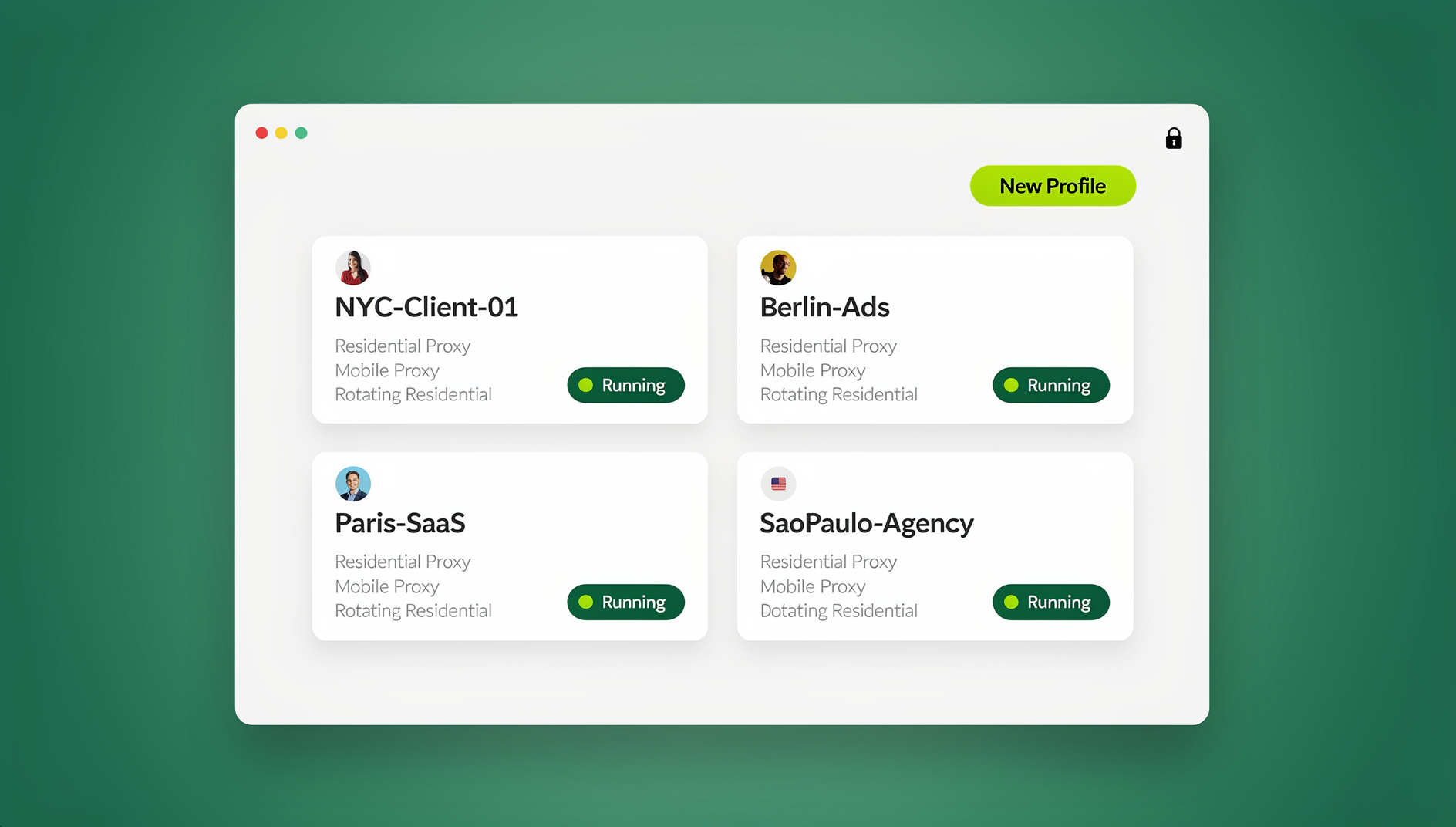
Send.win solves the fingerprinting dilemma by providing two robust, professional modes: the native desktop client (Sendwin Browser) and cloud browser sessions. The desktop client allows you to create and run isolated profiles locally, with each profile having its own customized cookie storage, local settings, and proxy parameters. This enables marketers and multi-account managers to operate separate profiles on the same computer without any risk of cross-profile leaks.
For maximum security and accessibility, Send.win’s cloud browser sessions run your profiles entirely on remote, secure cloud servers. Because the session operates in the cloud, websites interact with the hardware specifications of the remote cloud instance rather than your actual physical computer. There is zero installation required to access these cloud sessions, and they can be launched from any device (including smartphones and tablets) while maintaining a consistent, realistic fingerprint. This cloud-first approach provides bulletproof protection, as the web servers see genuine, un-spoofed hardware parameters belonging to real servers, eliminating the risk of being flagged for spoofing.
🏆 Send.win Verdict
Bypassing device tracking requires more than just masking scripts. Send.win offers complete digital fingerprint separation. With the native Sendwin Browser desktop client running local profiles and cloud browser sessions for remote accessibility, you can maintain completely clean, genuine identities. Both options include high-quality fingerprint isolation, with paid plans starting at Pro $19/mo or $83.88/yr, or Team $49/mo or $251.88/yr. The first card purchase is covered by a 7-day money-back guarantee, and you can try the free cloud demo at https://send.win/demo-browser/.
Try Send.win free today — protect your digital identity with isolated cloud browsing and native desktop profiles.
Frequently Asked Questions
Can I completely block browser fingerprinting?
It is virtually impossible to completely block fingerprinting, because blocking or turning off APIs (like canvas or JavaScript) makes your browser look highly suspicious. A better approach is to use tools that inject random noise, such as Brave, or use remote cloud sessions like Send.win to isolate your real hardware profile entirely.
Does using a VPN prevent browser fingerprinting?
No, a VPN only changes your IP address and encrypts your network traffic. It does not hide your hardware specifications, installed fonts, canvas rendering behaviors, or browser configurations. To defeat fingerprinting, you must combine network proxies with browser profile isolation.
How does incognito mode affect my device fingerprint?
Incognito mode only prevents your local browser from saving cookies, history, and form data. It does not alter your hardware parameters, screen resolution, GPU model, or font list. Consequently, tracking scripts can identify and link your incognito sessions to your normal browsing history instantly.
Will blocking canvas APIs break my daily banking sites?
Yes, many financial institutions and banking sites use canvas rendering and device profiling as part of their fraud prevention systems. Blocking these APIs entirely can prevent you from logging in or trigger false fraud alerts. It is better to use realistic profiles that pass verification checkmarks.
Why do some privacy add-ons make my fingerprint more unique?
Privacy add-ons modify the way your browser responds to queries. Because most users do not install these tools, having a unique combination of add-ons makes you stand out. This is why native settings and built-in browser protections are preferred over multiple third-party tools.
Is browser fingerprinting legal under privacy regulations like the GDPR?
Under the GDPR and the ePrivacy Directive in the European Union, browser fingerprinting is treated similarly to cookies. Websites must obtain user consent before collecting device parameters for tracking purposes. However, enforcement remains difficult, and many platforms continue to collect these signals without explicit disclosure.
What is the difference between browser spoofing and cloud isolation?
Browser spoofing attempts to trick tracking scripts by feeding them fake hardware values (like a fake graphics card name), which can easily be detected by mismatch checkers. Cloud isolation runs the entire browser session on a remote server, meaning the website interacts with real, genuine server hardware without any spoofing or lies.