How to Manage Multiple AliExpress Seller Accounts Without Chain Suspensions
To safely manage multiple AliExpress seller accounts from one workstation without triggering identity linkage bans, you must isolate each storefront inside a separate browser environment with dedicated residential proxies and distinct hardware fingerprints. Operating multiple AliExpress merchant portals in standard browser tabs leaks shared cookies, canvas hashes, and IP data that Alibaba’s compliance algorithms flag as duplicate accounts; isolated browser profiles or cloud browser sessions ensure each store remains technically distinct.
📌 TL;DR Executive Summary
- The Risk: AliExpress actively detects multi-store operations using browser fingerprinting, device telemetry, and IP correlation, triggering cascading bans.
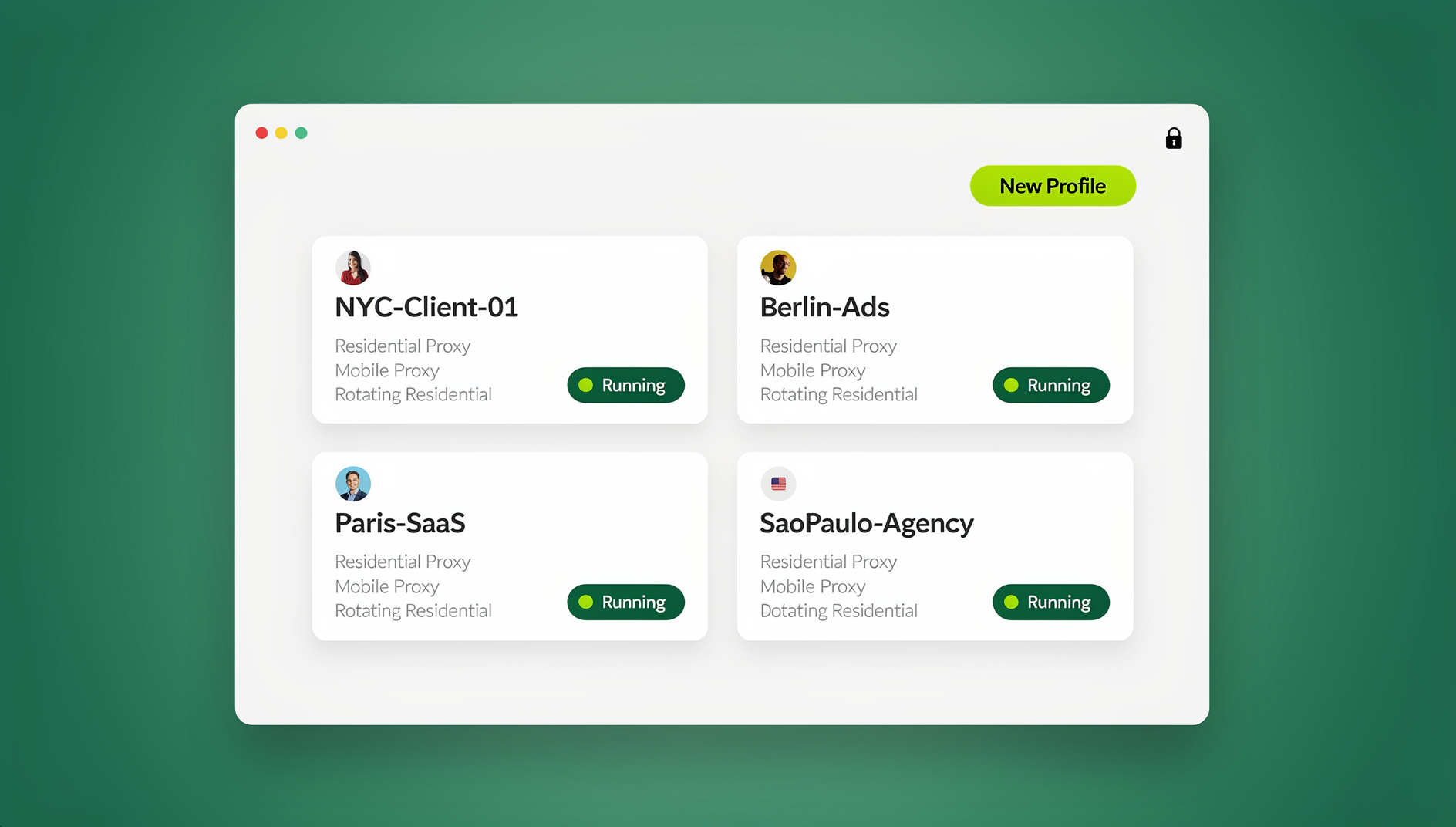
- The Solution: Sandboxed browser environments (like Sendwin) assign dedicated residential proxies, unique canvas/WebGL parameters, and isolated cookie storage per store.
- Operational Strategy: Separate business entities, unique banking details, isolated staff access, and automated order routing without shared credentials.
Operating a single AliExpress store allows merchants to reach millions of international buyers, but scaling an e-commerce enterprise often demands running multiple storefronts. Diversifying across multiple product categories, targeting distinct geographical markets, and safeguarding your cash flow against unexpected platform suspensions are vital reasons why modern cross-border merchants operate multiple AliExpress accounts.
However, AliExpress and its parent organization Alibaba enforce strict anti-multi-accounting policies. When merchant accounts share digital signals — such as matching IP addresses, shared browser storage, or identical browser fingerprints — the platform’s security mechanisms link those profiles. If one account experiences a customer dispute, listing flag, or compliance check, the entire cluster faces immediate suspension. In this comprehensive guide, we examine AliExpress detection architecture, explore operational best practices, and demonstrate how browser isolation keeps your stores secure.
💡 Pro Tip: Geographic Proxy Matching
Always pair your AliExpress merchant profile with a static residential proxy located in the exact jurisdiction where the business entity was registered. Frequent geolocation jumping between logins triggers automated merchant re-verification challenges.
Why Cross-Border Merchants Run Multiple AliExpress Stores
Scaling a global retail operation requires market segmentation. Experienced merchants recognize that a single storefront cannot effectively cater to diverse consumer niches.
1. Category Specialization and Niche Authority
Consumer trust increases when a storefront specializes in a specific niche. A store dedicated exclusively to consumer electronics converts at a higher rate than a general merchandise bazaar. Running distinct accounts for home goods, consumer electronics, and apparel allows merchants to build focused brand equity for each vertical.
2. Risk Mitigation and Business Continuity
E-commerce platforms frequently update algorithms and compliance rules. An automated algorithmic flag or a burst of shipping delays can temporarily freeze payouts on a store. Operating independent accounts ensures that if one storefront encounters an audit, your remaining revenue streams continue without disruption. Merchants looking to scale across platforms often review our multi-store operations guide to structure resilient multichannel workflows.
3. Supplier Diversification and Inventory Testing
Testing new product concepts or onboarding new supply chain partners carries inherent delivery risks. Isolating test listings within a secondary storefront protects your primary store’s feedback rating and merchant tier status while validating new inventory.
How AliExpress Detects and Links Merchant Accounts
AliExpress utilizes sophisticated fraud detection infrastructure that monitors behavioral, environmental, and financial signals.
| Detection Vector | What AliExpress Analyzes | Standard Browser Risk | Isolated Profile Protection |
|---|---|---|---|
| IP & Network | Public IP, ISP type, ASN, WebRTC leaks | Multiple stores share identical IP address | Dedicated static residential proxy per store |
| Browser Fingerprint | Canvas hash, WebGL renderer, AudioContext, fonts | Identical hardware signature across all tabs | Unique, persistent engine-level spoofing per profile |
| Local Storage & Cookies | Persistent authentication tokens, flash cookies, IndexedDB | Tabs share the same local storage container | Complete physical sandbox isolation |
| Operational Data | Business names, tax IDs, banking details | Duplicate corporate credentials | Requires distinct legal entities and bank accounts |
⚠️ Security Warning: Avoid Public VPNs for Seller Consoles
Standard commercial VPNs route traffic through shared datacenter IP pools. When multiple flagged sellers share the same datacenter subnet, AliExpress automatically places every connected merchant account under high-risk review.
Operational Checklist: Setting Up Multi-Store Infrastructure
To establish compliant and resilient multi-account operations, follow this structured operational protocol:
Step 1: Separate Business Entities and Documentation
Every AliExpress merchant account must be backed by distinct corporate documents, tax IDs, and verified contact numbers. Attempting to register multiple merchant accounts with identical business registries will result in instant registration rejection.
Step 2: Distinct Banking and Payout Methods
Assign separate bank accounts, debit cards, or payment processor sub-accounts (such as Payoneer or Wise virtual business accounts) to each storefront. Payout linkage is one of the quickest ways algorithmic monitoring connects multi-store operations.
Step 3: Clean Product Listings and Media Assets
Avoid copying identical product descriptions, titles, and raw image files across different stores. Strip EXIF metadata from product images before uploading to ensure image hashes remain unique. For specialized dropshipping operations, reviewing Shopify multi-store workflows provides helpful parallels in listing management.
⚡ Quick Win: Team Session Sharing Without Password Hand-Offs
When hiring virtual assistants or order fulfillment agents, do not send login credentials over chat apps. Use Sendwin’s session sharing to grant authenticated access directly into the seller workspace without exposing passwords or triggering MFA hurdles.
Managing Order Fulfillment and Customer Service at Scale
When running 5, 10, or 20 AliExpress stores, logging in and out of different browser profiles manually becomes an operational bottleneck. E-commerce teams require unified management environments:
- Centralized Order Notifications: Configure distinct email forwarders to route customer inquiries and shipping alerts into a unified helpdesk.
- Persistent Cloud Sessions: Utilize cloud browser environments so multiple fulfillment staff can process orders in parallel without conflicting login sessions.
- Automation API Integration: Leverage Puppeteer or Playwright via Sendwin’s Automation API to extract daily order summaries and tracking numbers across all seller dashboards automatically.
Step-by-Step Code Guide: Automating AliExpress Store Monitoring with Puppeteer
For cross-border e-commerce brands managing dozens of storefronts, monitoring inventory levels, customer messages, and price compliance manually requires excessive staff hours. By connecting Sendwin’s local Automation API with Puppeteer or Playwright, development teams can control sandboxed browser sessions programmatically.
The code example below demonstrates how to connect Puppeteer to an active, isolated Sendwin profile to verify login state and extract order metrics without triggering anti-bot security alerts:
const puppeteer = require('puppeteer-core');

async function auditAliExpressStore(profileWsEndpoint) {
    // Connect to the isolated Sendwin browser profile via WebSocket
    const browser = await puppeteer.connect({
        browserWSEndpoint: profileWsEndpoint,
        defaultViewport: null
    });

    const page = await browser.newPage();
    console.log('Navigating to AliExpress Merchant Portal...');

    // Navigate with natural timeout and headers preserved by the sandboxed profile
    await page.goto('https://sellercenter.aliexpress.com', {
        waitUntil: 'networkidle2',
        timeout: 60000
    });

    // Check if the session is fully authenticated
    const title = await page.title();
    console.log(`Current Merchant Dashboard Title: ${title}`);

    // Extract unread message count and pending fulfillment badge
    const pendingOrders = await page.evaluate(() => {
        const orderBadge = document.querySelector('.order-count-badge');
        return orderBadge ? orderBadge.innerText.trim() : '0';
    });

    console.log(`Pending orders requiring fulfillment: ${pendingOrders}`);

    // Disconnect cleanly without closing the background session
    await browser.disconnect();
}

// Example usage with Sendwin Automation API endpoint
const SENDWIN_PROFILE_ENDPOINT = 'ws://127.0.0.1:9222/devtools/browser/aliexpress-store-01';
auditAliExpressStore(SENDWIN_PROFILE_ENDPOINT).catch(console.error);
Operational Security: Preventing IP Leaks and Hardware Correlation
Maintaining security at enterprise scale requires constant vigilance against subtle technical leaks. Below are four advanced security practices for multi-store merchants:
1. WebRTC Leak Elimination
WebRTC is a browser protocol that facilitates real-time audio and video streaming. However, standard browsers frequently expose the host machine’s true local network IP address and ISP gateway through WebRTC STUN requests, even when routing traffic through a proxy. Sendwin replaces the WebRTC stack entirely, binding all media interfaces to the assigned proxy IP.
2. Canvas and AudioContext Noise Injection
Rather than blocking Canvas queries — which itself signals an anomaly to Alibaba fraud filters — Sendwin injects subtle, mathematically consistent noise into graphic rendering and audio buffer calculations. This generates a natural, realistic hardware hash unique to that store profile.
3. Timezone and Geolocation Synchronization
If your assigned residential proxy is located in Madrid, Spain, but your operating system timezone is set to Tokyo, the mismatch creates an immediate risk indicator. Sandboxed profiles automatically align `Intl.DateTimeFormat`, system clock offsets, and language headers to match the proxy’s geographic location.
4. Cookie and Session Hygiene
Always log out through the profile manager rather than clearing cookies inside the browser. Preserving session tokens prevents the store from looking like a brand-new device on every login.
🏆 Send.win Verdict
Scaling a cross-border e-commerce brand on AliExpress requires absolute technical separation between store profiles. Sendwin delivers complete profile sandboxing, native residential proxy integration, team session sharing, and local Automation API support. It transforms dangerous multi-account juggling into an enterprise-grade, ban-proof growth engine.
Try Send.win free today — launch your 30-day trial and protect your merchant stores from day one.
Comprehensive Security Checklist for Cross-Border E-Commerce Merchants
To ensure total account longevity across multiple AliExpress storefronts, implement this daily operational security routine across your organization:
- Daily Session Pre-Checks: Before launching seller console sessions, verify that the assigned residential proxy IP matches the profile’s geographical registration.
- Isolated Image Repositories: Maintain separate Google Drive or Dropbox folders for each store’s visual assets to prevent accidental cross-posting of duplicate product photos.
- Separate Customer Support Canned Responses: Avoid pasting identical auto-reply text across different stores. Craft customized templates for each brand to eliminate linguistic matching by platform AI.
- Segregated Two-Factor Authentication Keys: Store 2FA secret keys in distinct password manager vaults assigned to specific brand managers rather than a single shared master vault.
- Automated Stock Level Synchronization: Use Sendwin’s Automation API to sync inventory quantities between your ERP software and AliExpress seller dashboards in real time.
Long-Term Account Longevity Strategy: The 90-Day Warm-Up Protocol
When launching new AliExpress seller storefronts, aggressive scaling in the initial weeks triggers automated fraud audits. Follow this structured 90-day onboarding strategy:
- Days 1–14 (Initialization): Complete corporate identity verification, connect dedicated bank accounts, configure static residential proxies, and list no more than 5 initial core products.
- Days 15–30 (Initial Order Flow): Process early organic sales with fast fulfillment, upload accurate tracking numbers within 24 hours, and maintain high customer response rates.
- Days 31–60 (Catalog Expansion): Gradually expand listing count to 50+ products, optimize search tags, and introduce targeted promotional discounts.
- Days 61–90 (Scaling & Automation): Introduce automated inventory synchronization via the Sendwin Automation API and delegate customer support to dedicated team members via session sharing.
Enterprise Case Study: Scaling an E-Commerce Brand Across 15 Storefronts
To demonstrate the real-world impact of browser isolation, consider the case of a mid-sized consumer electronics brand operating across multiple international marketplaces. Previously, the brand attempted to manage multiple seller accounts using standard multi-profile browsers on local office workstations. Within six months, cross-session cookie leakage and fluctuating IP addresses triggered cascading seller re-verification holds across four flagship storefronts, resulting in over $45,000 in delayed payouts.
After migrating to Sendwin’s sandboxed environment, the brand implemented isolated profiles with dedicated static residential proxies for each international storefront. By pairing persistent session isolation with automated inventory syncing via the Sendwin Automation API, the brand eliminated account linkage errors entirely, reduced customer inquiry response times to under 15 minutes, and scaled annual marketplace revenue by 210% without a single platform compliance flag.
Frequently Asked Questions
Can I legally operate multiple AliExpress seller accounts?
AliExpress allows businesses to operate multiple stores provided each store represents a distinct verified corporate entity with unique business licenses, tax documents, and dedicated bank accounts.
Why does switching Chrome profiles fail to protect AliExpress stores?
Standard Chrome profiles isolate cookies and browsing history, but they share the exact same public IP address, network interface, WebRTC IP, and hardware canvas fingerprint with the host operating system, allowing AliExpress to correlate all active profiles.
What type of proxies should I use for AliExpress seller accounts?
You should exclusively use dedicated static residential proxies or clean ISP proxies. Avoid rotating proxies during active seller console sessions, as changing IP addresses mid-session triggers fraud prevention lockouts.
Can I share access to an AliExpress store with a remote virtual assistant safely?
Yes. By using Sendwin’s secure session sharing feature, you can transfer an authenticated browser session to a virtual assistant without disclosing account passwords or triggering two-factor authentication re-verification.
How does Sendwin protect against browser fingerprint tracking?
Sendwin generates unique, consistent fingerprint parameters at the engine level — including Canvas, WebGL, AudioContext, font signatures, screen resolutions, and WebRTC configurations — ensuring each profile looks like a separate physical computer.
What is Sendwin’s pricing structure?
Sendwin provides a 30-day free trial. The Pro plan costs $19/month ($6.99/month billed annually — 63% savings) for 150 profiles and 5GB proxy bandwidth. The Team plan is $49/month ($20.99/month billed annually — 57% savings) with 500 profiles, 20GB bandwidth, and 16 team seats.
Does Sendwin support automated order scraping across AliExpress accounts?
Yes. Both Pro and Team plans include local Automation API access, allowing developers to control sandboxed profiles using Puppeteer, Playwright, or Selenium for automated order syncing and listing updates.
How Send.win Helps With Manage Multiple Aliexpress Seller Accounts
Send.win is an antidetect browser built for exactly this kind of work — every profile is a clean, isolated identity:
- Isolated profiles – unique fingerprint, separate cookies and storage per profile
- Stealth engine – canvas, WebGL, fonts, and audio spoofed at the engine level
- Desktop app + cloud sessions – native app for Windows, macOS, and Linux, or run profiles in the cloud with no install
- Built-in residential proxies – with automatic timezone, locale, and WebRTC matching
- Team features – share logged-in profiles with teammates without sharing passwords
Try the instant cloud browser demo — no install, no signup — or download the desktop app. The 30-day free trial needs no credit card, and paid plans start at $6.99/month billed annually (see pricing).