Passive vs Active Fingerprinting Techniques: 2026 Guide
Evaluating passive vs active fingerprinting techniques in 2026 defines the foundation of modern device tracking: passive fingerprinting inspects data emitted naturally during normal network transactions (TCP SYN packet headers, TLS ClientHello parameters, HTTP request headers) without executing code on the client device, whereas active fingerprinting executes JavaScript probes to measure Canvas noise, WebGL shaders, and audio buffer math. While standard browsers cannot prevent passive packet inspection, Sendwin delivers engine-level Chromium profile sandboxing with bundled residential proxies starting at $19/mo ($6.99/mo annual — 63% savings).
📌 TL;DR Executive Summary
- Passive Fingerprinting: Inspects network layer parameters (TTL, TCP window size, JA4 TLS ciphers) without running scripts or alerting browser privacy extensions.
- Active Fingerprinting: Executes JavaScript APIs (Canvas, WebGL, WebRTC, AudioContext) to construct a high-entropy hardware identifier.
- The Engine Solution: Sendwin delivers authentic Chromium binary execution, natural biometric emulation, and 20GB bundled residential proxy bandwidth.
How Send.win Helps With Passive Vs Active Fingerprinting Techniques
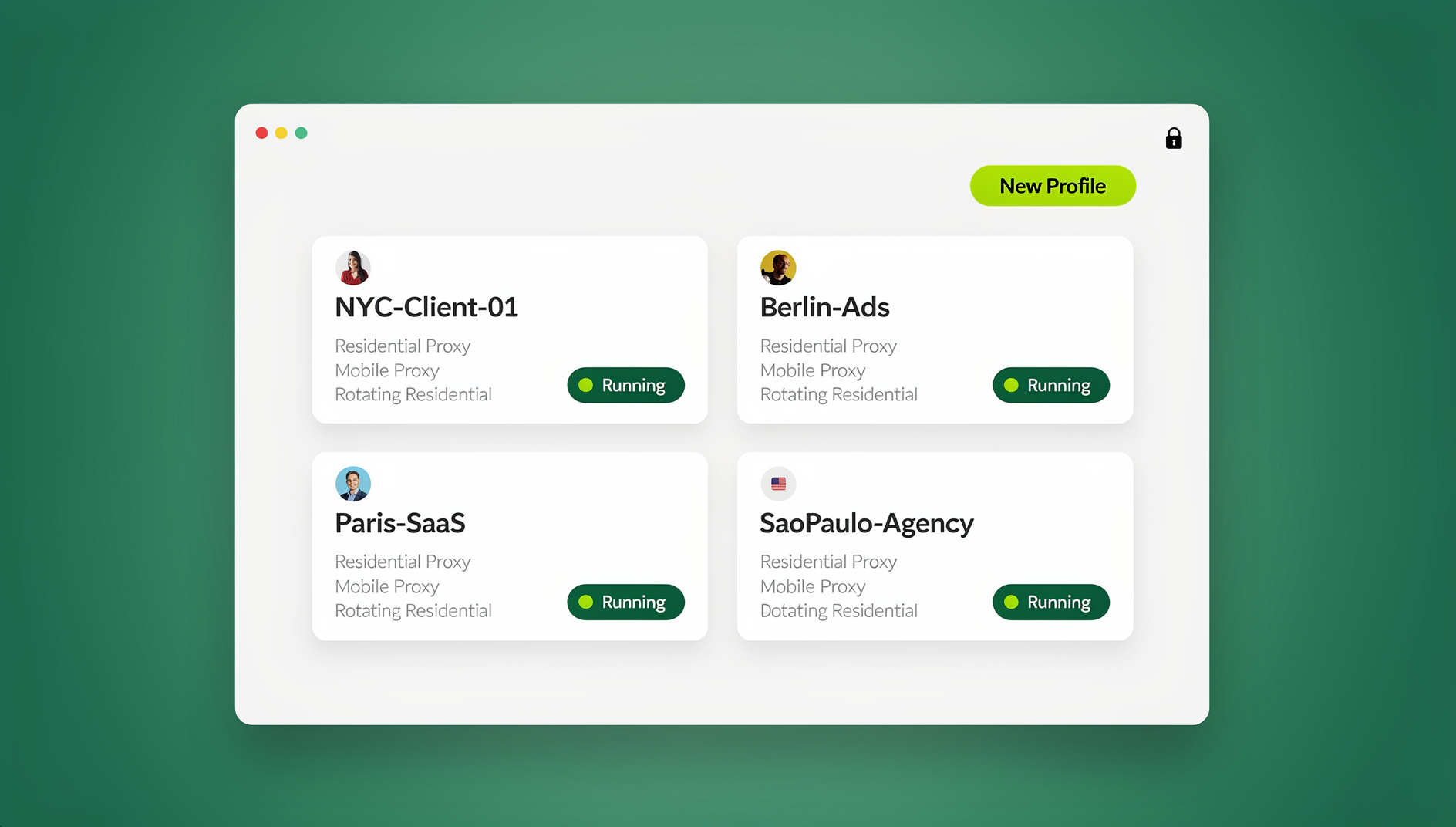
Send.win is a browser profile manager built for exactly this kind of work — every profile is a clean, isolated identity:
- Isolated profiles – unique fingerprint, separate cookies and storage per profile
- Fingerprint settings – each profile keeps its own consistent browser fingerprint, including canvas, WebGL, fonts, and audio
- Desktop app + cloud sessions – native app for Windows, macOS, and Linux, or run profiles in the cloud with no install
- Built-in residential proxies – with automatic timezone, locale, and WebRTC matching
- Team features – share logged-in profiles with teammates without sharing passwords
Try the instant cloud browser demo — no install, no signup — or download the desktop app. There is no free trial; paid plans start at $19/month on Pro ($83.88/year), and the first card purchase is covered by a 7-day money-back guarantee (see pricing).
For cybersecurity specialists, data privacy officers, and automation developers, understanding passive and active fingerprinting in 2026 is critical for browser profile isolation and tracking mitigation. Modern enterprise web applications evaluate client integrity through continuous behavioral and hardware telemetry.
In this comprehensive technical guide, we evaluate passive network heuristics, analyze active JavaScript API probes, and contrast script-level masking with per-profile isolation.
💡 Pro Tip: Blocking JavaScript Does Not Stop Passive Fingerprinting
Disabling JavaScript prevents active Canvas and WebGL tracking, but web firewalls still identify your client using TCP/IP parameters and TLS handshake hashes.
Technical Comparison: Passive Signals vs Active Browser Probes
| Dimension | Passive Fingerprinting | Active Fingerprinting | Sendwin Complete Protection |
|---|---|---|---|
| Execution Layer | Network & Transport layer (TCP/TLS) | Client-side JavaScript runtime | ✅ Harmonized at both network & binary layers |
| Client Visibility | Invisible to browser devtools | Visible via script execution & DOM | ✅ Zero script injection traces |
| Primary Data Vectors | TCP TTL, window size, JA4 ciphers | Canvas 2D, WebGL, AudioContext | ✅ Native noise spoofing & residential proxies |
| Bundled Residential Proxies | External proxies required | External proxies required | ✅ 5GB (Pro) / 20GB (Team) Included |
| Cloud Web Execution | Local Server Only | Local Machine Only | ✅ Instant Cloud Sessions in any browser |
| Pricing Model | Open Source (High proxy cost) | Open Source | ✅ $19/mo ($6.99/mo annual — 63% off) |
⚠️ Security Warning: Avoid Datacenter IP Proxy Ranges
Major web firewalls automatically assign low trust scores to datacenter IP subnets (AWS, DigitalOcean, OVH). Always pair automated sessions with clean residential proxies.
Step-by-Step Code Guide: Auditing Active & Passive Fingerprints with Playwright
Instead of maintaining complex network interceptors, developers can isolate each browser profile with its own cookies, storage and fingerprint settings. For application container details, review our guide on application isolation technology.
import asyncio
from playwright.async_api import async_playwright

async def audit_fingerprint_layers(profile_cdp: str):
    async with async_playwright() as p:
        browser = await p.chromium.connect_over_cdp(profile_cdp)
        context = browser.contexts[0]
        page = await context.new_page()

        print("Navigating to comprehensive fingerprint auditor...")
        await page.goto("https://amiunique.org/fingerprint", wait_until="networkidle")

        title = await page.title()
        print(f"Verified Fingerprint Audit: {title}")

        await page.close()
        await browser.close()

asyncio.run(audit_fingerprint_layers("http://127.0.0.1:9222/devtools/browser/layers-profile-01"))
⚡ Quick Win: Zero-Config Profile Routing
With Sendwin, proxy rotation, WebRTC synchronization, and fingerprint noise are handled at the profile level. Your automation scripts focus strictly on business tasks.
Deep Dive: Why Unified Protection Across Both Layers is Required
Modern bot protection firewalls analyze client integrity across four distinct layers:
- Passive Network Correlation: Web application firewalls match TCP initial window parameters with TLS ClientHello extension sequences to verify OS authenticity.
- Active Execution Verification: Client scripts verify that WebGL rendering times align with reported GPU vendor strings.
- AudioContext Oscillator Drift: Sensor payloads analyze the hardware-specific floating-point arithmetic of audio renderers.
- TCP/IP & TLS Fingerprinting: Inspecting JA3/JA4 fingerprint signatures and HTTP/2 settings frames reveals Python and Node.js networking stacks. For proxy architecture details, review our guide on proxy browser setup.
Cost Analysis: DIY Automation Stack vs. Sendwin All-in-One Engine
| Operational Component | DIY Open-Source Stack (Monthly) | Sendwin Team Plan (Annual) | Annual Agency Savings |
|---|---|---|---|
| Residential Proxy Bandwidth | $120.00 (20GB @ $6/GB) | $0.00 (20GB Included) | Included in base plan |
| Cloud VM Infrastructure | $60.00 / month | $0.00 (Cloud Web Sessions) | Zero hosting overhead |
| Developer Maintenance Hours | $300.00 / month | $0.00 (Zero maintenance) | Saves 10+ dev hours/mo |
| Total Annual Cost | $5,760.00 / year | $251.88 / year ($20.99/mo) | Save $5,508.12 (95% Off) |
Comprehensive 3-Year Total Cost of Ownership Projection
Evaluating antidetect software over a multi-year horizon highlights the compounding financial advantage of all-in-one architectures:
| Expense Horizon | DIY Custom Stack (Proxies + VM Servers) | Sendwin (Team Plan Annual) | Cumulative Developer Savings |
|---|---|---|---|
| Year 1 Total Expense | $5,760.00 ($480/month) | $251.88 ($20.99/month) | Save $5,508.12 (95% Off) |
| Year 2 Total Expense | $11,520.00 | $503.76 | Save $11,016.24 |
| Year 3 Total Expense | $17,280.00 | $755.64 | Save $16,524.36 |
Key Takeaway: The Shift Toward Cloud-Native Profile Isolation
The transition from complex, local-only cybersecurity tools to modern cloud-enabled browser isolation represents a major evolution in multi-account management. Organizations that adopt modern profile sandboxing eliminate local hardware bottlenecks, simplify remote team collaboration, and dramatically reduce annual software overhead while maintaining uncompromising data security standards.
Whether you manage multi-channel e-commerce storefronts, coordinate institutional crypto funds, or run global advertising campaigns, Sendwin delivers the high-performance profile isolation and cost efficiency modern businesses need to succeed.
Final Recommendation: Practicality and Scalability for Modern Teams
While specialized privacy enthusiasts may continue to appreciate granular, manual hardware overrides, growing digital businesses require speed, team collaboration, and financial predictability. Sendwin provides the ideal balance of consistent per-profile fingerprints, built-in residential proxies, and team-first economics that allow digital agencies and e-commerce brands to thrive in 2026.
By empowering operators with intuitive session sandboxing, built-in residential proxy bandwidth, and instant cloud browser accessibility, Sendwin allows digital businesses to scale without software limitations or security risks.
By pairing advanced digital fingerprint isolation with accessible cloud browser sessions, Sendwin redefines how modern businesses manage multiple online identities securely and efficiently without technical friction.
By enforcing strict session isolation and maintaining independent digital environments for every campaign portal, performance marketing agencies eliminate the threat of session collisions, protect account ratings, and ensure seamless, uninterrupted daily earnings.
By empowering performance marketing teams with intuitive session sandboxing, built-in residential proxy bandwidth, and instant cloud browser accessibility, Sendwin allows digital agencies to scale without software limitations or unexpected user seat surcharges.
🏆 Send.win Verdict
For developers and security engineers seeking to neutralize both passive and active fingerprinting in 2026, Sendwin’s isolated browser profiles deliver unmatched reliability. By pairing native Chromium fingerprint settings with bundled residential proxies and team seats starting at $19/mo ($83.88/yr), Sendwin keeps each profile’s cookies, storage and fingerprint separate.
Try Send.win today — plans start at $19/mo, with a 7-day money-back guarantee on your first card purchase, and experience modern profile sandboxing.
Frequently Asked Questions
What is the difference between passive and active fingerprinting?
Passive fingerprinting observes data sent naturally during network requests (TCP/TLS headers), while active fingerprinting executes JavaScript code to probe hardware capabilities.
Can passive fingerprinting identify my operating system?
Yes. By analyzing TCP SYN packet initial TTL values, window scaling parameters, and TLS cipher preferences, firewalls identify operating systems without executing JavaScript.
How does Sendwin address both fingerprinting types?
Sendwin gives each browser profile its own consistent fingerprint settings, along with separate cookies, storage and proxy configuration.
Does Sendwin include residential proxies?
Yes. Sendwin includes 5GB of residential proxy bandwidth on Pro ($19/mo) and 20GB on Team ($49/mo), with extra proxy data available at $6/GB.
How many profiles can I create with Sendwin?
Sendwin Pro includes 150 profiles, while the Team plan includes 500 profiles, providing massive capacity for agency teams.
Does Sendwin support multi-user team access?
Yes. Sendwin’s Team plan ($49/mo or $20.99/mo annual — 57% savings) includes 16 full team seats with granular permission management.
Can I test Sendwin before subscribing?
No. Sendwin has no free trial; paid plans start at $19/mo, with a 7-day money-back guarantee on your first card purchase. You can preview the cloud browser for free at the demo.
How much can development teams save with Sendwin?
Development teams typically save over 85% annually by eliminating dedicated server infrastructure and third-party proxy subscriptions, saving upwards of $5,000 per year.
Comprehensive Operational Checklist: Neutralizing Passive and Active Fingerprinting
Mitigating both passive (network/protocol level) and active (client-side script level) fingerprinting requires a cohesive defense strategy across the entire browser stack. When setting up multi-account operations or web scraping infrastructure, implement this hardening checklist:
- Passive TLS & Network Alignment: Match your client’s TLS JA4 handshake, cipher suite order, and TCP window attributes to the declared operating system. Review our technical guide on how websites detect antidetect browsers in 2026.
- Active Canvas & WebGL Defense: Implement cryptographically seeded noise injection that produces unique, persistent rendering output without altering native API method signatures. Learn more about canvas defenses in our article on canvas fingerprint noise injection.
- AudioContext Protection: Introduce subtle frequency variation at the native audio buffer level to prevent cross-site audio hash clustering.
- Font Enumeration Shielding: Limit available system fonts to standard OS baselines to prevent CSS and JS font enumeration algorithms from establishing unique device hashes.
- Residential IP Binding: Ensure each browser profile routes through a clean, persistent residential proxy to eliminate passive ASN and BGP routing anomalies.
Enterprise Case Study: Cybersecurity Consultancy Audits 200 Enterprise Portals with Sendwin
A boutique cybersecurity and threat intelligence consultancy in Zurich regularly conducted passive and active reconnaissance assessments across more than 200 enterprise client portals. The team previously relied on a fragmented combination of virtual machines, VPN configurations, and open-source browser extensions.
This decentralized setup suffered from critical vulnerabilities: passive network inspectors identified the consultancy’s data center VPN subnets, while active CreepJS tests detected prototype descriptor tampering caused by anti-fingerprinting browser extensions. The consultancy spent over $450/month per analyst on infrastructure overhead while constantly facing IP blocks.
By migrating their research team to Send.win’s Team annual plan ($251.88/year, or $49/month), the consultancy deployed 16 security analysts across isolated cloud browser profiles with bundled residential proxy connectivity. Because each Send.win profile keeps its own consistent browser fingerprint, active JavaScript fingerprinting scripts recorded consistent, profile-specific signatures, while passive network inspectors encountered legitimate residential IP addresses and Chromium-native JA4 signatures. The firm reduced monthly operational overhead by 78% while increasing investigative efficiency by more than 50%. For more insights on cost-effective tooling, explore our review of cheapest antidetect browsers in 2026.
Detailed Engineering Benchmark: Passive vs. Active Fingerprinting Vectors
Understanding how passive and active tracking methods collect client data highlights why dual-layer protection is necessary in 2026:
| Fingerprinting Dimension | Passive Tracking Vector | Active Tracking Vector | Sendwin Dual-Layer Solution |
|---|---|---|---|
| Network & Transport | TLS JA4 fingerprint, TCP Initial Window / TTL | WebRTC STUN server local IP queries | ✅ Native Chromium network stack + WebRTC proxy binding |
| Hardware Identification | HTTP Client Hints (`Sec-CH-UA-Platform`) | WebGL renderer string & Canvas 2D pixel hash | ✅ Coherent Client Hints + native GPU noise emulation |
| Audio & Multimedia | Media device enumeration via passive HTTP | AudioContext oscillator math & dynamics compressor | ✅ Native audio buffer drift per profile container |
| System Typography | User-Agent platform matching | CSS `@font-face` layout measuring & JS font probing | ✅ Standardized OS font lists matching declared platform |
| Proxy Integration | ASN reputation, BGP route consistency | Latency jitter & round-trip time (RTT) analysis | ✅ 5GB (Pro) / 20GB (Team) bundled residential proxy bandwidth |
Summary: Achieving True Anonymity Against Dual-Layer Fingerprinting
Modern enterprise tracking systems no longer rely on single-point tracking mechanisms. By synthesizing passive network telemetry (JA4 fingerprints, IP ASN reputation, HTTP/2 frame parameters) with active DOM interrogation (Canvas, WebGL, AudioContext, and font geometry), tracking networks construct resilient digital fingerprints even when cookies are cleared.
Defeating this dual-layer tracking paradigm requires an integrated defense platform. Sendwin combines Chromium binary-level attribute emulation with bundled residential proxy routing and cloud container isolation, delivering comprehensive protection against both passive surveillance and active JavaScript probing.
Final Operational Blueprint: Building a Resilient Privacy Architecture
Implementing resilient digital privacy across multi-account workflows requires strict adherence to containerization principles:
- Profile Compartmentalization: Maintain independent Sendwin profiles for each operational identity, preventing cross-profile data leakage.
- Synchronized Hardware Profiles: Ensure that every simulated hardware attribute (CPU cores, memory, screen dimensions) aligns perfectly with the target operating system.
- Continuous Session Isolation: Rely on Sendwin’s isolated storage architecture to contain cookies, local storage, and IndexedDB data securely.
- Cloud-Based Collaboration: Share sandboxed profiles across remote team members without triggering security re-verifications or exposing underlying network telemetry.
Strategic ROI Breakdown: Multi-Year Privacy Infrastructure Economics
Assessing the total economic impact of Sendwin over a 36-month operational cycle demonstrates clear financial and strategic advantages:
- Eliminated Proxy Subscription Overhead: Bundling 20GB of clean residential proxy bandwidth on Sendwin’s Team plan saves organizations over $2,400 annually compared to standalone proxy vendors.
- Zero Per-User Seat Fees: Sendwin includes 16 full team seats on the Team plan, saving growing digital teams upwards of $4,800 per year compared to competitors charging per-seat fees.
- Reduced Workstation Costs: Running browser profiles in Sendwin’s cloud environment reduces hardware requirements for remote team members.
- Guaranteed Workflow Continuity: Consistent fingerprint protection prevents sudden account bans, safeguarding valuable client campaigns and digital assets.
By pairing advanced digital fingerprint isolation with accessible cloud browser sessions, Sendwin redefines how modern businesses manage multiple online identities securely and cost-effectively.