Why Did Google Disable Your Gmail Account With No Warning?
A Gmail account disabled for no reason is usually one of four things: an automated abuse-system false positive, a reputation throttle on sending, a device or IP already linked to a flagged account, or a sign-in pattern the risk model read as hijacking. Google rarely says which one fired. Identify the block type first, because an appeal and a cooldown are different tools and using the wrong one costs you days.
📌 TL;DR Executive Summary
- Core Takeaway: Most “no reason” disables are automated decisions driven by sending behavior, connection reputation or device fingerprint — not a human judgment about your mailbox.
- Key Risk/Challenge: Retrying sends and logging in from new devices escalates a 24-hour throttle into an account-level disable, and only some accounts show a Start Appeal button.
- Recommended Solution: Diagnose the exact error, appeal once with facts, then rebuild trust with a warmup schedule and one isolated browser profile per account.
Diagnose the Block Type Before You Touch Anything
Google uses different language for different failures. A sending block throttles one capability; a disabled account is a decision about the account itself. Find your exact screen or bounce message in the table below before you do anything else, because the fix is not the same for the two. A Gmail account disabled for no reason at the sign-in screen and a bounce code from a merely throttled inbox are separate problems, and the response that fixes one makes the other worse.
| What you see | What it actually means | Correct response | Typical clear time |
|---|---|---|---|
| “Account disabled” with a Start Appeal button | Account-level decision from policy or abuse review | Submit the official appeal form once | Not fixed by waiting |
| 550 5.4.5 Daily user sending limit exceeded | You filled the rolling 24-hour recipient window | Stop all sends and wait the window out | Roughly 24 hours |
| 550 5.7.1 Unusual traffic | Reputation throttle, far below the published cap | Pause every sender on that identity, cut volume, fix bounce rate | 24-72 hours, can repeat |
| 421 4.7.0 Try again later | Temporary rate limit | Stop automated retries immediately | Minutes to hours |
| 452 4.5.3 Too many recipients | Too many addresses in one message | Split the message and resend in batches | Immediate on retry |
| Verification challenge at login | New location, device or network | Complete verification from a familiar environment | Immediate |
550 5.4.5 is a quota problem; 550 5.7.1 is a trust problem. Waiting fixes the first. Waiting alone almost never fixes the second, because the behavior that produced it is still running.
Quick Wins: The First Hour After a Block
Order matters here. The wrong first move — sending a test to see whether it works yet — turns a recoverable throttle into a suspension.
- Stop every sender on that identity. Mail merge add-ons, CRM sequences, SMTP relays and the Gmail API all retry on their own schedule, and each retry against a throttled account deepens the reputation hit.
- Freeze the login environment. Signing in from three laptops, a phone and a VPN to “check” adds locations to the login history and reads as hijacking. Use your normal device and network.
- Record the evidence while it is fresh. Note the timestamp with timezone, the error code, the route the mail left on (web, SMTP, API) and how many recipients your last campaign touched.
- Check whether the account is appealable. A Start Appeal button at login means you are eligible. No button usually means the category is one Google treats as final.
- Wait out a sending block instead of appealing it. For 421 and 550 5.7.1 responses the fix is time plus less volume. Appeals are for account-level disables.
Enforcement flows look alike across platforms: an automated decision, a narrow appeal window, and an environment still producing the same signal. The sequence that works for a Facebook ad account disabled case applies here — document, appeal once, then fix the environment rather than polishing the wording.
How to Appeal a Disabled Gmail Account and Improve Your Odds
The appeal form is short, which is exactly why most submissions fail. Google wants three things: what the account is for, what changed recently, and whether you still control it. Answer those plainly and stop.
What to put in the appeal
- Your name and a contact address you can actually receive mail at.
- One or two sentences on the account’s purpose: personal mail, client work, a store’s support inbox.
- Anything that changed in the days before the disable — travel, a new laptop, a VPN, a new phone number, a first bulk send.
- A line stating you have secured the account: password changed, unknown sessions removed.
- No appeals to fairness, no accusations, no identical resubmission.
How many appeals do you get?
For some violation categories Google allows up to two separate appeals, so a first rejection is not automatically the end. Use the second attempt for new information — the date you last logged in normally, the name of the tool that sent the mail — not the same text with the intensity turned up.
Workspace accounts take a different door
If the address sits on a domain you own through Google Workspace, the personal appeal form is the wrong route. The admin console restores access, and the support channel attached to the Workspace account creates a paper trail. Do not recreate a suspended user and instantly resend the campaign that triggered the block — that repeats the original signal with the same domain behind it.
Why Gmail Blocks You Before You Reach 500 Emails
The published cap is not the real ceiling. A free @gmail.com account is limited to 500 recipients per rolling 24 hours, and every address in To, Cc and Bcc counts as one recipient. Google Workspace raises that to 2,000 a day with 3,000 external recipients.
| Route | Per-message cap | Daily allowance |
|---|---|---|
| Gmail web interface (personal) | 2,000 recipients, max 500 external | 500 recipients per rolling 24 hours |
| Gmail web interface (Workspace) | 2,000 recipients, max 500 external | 2,000 per day, 3,000 external |
| SMTP via POP or IMAP | 100 recipients | Draws from the same account quota |
| Gmail API | 500 recipients | Draws from the same account quota |
| Workspace trial account | Standard limits | 500 per day until the billing threshold is met |
Workspace trial accounts stay on the 500-message tier until a payment method is on file and roughly $100 has been paid with 60 days elapsed. Plan for the tier you are on, not the tier on the pricing page.
The reputation throttle sits far below the cap
Bounce rates above 2-3%, spam complaints above 0.1%, a sudden jump in send velocity, and young accounts or domains all silently lower your effective limit — sometimes to a few dozen messages a day — long before any hard error appears. Google Postmaster Tools puts the bulk-sender danger line at 0.3% complaints, so keep complaint rates under 0.1%. This is where most Gmail account disabled for no reason reports actually begin: not at the 500-recipient wall, but at a few dozen sends the reputation model judged risky.
As of 2026 the cap runs as a rolling 24-hour window, not a calendar day. A block at 3 PM does not clear at midnight; it clears roughly 24 hours after the messages that filled the window. That explains most “it worked this morning and broke again by noon” reports.
Aliases are the most common mistaken workaround. “Send mail as” addresses, delegated users, mail merge add-ons, SMTP relays and API sends all draw from one underlying account quota, so rotating the From header buys no extra allowance. That is why managing multiple Gmail accounts separately beats funneling every campaign through a single inbox.
Warming up a new account so the limit never bites
A fresh account that fires 300 cold emails on day one looks nothing like a human. Start at 20-30 emails a day in week one, move to 50-100 in week two, and scale only while replies hold up and bounces stay low. For cold outbound from a young inbox, 30-50 emails per day after a three-to-four-week warmup is a working volume — not 500.
Do the arithmetic before you schedule anything. A 1,200-contact mail merge campaign from a free Gmail account needs at least three separate sending days to clear without tripping the window.
If your domain sends at scale
Google’s bulk-sender classification applies once a primary domain sends roughly 5,000 messages a day to personal Gmail accounts. It covers SPF, DKIM and DMARC alignment, complaint rates and one-click unsubscribe — and it raises no single account’s quota. A missing or misaligned authentication record gets a new domain throttled before it reaches any published limit.
Why Several Gmail Accounts Get Disabled at the Same Time
Google’s risk systems score connections as well as logins. When two accounts share a device fingerprint, a browser profile, a verification phone number, a recovery address or a similar activity rhythm, they land in one cluster, and a decision against one propagates to the rest. That propagation is a common reason a Gmail account disabled for no reason turns out to be one of three accounts disabled on the same afternoon.
The signals that link accounts together
- Device and browser fingerprint: canvas, WebGL, audio, installed fonts, screen metrics, timezone and language.
- IP reputation and ASN: datacenter ranges from cloud providers belong to hosting networks rather than residential broadband, which is a red flag on its own.
- Reused verification numbers and recovery emails across accounts that are supposed to look unrelated.
- Cookies and local storage left behind when you switch accounts in the same browser window.
- Login location history: a login from a new country triggers verification, and jumps between continents look like hijacking.
That is why “sign out and sign back in” fails as a multi-account strategy — the second account is still the first account as far as the fingerprint and the IP are concerned. If the accounts must stay separate, the environment has to be separate before the accounts exist, which is the argument for a dedicated antidetect browser for Gmail creation instead of another tab in your everyday browser.
Detection has also become less reactive. Risk scoring evaluates environment fingerprints and behavioral patterns instead of waiting for a complaint, so an account can be flagged on the strength of its setup before it sends anything meaningful. That is why so many “no reason” bans turn out to have a reason sitting in the browser, the IP or the phone number.
Preventing a Repeat: Isolated Profiles and Sending Discipline
Prevention splits in two: the environment each account lives in, and the behavior inside it. Fix the environment and you remove linked-ban risk. Fix the behavior and you stay under a reputation threshold far lower than the published cap.
One account, one isolated profile, one exit IP
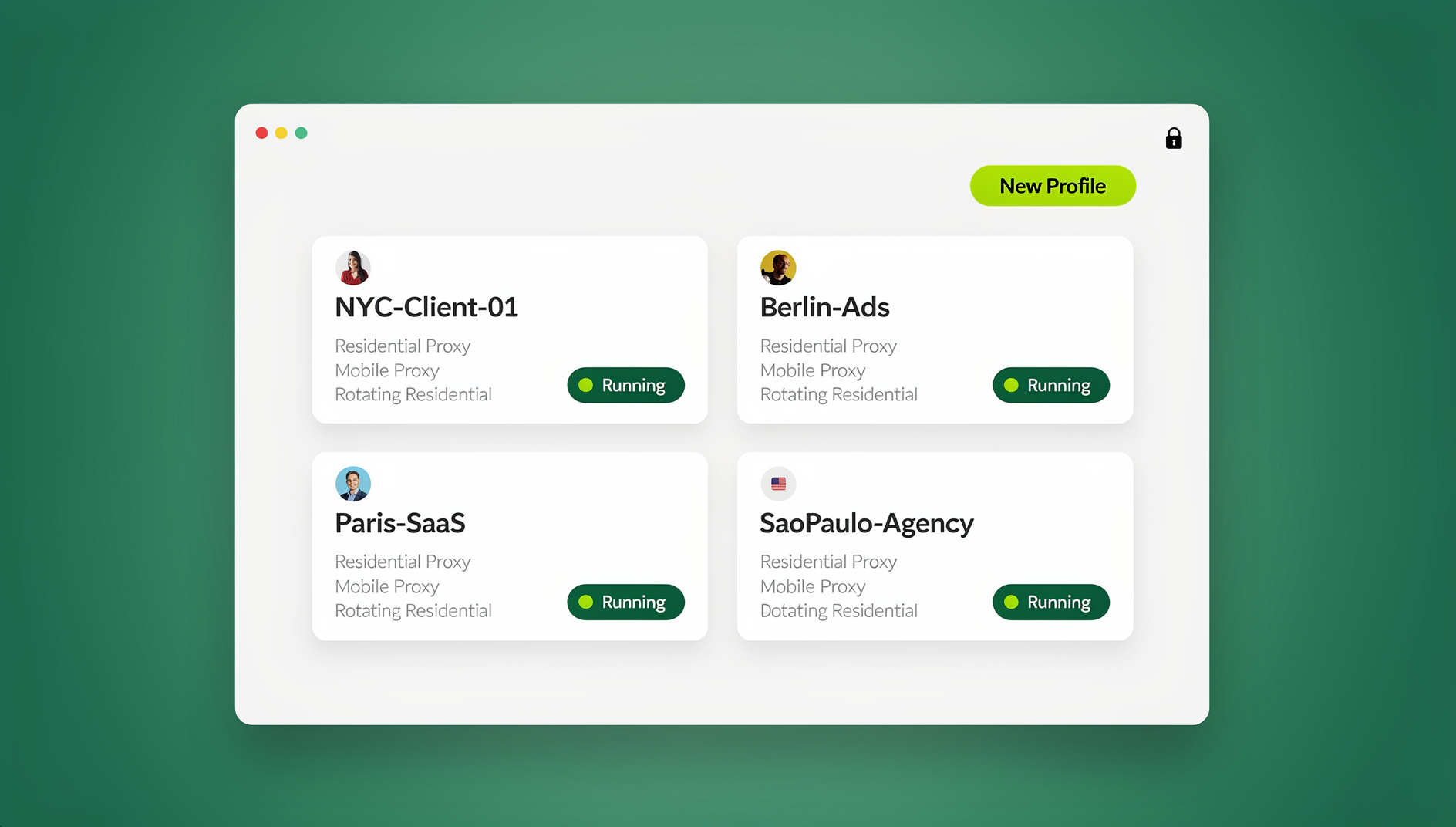
A genuinely separate profile has its own fingerprint and its own network identity, and never shares cookies with the others. Send.win builds each profile that way: canvas, WebGL, audio, fonts and hardware are spoofed inside the patched-Chromium engine rather than injected by scripts sites can detect, and no two profiles share a fingerprint. Residential proxies are included on every plan, and timezone, locale, WebRTC and geolocation follow the proxy’s exit IP, so a profile never contradicts where its traffic leaves.
It runs two ways. Sendwin Browser is a desktop app for Windows 10/11, macOS 12+ and Linux; it installs locally and your profiles stay on your machine. The cloud browser runs profiles on EU and US cloud nodes from any device, with a free 10-minute daily preview. The 30-day trial includes 10 profiles, 10 residential proxies and 1 GB of bandwidth — enough to test whether separation actually stops the linking.
Keep the mapping strict: one profile per Gmail account, one proxy per profile, no account ever opened in a second profile. You can share a profile with a paid teammate so it opens already signed in, without anyone handling the password, which removes the temptation to log the same account in twice. For the mechanics of running several inboxes side by side, see how to sign in to multiple Gmail accounts in parallel.
Behavior that keeps the account out of review
- Warm up every new account: 20-30 sends a day in week one, 50-100 in week two, then scale only with replies.
- Hold bounces under 2-3% and complaints under 0.1%.
- Never route the same campaign through an alias to dodge a cap — it shares the quota and doubles the signal.
- Keep the phone number and backup email unique per account.
- Log date, volume, route and error code for anything unusual, so the next appeal has facts behind it.
Automating checks without linking accounts
If you monitor mailboxes with Playwright, attach to the profile that owns the account instead of launching a fresh browser. Each Send.win profile exposes a CDP endpoint in its automation settings, and the local Automation API ships on the Team plan.
from playwright.sync_api import sync_playwright

CDP_URL = "http://127.0.0.1:PORT"  # copy it from the profile's automation settings

with sync_playwright() as p:
    browser = p.chromium.connect_over_cdp(CDP_URL)
    context = browser.contexts[0]   # the profile's existing session
    page = context.new_page()
    page.goto("https://mail.google.com/")
    print(page.title())
Because you attach to the existing context, the cookies, fingerprint and proxy are the ones Google already associates with that account. Launching a separate browser and signing in manually adds a new device to the login history on every run.
🏆 Send.win Verdict
Send.win cannot restore a disabled account — no tool can, and anything claiming otherwise is selling you a story. What it does fix is the reason most repeat disables happen: accounts sharing one fingerprint, one IP and one cookie jar. Each profile carries its own engine-level fingerprint and its own residential exit IP, so a block on one account does not automatically travel to the rest, and locale and timezone stay consistent with the exit IP instead of contradicting it.
Try Send.win free today — 10 isolated profiles and 10 residential proxies for 30 days, $0 today, cancel anytime, with your local profiles staying on your machine.
Frequently Asked Questions
Why was my Gmail account disabled for no reason?
Because the decision came from an automated system, not a person reading your mailbox. Most disables trace to sending behavior that tripped abuse prevention, a connection or device already linked to a flagged account, an unusual login location, or long inactivity. Google does not disclose which signal fired, so the block feels arbitrary.
How long does a Gmail appeal take to clear?
Appeals are reviewed manually and no service level is published. Sending blocks behave differently: a 550 5.4.5 quota block clears after roughly 24 hours, while a 550 5.7.1 reputation throttle usually needs 24 to 72 hours and returns within days if the volume and the list stay the same.
Can I recover a permanently disabled Gmail account?
Some categories are final. For certain policy violations Google allows up to two appeals, so a first rejection is not always the end. If no Start Appeal option appears at login, further submissions rarely change the outcome.
What happens to my data while the account is disabled?
Your mail, files and contacts are held rather than deleted, and approval restores them as you left them. Download is blocked in some categories — legal requests, hijacking and content violations are the usual exclusions — so keep any Takeout export you already have.
How many emails can I send from Gmail per day?
A free @gmail.com account is capped at 500 recipients per rolling 24 hours; Google Workspace allows 2,000 a day and 3,000 external recipients. Every address in To, Cc and Bcc counts as one recipient, and per-message limits are lower: 100 recipients over SMTP or IMAP and 500 through the Gmail API.
Does an alias or mail merge add-on bypass the Gmail sending limit?
No. Aliases, “Send mail as” addresses, delegated users, mail merge add-ons, SMTP relays and API sends all draw on the same account quota. Changing the From address changes who the message appears to come from, not how much allowance the account has.
Why did Google disable several of my Gmail accounts at once?
Because they were linked. Accounts sharing a browser fingerprint, a datacenter IP, a verification phone number or a recovery address sit in one risk cluster, and a single decision applies to the group. Separate profiles with separate residential IPs, created before the accounts exist, break that link.
How do I stop a Gmail account from being disabled again?
Warm up new accounts slowly, keep bounces under 2-3% and complaints under 0.1%, stay inside the rolling 24-hour window, and give every account its own isolated browser profile and proxy. Log timestamps, volumes and error codes so a future appeal can cite specifics.
How Send.win Helps With Gmail Account Disabled For No Reason
Send.win is an antidetect browser built for exactly this kind of work — every profile is a clean, isolated identity:
- Isolated profiles – unique fingerprint, separate cookies and storage per profile
- Stealth engine – canvas, WebGL, fonts, and audio spoofed at the engine level
- Desktop app + cloud sessions – native app for Windows, macOS, and Linux, or run profiles in the cloud with no install
- Built-in residential proxies – with automatic timezone, locale, and WebRTC matching
- Team features – share logged-in profiles with teammates without sharing passwords
Try the instant cloud browser demo — no install, no signup — or download the desktop app. The 30-day free trial needs no credit card, and paid plans start at $6.99/month billed annually (see pricing).