Can a Single Browser Securely Manage Multiple Online Accounts?
If you need an antidetect browser privacy multi account guide 2026 4, the answer is that using profile isolation and fingerprint customization is the most reliable way to run multiple accounts safely. Tools like Send.win and AdsPower protect your identity by mimicking unique device parameters and routing traffic through dedicated proxies. This setup prevents websites from linking your profiles, keeping your digital marketing and e-commerce workflows completely secure.
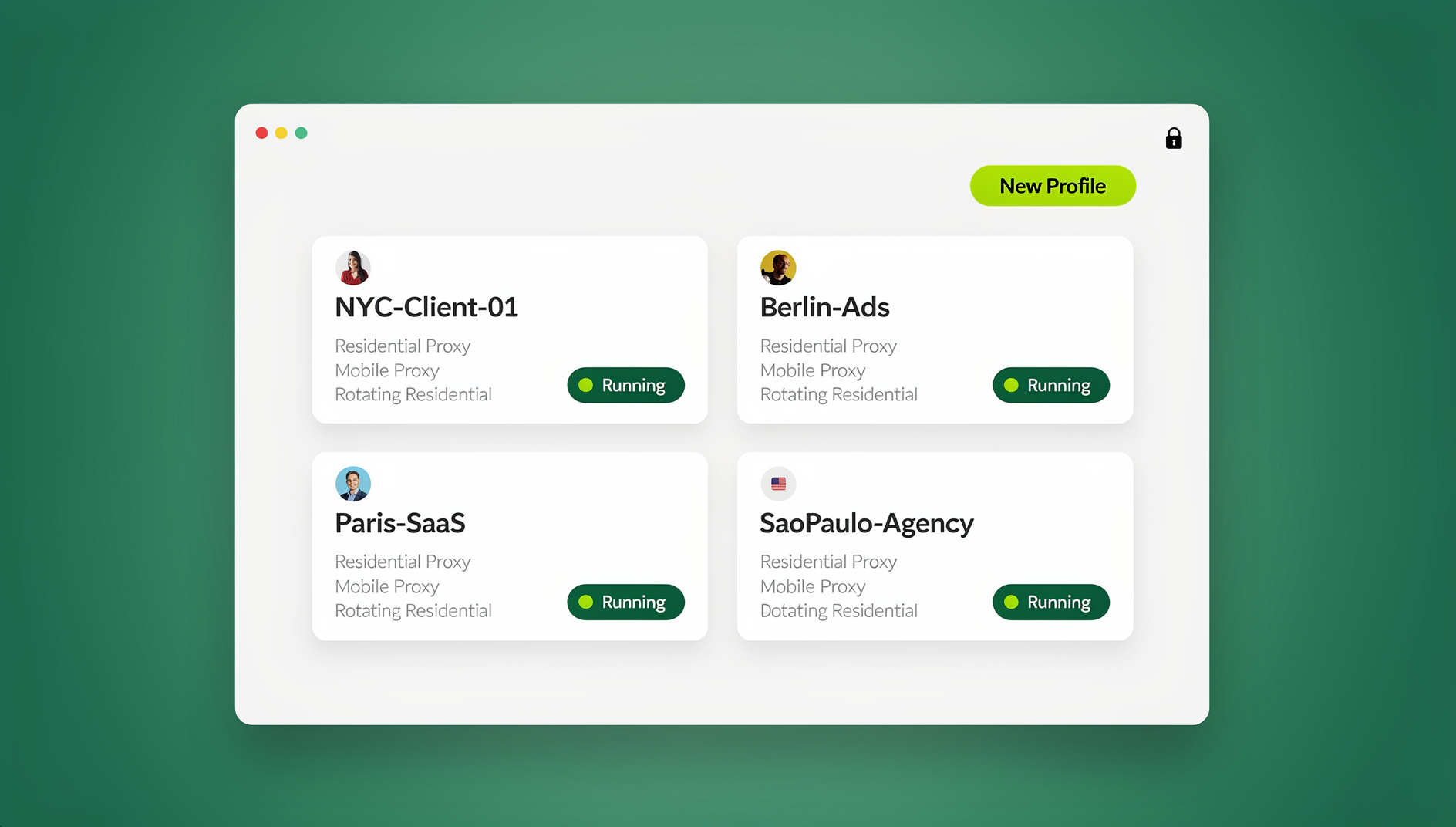
For digital marketers, e-commerce sellers, and social media managers, managing multiple accounts is a key part of their business. However, major websites use sophisticated fingerprinting algorithms to track and link profiles. If you log into multiple seller or ad accounts from the same device, platforms like Amazon, Google, or Facebook will quickly detect the shared hardware attributes, cookies, and network patterns. This leads to immediate, site-wide account restrictions and bans. To scale your business, you need a solution that separates your digital profiles at a fundamental hardware level.
To run multiple accounts safely, you must deploy an antidetect system that creates isolated digital identities. In this guide, we will analyze how these systems modify hardware parameters, review the popular AdsPower platform, and compare it with modern cloud-based alternatives like Send.win. By isolating your profiles, you can bypass detection blocks and manage your business without security risks.
What Is an Antidetect Browser and How Does It Prevent Fingerprinting?
An antidetect browser is a specialized application that allows users to create multiple isolated browser profiles, each presenting a unique digital fingerprint to the websites they visit. Unlike standard browsers that broadcast your real hardware configuration, an antidetect browser intercepts fingerprinting queries. It returns custom values for system parameters, making each profile appear as an entirely different physical device located in a different geographic region. This stops websites from seeing that the same user is connecting from the same computer.
By mimicking unique parameters, these tools prevent web platforms from linking your profiles. They create a secure partition between your accounts, ensuring that a suspension on one profile does not affect your other operations. This is essential for scaling digital marketing, managing multiple client stores, and maintaining online privacy. The browser acts as a virtualization shell, masking all hardware identifiers from trackers. For a broad look at online security protocols, check out our guide on browsing protection.
Understanding Browser Fingerprints: Canvas, WebGL, WebRTC, and OS Identifiers
Modern website tracking goes far beyond tracking cookies and IP addresses. Platforms compile a unique identifier called a browser fingerprint by gathering detailed system parameters. These parameters include:
- Canvas Fingerprinting: Websites draw hidden graphics on a webpage and analyze how your graphics card and drivers render the image. Because every GPU renders shapes slightly differently, this creates a unique hardware signature.
- WebGL Fingerprinting: This query extracts detailed information about your graphics processor, including the GPU brand, model, driver version, and WebGL rendering capabilities.
- WebRTC Handling: Web Real-Time Communication (WebRTC) is used for video and audio streaming, but it can leak your real local and public IP addresses, even when routing traffic through a VPN. Antidetect systems must disable WebRTC or substitute the proxy’s IP address.
- System Identifiers: This includes your operating system version, system language, internal timezone, installed fonts, CPU cores, device memory, and screen resolution.
An antidetect browser manages these queries by replacing your real system data with custom values. For example, if a website queries your canvas rendering, the browser adds subtle noise to the image, generating a unique signature for that specific profile without revealing your actual hardware. This ensures that every profile has an entirely different hardware footprint. For network routing instructions, see our proxy browser setup guide.
The Architecture of Multi-Account Protection: Why Traditional Isolation Fails
Many users attempt to manage multiple profiles using standard browser features, such as Chrome profiles or Firefox multi-account containers. While these features separate cookies and local storage, they do not modify your hardware configurations. All your profiles still share the same canvas rendering, GPU signature, screen resolution, and operating system attributes. This means that a website’s server can easily link all profiles back to the same physical machine.
If you connect all your profiles through the same local network, they will also share the same public IP address. Modern bot-detection algorithms easily link these identical parameters. When one account is flagged, the platform’s algorithm runs a query for matching fingerprints and IPs, leading to the immediate restriction of all linked accounts. True multi-account safety requires both complete cookie isolation and deep fingerprint customization. To understand the security mechanics behind this level of isolation, read about browser isolation technology.
AdsPower Antidetect Browser: Deep Dive, Strengths, and Limitations
AdsPower is a popular, desktop-based multi-account browser designed primarily for e-commerce sellers and digital marketers. It allows users to run multiple profiles, each with its own isolated fingerprint and proxy settings. Below is a detailed look at its core features, strengths, and weaknesses.
Dual Engine Architecture
AdsPower offers two browser engines: Sun Browser, which is based on Chromium, and Flower Browser, which is based on Firefox. This dual-engine approach gives users flexibility. Sun Browser is ideal for standard e-commerce and social media management because it matches the browser type used by the vast majority of web users. Flower Browser is useful for privacy scenarios and accessing websites that actively block Chromium-based antidetect tools. Having two engines provides a backup if one engine is flagged by website detectors.
RPA Robot and Synchronizer Features
AdsPower is known for its Robotic Process Automation (RPA) builder. This no-code system allows users to automate repetitive tasks, such as creating profiles, warming up accounts, posting content, and extracting data. Additionally, its Synchronizer feature allows users to control multiple profiles simultaneously. Actions performed in a master window are mirrored in real-time across all other open profiles, which is useful for setting up identical campaigns or updating account details. This automation can save hours of manual data entry.
AdsPower Strengths and Weaknesses
AdsPower’s primary strength is its entry-level pricing, starting at $5.40/month for a basic plan, and a free tier that supports five profiles. The platform also has a large user community and a built-in RPA template marketplace. This makes it a popular starting point for budget-conscious sellers.
However, the platform has several weaknesses. It requires you to download and install a heavy desktop application (400MB+), and running multiple profiles locally consumes massive amounts of local computer resources (500MB to 1GB of RAM per open tab). Furthermore, proxies are not included in the plans, forcing you to purchase residential proxies separately. Because it is a local desktop client, your profiles are tied to the specific computer where the software is installed, preventing cross-device access. This limits collaboration and mobility.
Send.win: The Modern Cloud-Based Alternative for Profile Management
For users who want to avoid the high resource usage and setup complexity of desktop apps, Send.win offers a modern, cloud-based alternative. Send.win supports both the Sendwin Browser (a native desktop app) and cloud browser sessions. By running profiles inside secure cloud containers, Send.win eliminates the need for local installations and heavy resource consumption. This shifts all rendering and execution off your hardware and into secure server environments.
Send.win stands out with its secure session sharing features. It allows team members to share access to profiles with a single click, without ever exposing passwords or account credentials. The pricing is highly competitive: a 30-day free trial is available to test all features with no credit card required. The Pro plan costs $19/month ($6.99/month on the annual plan) and includes 150 profiles, 5GB of proxy bandwidth, and the local Automation API. The Team plan costs $49/month ($20.99/month on the annual plan) and provides 500 profiles, 20GB of proxy bandwidth, the local Automation API, and 16 team seats. The local Automation API is available on both the Pro and Team plans, providing great flexibility for developers using Puppeteer, Playwright, or Selenium. Since the API is local, it allows you to automate profiles directly from your workspace scripts.
Detailed Comparison: AdsPower (Desktop) vs. Send.win (Cloud)
When choosing between AdsPower and Send.win, it is vital to analyze how each platform handles deployment, resource management, and team access. Below is a detailed comparison:
| Comparison Factor | AdsPower (Desktop Client) | Send.win (Cloud Browser Sessions) |
|---|---|---|
| Software Installation | Heavy desktop download required (400MB+) | None — runs instantly in your web tab |
| Local Resource Usage | High (500MB-1GB RAM per open profile) | Zero (all execution happens in the cloud) |
| Built-in Proxies | No — must purchase and configure separately | Yes — proxy bandwidth included in plans |
| Cross-Device Access | No — profiles are locked to the local device | Yes — access your profiles from any device |
| Password-Free Sharing | No — requires credential sharing for teams | Yes — share profile access with one click |
| Local Automation API | Only available on expensive Pro plans | Available on both Pro and Team plans |
| Data Backup | Manual or local file sync options | Automatic, real-time cloud backups |
Step-by-Step Setup Guide for Safe Multi-Account Browsing
Setting up your multi-account system correctly is essential to avoid account suspensions. Follow these steps to configure your profiles:
- Register your account: Sign up at send.win to access your control panel. You can start with a 30-day free trial with no credit card required.
- Create a new browser profile: Click “Create Profile” to start a new sandbox. Select your preferred operating system and browser client configuration.
- Configure proxy settings: Add a dedicated residential proxy to the profile. Residential proxies mimic standard home internet connections, which are highly trusted by web platforms.
- Verify fingerprint metrics: Open the profile and visit verification websites like browserleaks.com or pixelscan.net. Ensure that your WebRTC does not leak your real IP and that your GPU signature is successfully modified.
- Log into your account: Navigate to your target website (such as Facebook, eBay, or Amazon) and log into your account. The session will automatically save your cookies and login state.
- Share access (optional): If working with team members, use the share settings to grant access to the profile. Colleagues can open the session in their browser with a single click, without needing your passwords.
Best Practices for Profile Integrity: Proxies, Cookies, and Timezones
To maintain long-term account safety, you must keep your profiles consistent and avoid common mistakes:
Selecting Residential over Datacenter Proxies
Datacenter proxies are cheap and fast, but they belong to massive server farms. Web platforms easily identify datacenter IP ranges and flag them as automated bots or scrapers. For managing seller or social media accounts, you should always use residential proxies. These IPs belong to actual home internet connections, making them highly trusted. This decreases the risk of triggering captcha requests and account reviews.
Syncing System Time and Language to IP Locations
Ensure that the timezone, geographic coordinates, and system language in your profile settings match the location of your proxy IP. If your proxy is located in Munich, Germany, but your profile’s clock is set to Pacific Standard Time, web platforms will immediately detect this inconsistency and flag your account. Keeping these parameters aligned is essential for passing deep fingerprint checks.
Profile Warm-up and Slow Activity Scaling
When you create a new account, do not immediately launch high-volume advertising campaigns or list dozens of products. This sudden spike in activity triggers security alarms. Instead, warm up the profile by browsing popular websites, searching on Google, and visiting news portals for a few days to build cookie history. Gradually scale your activities over several weeks. This slow growth makes the profile look like a genuine organic user.
🏆 Send.win Verdict
Managing multiple accounts securely requires complete profile isolation and deep fingerprint customization. While desktop antidetect browsers like AdsPower are popular, they require heavy software downloads and consume significant local system resources. Send.win offers a modern, cloud-based alternative that runs profiles inside remote containers, providing built-in proxy support and secure, password-free team sharing.
Try Send.win free today — start your 30-day trial with no credit card and secure your multi-account workflow.
Frequently Asked Questions
What is an antidetect browser?
An antidetect browser is a specialized application that allows you to run multiple browser profiles, each with its own isolated cookie storage, cache, and custom hardware fingerprint. This makes each profile appear as an entirely different physical device to the websites you visit, preventing them from linking your accounts.
Is it safe to use an antidetect browser for multi-account management?
Yes. Antidetect tools are legitimate applications used by privacy advocates, security teams, and digital marketers. However, to maintain account safety, you must pair them with high-quality residential proxies and follow strict operational practices to prevent account linking.
How does AdsPower compare to Multilogin?
AdsPower offers more entry-level pricing starting at $5.40/month, a free tier for five profiles, and a built-in RPA automation builder. Multilogin is a more expensive, enterprise-focused tool starting at $99/month. Both platforms offer dual browser engines (Sun Browser and Flower Browser for AdsPower, Mimic and Stealthfox for Multilogin).
Does AdsPower include built-in proxies?
No. AdsPower does not include proxies in its subscription plans; you must purchase and configure proxies separately. Cloud-based alternatives like Send.win include proxy bandwidth directly in their paid plans, providing a simpler, all-in-one setup.
Can I run an antidetect browser on a mobile device?
AdsPower is a heavy desktop application and is not fully compatible with mobile operating systems. However, cloud-based solutions like Send.win stream your browser profiles from remote servers, which means you can access and manage your sessions through any web browser on smartphones or tablets.
How many browser profiles can I open simultaneously?
For desktop applications like AdsPower, this depends on your local computer’s hardware. Since each profile runs a separate browser instance that consumes 500MB to 1GB of RAM, a standard 16GB RAM machine can comfortably run about 10-15 profiles. Cloud-based sessions do not consume your local hardware resources.
Is an antidetect browser suitable for beginners?
Desktop antidetect browsers can be complex because of their numerous technical fingerprint settings and proxy configurations. Cloud-based platforms like Send.win offer a gentler onboarding experience, as they automate the creation of secure fingerprints and include built-in proxy configurations.
Related Products & Resources
- To learn how to protect your web activities from tracking, see our browsing protection guide.
- For a step-by-step tutorial on routing profiles, check out our guide on proxy browser setup.
- To understand the underlying security technologies, read our guide on browser isolation technology.