Introduction to Multi-Account Security
This comprehensive antidetect browser privacy multi account guide 2026 8 reveals how to run hundreds of isolated profiles safely using advanced digital fingerprint masking and premium proxies. By isolating each profile’s cookies, local storage, canvas, and WebGL footprints, you can run multiple e-commerce, advertising, or social media accounts without getting linked or banned. We compare top virtual browsing clients and demonstrate how cloud-based sessions provide ultimate isolation.
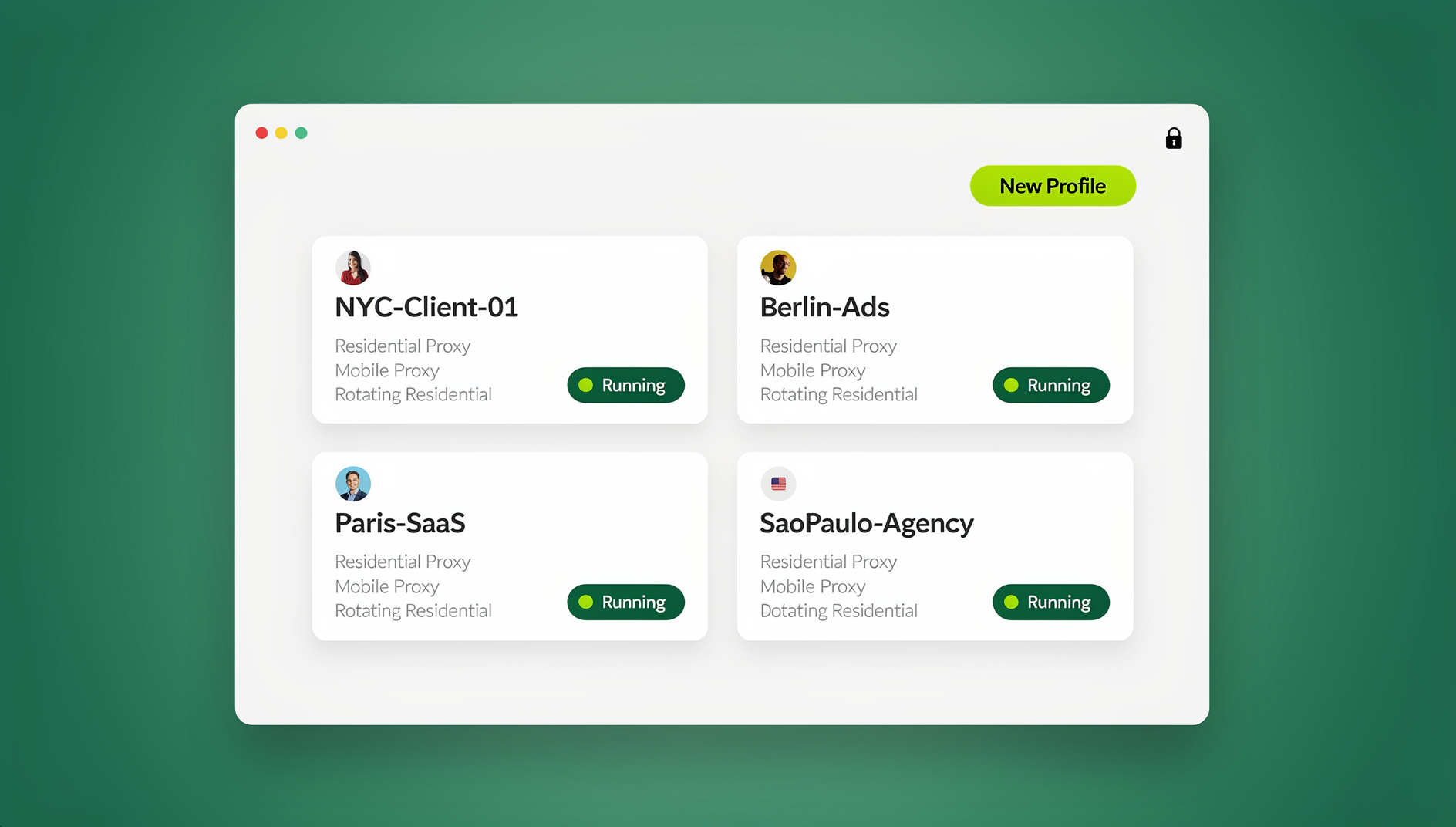
The Core Pillars of Browser Profile Privacy
In the modern digital landscape, web services employ incredibly sophisticated detection systems to identify and link multiple accounts controlled by a single operator. To maintain privacy, you must understand the underlying parameters that these tracking algorithms monitor. Traditional web protection mechanisms, like clearing cookies or using incognito mode, are entirely insufficient because they do not alter the fundamental configuration of your web client. For a deeper understanding of how modern networks verify user credentials, check out our comprehensive guide on browsing protection.
A secure multi-account strategy rests on three key pillars: identity isolation, network diversity, and behavioral consistency. Identity isolation requires that every profile operates with a completely distinct set of cookies, cache, local storage, and database files. If any of these elements cross-contaminate between profiles, the accounts will be linked instantly. Network diversity ensures that each profile routes its traffic through a separate IP address, preventing the target platform from associating the accounts with the same physical network location.
Behavioral consistency means that each profile behaves like a distinct human operator. Anti-fraud systems analyze typing speeds, mouse movement patterns, and browsing schedules to identify automated operations or coordinated account activity. By combining isolated web engines with dedicated network routing, you create a virtual buffer that protects your business from automated restrictions and security checkpoints.
Understanding Fingerprint Vectors: Canvas, WebGL, and Beyond
Modern tracking scripts gather hundreds of data points to build a unique identifier for your device, known as a browser fingerprint. Unlike cookies, which you can delete, a browser fingerprint is derived from your system’s hardware configuration and software settings, making it much harder to change or mask. To operate multiple accounts safely, you must utilize a tool that can dynamically spoof these fingerprint vectors on a per-profile basis.
One of the primary fingerprinting vectors is Canvas fingerprinting, which forces the browser to render a hidden image using the system’s graphic card. Because different graphics cards, drivers, and operating systems render fonts and pixels slightly differently, the resulting image hash is highly unique. By randomizing or masking the canvas rendering process, you can prevent websites from tracking your device across different sessions.
Other critical vectors include WebGL vendor and renderer strings, AudioContext audio rendering signatures, screen resolution parameters, hardware concurrency (CPU core count), device memory configurations, and system font lists. When these parameters are queried by a script, an antidetect tool must respond with realistic, consistent values that match the claimed user-agent. Discrepancies between the user-agent and the underlying hardware parameters will immediately flag the profile as suspicious.
Furthermore, WebRTC IP leaks represent a massive security vulnerability. WebRTC is designed for real-time communication but can bypass standard proxy configurations to reveal your true local and public IP addresses. A robust privacy client must block or spoof WebRTC queries, ensuring that your real network connection is never exposed to the target server.
Why Multi-Account Architecture Needs Modern Isolation
Many users assume they can manage multiple profiles using standard browser profiles, such as those in Google Chrome or Brave. While this approach separates cookies and local storage, it does not mask your system’s hardware fingerprint or separate your network traffic. All Chrome profiles share the same graphics card, system font list, and internet connection. As a result, anti-fraud algorithms can easily link all your accounts back to the same physical machine.
To run multiple accounts successfully, you need an architecture that isolates the browsing environment at a deeper level. This is achieved by running isolated browser engines, each operating inside a virtual container. Each container has its own virtual hardware parameters, making it look like a completely different device. This level of isolation prevents websites from correlating your accounts, ensuring that a security issue on one profile does not affect the others.
Furthermore, this isolated architecture protects your local system from potential web-based threats. Because each session runs in its own sandboxed container, malicious scripts or downloads cannot escape the profile to infect your host machine. This sandboxed design is essential for security-focused teams who handle sensitive client data or manage high-value advertising campaigns.
Selecting the Ideal Proxy Strategy for Anti-Fraud Evasion
No antidetect strategy is complete without high-quality proxy routing. While the browser client manages the software and hardware fingerprints, the proxy manages your digital location. If you log in to multiple accounts from the same IP address, they will be linked immediately, regardless of how clean your browser fingerprints are. To route each browser profile through its own distinct residential or mobile IP address, you will need a reliable proxy browser setup.
There are three main types of proxies: datacenter, residential, and mobile. Datacenter proxies are cheap and fast but are hosted in commercial data centers. Websites easily identify these IPs and flag them as potential bots or scrapers, making them unsuitable for managing high-value accounts on sensitive platforms. Residential proxies are routed through real home internet connections, giving them a much higher trust score.
Mobile proxies route traffic through cellular towers and are the most trusted option. Because mobile carrier IPs are shared by thousands of real users, websites cannot easily block them without blocking legitimate customers. When configuring proxies, you must ensure that the profile’s timezone, language, and WebGL parameters automatically align with the proxy’s geographic location. This consistency is critical for passing advanced anti-fraud checks.
Send.win: The Premium Client for Multi-Account Protection
If you are looking for a reliable, cost-effective solution to manage multiple profiles, Send.win offers a powerful platform designed for individuals and teams alike. Unlike traditional tools that require complex configurations, Send.win simplifies the process while maintaining enterprise-grade security. This advanced containment is achieved using cutting-edge browser isolation technology, which isolates execution from the underlying hardware.
Send.win operates in two distinct modes to match your operational needs:
- Sendwin Browser (the desktop app): A native desktop application for Windows, macOS, and Linux that runs isolated profiles locally on your computer. It provides maximum speed, low latency, and direct integration with your local files and workflows.
- Cloud browser sessions: Virtual browser profiles that run entirely on Send.win’s remote servers. These sessions require no installation and can be accessed from any device with a standard web browser, making them perfect for remote teams and portable access.
Send.win’s pricing is highly competitive and designed to fit any budget, with the Pro plan at $19/mo (or $83.88/yr) and the Team plan at $49/mo (or $251.88/yr). The first card purchase is covered by a 7-day money-back guarantee, and the only free option is the cloud demo at send.win/demo-browser. The Pro plan supports up to 150 profiles and 5GB of proxy bandwidth. For larger teams, the Team plan includes up to 500 profiles, 20GB of proxy bandwidth, and 16 user seats, enabling seamless collaboration without sharing raw passwords.
Operational Best Practices for Scaling Profiles Safely
To ensure long-term success when managing multiple accounts, you must follow strict operational guidelines. Anti-fraud systems are constantly evolving, and a single mistake can lead to your entire network of accounts getting flagged. First, always assign a dedicated proxy to each profile and avoid changing the proxy location once an account is established. Sudden shifts in geographic location will trigger security locks.
Second, implement realistic delays and randomized actions when automating browser tasks. If your automated scripts click buttons or type text at identical intervals, websites will quickly identify the activity as bot-driven. Keep your automated interactions as human-like as possible. Third, never share session cookies or login credentials between different profiles, and ensure your team members use Send.win’s built-in sharing features rather than copy-pasting sensitive session data.
Finally, perform regular audits of your profile settings to ensure that WebRTC, WebGL, and canvas parameters remain consistent with your proxy IP address. By combining these operational best practices with a professional virtual browsing client, you can build a highly resilient, scalable workspace that protects your business assets from sudden bans and detection.
Moreover, establishing a regular schedule for profile updates is a critical component of security. The underlying browser engines must be updated to match the latest stable release of major consumer browsers. Outdated browser engines will raise flags when they attempt to access modern platforms, as normal users rarely run older browser versions. Send.win automatically manages these browser engine upgrades, ensuring that your profiles are always running on current, trusted builds without requiring manual maintenance from your team.
Another common mistake is logging into multiple profiles in the same chronological window without clearing local network DNS caches. While the profiles themselves are fully containerized, a shared local router can leak DNS lookup requests that connect your activities. Utilizing SOCKS5 proxies configured to resolve DNS queries remotely within each profile solves this security risk, guaranteeing that no local network footprint links your active sessions.
Step-by-Step Setup Guide for Your Sandboxed Workspace
Setting up your secure multi-account environment with Send.win is straightforward and takes only a few minutes. Follow this workflow to create and launch your first isolated profile:
- Create your Send.win Account: Go to the official site and sign up for a paid plan, covered by a 7-day money-back guarantee on your first card purchase.
- Download Sendwin Browser: Download and install the desktop app matching your operating system (Windows, macOS, or Linux). If you prefer, you can skip the install and use cloud browser sessions directly in your default web browser.
- Create a New Profile: Click the “New Profile” button in your dashboard. Give it a clear, descriptive name to organize your workspace.
- Configure Fingerprint Settings: The application will automatically generate a clean, consistent browser fingerprint based on realistic hardware configurations. You can manually adjust the user-agent, memory, and CPU core counts if needed.
- Add Your Proxy: Enter your proxy credentials in the network configuration section. Verify the connection to ensure that the timezone and geolocation automatically align with your new IP.
- Launch and Log In: Click the “Start” button to open the isolated window. You can now safely log in to your target accounts, knowing your digital fingerprint and network location are fully protected.
By building a systematic library of independent, containerized profiles, you can scale your operations safely across any online marketplace, social network, or advertising platform. This method represents the gold standard for maintaining digital privacy and managing multiple assets securely in 2026.
🏆 Send.win Verdict
Managing multiple accounts using traditional browser profiles leads to inevitable flags, linked profiles, and operational shutdowns. By utilizing this browser profile manager privacy multi account guide 2026 8, you can deploy isolated profiles that present unique, realistic fingerprints and IPs to target websites. Send.win delivers this security seamlessly with both a local desktop client and cloud browser sessions.
Try Send.win today — Start with a paid plan covered by a 7-day money-back guarantee, or preview the cloud demo, to safely scale your multi-account operations.
Frequently Asked Questions
What is an antidetect browser and how does it work?
An antidetect browser is a specialized web client that lets users run multiple isolated browser profiles, each with its own unique digital fingerprint. It works by spoofing hardware and software parameters, such as canvas hashes, WebGL vendor details, screen resolution, and user-agents, making each profile appear as a completely different physical device to target websites.
Can websites detect when I am using multiple accounts?
Yes, websites use advanced tracking scripts to scan your device’s browser fingerprint and network IP. If they detect multiple accounts logging in from the same hardware configuration or IP, they will link the accounts and restrict them. Using an antidetect browser ensures that each profile runs in a separate sandbox with unique parameters, preventing websites from linking the accounts.
What is the difference between a proxy and an antidetect browser?
A proxy changes your network location by routing your internet traffic through a different IP address. An antidetect browser changes your device’s hardware parameters and stores separate cookies and cache. To successfully run multiple accounts, you must combine both technologies: the browser client hides your device identity, while the proxy hides your network location.
Is it safe to use free antidetect browsers?
Free antidetect tools often lack the development resources needed to keep up with modern anti-fraud systems, leading to fingerprint leaks and eventual account bans. Some untrusted tools may also contain malware. It is much safer to use a professional service like Send.win, which offers a 7-day money-back guarantee on your first card purchase and highly secure, regular updates to ensure continuous protection.
Does Send.win support local automation scripts?
No, Send.win does not offer an Automation API, SDK, headless mode or Selenium/Puppeteer/Playwright support on any plan. The Pro plan ($19/month, or $83.88/year) and the Team plan ($49/month, or $251.88/year) focus on isolated browser profiles with their own cookies, storage, sessions and fingerprint settings.
How does Sendwin Browser prevent local hardware leaks?
The native Sendwin Browser client gives each profile its own consistent browser fingerprint, so profiles do not share one browser identity. Each profile keeps its own cookies, storage and fingerprint settings, assigned specifically to that profile container.
Can I run isolated profiles on mobile devices?
Yes, by using Send.win’s cloud browser sessions, you can run isolated profiles on mobile phones or tablets. Because these sessions execute entirely on remote cloud servers, no installation is required, allowing you to access and manage your secure profiles from any device with internet access.
Following this antidetect browser privacy multi account guide 2026 8 will give you a major advantage in maintaining your digital privacy and scaling your business operations. By choosing Send.win, you get access to enterprise-grade profile isolation, native desktop clients, and cloud browsing sessions, enabling you to operate securely and efficiently across all your target web platforms.