Strategic Governance for Multi-Account AWS Environments
Simplifying aws multiple accounts management requires a robust combination of AWS Organizations for structural isolation, IAM Identity Center for centralized access control, and a secure desktop client like Sendwin Browser to isolate administrative browser sessions. By separating development, staging, and production environments into distinct accounts under a unified billing framework, organizations can minimize security blast radiuses, allocate cloud costs accurately, and maintain compliance standards across their entire infrastructure.
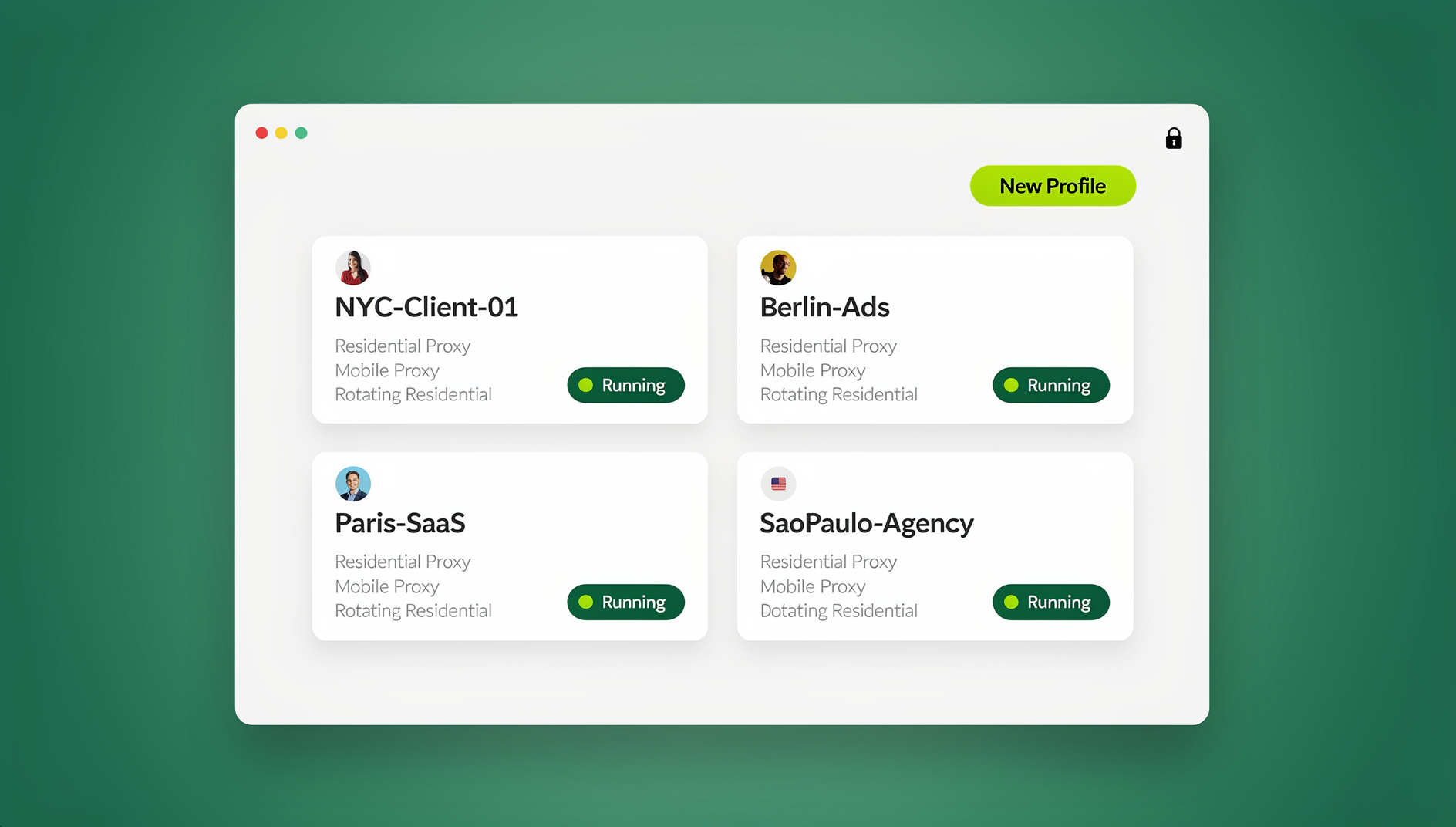
As organizations scale their cloud presence, relying on a single AWS account introduces significant operational and security risks. In a single-account setup, a developer making a minor configuration error in a sandbox environment can accidentally modify a production database. Additionally, managing service quotas and detailed cost allocation becomes increasingly difficult. Isolating business workloads into multiple AWS accounts is a critical best practice that provides natural barriers, protecting your production infrastructure from development errors and external threats.
The Strategic Architecture of Multiple AWS Accounts
Designing a multi-account AWS environment involves defining clear boundaries for different departments, projects, and lifecycles. Security experts recommend establishing distinct accounts for core organizational functions. This setup typically includes a root management account, a shared security account for centralized logging, an infrastructure account for shared networking services, and individual application accounts separated by environment stages (such as development, staging, and production).
This architecture matches the isolation protocols used in other industries. For instance, this security level is comparable to managing multiple Amazon accounts, where merchants must separate store environments to prevent policy flags from affecting their entire catalog. In the cloud, account separation ensures that service limits, security vulnerabilities, and network access policies are restricted to a single environment. This boundaries protect the integrity of your overall cloud infrastructure.
Additionally, dividing workloads into multiple accounts simplifies regulatory compliance. If your application handles payment card data (PCI DSS) or health information (HIPAA), you can isolate those components in a dedicated, highly restricted account. This approach keeps your non-sensitive services out of the audit scope, reducing compliance costs and simplifying the audit process.
Core Organizational Units (OUs) Recommendations
To implement a scalable architecture, AWS recommends using Organizational Units (OUs) inside AWS Organizations. OUs allow you to group accounts that share similar operational or regulatory requirements. A common best practice is to separate your OUs into two main categories: Foundational and Workloads.
Foundational OUs contain accounts dedicated to security (such as Log Archive and Security Tooling) and infrastructure (such as shared networking and shared services). Workloads OUs, on the other hand, contain the actual business application accounts. You should further divide your Workloads OUs into Production and Non-Production (SDLC) OUs to apply strict Service Control Policies (SCPs) on production resources while allowing developers more freedom in non-production environments.
Common Pitfalls in AWS Multiple Accounts Management
While a multi-account strategy improves security and cost control, it introduces management complexity. The first major challenge is administrative console navigation. Systems administrators must constantly switch between accounts to check resource status or adjust configurations. If this process is managed poorly, administrators may lose track of which account they are working in, potentially making changes in production that were intended for a staging environment.
The second challenge is credential sprawl. When administrators manage multiple sets of credentials or IAM access keys, the risk of credential leakage increases. Developers might store access keys in local files or accidentally commit them to public code repositories. Without a centralized identity system, monitoring who has access to which resources across dozens of accounts becomes a significant security vulnerability.
Finally, maintaining consistent security policies is difficult. As new accounts are created, ensuring that they conform to security baselines—such as having CloudTrail enabled and public S3 buckets blocked—requires automated auditing. Without proper governance tools, individual accounts can easily drift from organizational compliance standards, creating security gaps.
Central Governance with AWS Organizations and OUs
AWS Organizations is the foundation of multi-account governance. It allows you to group accounts into hierarchical structures called Organizational Units (OUs). Each OU represents a specific department, application group, or environment type. You can apply policies to these OUs, automatically configuring security baselines and administrative rules for all child accounts within that OU.
The primary mechanism for enforcing these guardrails is the Service Control Policy (SCP). SCPs allow you to define maximum permissions for member accounts. For example, you can write an SCP that prevents any user—including the root user—from disabling CloudTrail, deleting audit logs, or launching unauthorized EC2 instances. SCPs do not grant permissions; instead, they establish a security ceiling that member account administrators cannot exceed, ensuring consistent security guardrails across your organization.
AWS Organizations also enables consolidated billing. All charges from member accounts are rolled up into a single monthly invoice sent to the management account. This allows you to track overall spending easily, and it enables volume discounts across all accounts. For example, AWS aggregates the usage of services like S3 and EC2 across all accounts to calculate tiered pricing discounts, reducing your overall cloud costs.
AWS Single Sign-On and Access Control Best Practices
To eliminate credential sprawl, organizations should deploy AWS IAM Identity Center (formerly AWS Single Sign-On). This service centralizes identity management, allowing you to connect your existing corporate directory (such as Active Directory or Okta) to AWS. Users log in once using their corporate credentials and are presented with a portal listing all AWS accounts and roles they are authorized to access.
While a basic Chrome multi account setup works for light tasks, it lacks the centralized security controls required for enterprise cloud management. In contrast, IAM Identity Center generates short-lived, temporary session credentials that expire automatically, eliminating the need to store long-term access keys on local machines. This significantly reduces the risk of credential exposure during security incidents.
Furthermore, managing access across multiple environments requires a dedicated cookie management tool to keep sessions separate. If a cloud administrator is logged into a production account and a development account in the same browser, a cookie overlap or simple copy-paste error can result in executing commands in the wrong environment. Separating these sessions at the browser level is a critical operational safety practice.
SCPs vs IAM Policies: Understanding the Boundaries
It is important to understand the operational difference between Service Control Policies (SCPs) and Identity and Access Management (IAM) policies. IAM policies are applied to users, groups, or roles within an account, defining what actions those entities can perform. In contrast, SCPs are applied at the organization level, defining the maximum boundaries for the entire account.
Even if an IAM policy grants a user administrator access, an SCP that denies access to a specific service (such as Amazon Redshift) will override the IAM policy. This separation of duties ensures that local account administrators cannot bypass the global security baselines set by the central security team, providing a critical layer of defense-in-depth across your cloud infrastructure.
Enhancing AWS Console Security via Session Isolation
Browser-level isolation is a critical but often overlooked aspect of cloud administration. When you log into the AWS Management Console, the browser stores session cookies and local cache data. If you use the same browser profile to access other websites, a malicious script or malicious add-on could attempt to hijack your active AWS sessions or extract sensitive console tokens.
Similar to using a specialized browser for ads management to isolate client accounts and prevent fingerprint linking, cloud engineers should use isolated browser sessions for AWS console access. Sendwin Browser provides sandboxed sessions for each AWS account. This ensures that session cookies, storage, and fingerprint parameters are completely isolated. A vulnerability in one tab cannot access resources in another, protecting your cloud environments.
Additionally, Sendwin Browser supports cloud browser sessions. This feature allows administrators to access the AWS console from isolated cloud-hosted containers. Because the actual browser runs in the cloud, no session data or cookies are stored on the administrator’s local machine, preventing session hijacking if the local device is compromised or stolen. This provides an additional layer of security for enterprise operations.
Consolidated Billing and Cost Allocation Strategies
Consolidated billing provides a unified view of your organization’s cloud spending, but it requires structured cost allocation to remain effective. AWS Cost Explorer allows you to filter and group costs by linked account, department, or project. By assigning cost allocation tags to resources, you can trace expenditures back to specific business units, simplifying chargeback calculations.
To prevent budget overruns, organizations should configure AWS Budgets at the organization level. You can set custom spending limits for individual OUs or member accounts and receive alerts when costs exceed defined thresholds. These alerts can trigger automated actions, such as shutting down sandbox resources or notifying developers via email, helping you manage cloud costs effectively.
Consolidated billing also simplifies the management of Reserved Instances (RIs) and Savings Plans. You can purchase these discount options in the management account, and AWS will automatically apply them to matching resource usage in any member account. This optimization maximizes your discount coverage, ensuring you receive the lowest possible pricing without requiring individual teams to manage complex purchasing lifecycles.
Implementing Automated Cost Guardrails and Alerts
To avoid unexpected charges (commonly referred to as cloud bill shock), organizations should enforce automated guardrails. You can configure SCPs that block the creation of expensive, high-tier resource classes (such as GPU-based EC2 instances) in sandbox accounts. In addition, you should deploy automated cleanup scripts—such as AWS Instance Scheduler—to turn off development resources during non-business hours.
By implementing these automated controls alongside your multi-account billing dashboard, you create an environment where developers can innovate safely without risking massive budget overruns. Every team operates within a defined sandbox, giving you complete visibility and control over cloud consumption.
Implementation Roadmap for AWS Account Governance
Transitioning to a structured multi-account AWS environment should follow a phased roadmap. First, establish your core organizational structure. Create your root management account and configure AWS Organizations. Next, deploy AWS Control Tower. Control Tower automates the setup of a secure landing zone, automatically configuring OUs, SCPs, and centralized logging accounts according to AWS best practices.
Second, integrate IAM Identity Center and configure role-based access. Set up permission sets for developers, administrators, and auditors, ensuring that each role follows the principle of least privilege. Third, establish an account factory. This allows teams to request and provision new AWS accounts that automatically conform to your organization’s security and compliance baselines.
Finally, implement continuous monitoring. Use AWS Config to audit configuration drift and AWS Security Hub to centralize security alerts across all member accounts. Combined with browser isolation protocols for administrative console access, this roadmap provides a secure, scalable foundation for your organization’s cloud operations.
Feature Matrix: Native AWS Tools vs. Secure Session Tools
This table compares how native AWS management services and secure browser tools address the primary challenges of multi-account operations.
| Challenge | Native AWS Solution | Sendwin Browser Solution | Combined Benefit |
|---|---|---|---|
| Session Separation | Role switching (limited) | Sandboxed browser profiles | Simultaneous secure console access |
| Credential Safety | IAM Identity Center (SSO) | Short-lived session storage | No local credential caching |
| Security Isolation | AWS Organizations OUs & SCPs | Isolated cloud browser sessions | Protection against session hijacking |
| Automation API | AWS SDK / CLI | No | Automated browser testing and tasks |
| Access Control | IAM Policies | Workspace and profile sharing | Secure administrative collaboration |
🏆 Send.win Verdict
Managing multiple AWS accounts requires strict organizational boundaries. While AWS provides the administrative framework, Sendwin Browser secures the human entry point. By isolating your console sessions in secure sandboxes, you eliminate the risk of cross-account errors and session hijacking, safeguarding your cloud operations.
Try Send.win today — Start with a paid plan covered by a 7-day money-back guarantee and experience secure AWS console management via our native desktop client or cloud browser sessions.
Frequently Asked Questions
Why should I use multiple AWS accounts instead of one big account?
Using multiple AWS accounts provides security isolation, limiting the blast radius of a security breach or configuration error. It also simplifies cost allocation, separates staging and production workloads, and prevents individual teams from hitting service quotas.
What is the role of Service Control Policies (SCPs) in AWS Organizations?
Service Control Policies (SCPs) are organizational guardrails that define the maximum permissions for member accounts. They allow you to restrict which AWS services can be run and prevent users from disabling critical security services like CloudTrail.
How does AWS IAM Identity Center solve credential sprawl?
AWS IAM Identity Center centralizes identity management. Users log in once using their corporate credentials and are granted temporary, short-lived session tokens for specific AWS roles. This eliminates the need to distribute and store long-term IAM access keys on local machines.
What is the risk of logging into multiple AWS accounts in the same browser?
Logging into multiple AWS accounts in a standard browser can lead to session confusion, where an administrator accidentally runs commands in a production console thinking it is a staging console. It also exposes sensitive console cookies to cross-site tracking and browser hijacking.
How does Sendwin Browser help AWS cloud administrators?
Sendwin Browser allows administrators to run multiple, completely isolated console sessions simultaneously. Each profile has its own cookie jar, cache, and fingerprint, preventing session bleed and protecting admin credentials from cross-site scripts.
Does Send.win offer cloud-based sessions for AWS console access?
Yes, Send.win offers cloud browser sessions that run in secure, remote containers. Administrators can access the AWS console through their browser without storing any cookies, credentials, or session history on their local device, enhancing remote access security.
What is the difference between Sendwin Browser and a standard proxy manager?
A standard proxy manager only routes network traffic through different IP addresses. Sendwin Browser modifies the browser’s fingerprint (like canvas hash, user-agent, and system fonts) and separates the local cache and cookies, providing complete session isolation.
How does pricing work for Send.win plans?
Send.win offers a Pro plan for $19/month or $83.88/year, and the Team plan is $49/month or $251.88/year and includes team seats. The first card purchase is covered by a 7-day money-back guarantee.