
Finding the best banking apps for multiple accounts 2026 is essential for individuals and businesses looking to streamline their financial management, track budgets, and consolidate diverse account balances. Connecting various checking, savings, and investment accounts to a single platform eliminates manual logins and provides unified net worth tracking. In this guide, we review the top-rated banking and budgeting apps for 2026 and examine how browser isolation keeps your sensitive financial logins secure.
Why You Need Banking Apps to Manage Multiple Accounts
In modern personal and business finance, holding funds in a single bank account is rarely sufficient. Individuals often separate their money into dedicated accounts for daily expenses, emergency funds, tax allocations, and long-term savings goals. For businesses, separating payroll, operational cash, and tax liabilities across multiple checking accounts is standard practice for maintaining cash flow transparency and protecting company reserves. Budgeting across these entities becomes complicated without central visibility, making a consolidating tool incredibly valuable.
However, logging into multiple different banking apps to check balances, monitor transactions, and coordinate budgets is time-consuming and introduces significant friction. Multi-account banking apps address this issue by aggregating all your financial accounts into a single, unified interface. This gives you a real-time overview of your financial health, automates expense categorization, tracks net worth, and helps you make informed financial decisions without logging into separate banking portals. By establishing this clear overview, you gain insights into monthly spending trends and discover areas where you can optimize investments or cut unnecessary costs.
For entrepreneurs running multiple businesses, financial segregation is even more critical. Mixing funds between different LLCs or combining business cash with personal funds can result in the loss of corporate liability protection. Maintaining separate checking and savings accounts for each corporate entity is a legal necessity. Banking aggregation applications allow business owners to keep an eye on the liquidity of each separate business entity without constantly logging in and out of different corporate banking portals, reducing administrative friction.
Detailed Reviews of the Top Banking and Budgeting Apps
Here are the best banking and budgeting tools available in 2026, evaluated based on integration quality, budgeting features, user interface, and overall value:
1. YNAB (You Need A Budget)
YNAB remains the gold standard for individuals who want active control over their finances. The app employs an envelope budgeting philosophy, prompting users to assign a specific purpose to every dollar they receive. Rather than simply tracking historical spending, YNAB forces you to plan future expenses, making it ideal for managing multiple savings goals across separate bank accounts. It helps users break the paycheck-to-paycheck cycle by giving every dollar a job.
- Key Features: Direct bank sync, goal tracking, customizable categories, and multi-device sync.
- Pros: Excellent educational resources, active budgeting methodology, and reliable account syncing.
- Cons: Steep learning curve, no investment tracking, and requires a paid subscription.
- Pricing: $14.99 per month or $99.00 billed annually after a free trial.
2. Monarch Money
Monarch Money has rapidly become the preferred choice for users seeking a modern, ad-free financial planner. The platform is designed for comprehensive wealth tracking, allowing you to connect checking, savings, investments, loans, and real estate assets. Monarch also offers collaborative features, making it the best option for couples who want to manage joint and individual accounts from separate logins without sharing passwords.
- Key Features: Net worth tracking, investment portfolio monitoring, custom categorization, and collaborative budgeting.
- Pros: Ad-free interface, highly customizable dashboard, and robust recurring bill tracking.
- Cons: Expensive compared to basic trackers, and lacks deep hands-on budgeting rules.
- Pricing: $14.99 per month or $99.99 billed annually.
3. Empower (formerly Personal Capital)
Empower is a wealth management platform that offers a powerful, free financial dashboard. It excels at consolidating investment portfolios alongside traditional banking accounts. The dashboard provides detailed fee analyzers, retirement planners, and net worth charts. If your primary goal is tracking long-term net worth and investment performance rather than daily cash flow budgeting, Empower is the top free option, pulling in data from all major brokerages.
- Key Features: Investment checkup, retirement planner, fee analyzer, and net worth dashboard.
- Pros: Free to use, robust investment tools, and clean cash flow tracking charts.
- Cons: Regular sales prompts for Empower’s wealth advisory services, and weak budgeting tools.
- Pricing: Free for the dashboard; custom advisory fees apply if you use their wealth management services.
4. PocketGuard
PocketGuard is designed for simplicity. It connects to your bank accounts, calculates your fixed bills and savings goals, and displays exactly how much spending money you have left “in your pocket” for the day, week, or month. This straightforward approach is perfect for users who want to avoid overspending without managing complex budgeting categories or manual entries.
- Key Features: “In My Pocket” spending indicator, automated bill tracking, and debt payoff planner.
- Pros: Extremely simple interface, automated tracking, and helpful alerts.
- Cons: Limited customization options on the free tier, and lacks advanced wealth tracking.
- Pricing: Free basic version; PocketGuard Plus is available for $7.99 per month or $34.99 per year.
5. Simplifi by Quicken
Simplifi by Quicken provides a highly personalized approach to cash flow tracking. It automatically generates a customized spending plan based on your historical income and fixed expenses. Simplifi handles multiple bank accounts, credit cards, and investments seamlessly, and offers customizable watchlists so you can keep a close eye on specific spending categories, such as dining out or shopping.
- Key Features: Dynamic spending plan, customizable watchlists, direct bank syncing, and goal tracking.
- Pros: Affordable pricing, clean design, and detailed watchlists for budget tracking.
- Cons: No free tier, and some users report occasional sync lag with smaller credit unions.
- Pricing: Billed annually at $47.88 ($3.99 per month equivalent) or monthly at $5.99.
Crucial Features to Evaluate in a Multi-Account Banking App
When comparing different financial apps to manage your accounts, pay close attention to these core parameters:
| Feature | Importance | What to Look For |
|---|---|---|
| Sync Reliability | Critical | Integration with Plaid, Finicity, or Yodlee for stable connections |
| Ad-Free Interface | High | Platforms that charge a subscription fee and do not sell financial products |
| Custom Categories | Medium | Ability to rename categories and set custom rules for transactions |
| MFA Support | Critical | Multi-factor authentication via authenticator apps or security keys |
By evaluating these parameters carefully, you can choose a platform that fits into your lifestyle or business operational requirements. A tool with strong syncing is useless if its interface is constantly cluttered with third-party loan offers, making balance checks a frustrating chore.
Security Risks of Connecting Multiple Bank Accounts
Connecting multiple bank logins to a third-party application consolidates your financial data in one location, introducing potential security risks. Most banking apps use secure data aggregation services like Plaid or Finicity, which establish read-only connections. This means the app can only view your balances and transactions; it cannot move or transfer funds out of your accounts.
However, accessing these bank dashboards and third-party budgeting interfaces from standard web browsers poses risks. Typical browsers store cookies, session tokens, and local cache data. If your local device is compromised, attackers can exploit browser data to access your banking credentials. In addition, standard browsers share your hardware fingerprint across sites, creating a trackable profile. To protect your financial activity, maintaining robust browsing protection is crucial.
Furthermore, standard browser environments do not isolate different financial tabs. If you have your personal bank portal open in one tab and a compromised website open in another tab, cross-site scripting (XSS) or tab-nabbing vulnerabilities could allow attackers to scrape session tokens or capture password entries. To prevent these vulnerabilities, users must look beyond default browser security and implement isolated execution environments.
How Open Banking and PSD2 Regulations Impact App Integration
In 2026, financial data sharing is heavily influenced by Open Banking frameworks and regulations like PSD2. These frameworks mandate that banks provide secure, tokenized API access to authorized third-party apps, replacing the insecure practice of credential screen-scraping. This tokenized approach ensures that your passwords are never shared directly with the budgeting apps, and you can revoke access at any time from your bank’s portal.
However, Open Banking regulations require regular re-authentication, typically every 90 days. This means you will need to re-verify your credentials and solve MFA challenges periodically for each connected account. When managing dozens of accounts across different banks, this re-authentication process can become tedious. Managing these logins inside secure, persistent browser environments ensures you can complete these periodic verifications safely without triggering automated security locks from suspicious IP changes.
Enhancing Financial Security with Browser Isolation
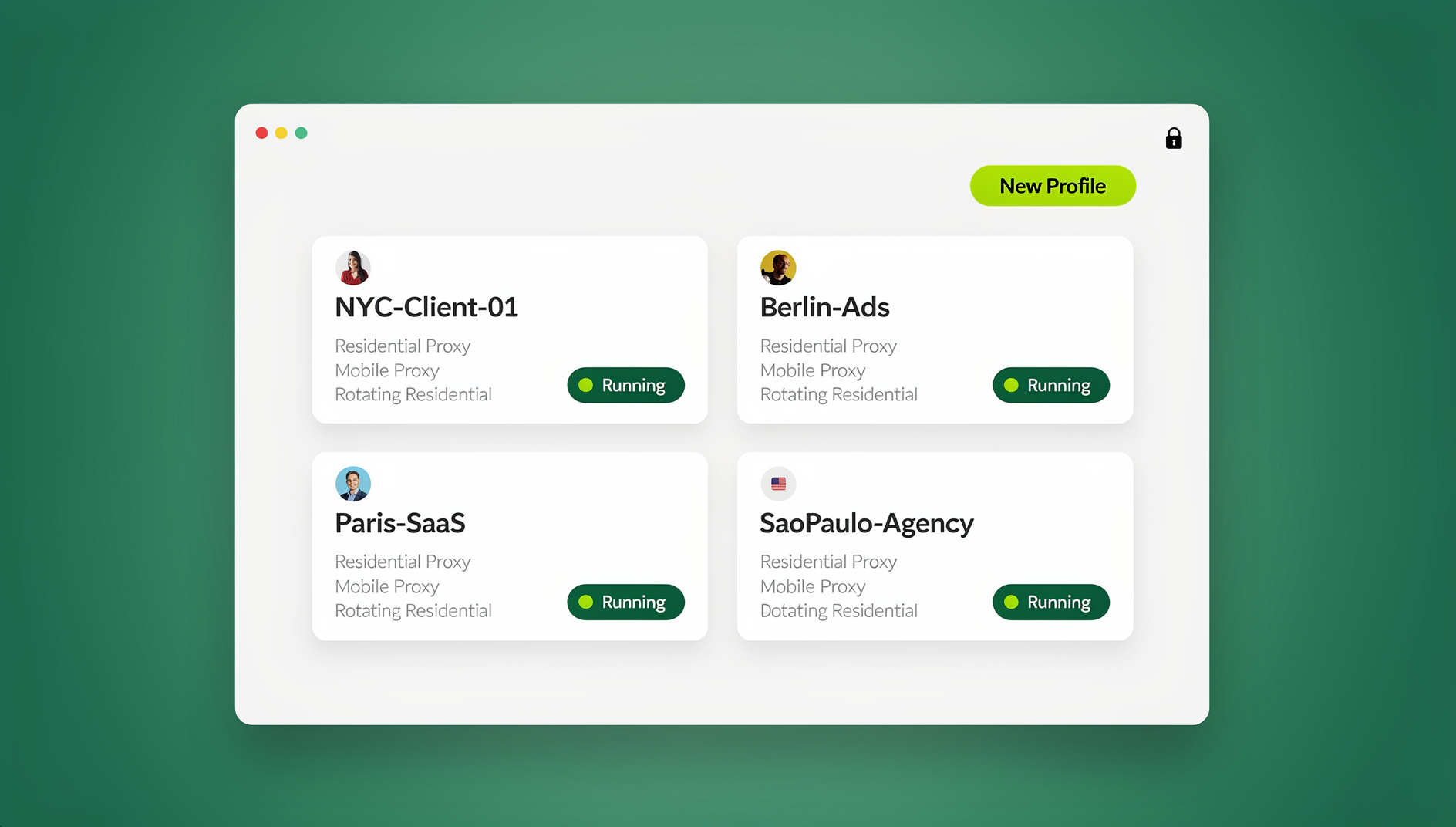
To eliminate security risks, professional users and business owners are turning to browser isolation. Rather than logging into different banks on a single browser, you can establish an isolated environment. Configuring a secure proxy browser setup allows you to run separate browser profiles with distinct IPs, completely separating your online banking sessions.
Using browser isolation technology, tools like Send.win isolate each profile inside a sandboxed environment. This prevents cross-site scripting attacks, session hijacking, and cookie leaks. Send.win offers two operational modes: the native desktop app (the Sendwin Browser) and remote, sandboxed cloud browser sessions that require no local software installation.
Send.win offers paid plans with a 7-day money-back guarantee on your first card purchase, allowing you to test its security features. The Pro plan costs $19 per month ($83.88 per year) and includes isolated browser profiles with their own cookies, storage, sessions, fingerprint settings and proxy. The Team plan is available for $49 per month ($251.88 per year) and supports team seats. Utilizing these isolated profiles to run separate bank portals helps keep your financial activity private and organized, with separate cookies, storage and fingerprint per profile.
Step-by-Step: Securing Your Banking Dashboards in Send.win
To set up a secure multi-profile banking workflow inside Send.win, follow this systematic guide:
- Create Dedicated Banking Profiles: Create separate browser profiles for each of your financial dashboards (e.g., one profile for Chase, another for Bank of America, and a third for your Monarch Money planner).
- Bind Static Proxies: Assign a dedicated, static residential proxy to each profile. This ensures that every time you log into a specific bank, you connect from the exact same clean IP address, preventing security systems from triggering MFA blocks due to IP changes.
- Lock the Browser Fingerprints: Send.win keeps each profile’s own consistent browser fingerprint. Ensure that Canvas, WebGL, and font signatures are locked for each profile to keep profiles separate.
- Access and Log In: Open each session, navigate to the bank’s portal, and complete your login. Let Send.win save your session cookies safely within each profile’s sandbox.
- Share with Collaborators Safely: If you use the Team plan, you can share the pre-authenticated session containing your budgeting dashboard or read-only bank portal with your accountant, without ever sharing your actual password.
Implementing this secure protocol allows you to consolidate and review your accounts safely, providing peace of mind and showing why Send.win is the perfect companion for the best banking apps for multiple accounts 2026.
🏆 Send.win Verdict
Consolidating your finances with the best banking apps for multiple accounts 2026 is a smart way to manage your cash flow, but it requires robust browser security. Send.win ensures that your bank logins and budgeting dashboards remain secure inside sandboxed environments. By using separate browser profiles for each bank, you block session hijacking and cookie theft, whether you operate through the native Sendwin Browser desktop client or direct cloud browser sessions.
Try the Send.win cloud demo — secure your financial logins with a 3-minute preview without signup.
Frequently Asked Questions
Is it safe to connect all my bank accounts to a single app?
Yes, reputable budgeting applications use secure, read-only aggregation services like Plaid or Finicity to retrieve financial data. Your login credentials are not stored by the application, and the connection is read-only, meaning the app cannot initiate transfers or withdraw money from your accounts.
What is the best free banking app for multiple accounts?
Empower (formerly Personal Capital) is widely regarded as the best free dashboard for consolidating multiple accounts, especially for users who want to track their investment portfolios and overall net worth. PocketGuard also offers a free basic tier for tracking daily cash flow.
Can these third-party budgeting apps move money out of my accounts?
No, these applications are design-restricted to read-only access. They only import balance and transaction data for visualization and budgeting purposes. To execute transfers, pay bills, or withdraw funds, you must log into your bank’s official web portal or mobile application.
How do these banking apps link to my financial institutions?
These apps link to your financial institutions via secure APIs managed by aggregators like Plaid. When you link a bank, you are redirected to your bank’s portal to authorize read-only access. The aggregator then passes encrypted token data back to the budgeting application, protecting your password.
How does browser isolation protect my online banking sessions?
Browser isolation sandboxes your banking profiles, meaning cookies, active session tokens, and local cache are kept separate from your main browser. If you land on a malicious page or download malware in your main browser, the sandbox prevents attackers from accessing your active banking sessions.
Should I use a native app or a cloud browser for accessing bank portals?
For accessing sensitive bank accounts, the native Sendwin Browser desktop app is excellent for local, secure browsing. However, if you need to check dashboards or share access with an accountant without installing software, running profiles inside Send.win’s cloud browser sessions is highly secure.
Do these apps support international bank accounts in 2026?
International support depends on the application. Most US-focused apps primarily link to American and Canadian banks via Plaid. For European bank accounts, you may need a specialized local app that supports Open Banking regulations, such as Emma or Yolt, which integrate with regional banks.