What Is a Fingerprint Browser Anti Detect Browser?
To configure and run a fingerprint browser anti detect browser safely, you must pair isolated browser profiles with dedicated proxies and matching system metadata. This specialized software masks your digital footprint by spoofing parameters like canvas rendering, screen resolution, and WebRTC, allowing you to manage multiple accounts without detection. Below, we explain the step-by-step setup process, technical detection factors, and how genuine cloud-based browser isolation compares to local hardware spoofing.
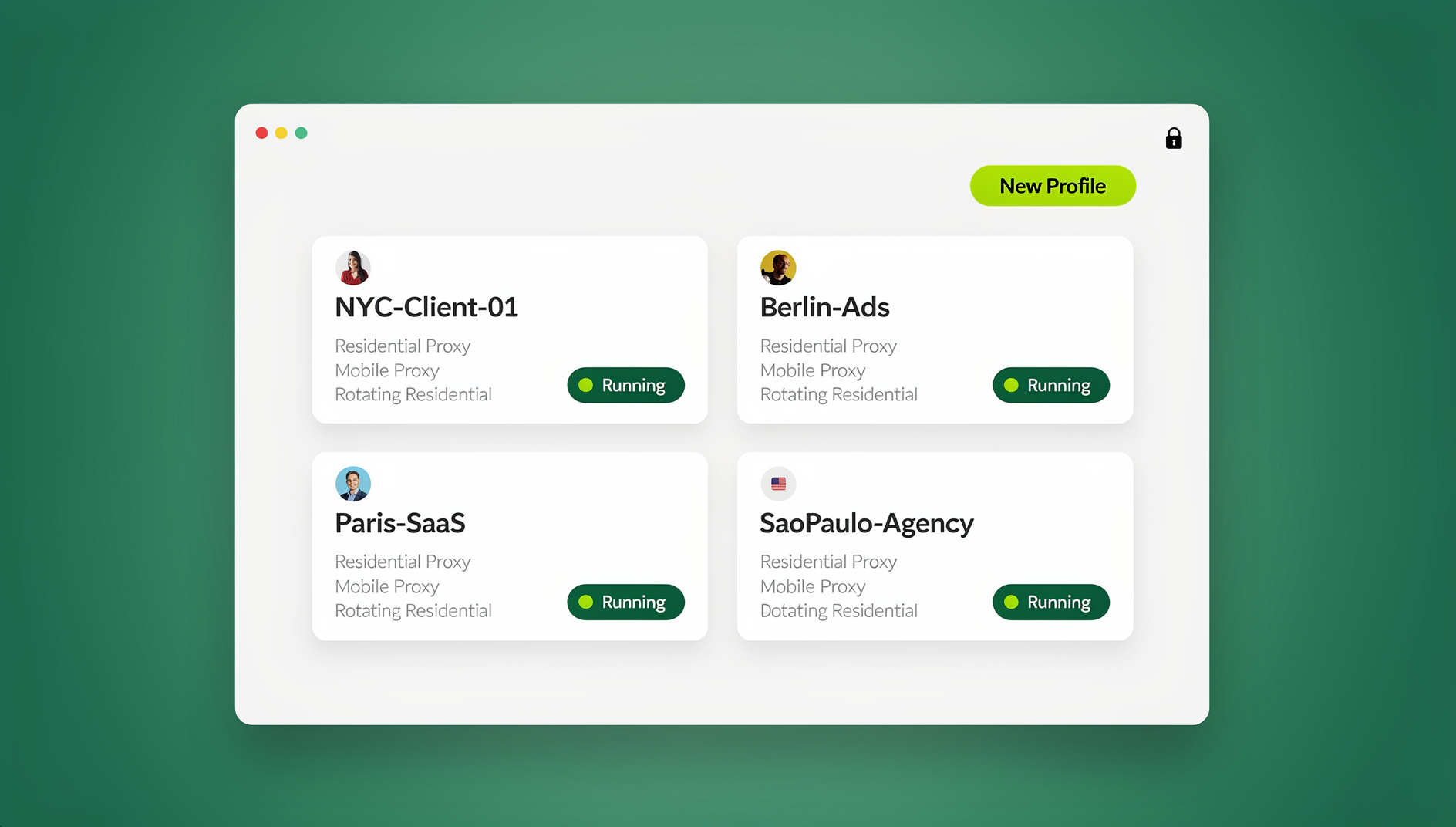

Every web browser you use transmits a massive array of configuration data to the websites you visit. This data collection process is known as browser fingerprinting. Websites use these signals to compile a unique hardware-anchored device signature, which is so precise that it can identify you with over 99% accuracy even if you clear your browser cookies, change your IP address, or use private browsing. A fingerprint browser anti detect browser solves this problem by modifying or masking these individual characteristics. Instead of showing websites your actual hardware parameters, it generates multiple virtual profiles that each appear as a completely different physical device.
In modern web workflows, the ability to maintain distinct digital identities is crucial. Digital marketers, affiliate networks, and multi-store e-commerce sellers rely on these tools to keep their operations separated. If you run multiple seller storefronts or run ad campaigns across different profiles without proper isolation, platforms will quickly link your accounts and suspend your entire operation. By utilizing a fingerprint browser anti detect browser, you create isolated spaces where each profile acts as a sandbox, preventing platforms from finding connections between your accounts.
How Browser Fingerprinting Actually Tracks You
To understand how to protect your digital identities, you must first understand the underlying mechanisms websites use to fingerprint your device. Unlike traditional cookies, which are files stored on your hard drive, fingerprinting is active and passive profiling that queries your browser APIs directly to extract hardware and software details.
When you load a page, the website runs JavaScript scripts that query properties like navigator.userAgent, navigator.language, screen.width, and navigator.hardwareConcurrency. It can also render hidden shapes to an HTML5 canvas element. Because different graphics cards and display drivers handle anti-aliasing and sub-pixel rendering in slightly different ways, the resulting image hash is highly unique. The site then combines all of these individual signals into a single cryptographic hash that represents your device.
If you modify only your IP address or clear your cookies, your hardware profile remains identical. Advanced platforms will recognize the returning hardware signature and immediately link the new session back to your blocked profiles. This makes simple privacy tools insufficient for managing multiple accounts, highlighting the need for a dedicated browser that isolates hardware signals.
Web platforms do not just look at single signals; they perform statistical correlation. If your browser profile claims to be running a common version of Chrome, but your JavaScript rendering speed or WebGL capabilities match an older browser build, the system flags the profile. This is why basic browser modifications often fail; they alter the visible headers but leave the lower-level hardware APIs untouched, creating obvious inconsistencies that trigger automatic blocks.
The Core Parameters Spoofed by Anti-Detect Tools
A high-quality anti-detect tool does not merely randomize your settings; it crafts a realistic and internally consistent digital identity. If a browser claims to be running Safari on macOS but reports WebGL parameters from an NVIDIA card running on Windows, platforms will instantly flag the profile as spoofed. Here are the core parameters that these tools isolate and modify:
Canvas and WebGL Graphics Isolation
Canvas fingerprinting works by forcing your graphics card to draw a specific text string or geometric shape in the background. The anti-detect client intercepts these rendering calls. It can either add subtle, non-disruptive mathematical noise to the output or replace the rendering output with pre-calculated parameters that match your spoofed GPU profile. Similarly, WebGL parameters (such as the renderer and vendor strings) are modified to hide your actual physical graphics card. This ensures that every canvas query returns a unique but consistent signature.
WebRTC and IP Leak Prevention
WebRTC is a protocol designed for real-time video and audio communication. However, it can reveal your local and public IP addresses even if you are using a proxy or VPN. Anti-detect tools override the WebRTC APIs to block these leaks. They ensure that WebRTC queries return the public IP address of your proxy, maintaining complete IP consistency across all browser layers. Without this protection, your true local ISP details would be exposed to the host site.
User Agent and Browser Engine Mimicry
The User Agent string tells the server which browser, version, and operating system you are using. While anyone can change their User Agent string, native anti-detect engines modify the underlying source code (typically Chromium) to ensure that the browser’s capabilities, JS features, and DOM layout perfectly match the claimed User Agent. This prevents platforms from finding version mismatches through feature detection tests. For example, if the user agent says Safari, the browser must not support Chrome-specific APIs.
The Complete Parameter Comparison Matrix
To help you understand the landscape of browser parameters, here is a detailed breakdown of what is monitored and how it is protected:
| Fingerprinting Parameter | Risk Level | How Websites Track It | Anti-Detect Protection Method |
|---|---|---|---|
| Canvas Rendering | Critical | Drawing hidden fonts/shapes to hash GPU rendering quirks | Injecting consistent mathematical noise into graphics APIs |
| WebGL GPU Metadata | High | Reading GPU vendor, renderer, and shader precision values | Spoofing driver info to match target hardware profile |
| Audio Context | High | Measuring mathematical distortion in synthesized sine waves | Injecting minor audio buffer noise to alter hardware characteristics |
| WebRTC APIs | Critical | Bypassing network layers to extract local/public IP addresses | Overriding WebRTC endpoints to resolve only to proxy IPs |
| System Font Lists | Medium | Querying available system fonts via JS side-channel checks | Restricting font detection to a standardized profile list |
| Screen Resolution | Medium | Matching screen dimensions with viewport CSS height/width | Scaling viewport frame and matching hardware display details |
Step-by-Step Guide to Setting Up Your Profiles Safely
Setting up your profiles properly is essential for preventing platform bans. Follow this structured process to configure a secure, isolated profile:
Step 1: Choose a Reliable Desktop Client
Select a reputable desktop client that offers Chromium-based profile isolation. Ensure the software receives regular updates to keep its browser engine version aligned with current mainstream browsers. Stale browser versions are a major red flag for security platforms, as most organic users update their browsers within a few weeks of a new release.
Step 2: Assign a Dedicated Proxy Setup
Never run multiple profiles on the same local IP address. For each profile, configure a dedicated residential or mobile proxy. To ensure your network parameters align with your browser settings, you should implement a robust proxy browser setup that maps the profile’s timezone and location to the proxy’s IP coordinates. This prevents the platform from linking profiles via network block allocation.
Step 3: Match Timezones and Language Headers
Ensure that the profile’s timezone, language headers, and WebRTC parameters match the geographical location of your proxy. If your proxy is located in Germany, but your browser timezone reports New York (EST) and your language header prefers English (en-US), security systems will flag the profile for location inconsistency. Setting these parameters to automatic matching resolves this risk.
How to Verify and Test Your Spoofed Profiles
Before logging into your accounts, you must verify that your fingerprint browser anti detect browser setup is working correctly and does not reveal leaks. Use specialized leak-testing platforms to check your profiles.
Services like BrowserLeaks, CreepJS, and Iphey test your browser for parameter consistency. Look closely at the WebGL parameters, WebRTC leaks, and font lists. If a test shows a high trust score and does not detect inconsistencies, the profile is safe to use. If any leak or warning is displayed, delete the profile and rebuild it with matching settings. Regular verification ensures that updates to testing sites have not uncovered new gaps in your spoofing configuration.
Testing can be scaled across multiple setups. For instance, testing how different container boundaries block scripts is made easier by understanding browser isolation technology. Furthermore, you can deploy a localized cluster using a containerized docker browser environment. Finally, adopting complete application isolation ensures that even local host parameters are entirely separated from the browser runtime, blocking physical device leakage.
Why Traditional Desktop Spoofing Is Not Enough
Traditional anti-detect programs operate by running a modified Chromium binary on your physical machine. While this changes the values returned by JS APIs, it has limitations. If a website runs a script that checks for native environment characteristics (like CreepJS), it can often spot the difference between a naturally clean browser and a browser that is actively intercepting and rewriting its properties. The code overhead of spoofing functions can introduce timing anomalies, where an API call takes slightly longer than it would on a native machine. Security teams use these timing checks to flag suspicious profiles.
Furthermore, managing these files locally consumes significant CPU and RAM. Each active profile runs as a separate browser instance on your computer. If you need to manage dozens of accounts simultaneously, your local hardware will quickly bottleneck, causing lag and crashes. This makes local spoofing difficult to scale for large teams or complex automation scripts. Security updates are also slow, meaning you might be stuck running an outdated browser version while waiting for the client software to update.
Cloud Browser Sessions vs. Local Hardware Spoofing
Traditional anti-detect tools operate locally, modifying browser APIs on your physical machine. While this works, it requires deep system integration and is vulnerable to local detection. If a script successfully queries native system APIs, it can bypass the browser layer and read your real hardware configuration. This is why advanced security platforms look past the browser window to analyze OS-level signals.
Cloud-based browser isolation takes a fundamentally different path. Instead of spoofing local parameters, it runs actual browser sessions on remote servers in the cloud. When you open a profile, you are interacting with a real, isolated browser running on server-grade hardware. Because the browser runs in the cloud, there are no local hardware configurations to spoof — the remote session has a legitimately unique fingerprint. This architecture eliminates the risk of local leaks and allows you to access your sessions from any device without installing heavy software.
Additionally, cloud sessions simplify collaboration. Since the browser state is maintained entirely on remote servers, team members can access the exact same profile without passing cookies or configuration files back and forth. A session can be handed off from one marketer to another with a single click, with no risk of changing the hardware footprint or triggering security blocks. This makes it an ideal solution for remote marketing agencies and distributed teams.
🏆 Send.win Verdict
Relying on local browser fingerprinting leaves your accounts vulnerable to advanced fingerprint analysis. Send.win offers a superior alternative through cloud browser sessions that isolate your browsing profiles in the cloud. Every tab runs in a genuine, remote sandbox with its own consistent browser fingerprint. Send.win offers paid plans starting at $19/month (or $83.88/year) for Pro, with the first card purchase covered by a 7-day money-back guarantee. You can also try the free cloud demo at https://send.win/demo-browser/.
Try Send.win free today — experience the power of native cloud browser isolation.
Frequently Asked Questions
What is a fingerprint browser anti detect browser?
It is a specialized browser designed to mask or modify your digital fingerprint, which consists of browser settings and hardware parameters. By spoofing these signals, it allows you to run multiple profiles that websites treat as separate physical devices.
Can websites detect when I use an anti-detect browser?
Yes, websites use advanced consistency checks to identify spoofing. If your user agent, canvas, and WebGL settings are not perfectly aligned, the website will flag the session. Cloud browser sessions that do not rely on local spoofing are much harder to detect.
Do I need proxies with an anti-detect browser?
Yes, proxies are mandatory. If you run multiple profiles on the same local IP address, websites will link the profiles together, defeating the purpose of fingerprint spoofing. You must use a unique proxy for each profile.
What is the difference between a VPN and an anti-detect browser?
A VPN only changes your IP address and encrypts your traffic. An anti-detect browser isolates your entire browser profile, cookies, and hardware fingerprint, providing the deep separation required for managing multiple accounts safely.
Are anti-detect browsers legal?
Yes, anti-detect browsers are legal tools for managing privacy and multiple profiles. However, your activities must comply with the laws of your jurisdiction and the terms of service of the websites you visit.
Can I automate anti-detect browser profiles?
Yes, many anti-detect clients support integration with automation frameworks like Puppeteer, Playwright, or Selenium. Send.win does not offer an automation interface on any plan.
How does Send.win protect my digital fingerprint?
Send.win isolates your browsing profiles by running them either locally through the desktop client or remotely in cloud browser sessions. Each profile runs in its own secure sandbox with isolated cookies and parameters, presenting a unique fingerprint to tracking scripts.
Conclusion
A high-quality fingerprint browser anti detect browser is a powerful tool for maintaining online privacy and running multiple business accounts safely. By understanding the components of browser fingerprinting and configuring your profiles to match your proxy settings, you can protect your digital operations from aggressive platform tracking. While local spoofing requires constant maintenance, shifting to cloud-based isolation offers a stable, secure, and easily scalable solution for modern digital workflows. Adopting platforms like Send.win allows you to run multiple profiles with total peace of mind, knowing your actual hardware footprint remains fully hidden from tracking networks.