A Technical Framework to Compare Browser Fingerprinting APIs for Web Applications
To **compare browser fingerprinting apis** effectively, you must evaluate them across seven core dimensions: identification accuracy, signal coverage, anti-spoofing capabilities, privacy compliance, developer experience, system reliability, and total cost of ownership. By testing these APIs under identical network conditions, incognito settings, and device parameters, your team can select the optimal security or analytics partner. This comprehensive comparison framework is designed to help security engineers, developers, and product managers systematically evaluate identification technologies to make a durable decision.

Why Comparing Browser Fingerprinting APIs Matters
Browser fingerprinting has become a cornerstone of modern web security, used to prevent credential stuffing, detect bot traffic, block payment fraud, and track visitor analytics without relying on cookies. However, choosing the wrong identification API can have severe consequences for your business. An inaccurate system will either block legitimate customers (false positives) or let fraudulent transactions pass (false negatives). Additionally, integrating a bloated tracking script can slow down your site, negatively affecting SEO and user conversion. A systematic comparison ensures you select an API that matches your traffic profile, security requirements, and budget.
The 7-Dimension Evaluation Framework
To conduct an objective evaluation of browser fingerprinting APIs, security teams should score each shortlisted provider across seven key dimensions. This structured approach prevents you from relying on high-level marketing metrics and forces a deep analysis of technical capabilities.
1. Identification Accuracy and Stability
Accuracy is the most critical metric for any device tracking API. It must be evaluated using three main benchmarks. First, the true positive rate: does the API correctly identify a returning user even if they have cleared their cache, changed their IP address, or activated private browsing? Second, the false positive rate: does the API incorrectly assign the same identifier to two separate users who share similar hardware setups, such as two identical corporate laptops? Third, stability: does the generated device identifier remain stable over weeks and months, surviving minor browser updates and software patches?
Stability is particularly difficult to achieve. A user’s browser is not static; they regularly update software, install font packages, plug in external monitors, or adjust default language settings. A basic tracking script will treat these changes as a brand-new device, creating a duplicate profile. Advanced fingerprinting APIs use probabilistic linking models on remote servers, cross-correlating historical entries to ensure that minor telemetry changes do not break the visitor identification chain.
2. Signal Coverage and Data Collection
The accuracy of a fingerprinting API depends directly on the variety and depth of signals it collects from the visitor’s browser. The best APIs query multiple subsystems, including the HTML5 canvas rendering engine, WebGL graphics parameters, the Web Audio API context, installed system fonts, device screen attributes, and local hardware properties (such as CPU concurrency and device memory). An API that only checks basic navigator parameters is easily bypassed by simple user scripts and fails to build a stable identifier.
Let us look at some of these signals in detail. Canvas rendering relies on rendering a hidden font or shape to an HTML5 canvas element; because of variations in GPU models, graphics drivers, and sub-pixel rendering settings, the output image is highly unique. WebGL queries your hardware directly, revealing the graphics chip’s driver manufacturer and performance attributes. Audio fingerprinting works by synthesizing a tiny sine wave through the browser’s audio context and measuring the subtle distortion introduced by the host audio hardware. When these signals are analyzed together, they generate a highly unique hardware-anchored device signature.
3. Anti-Spoofing and Tampering Detection
Sophisticated attackers do not merely clear their cookies; they use advanced tools to hide or modify their fingerprints. The API you select must include built-in anti-spoofing checks. This includes consistency analysis (checking if the operating system reported by the user agent matches the rendering engine’s font handling and line breaks), headless browser detection (identifying Puppeteer, Playwright, or Selenium scripts), and canvas poisoning detection (identifying when a browser is intentionally injecting noise into canvas outputs to break tracking hashes).
Furthermore, the API must distinguish between genuine web browsers and randomized profiles generated by antidetect software. These security scripts analyze internal inconsistencies, such as checking if navigator.hardwareConcurrency matches the actual time it takes to execute a parallel mathematical array. An API that lacks tampering checks will accept spoofed parameters, allowing attackers to present a fresh, clean device signature for every fraudulent transaction.
4. Privacy and Regulatory Compliance
Under regulations like GDPR, CCPA, and the ePrivacy Directive, a browser fingerprint is classified as personal data. This classification introduces significant legal compliance requirements. When comparing APIs, you must evaluate where the telemetry data is processed and stored. Does the provider support data residency in your region (for example, EU-only servers)? How long is the raw fingerprinting data retained? Does the provider offer a signed Data Processing Agreement (DPA) that complies with standard contractual clauses? The best APIs offer modes that can run without storing cookies or processing IP addresses directly, simplifying consent management.
You must also ensure the vendor provides mechanisms for compliance with the “Right to be Forgotten” (data erasure requests). If a customer asks to delete their data, can your server trigger an API call to erase all historical fingerprint entries linked to that user? Failing to evaluate this capability can leave your business open to regulatory penalties and compliance audits.
5. Integration and Developer Experience
The technical quality of an API affects both your initial development speed and long-term maintenance costs. The best providers offer native SDKs for front-end frameworks (React, Vue, Angular, Next.js) and back-end environments (Node.js, Python, Go, Ruby). They also provide comprehensive documentation, complete API references, and interactive playgrounds where developers can test payloads in real-time. Webhook support is another essential feature, allowing your server-side security logic to receive real-time fraud scores as soon as a client-side fingerprint is processed.
For example, if you integrate fingerprinting into a user signup flow, the client script sends device data directly to the vendor’s servers. The vendor immediately fires a webhook containing a risk score to your server. Your server can then check this score before saving the user profile, allowing you to reject malicious registrations synchronously without introducing lag into the user interface.
6. Performance and System Reliability
Every script added to your website affects page load speed. You must measure the client-side performance footprint of the fingerprinting script. The script should be small (ideally under 50KB gzipped) and must load asynchronously to avoid blocking the browser’s main execution thread. On the server side, you must evaluate the API’s global response latency. The p99 response time should be under 150 milliseconds, and the provider should back their service with a SLA of 99.9% uptime or higher, ensuring your login and checkout flows never experience downtime.
Additionally, you must evaluate CDN coverage. If your application has users in Asia, South America, or Africa, but the fingerprinting API servers are located exclusively in Europe, those users will experience significant latency before the script resolves. Global edge node distribution is a key differentiator between basic libraries and production-grade enterprise identification platforms.
7. Total Cost of Ownership
Commercial fingerprinting APIs typically charge based on monthly request volume. While free tiers are common, the pricing for paid tiers scales rapidly. When calculating the total cost of ownership, look beyond the monthly subscription fee. You must include the development cost of integration, the ongoing maintenance cost of keeping SDKs updated, and the business cost of false positives or missed fraud. A cheap API that allows extra chargebacks or blocks high-value customers is far more expensive than a premium solution with high accuracy.
To plan your volume costs, evaluate where the API is called. Instead of tracking every single visitor page load, you can configure the script to trigger only on critical events (like user registration, logging in from a new IP, or finalizing a checkout). This event-driven approach reduces API call volume by 70-80%, allowing you to select a highly accurate paid plan while keeping monthly costs predictable.
Detailed Reviews of Leading Fingerprinting APIs
To narrow down your selection, you should focus on the four leading solutions currently dominate the digital identity market. Each of these APIs is optimized for a different operational style.
Fingerprint (formerly FingerprintJS Pro)
Fingerprint is widely considered the gold standard for high-performance developer-focused identification. Its hybrid architecture collects client-side telemetry and processes it on server-side nodes using machine learning. This combination achieves an accuracy rate of 99.5%. It is highly scalable, handling billions of requests monthly, and provides exceptional anti-spoofing signals. It is the best choice for teams that want a developer-first API that works out of the box with minimal custom rule writing.
ThreatMetrix (LexisNexis Risk Solutions)
ThreatMetrix is an enterprise fraud platform designed for large-scale financial institutions. It integrates browser fingerprinting with the LexisNexis Digital Identity Network, which cross-references transactions against a massive global consortium of customer data. If a device has committed fraud on another banking platform, ThreatMetrix flags it instantly. While its identification power is unmatched, the integration process is heavy and requires dedicated fraud analysts to manage custom risk rules.
SEON (Fraud Intelligence API)
SEON combines device profiling with real-time digital footprint enrichment. When a user visits your site, SEON analyzes the browser fingerprint and simultaneously checks the reputation of their email address, phone number, and IP address. This gives your security team a comprehensive risk score rather than just a raw device identifier. It is the best choice for platforms that want to build a complete fraud prevention engine without managing separate APIs for device tracking and social lookups.
Stytch (Identity and Authentication API)
Stytch provides fingerprinting as a built-in feature of its broader user authentication and login platform. If you are building signup and sign-in flows from scratch, Stytch allows you to deploy user authentication and device tracking together. This simplifies your architecture by keeping identity management and security analysis under a single SDK, though it is less specialized than standalone fraud prevention platforms.
Testing and Validation Strategy in a Staging Environment
To accurately compare browser fingerprinting APIs, you must test them under identical conditions. Running a parallel proof of concept in a staging environment allows you to evaluate how each API handles different browser configurations, network changes, and privacy countermeasures.
When setting up a test environment, combining your API testing with a secure proxy browser setup is crucial for simulating different locations. To analyze how browser parameters are isolated, implementing browser isolation technology will show how different container boundaries block fingerprinting scripts. Testing can be scaled using a containerized docker browser cluster. Ultimately, utilizing full application isolation allows your team to verify whether tracking APIs can link profiles when hardware-level signals are entirely separated.
API Pricing Models and Volume Planning
Understanding the pricing structures of fingerprinting APIs prevents unexpected cost spikes as your user base grows. Most providers use a tiered subscription model, charging a flat rate for a set volume of requests (for example, 100,000 monthly checks) and an overage fee for any requests beyond that limit. If you run a high-traffic site, you must evaluate whether the API check is triggered on every page load or only during high-risk events (such as checkout, password resets, or signup). Limiting API calls to high-risk events significantly reduces your monthly volume, making premium solutions far more cost-effective.
🏆 Send.win Verdict
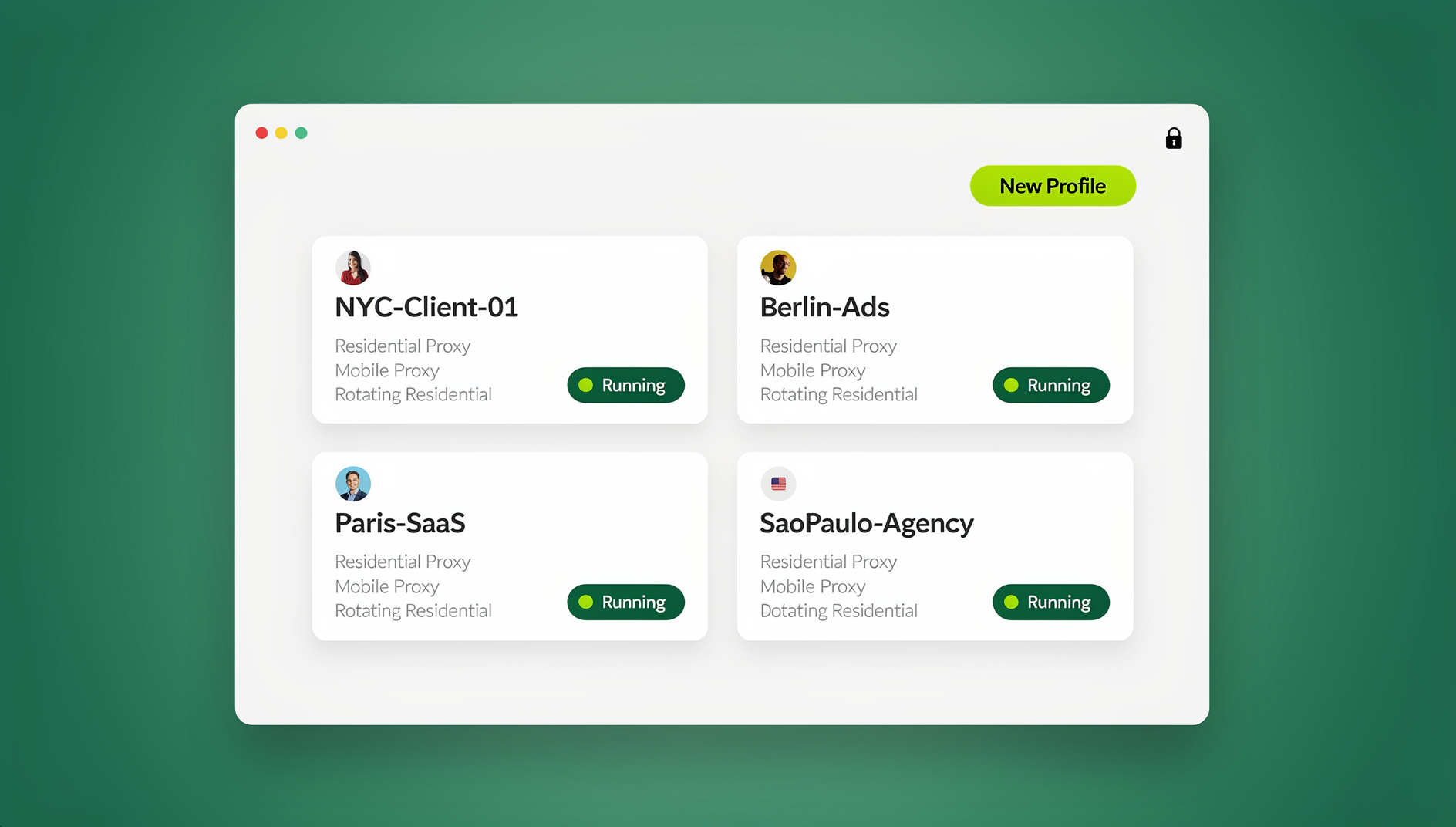
Comparing browser fingerprinting APIs is essential for choosing the right identification tools for fraud prevention. However, if your team is working to manage multiple distinct digital identities safely, trying to spoof your local browser fingerprint is a temporary fix. Sendwin provides complete session isolation. With Sendwin, you can run isolated browser profiles locally via the desktop client or in the cloud through secure cloud browser sessions. This architecture runs clean, remote instances that natively pass all fingerprint tests. Plans start at $19/month (annual pricing at $83.88/year), and your first card purchase is covered by a 7-day money-back guarantee. You can also try the free cloud demo at https://send.win/demo-browser/.
Try Send.win free today — protect your operations and test the power of genuine browser isolation.
Frequently Asked Questions
How do I compare browser fingerprinting APIs for identification accuracy?
To compare accuracy, run a parallel pilot using real traffic. Log the device IDs generated by each API and check how they handle common identification challenges: identifying the same user across different browser updates, identifying users who switch between incognito and standard modes, and preventing false positives on identical hardware configurations.
Can browser fingerprinting APIs track users who block cookies?
Yes. Browser fingerprinting is a probabilistic tracking technique that relies on hardware and software parameters queryable through browser APIs. Unlike cookies, which are stored files that users can delete, fingerprints are generated dynamically based on device characteristics, allowing identification even when cookies are disabled.
Are there open-source APIs for browser fingerprinting?
Yes. The open-source FingerprintJS library is the most popular client-side fingerprinting tool. However, because it runs entirely on the client, its accuracy is limited to 60-75% and it cannot detect spoofing. For commercial security applications, a hybrid client-server API is generally required to maintain accuracy.
Do browser fingerprinting APIs work on mobile devices?
Yes, but mobile fingerprinting has different characteristics than desktop. Mobile operating systems (iOS and Android) limit the variety of accessible hardware parameters to protect user privacy. High-quality APIs use specialized mobile SDKs that collect mobile-specific parameters, such as battery status, device model, and OS version, to build stable profiles.
How do fingerprinting APIs handle GDPR and CCPA compliance?
GDPR and CCPA treat browser fingerprints as personal data. Complying with these regulations requires choosing an API vendor that processes data in your region, offers a Data Processing Agreement (DPA), and provides mechanisms to anonymize IP addresses. You must also disclose the use of fingerprinting tracking in your privacy policy.
Can a fingerprinting API detect virtual machines or emulators?
Yes, advanced fingerprinting APIs examine WebGL rendering performance, GPU vendor strings, and hardware CPU concurrency. Because virtual machines and mobile emulators render graphics using virtualized drivers, these parameters stand out, allowing the API to flag the device as a virtual environment.
Do VPNs bypass browser fingerprinting APIs?
No. A VPN only hides your public IP address and encrypts your network traffic. It does not alter your device’s canvas rendering characteristics, installed font list, screen resolution, or audio context. Fingerprinting APIs bypass the network layer to query these hardware signals directly, tracking the device regardless of VPN usage.
How does Sendwin protect against browser fingerprinting APIs?
Sendwin protects your privacy by running browser profiles in containerized sandboxes, either locally using the native desktop client or remotely via cloud browser sessions. Because each profile runs in a separate browser instance with its own dedicated proxy and hardware parameters, tracking APIs see them as completely separate physical devices.
Conclusion
Evaluating and comparing browser fingerprinting APIs requires a structured framework that looks beyond marketing claims. By analyzing accuracy, signal coverage, anti-spoofing capabilities, privacy compliance, developer experience, system reliability, and total cost of ownership, your team can choose the optimal identification tool for your security needs. Implementing a parallel pilot in a staging environment is the most reliable way to gather real-world performance metrics before making a final decision.
For businesses focused on fraud prevention and visitor tracking, hybrid APIs like FingerprintJS Pro offer the best balance of accuracy and integration speed. However, if your goal is multi-account management or private browsing, relying on local fingerprint spoofing is insufficient. Adopting a secure, cloud-native session isolation platform like Sendwin ensures your profiles remain private, secure, and entirely separated from aggressive web tracking networks.