What Is a Ghost Browser Proxy and How Does It Function?
A ghost browser proxy is a proxy server configured within Ghost Browser to route traffic from a specific color-coded session through a unique IP address, enabling isolated multi-account browsing. While Ghost Browser supports individual proxies per session to isolate cookies and IPs, it does not mask your browser fingerprint, making it vulnerable to advanced tracking. For full protection, modern cloud tools like Send.win isolate both fingerprints and IPs.
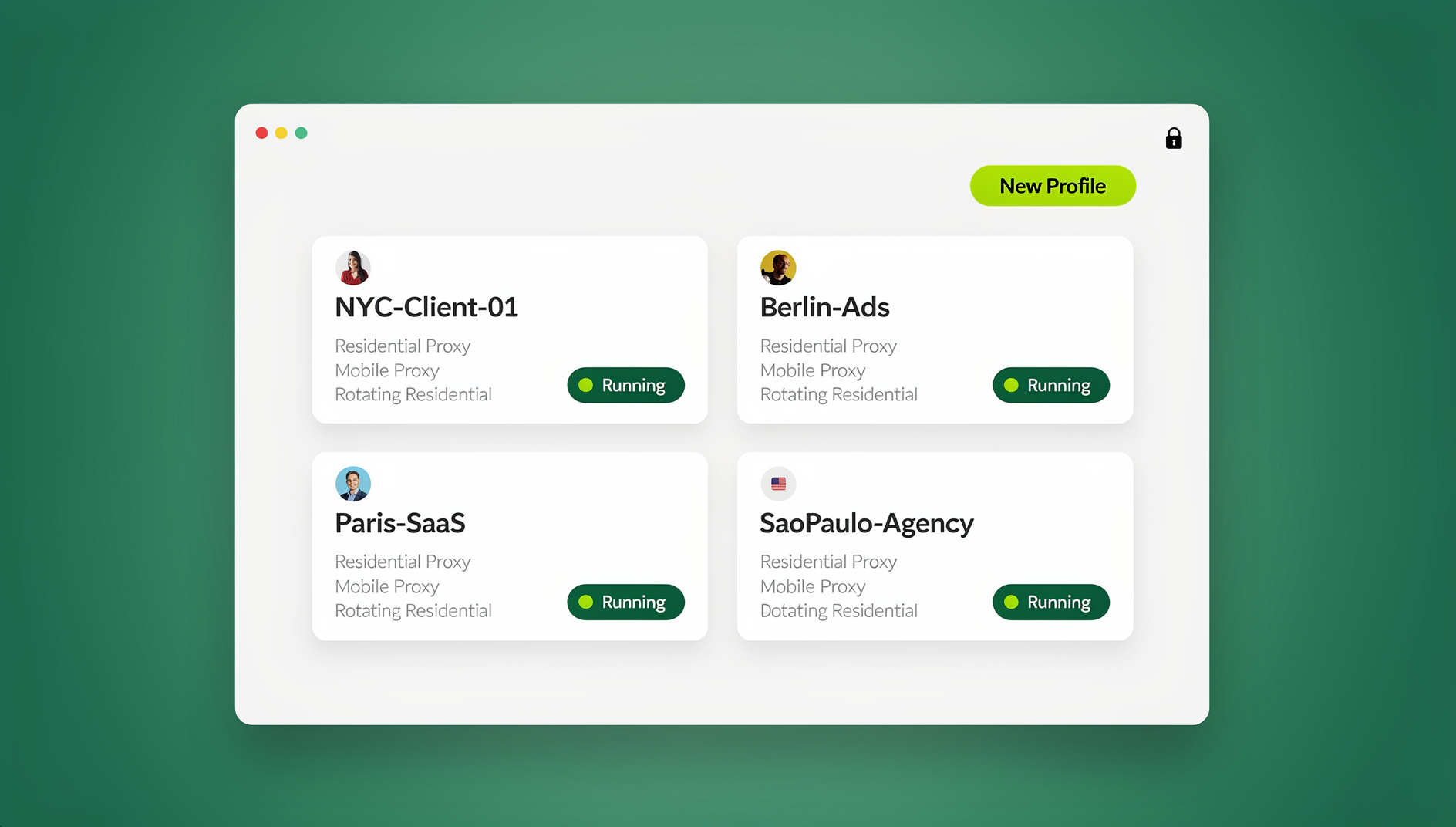
To understand how a ghost browser proxy configuration operates, it is necessary to examine the underlying architecture of modern multi-account management. Standard web browsers utilize a single cookie jar and a single external IP address for all open tabs. If you log into multiple social media profiles, digital marketing portals, or e-commerce accounts simultaneously in a standard browser, the website detects the shared cookies and same network footprint, leading to immediate account association or suspension. Ghost Browser attempts to resolve this issue by introducing color-coded sessions. Each session partitions cookies, session storage, and local cache. By attaching a specific proxy to each session, you can run multiple tabs side-by-side, each sending requests from a different geographic location and network route.
While this configuration works for simple tasks, the modern digital landscape in 2026 relies on more sophisticated tracking mechanisms. In this comprehensive analysis, we will explore how to set up proxies in Ghost Browser, examine its structural limitations, and look at how cloud-based alternatives provide superior security at a fraction of the cost.
The Technical Architecture of Ghost Browser Sessions
Ghost Browser relies on Chromium, the open-source browser engine that powers Google Chrome and Microsoft Edge. This means it inherits standard Chromium performance and rendering behaviors. However, it alters the way session data is stored and managed. Here is a breakdown of how sessions partition data:
- Cookie Jar Separation: Each session has a dedicated directory for its cookies, preventing accounts logged in side-by-side from reading each other’s authentication tokens.
- Local Storage Isolation: HTML5 local storage and session storage are sandboxed per color-coded session, ensuring that web apps cannot cross-reference data.
- Cache Partitioning: Cached images and scripts are stored separately, which prevents forensic cross-tab tracking.
When you bind a unique proxy to one of these sessions, you complete the basic isolation stack. This is what marketers refer to as a multi-login profile. If you are learning how to create a secure proxy browser setup, you will find that assigning individual IPs to isolated cookie containers is the baseline requirement for running multiple accounts safely.
How to Configure a Ghost Browser Proxy Step-by-Step
Setting up proxies in Ghost Browser requires either using their native proxy configuration tools or utilizing their official proxy manager add-on. Here is the step-by-step process to configure your proxies:
Step 1: Install a Proxy Management Add-on
While you can configure a single system-wide proxy in the default settings, managing different proxies for different sessions requires the Ghost Proxy Control add-on. You must download this native utility from the developer’s repository or add-on store.
Step 2: Import Your Proxy List
Open the proxy manager add-on by clicking its icon in the toolbar. You can enter proxies manually or import them in bulk using a CSV file. The format must match the host:port:username:password schema required by the manager.
Step 3: Define Your Connection Protocols
Ghost Browser supports several network protocols: HTTP, HTTPS, SOCKS4, and SOCKS5. For high-privacy applications, SOCKS5 is preferred because it handles raw TCP traffic and supports robust user-password authentication.
Step 4: Bind Proxies to Color-Coded Sessions
Right-click a tab or click the proxy manager icon to assign a saved proxy to a specific colored session. Once assigned, every tab opened within that color group will route its traffic through the designated proxy server.
Step 5: Verify Your IP Address and Location
Before logging into any sensitive accounts, open a new tab in the proxied session and load an IP verification tool like whatismyip.com. Ensure the displayed IP matches your proxy provider’s location and does not leak your domestic connection.
Key Limitations of Ghost Browser Proxy for Multi-Accounting
Although Ghost Browser makes it simple to route different tabs through different proxy servers, it lacks several key protection layers that are critical in 2026. If you rely solely on Ghost Browser for complex operations, you run substantial risks due to the following limitations:
1. Shared Browser Fingerprints
This is Ghost Browser’s primary security flaw. While it separates cookies and routes traffic through different IPs, it does not mask your browser fingerprint. A browser fingerprint is a collection of hardware and software configurations that websites read to identify your device. This includes your Canvas fingerprint, WebGL hash, audio context parameters, installed system fonts, screen resolution, operating system version, and media codecs. Because all sessions in Ghost Browser run on the same local engine and hardware, they all share an identical digital fingerprint. Modern platforms detect users not just by IP, but through advanced tracking. This is why advanced browser isolation technology has become the standard for professional teams.
2. Vulnerability to WebRTC Leaks
WebRTC (Web Real-Time Communication) is a protocol that allows browsers to establish direct peer-to-peer connections. By design, WebRTC can bypass proxy settings to discover your local network IP and your real public IP. Ghost Browser does not include built-in WebRTC leak blocking at the engine level. If WebRTC is enabled, target websites can discover your true location even if your HTTP proxy is functioning perfectly.
3. Extreme Memory Consumption
Running multiple Chromium-based sessions locally requires immense hardware resources. Each session runs individual browser processes on your local machine. If you attempt to run 15-20 color-coded profiles simultaneously, your local computer’s RAM usage can easily exceed 8GB or 12GB. This resource drain can slow down your workflows and cause system instability.
4. Desktop-Only Limitation
Ghost Browser is a desktop client that must be installed on your local computer. If you need to access your profiles from a mobile device, a tablet, or a client’s computer, you cannot do so without exporting cookies and reconfiguring your settings. There is no cloud-native mode that allows instant access from any web-connected device.
Comparing Ghost Browser with Sandboxed and Isolated Environments
To understand where Ghost Browser fits in the security landscape, it is helpful to compare it to other isolation methodologies. Many developers and system engineers use sandboxed containers to achieve clean environments. For instance, for enterprise-level sandboxing, a docker browser provides root-level containerization, whereas Ghost Browser only separates cookies. While containerized systems offer exceptional security, they require command-line management and significant technical expertise to set up and maintain.
Another common approach is application-level isolation. If you need true application isolation, running your browser in a virtual environment or an isolated sandbox prevents local tracking scripts from reading device-level identifiers. However, this method still does not solve the problem of browser fingerprinting, as the virtualized browser will still present a generic, easily flaggable hardware profile to external websites.
Send.win: The Ultimate Ghost Browser Proxy Alternative
Send.win offers a modern, secure, and cost-effective alternative to Ghost Browser. Instead of running a heavy Chromium engine on your local computer and sharing a single browser fingerprint across all profiles, Send.win gives you fully isolated browsing environments with complete fingerprint protection.
Send.win operates in two primary modes designed to fit different workflows:
- Sendwin Browser (Native Desktop App): A lightweight, highly optimized desktop client for Windows, macOS, and Linux that runs isolated profiles locally with customized fingerprint profiles.
- Cloud Browser Sessions: Secure, containerized browser sessions that run entirely on Send.win’s remote servers. You can access these sessions from any device (including smartphones and tablets) without installing any local software.
Here is how Send.win’s pricing structure compares to other solutions in 2026:
- No Free Trial: Send.win has no free trial; the first card purchase is covered by a 7-day money-back guarantee, and a free cloud demo is available at https://send.win/demo-browser/.
- Pro Plan: $19 per month ($83.88/yr billed annually). Includes 150 profiles and 5GB of proxy bandwidth.
- Team Plan: $49 per month ($251.88/yr billed annually). Includes 500 profiles, 20GB of proxy bandwidth, and 16 team seats.
- Add-ons: Extra bandwidth is priced at $6/GB, and additional profiles can be added for $0.05/profile.
Configuring Advanced Proxy Rotation and Sticky Sessions
When managing multiple accounts online, static proxies are sometimes insufficient. E-commerce platforms and social media networks track connection consistency. To maintain long-term account health, operations teams use rotating proxies that provide a new IP address at regular intervals. However, raw rotation can terminate active sessions prematurely, leading to suspicious login flags.
This is where sticky sessions become essential. A sticky session ensures that your connection routes through the exact same IP address for a predetermined period or until your task completes. By mapping sticky SOCKS5 proxies directly to independent browser profiles, you can ensure that each account maintains a stable geographic and network identity. This is particularly crucial during account creation or when performing payment transactions, where sudden IP shifts can trigger immediate security lockdowns.
With cloud-hosted browser sessions, proxy configurations are loaded directly on the server side. This eliminates the latency associated with local proxy chaining and prevents your actual IP from leaking through DNS or WebRTC endpoints. Managing these connections via a centralized interface allows teams to allocate, monitor, and rotate connection nodes across hundreds of profiles with a single click.
Feature Comparison: Ghost Browser vs. Send.win
| Feature / Parameter | Ghost Browser | Send.win Cloud Browser |
|---|---|---|
| Cookie Isolation | Yes (Colored Sessions) | Yes (Cloud Containers) |
| Fingerprint Masking | No (Shared Hardware Profile) | Yes (Unique Canvas, WebGL, Fonts) |
| WebRTC Protection | No (Vulnerable to leaks) | Yes (Built-in WebRTC spoofing) |
| Local RAM & CPU Drain | High (Heavy local processes) | Zero (For Cloud Sessions) |
| Cross-Device Access | No (Desktop client only) | Yes (Access from any browser) |
| Team Collaboration | Manual cookie export required | Yes (One-click profile sharing) |
| Starting Pricing | $21/month (Solo plan) | $19/mo ($83.88/yr) / No free trial (7-day money-back guarantee) |
🏆 Send.win Verdict
While Ghost Browser proxy configurations are helpful for basic multi-login tasks, they fail to protect users against modern fingerprinting techniques. Because Ghost Browser does not isolate your canvas, hardware, or audio signatures, advanced platforms can easily link your profiles together. Send.win addresses this by giving each profile its own separate cookies, storage and consistent fingerprint, starting at $19 per month.
Try Send.win free today — secure your multi-account workflow with cloud-native session isolation.
Frequently Asked Questions
Does a ghost browser proxy prevent websites from linking my accounts?
Only partially. Routing different sessions through separate proxies changes your IP address and separates your cookies. However, because Ghost Browser does not mask your browser fingerprint, websites can still link your accounts using hardware and rendering signatures.
Can I use SOCKS5 proxies in Ghost Browser?
Yes, Ghost Browser supports HTTP, HTTPS, SOCKS4, and SOCKS5 proxy protocols. You can configure SOCKS5 proxies with username and password authentication through the native settings or proxy management add-ons.
Does Ghost Browser protect against WebRTC IP leaks?
No, Ghost Browser does not have native WebRTC leak protection built into its engine. To prevent WebRTC leaks, you must install a third-party add-on or disable WebRTC manually in the browser flags, which can be difficult for non-technical users.
How do cloud browser sessions compare to Ghost Browser?
Cloud browser sessions run entirely on remote servers, which means they consume zero local RAM and CPU. Furthermore, they spoof the entire hardware and browser fingerprint, whereas Ghost Browser runs locally and shares a single device fingerprint.
What is the monthly cost of using Ghost Browser in 2026?
Ghost Browser’s commercial plans start at $21 per month for the Solo tier and increase to $46 per month for the Team tier. Proxies are not included in these costs and must be purchased separately from third-party providers.
How does Send.win compare in price and features?
Send.win starts at $19 per month ($83.88/yr billed annually), with the first card purchase covered by a 7-day money-back guarantee. Unlike Ghost Browser, Send.win offers separate cookies, storage and fingerprint per profile, built-in proxy bandwidth, and cloud-native profiles accessible from any device.
Does Send.win support browser automation on all plans?
No, Send.win does not provide an Automation API, SDK, headless mode or Selenium/Puppeteer/Playwright support on any plan; the Automation API was retired.