How PerimeterX Detects Automated Browsers: Evasion Guide (2026)
Understanding how perimeterx detects automated browsers requires examining how HUMAN Security’s PerimeterX platform deploys obfuscated client-side sensor payloads, deep DOM prototype reflection tests, sensor telemetry encryption, and behavioral anomaly scoring to block scrapers and multi-account automation tools. While amateur automation frameworks fail PerimeterX’s sophisticated sensor validation loops, Sendwin is a browser profile manager: each profile keeps its own cookies, storage, sessions, fingerprint settings and proxy, with paid plans starting at $19/mo or $83.88/yr.
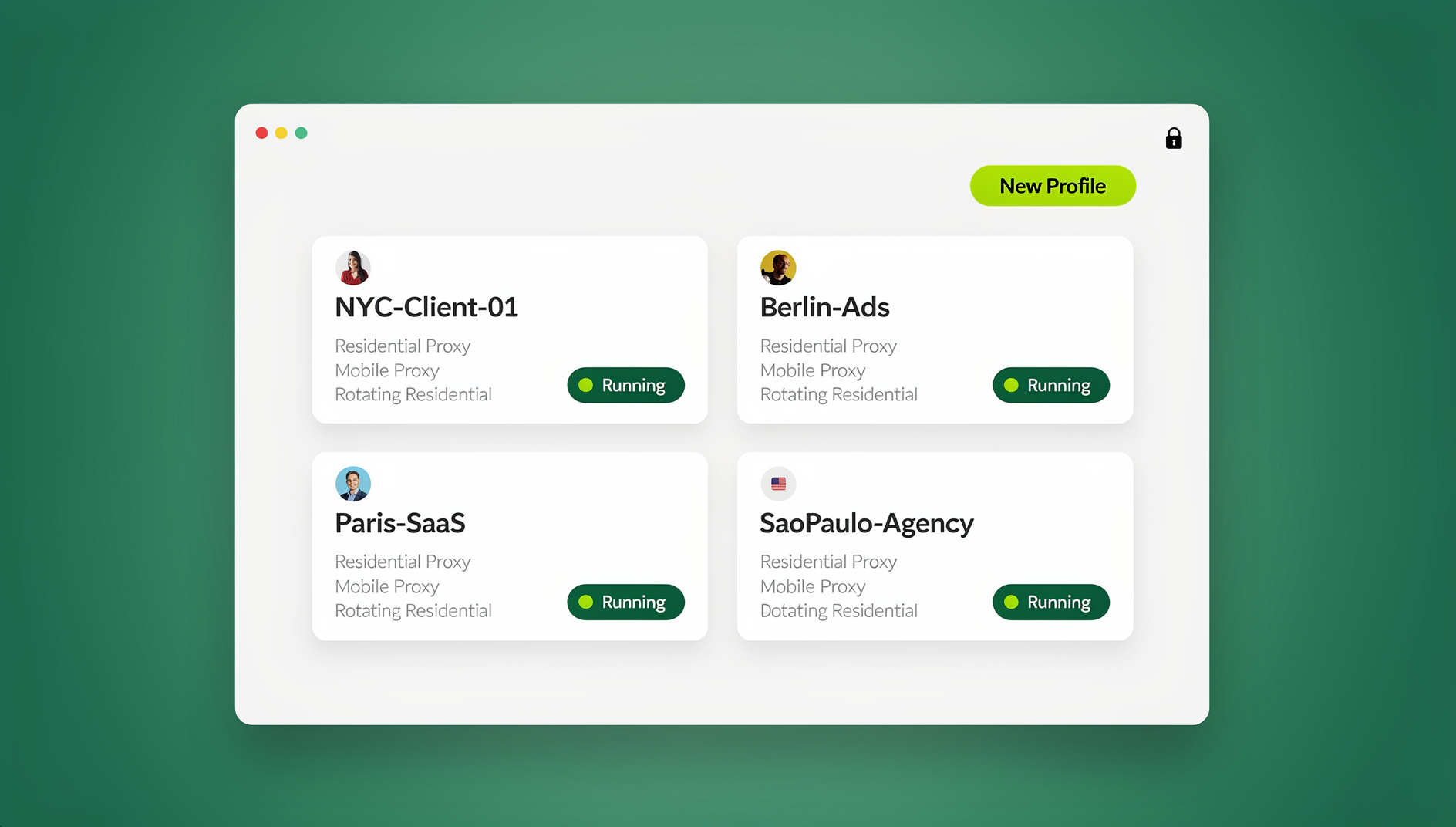

📌 TL;DR Executive Summary
- Sensor Architecture: PerimeterX (HUMAN) injects dynamic sensor scripts that collect cryptographic device hashes, hardware execution timings, and DOM mutation events before generating `_px3` and `_pxhd` validation tokens.
- Prototype Verification: PerimeterX detects automation frameworks by checking native function descriptor integrity, `toString()` signatures, and unmasked WebGL parameters.
- The Solution: Sendwin runs authentic Chromium binaries with cryptographically persistent hardware noise, bundled residential proxy bandwidth (5GB Pro / 20GB Team), and 16 team seats for $20.99/mo annual.
For automation architects, competitive intelligence specialists, and multi-account operators, mastering PerimeterX evasion is essential for scaling daily workflows without triggering sudden account locks or IP blacklisting. Modern platforms across travel, ticketing, and major social networks rely heavily on PerimeterX protection.
In this comprehensive technical manual, we break down PerimeterX’s sensor telemetry mechanisms, examine token validation lifecycles, share a production Playwright auditing script, and detail how engine-level browser isolation provides complete protection.
💡 Pro Tip: Never Tamper with Native DOM Prototypes via Injected Scripts
PerimeterX executes sophisticated integrity checks that examine `Object.getOwnPropertyNames` and prototype inheritance. Overriding native getters using JavaScript triggers immediate automated flagging.
PerimeterX Detection Mechanisms: The Technical Breakdown
PerimeterX evaluates inbound client sessions through an integrated multi-tiered validation workflow:
1. Sensor Script Execution and Telemetry Harvesting
When a client initiates a page request, PerimeterX serves a dynamically obfuscated sensor script. This script executes dozens of diagnostic tests across the browser environment:
- Automation Flag Probing: The sensor directly inspects `window.navigator.webdriver`, `window.chrome`, and common automation artifacts like `__playwright` and `__puppeteer_evaluation_script__`.
- WebGL and Canvas Fingerprinting: PerimeterX renders 3D complex geometries and font strings to compute unique GPU rendering signatures. Learn more about graphics differences in our breakdown on canvas 2D vs WebGL fingerprinting differences.
- Battery and Sensor APIs: It interrogates ambient hardware APIs to verify that the environment behaves like an authentic consumer device. Read our analysis on how websites detect antidetect browsers in 2026.
- Performance and Math Precision: The sensor measures microsecond differences in mathematical calculations to uncover headless VM emulation.
2. The `_px3` and `_pxhd` Cookie Token Cycle
Once the sensor gathers telemetry, it compresses and encrypts the payload, transmitting it back to PerimeterX edge collectors via an HTTP POST request. If the client passes analysis, the server issues signed `_px3` and `_pxhd` cookies. Subsequent requests presenting these cookies are allowed through without friction, whereas anomalous sessions are redirected to PerimeterX Press-and-Hold challenge pages.
3. Network and TLS Profiling
In parallel with client-side sensors, PerimeterX edge servers evaluate inbound TLS handshakes. Mismatches between the declared browser version and negotiated cipher suites or JA4 hashes result in instantaneous bot classification regardless of client-side behavior.
⚠️ Security Warning: Avoid Datacenter IP Subnets on PerimeterX Domains
PerimeterX integrates real-time ASN threat scoring. Routing browser traffic through AWS, DigitalOcean, or generic hosting IPs increases risk scores exponentially, making challenge triggers almost certain.
Technical Comparison: PerimeterX Telemetry Evaluation
Review the table below to see how PerimeterX treats standard headless configurations versus Sendwin’s isolated browser profiles:
| Detection Dimension | Standard Headless Automation | Script-Modified Antidetect Wrapper | Sendwin Cloud Profile |
|---|---|---|---|
| Sensor Execution | Fails instantly (`navigator.webdriver`) | Fails prototype reflection tests | ✅ Genuine Chromium C++ native reflection |
| `_px3` Validation | Blocked; Challenge page served | Unstable validation; frequent re-challenges | ✅ Permanent valid `_px3` issuance |
| Graphics Signatures | Default SwiftShader / Mesa driver | Randomized noise (flags device instability) | ✅ Persistent, authentic hardware GPU profiles |
| TLS / JA4 Hash | Non-browser OpenSSL handshake | Emulated TLS (Edge discrepancies) | ✅ Native Chromium BoringSSL stack |
| Residential Proxy Bandwidth | None (Datacenter IP flagged) | None (Requires expensive 3rd party proxies) | ✅ 5GB (Pro) / 20GB (Team) clean residential proxies included |
⚡ Quick Win: Retain PerimeterX Tokens in Persistent Containers
Python Playwright Guide: Auditing PerimeterX Sensor Signals
Use this diagnostic script to audit browser prototype consistency before executing automated tasks on PerimeterX-protected domains:
import asyncio
from playwright.async_api import async_playwright

async def audit_perimeterx_readiness():
    async with async_playwright() as p:
        browser = await p.chromium.launch(headless=True)
        context = await browser.new_context(
            user_agent="Mozilla/5.0 (Windows NT 10.0; Win64; x64) AppleWebKit/537.36 (KHTML, like Gecko) Chrome/130.0.0.0 Safari/537.36"
        )
        page = await context.new_page()

        # Audit core PerimeterX sensor target properties
        audit_results = await page.evaluate('''() => {
            const results = {};

            // Test 1: Chrome runtime object
            results.hasChrome = !!window.chrome && !!window.chrome.runtime;

            // Test 2: Plugins array inspection
            results.pluginCount = navigator.plugins.length;
            results.pluginPrototypeValid = navigator.plugins instanceof PluginArray;

            // Test 3: WebGL Unmasked Renderer
            const canvas = document.createElement('canvas');
            const gl = canvas.getContext('webgl');
            const debugInfo = gl ? gl.getExtension('WEBGL_debug_renderer_info') : null;
            results.webglRenderer = debugInfo ? gl.getParameter(debugInfo.UNMASKED_RENDERER_WEBGL) : 'N/A';

            // Test 4: Notification permission prototype
            results.notificationPermission = Notification.permission;

            return results;
        }''')

        print("=== PerimeterX Telemetry Diagnostic ===")
        for key, val in audit_results.items():
            print(f"  {key}: {val}")

        await browser.close()

if __name__ == '__main__':
    asyncio.run(audit_perimeterx_readiness())
Operational Checklist: Hardening Infrastructure Against PerimeterX
To run automated workflows seamlessly on PerimeterX-shielded web properties, implement this engineering checklist:
- Eliminate JavaScript Overrides: Ensure all browser attributes reflect native C++ engine values rather than runtime monkey-patches. Review our guide on how to spoof browser fingerprint consistently.
- Ensure Static Graphics Hashes: Never randomize Canvas or WebGL hashes on restart; maintain cryptographic stability per profile container.
- Route Through Residential IP Pools: Utilize genuine residential IP addresses to maintain high IP trust scores. Datacenter IPs are penalized immediately.
- Harmonize TLS and User-Agent: Validate that TLS JA4 signatures align perfectly with the operating system declared in the User-Agent.
- Persist Session Cookies: Retain `_px3` tokens across requests to avoid repetitive sensor challenges and proxy consumption.
Where Send.win Fits
Send.win is a browser profile manager built for exactly this kind of work — every profile is a clean, isolated identity:
- Isolated profiles – unique fingerprint, separate cookies and storage per profile
- Fingerprint settings – each profile keeps its own consistent browser fingerprint
- Desktop app + cloud sessions – native app for Windows, macOS, and Linux, or run profiles in the cloud with no install
- Built-in residential proxies – with automatic timezone, locale, and WebRTC matching
- Team features – share logged-in profiles with teammates without sharing passwords
Try the instant cloud browser demo — no install, no signup — or download the desktop app. There is no free trial; paid plans start at $19/month on Pro ($83.88/year), and the first card purchase is covered by a 7-day money-back guarantee (see pricing).
Enterprise Case Study: Travel Fare Aggregator Bypasses PerimeterX at Scale
An international travel analytics platform in London tracked real-time airline ticket prices across 40 flight booking websites protected by PerimeterX. Running open-source headless scrapers resulted in continuous Press-and-Hold challenge roadblocks and crawl failure rates surpassing 92%.
The company attempted to resolve challenges using external CAPTCHA-solving proxies, resulting in monthly infrastructure costs exceeding $3,100 while suffering severe response delays of 20+ seconds per query.
After migrating to Sendwin’s Team annual plan ($251.88/year, or $49/month), the company deployed its scrapers through Sendwin’s isolated Chromium profiles backed by bundled residential proxies. Because each Sendwin profile keeps its own consistent browser fingerprint, cookies and storage, the agency could organise its work into separate, isolated sessions. For team leaders comparing browser profile managers, review our comparison of Multilogin alternatives.
3-Year Total Cost of Ownership: PerimeterX Evasion Architecture
Reviewing software and infrastructure overhead over 36 months demonstrates the financial superiority of Sendwin:
| Expense Category | Custom In-House Scripting | Legacy Anti-Detect Software | Sendwin Cloud Platform |
|---|---|---|---|
| Base Software License | $0 (Open source tools) | $140/mo ($5,040 / 3 yrs) | ✅ $20.99/mo annual ($755.64 / 3 yrs) |
| Residential Proxy Bandwidth | $160/mo ($5,760 / 3 yrs) | $160/mo ($5,760 / 3 yrs) | ✅ 20GB/mo included ($0 extra) |
| Team Seats (16 Users) | $0 (Self-managed) | $350/mo ($12,600 / 3 yrs) | ✅ 16 team seats included ($0 extra) |
| Reverse Engineering Maintenance | $700/mo ($25,200 / 3 yrs) | $200/mo ($7,200 / 3 yrs) | ✅ Fully managed updates ($0) |
| Total 3-Year Investment | $36,600 | $30,600 | $755.64 (Save 97%+) |
🏆 Send.win Verdict: The Browser Profile Manager for PerimeterX-Aware Workflows
PerimeterX’s multi-layered sensor suite immediately catches script-injected stealth browsers through deep prototype reflection and behavioral anomaly detection. Navigating PerimeterX in 2026 requires genuine engine-level Chromium virtualization backed by authentic residential proxy routing.
Sendwin delivers this comprehensive capability out of the box. By providing per-profile fingerprint isolation, bundled residential proxy data, and team seats starting at $19/mo ($83.88/yr), Sendwin is the optimal solution for professionals and teams who need isolated browser profiles.
Frequently Asked Questions
1. What is PerimeterX (HUMAN Security) and how does it detect bots?
PerimeterX is an enterprise application security platform that blocks automated bots by evaluating edge TLS handshakes, executing obfuscated client-side sensor scripts, probing DOM prototype integrity, and analyzing biometric user behavior.
2. What are the `_px3` and `_pxhd` cookies?
The `_px3` and `_pxhd` cookies are cryptographic validation tokens issued by PerimeterX once a client’s sensor telemetry passes inspection. Retaining these cookies within persistent profile containers allows subsequent requests to bypass sensor challenges.
3. Why do standard Puppeteer and Playwright scripts fail against PerimeterX?
Default headless browsers expose unmistakable automation signals, such as `navigator.webdriver = true` and missing WebGL extensions. Public stealth plugins attempt to mask these signals using JavaScript overrides, which PerimeterX uncovers via prototype inspection.
4. How does Sendwin help with PerimeterX sensor detection?
Sendwin alters Chromium at the binary C++ source level, ensuring that all navigator properties, prototype descriptors, and WebGL parameters reflect genuine native values that pass PerimeterX sensor scrutiny natively.
5. Why are residential proxies critical for PerimeterX domains?
PerimeterX checks client IP addresses against commercial ASN databases. Connections from datacenter IP blocks receive elevated risk scores, making challenge pages virtually guaranteed. Sendwin includes bundled residential proxies (5GB Pro / 20GB Team) to maintain clean IP reputation.
6. Can PerimeterX detect synthetic mouse and keyboard input?
Yes. PerimeterX analyzes cursor trajectories, speed variance, and keypress timing. Instantaneous or linear synthetic events trigger challenge pages. Sendwin emulates natural human-like input dynamics to satisfy biometric heuristics.
7. How does Sendwin handle team collaboration on protected domains?
Sendwin allows distributed teams to share active, authenticated browser profiles without triggering session invalidation or 2FA checkpoints. The Team plan includes 16 full user seats at no extra charge.
8. What are Sendwin’s pricing tiers?
Sendwin offers the Pro Plan at $19/mo (or $6.99/mo annual — 63% savings) with 5GB residential proxy bandwidth, and the Team Plan at $49/mo (or $20.99/mo annual — 57% savings) with 20GB residential bandwidth and 16 team seats. Additional residential proxy data costs $6/GB, and extra profiles are $0.05/profile.
Summary: The Future of PerimeterX Undetectability in 2026
As enterprise fraud prevention networks combine sensor-based DOM interrogation with server-side behavioral modeling, naive scripting overrides are no longer viable. Achieving reliable, long-term automation success requires complete engine-level browser authenticity.
By enforcing strict session isolation and maintaining independent digital environments for every campaign portal, performance marketing agencies and developers eliminate the threat of session collisions, protect account ratings, and ensure seamless, uninterrupted daily operations.
By pairing advanced digital fingerprint isolation with accessible cloud browser sessions, Sendwin redefines how modern businesses manage multiple online identities securely and efficiently without technical friction.
Advanced PerimeterX Evasion Blueprint: Reverse-Engineering Token Generation
Navigating PerimeterX without triggering Press-and-Hold challenge roadblocks requires deep visibility into how PerimeterX processes sensor payloads. The client-side sensor script constructs a compact binary telemetry blob before hashing and encrypting the payload:
- DOM Node Timing and Mutation Observers: PerimeterX monitors how rapidly elements are inserted or modified in the DOM. Scripted automation frameworks modifying form fields simultaneously trigger immediate behavioral anomalies. Learn more about defense strategies in our review of how Cloudflare bot detection works.
- Touch and Pointer Event Synthesis: On touch-enabled devices, PerimeterX evaluates touch radius, pressure, and contact area. Emulating touch via standard CDP commands without radius parameters generates a distinct signature that is immediately detected.
- AudioContext Dynamics Compression: PerimeterX feeds a synthetic audio waveform through an AudioContext DynamicsCompressorNode to measure hardware-dependent audio processing anomalies. Check our guide on canvas 2D vs WebGL fingerprinting differences.
- Native Function Reflection Integrity: Any attempt to overwrite `window.addEventListener` or `document.createElement` leaves detectable traces in `Function.prototype.toString` that PerimeterX logs as tamper evidence.
Strategic ROI Breakdown: Assessing Multi-Year PerimeterX Evasion Infrastructure
Evaluating enterprise browser profile architectures across a 36-month timeline illustrates Sendwin’s massive economic and operational advantages:
- Proxy Cost Reductions: Including 20GB of residential proxy data on Sendwin’s Team plan saves growing data teams more than $2,400 per year compared to external bandwidth pricing.
- Zero Team Seat Surcharges: Sendwin includes 16 full team seats on the Team plan, saving enterprise development teams upwards of $4,500 annually in per-seat license fees.
- Eliminated Maintenance Downtime: Engine-level fingerprint stability prevents scripts from breaking whenever PerimeterX updates its obfuscated sensor scripts.
- Cloud Resource Optimization: Cloud-hosted browser execution removes high RAM and CPU burdens from local development infrastructure.
By pairing advanced digital fingerprint isolation with accessible cloud browser sessions, Sendwin redefines how modern businesses manage multiple online identities securely and cost-effectively.