Gmail Overload? Manage Multiple Gmail Accounts in Chrome
To manage multiple gmail accounts chrome users can set up separate Google browser profiles, use multi-session add-ons, or run dedicated sandbox clients like Sendwin Browser and isolated cloud browser sessions. These tools prevent account conflicts and avoid the default login errors caused by sharing the same cookie space.
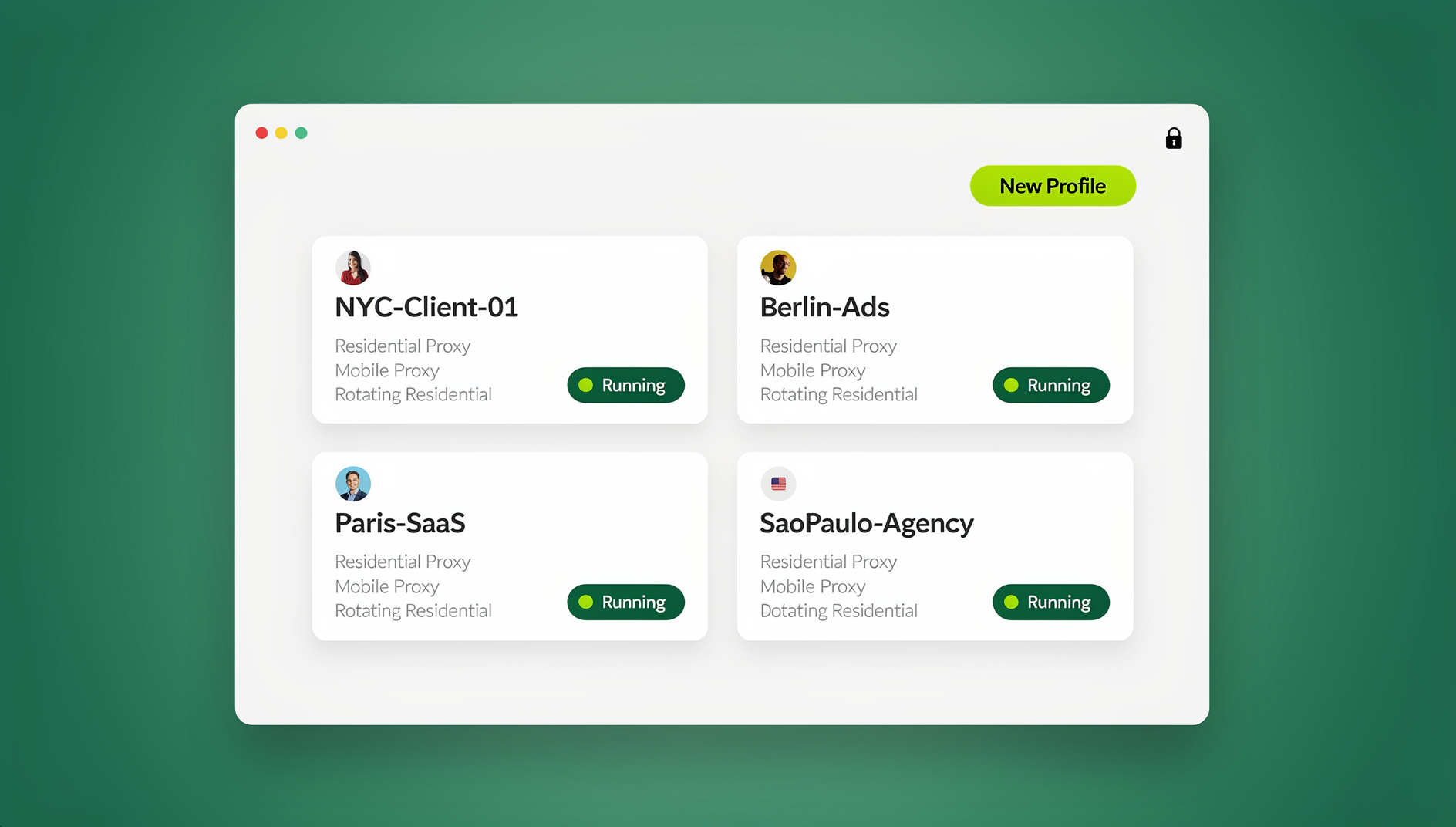
For many professionals, digital marketers, agency managers, and freelancers, email is the central hub of operations. It is common to have a primary email address for personal life, another for corporate work, and additional ones for managing different client portfolios, side projects, or e-commerce stores. While Google Chrome is the most popular browser in the world, trying to manage multiple Gmail profiles within it can quickly become an administrative nightmare.
The core issue stems from Chrome’s reliance on a single cookie jar per session. When you log into one Google account, Chrome sets global cookies that identify you across all Google services, including Gmail, Google Drive, and Google Calendar. When you try to add a second account using Google’s default ‘Add Account’ switcher, the browser overlaps these sessions. This leads to constant session timeout errors, redirect loops, and the frustrating scenario where clicking a Google Drive link automatically opens it in your default account, denying you access. To resolve this, you need to implement structured workflows that isolate your sessions. In this guide, we explore the most effective methods to manage this on Chrome.
Method 1: Google’s Native Multi-Account Sign-In
Google provides a built-in switcher that allows you to sign into multiple accounts within the same browser tab. This is the simplest option if you only manage a few profiles and do not have strict security requirements.
- Navigate to mail.google.com and log in with your primary Gmail address.
- Click on your profile avatar located in the top-right corner of the page.
- Select Add another account from the dropdown menu.
- Enter the credentials for your second account and complete any authentication requirements.
- Repeat this process for up to 10 accounts.
Once configured, you can switch between inboxes by clicking your avatar and selecting the desired profile. However, you must stay aware of default account behavior.
The Limitations of Native Account Switching
While this is the easiest method, it has severe drawbacks:
- Default Account Dominance: The first account you log into is designated as the default. Whenever you open a new tab or click a link to a Google service, Chrome defaults to this account, forcing you to switch manually.
- Accidental Sends: Because the user interface looks identical across accounts, it is easy to compose and send an email from the wrong address, compromising professional boundaries.
- Shared Fingerprints: All of your logged-in sessions share the same browser cache, history, local storage, and hardware fingerprints, meaning Google easily associates all your profiles together, which violates identity isolation.
Method 2: Configuring Chrome Browser Profiles
To achieve a higher level of separation, you can create distinct Chrome browser profiles. Each profile acts as a separate browser instance with its own bookmarks, settings, add-ons, cookies, and active login sessions. This is a solid native option for separating work and personal environments.
- Click on your Chrome profile icon in the top-right corner of the browser window (next to the three vertical dots, not the one inside the web page).
- Scroll down to the Other Profiles section and click Add.
- Select Set up your profile or click Continue without an account.
- Enter a profile name (e.g., ‘Work’, ‘Personal’, or ‘Client A’), choose a custom color theme to distinguish it visually, and click Done.
- A new Chrome window will open, allowing you to log into the specific Gmail account for that profile.
Understanding Chrome’s Profile Database Structure
At a technical level, each Chrome profile you create corresponds to a physical directory on your computer’s storage drive. On Windows, these directories are located in your user’s app data folder at C:\Users\YourUsername\AppData\Local\Google\Chrome\User Data\. The default profile is stored in the Default folder, while subsequent profiles are named Profile 1, Profile 2, and so on.
Each profile directory maintains its own SQLite database files for browsing history, local cookie storage databases, add-on settings, and cached web assets. This directory segregation is what allows you to stay logged into different Gmail sessions. However, because they all run under the same main executable process, they share system resources. Opening four separate Chrome profiles launches multiple instances of the Google Chrome helper process, which can quickly saturate your machine’s CPU and exhaust its RAM, leading to interface lag and system crashes on machines with less than 16GB of memory.
The Disadvantages of Multiple Chrome Profiles
While Chrome profiles offer visual separation, they fall short for advanced workflows:
- Resource Consumption: Every open Chrome profile runs its own set of background processes, which consumes vast amounts of system RAM, slowing down your computer and reducing performance.
- Shared Device ID: Since all profiles run on the same physical machine and network interface, they share the same IP address and hardware details.
- No Collaborative Features: If a team member needs access to a client’s Gmail profile, you cannot share the Chrome profile without sharing the raw password, which presents security risks and authentication blockages.
Method 3: Multi-Session Add-ons and Third-Party Clients
Another option is using browser add-ons and desktop email clients. Add-ons like session partition tools allow you to open separate, isolated tabs within the same browser window. Each tab operates with its own independent cookie container, allowing you to stay logged into different accounts simultaneously.
Technical Overview of Session Partitioning
Multi-session add-ons work by implementing session partitioning within a single browser window. Instead of loading the global cookie database, these add-ons intercept HTTP requests and inject isolated cookie containers (also called cookie jars) for designated tabs. This allows you to open two tabs side-by-side—one logged into your personal Gmail and the other logged into your work Gmail—without them overlapping or logging each other out.
While this is highly convenient and uses significantly less RAM than launching multiple Chrome profiles, it has a serious security drawback. These add-ons operate within the user-level permissions of Chrome. They cannot block advanced fingerprinting techniques, nor can they assign different proxy IP addresses to individual tabs natively without complex helper utilities. Consequently, while the cookies are separated, websites can still detect that both accounts are being accessed by the same computer and IP address, which exposes your accounts to linked security audits.
Alternatively, dedicated desktop software aggregates web apps into a single sidebar dashboard. They provide a unified workspace where you can switch between Gmail accounts with a single click.
If you are looking for details on configuring other browsers, reading our Chrome multi account guide is helpful for organizing workspaces. For ad operations, utilizing a specialized browser for ads management is key to maintaining clean cookie separations.
Method 4: Absolute Isolation with Send.win Browser and Cloud Sessions
For digital agencies, e-commerce sellers, and security-conscious professionals, Send.win offers a powerful, isolated workspace. It separates your digital fingerprints at the session level, ensuring that cookies, cache, local storage, and hardware signals are completely partitioned. It bypasses the RAM-heavy demands of running multiple local Chrome profiles.
Send.win provides two primary modes of operation:
1. The Sendwin Browser (Native Desktop Client)
A downloadable client for Windows, macOS, and Linux that creates isolated browser profiles. Each profile generates an entirely unique digital fingerprint (canvas hashes, WebGL configurations, audio profiles, and user-agents) and integrates with proxies, making each profile appear as a distinct device.
2. Cloud Browser Sessions
An environment running on remote secure servers that requires no local installation. You can run and manage your active Gmail profiles from any device within a standard browser window. Cloud sessions allow teams to share active sessions with colleagues instantly, without exposing raw passwords or triggering security warnings from Google.
When managing cookies across profiles, employing an efficient cookie management tool ensures session tokens remain completely separated. This security model keeps your workspace secure and prevents cross-contamination.
Gmail Keyboard Shortcuts and Visual Customization for Multi-Account Efficiency
When you are managing multiple Gmail accounts in Chrome, keeping them visually distinct is the best way to prevent sending emails from the wrong address. Google provides built-in customization features that help you color-code your environments. First, apply distinct Gmail themes to each inbox. By clicking the gear icon in the top-right corner of Gmail and selecting Themes > View all, you can set a dark theme for your personal mail, a bright corporate blue for your work mail, and a custom background for side projects. This creates an immediate visual cue that tells you which account you are viewing.
Second, take advantage of Chrome’s tab grouping feature. You can right-click a Gmail tab, select Add tab to new group, name it after the specific profile, and assign it a color. You can keep all tabs related to ‘Client A’ (Gmail, Drive, Docs) in a green group, and all tabs for ‘Client B’ in a red group. This organizes your workspace and prevents tab clutter.
Additionally, enabling keyboard shortcuts in Gmail settings (Settings > Advanced > Keyboard shortcuts > Enable) allows you to navigate and triage emails at lightning speed. You can use keys like ‘c’ to compose, ‘r’ to reply, and ‘e’ to archive. When running multiple Chrome windows, you can use the system shortcut Alt + Tab or Alt + ` (on Windows) to switch windows, moving between different Gmail profiles in milliseconds without touching your mouse.
Comparison: Desktop Multi-Gmail Solutions
To help you determine the best approach for managing Gmail in Chrome and desktop environments, here is a detailed comparison table:
| Parameter | Google Native Switcher | Chrome Profiles | Desktop Clients | Send.win Cloud Sessions |
|---|---|---|---|---|
| Session Isolation | None (Shared cookies) | Partial (Shared fingerprints) | Partial (Local storage split) | Complete (Isolated sandbox) |
| Visual Separation | Low (Same window) | High (Separate windows) | High (Sidebar interface) | High (Custom tab naming) |
| RAM Resource Cost | Low | Very High | High | Very Low (Cloud-hosted) |
| Team Login Sharing | No | No | No | Yes (Password-free) |
| Proxy Support | No | No | No | Yes (Residential & Mobile) |
Advanced Configuration and Pricing Models
If you scale your email operations to support team collaboration or manage client relations, Send.win offers pricing tiers designed to fit your requirements. There is no free trial; the first card purchase is covered by a 7-day money-back guarantee. The Pro plan costs $19/month (or $83.88/year) and the Team plan is priced at $49/month (or $251.88/year). You can preview the cloud browser for free at the demo.
🏆 Send.win Verdict
Managing multiple Gmail accounts in Chrome natively leads to session conflicts and default account confusion. Send.win provides a secure alternative by running isolated browser profiles that separate cookies, local storage, and device fingerprints, ensuring your accounts remain organized and completely isolated from each other.
Try the Send.win cloud demo — a 3-minute preview without signup, or 10 minutes a day with a free account, and experience robust session isolation today.
Frequently Asked Questions
Can I stay logged into multiple Gmail accounts in the same Chrome window?
Yes, Google’s native multi-sign-in allows you to log into multiple accounts in the same Chrome window. However, you can only view one inbox at a time in a single tab. For simultaneous viewing, you must open separate Chrome profile windows or use Send.win.
How many Gmail accounts can I add to Google Chrome?
Google’s default account switcher allows you to sign into a maximum of 10 accounts simultaneously. If you need to manage more than 10 accounts, you must create additional Chrome browser profiles or use a dedicated tool like Send.win to run unlimited accounts.
Does Google know that my Gmail accounts are linked?
If you log into multiple accounts in the same browser session or using different Chrome profiles on the same device, Google’s tracking scripts can link them based on your IP address and hardware fingerprint. To prevent this linkage, you need a session isolation browser like Send.win.
Why does Chrome keep switching back to my default Gmail account?
This happens because the first account you log into is set as the ‘default’ account. Whenever you open a new tab or click a generic Google link, Chrome defaults to the active session of this primary account, requiring you to manually switch profiles.
What is the difference between a Chrome profile and a Google account?
A Google account is your online identity used to access services like Gmail and Drive. A Chrome profile is a local browser environment on your computer that can contain multiple Google accounts, alongside local settings, bookmarks, and histories.
How does Send.win protect my Gmail accounts from suspensions?
Send.win isolates each profile within its own sandbox. This prevents cookies and local storage from leaking between sessions. Additionally, each profile is assigned a unique hardware fingerprint and IP address, preventing platforms from linking your separate accounts.
Does Send.win require a credit card for the free trial?
No, Send.win does not offer a free trial. The first card purchase is covered by a 7-day money-back guarantee, and the only free option is the cloud demo at https://send.win/demo-browser/ (a 3-minute preview without signup, 10 minutes a day with a free account).