How to Manage Multiple Google Accounts Without Sign-In Confusion
To manage multiple Google accounts without encountering sign-in confusion or session conflicts, you can use built-in browser profiles, open private sessions, or run a dedicated desktop client like Sendwin Browser. While Google’s default account switcher is simple, it often defaults to the first profile you logged in with and does not offer session isolation. By separating each client or personal profile into a sandboxed environment, you can run search campaigns, access separate Google Drives, and manage Gmail accounts concurrently without data leaks.
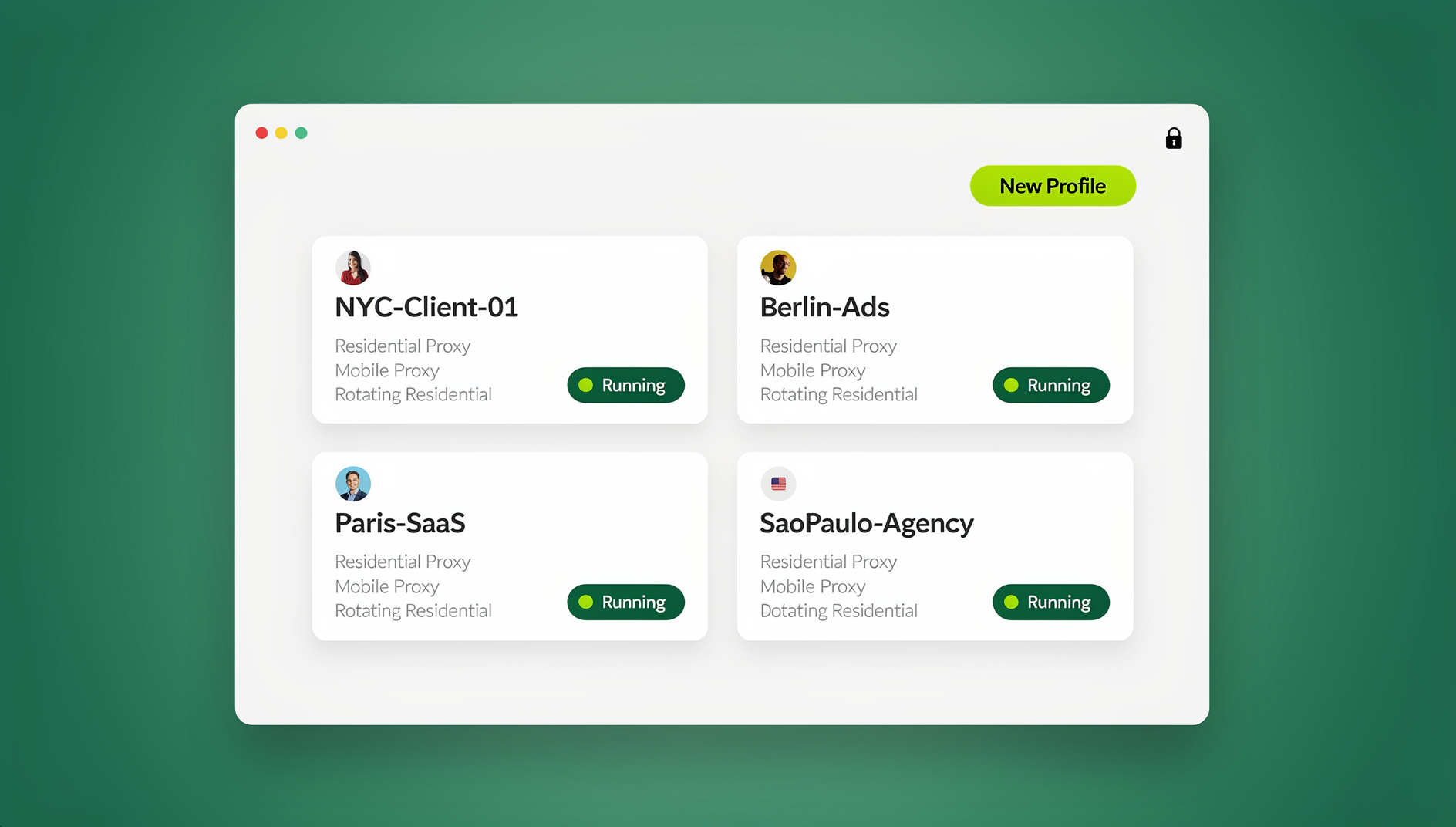
Managing several Google services is a daily routine for most digital professionals in 2026. You are likely juggling a personal Gmail account, a primary corporate Google Workspace account, several client access profiles, and maybe a few side project domains. When all these profiles are accessed within a single browser, the backend systems can easily mix up your sessions, leading to lost productivity and security issues.
The Common Pain Points of Multi-Account Switcher Limitations
Google offers a built-in account switcher that allows you to click your profile avatar and add another account. However, this method is fundamentally flawed for users who need to multiple Gmail accounts at once. Here is why the native switcher falls short:
- The Default Account Trap: Google automatically designates the first account you log into as the default profile. Whenever you open a new link, Google services will try to access it via this default account. If you want to open a document shared with your work email but your personal email is the default, you will be met with an “Access Denied” page.
- File Upload Errors in Google Drive: If you have multiple Google Drive tabs open, dragging and dropping a file into one tab can mistakenly upload it to the drive of your default account rather than the active folder you are viewing. This creates significant data leakage risks when handling sensitive client documents.
- URL Parameter Desync: Google separates accounts using URL parameters like
authuser=0orauthuser=1. If you copy a link to share with a colleague, they will often get an error because their browser interprets the parameter differently based on their login order. - Calendar Conflicts: Accepting calendar invitations when logged into several accounts frequently results in the event being added to the wrong calendar. This can lead to missed meetings and scheduling conflicts.
How Google’s Account Switcher Works under the Hood
When you sign into multiple accounts via Google’s native interface, your browser stores all of the authentication tokens in a single shared cookie space. When you request a page, the browser sends all these cookies to Google’s servers. The server then uses the URL parameters to decide which token to use. Because the cookie jar is shared, there is no boundary between your accounts. If one account is logged out, the entire session is often terminated, forcing you to log back into every profile individually.
The Limitations of the Switcher Method
Beyond convenience, the shared cookie space presents a major security issue. If you use a public or shared computer, anyone who gains access to your active session can access all your logged-in Google accounts. Furthermore, tracking scripts can link your accounts together because they share the same browser fingerprint, IP address, and cookie jar. This can be problematic if you are managing advertising profiles that must remain completely separate.
Method 1: Google’s Native Account Switcher (Best for Light Personal Use)
If you only need to check emails across two personal accounts, Google’s built-in switcher is the easiest option. You do not need to install any external software, and it works on any web browser.
To set it up, sign into your primary Google account, click your avatar in the top-right corner, and select “Add another account.” Enter your credentials for the second account. Once added, you can switch between them by clicking your avatar. However, we do not recommend this method if you need to manage multiple accounts easily in a professional capacity, as the session errors will eventually disrupt your workflow.
Method 2: Separate Web Browser Profiles (Chrome and Edge Profiles)
A step up from Google’s built-in switcher is using native browser profiles. Both Google Chrome and Microsoft Edge allow you to create distinct user profiles. Each profile operates with its own isolated set of cookies, local storage, bookmarks, and settings.
Why Browser Profiles Strain System Resources
While browser profiles solve the cookie sharing problem, they have a heavy hardware footprint. Each new profile runs as a separate browser process on your operating system. If you run five Chrome profiles simultaneously, your computer is essentially running five separate web browsers. This consumes significant RAM and CPU, which can slow down your computer and drain your battery.
Additionally, browser profiles are tied to the local machine. If you switch from your office desktop to a laptop, you must manually recreate each profile, sign into all your accounts again, and configure your settings. Furthermore, all local browser profiles share the same hardware characteristics (browser fingerprint) and IP address, meaning Google’s algorithms can still detect that all these profiles belong to the same physical device.
Method 3: Multi-Browser Setup (Brave, Firefox, Opera, and Safari)
Some professionals try to manage their accounts by running different browsers. For example, they might use Chrome for their personal email, Firefox for their main work account, and Brave for a client’s workspace. This method guarantees that cookies and local storage are completely separated. However, it is highly inefficient if you need to manage more than three or four accounts. Keeping multiple web browsers updated, managing bookmarks across them, and switching between completely different user interfaces is tedious and slows down your daily operations.
Method 4: Incognito Windows and Temporary Private Sessions
Incognito mode allows you to sign into an account without using your existing cookies. This is useful for a quick check of a secondary inbox. However, incognito windows do not persist. The moment you close the window, your session is deleted, and you are logged out. You must enter your username, password, and two-factor authentication (2FA) codes every time you open a private window. This makes incognito mode completely unviable for ongoing, daily multi-account management.
Method 5: Dedicated Multi-Login Browsers (Sendwin Browser and Cloud Sessions)
For power users, marketing agencies, and remote workers who need to handle multiple accounts professionally, the ultimate solution is a specialized multi-login browser. Sendwin Browser is a native desktop client that utilizes advanced session isolation technology to run unlimited, isolated browser profiles from a single window.
The Architecture of Session Isolation
Unlike standard browser profiles, Sendwin Browser creates a sandboxed container for each tab. This means you can have ten different tabs open side-by-side, each logged into a different Gmail account, without any session leakage or default account conflicts. This approach is highly resource-efficient because it does not launch separate browser processes, saving your computer’s RAM and CPU.
Sendwin offers two main modes of operation to suit your needs:
- Sendwin Browser (Desktop Client): A native desktop application for Windows, macOS, and Linux. This desktop client provides the fastest performance, offline access, and local profile management, making it the primary tool for daily work.
- Cloud Browser Sessions: For users who need to access their profiles on the go, Sendwin provides cloud-hosted sessions that run on remote servers. You can open and run these profiles directly inside any standard web browser without installing any software on your local machine. These profiles sync seamlessly in the cloud, allowing you to access them from a phone, tablet, or client computer.
Pricing and Core Plans
Sendwin has no free trial; paid plans start at $19/month for Pro or $49/month for Team, and your first card purchase is covered by a 7-day money-back guarantee. The pricing is structured to support both solo professionals and large teams:
- Pro Plan: Priced at $19/month (or $83.88/year). This plan supports 150 profiles and includes 5GB of proxy bandwidth.
- Team Plan: Priced at $49/month (or $251.88/year). This plan supports 500 profiles, includes 20GB of proxy bandwidth, and includes 16 user seats. This allows you to share access to specific profiles with team members or assistants without sharing the underlying passwords.
- Add-ons: If you need more resources, you can purchase extra proxy bandwidth for $6/GB or add additional profiles for $0.05/profile.
Why Datacenter Proxies Trigger Security Flags on Google
Google has highly sophisticated security systems that monitor the IP address of every sign-in attempt. If you log into five different Google accounts from the same IP address in a short period, Google may trigger verification prompts or temporarily block access. Many users try to solve this by using datacenter proxies, but these IPs are often flagged as commercial networks, which can lead to immediate security checks. Sendwin Browser integrates residential proxies directly into each profile, assigning a unique, clean IP address to each session to ensure your accounts look like they are accessing the web from separate domestic locations.
Comparing Multi-Account Workflows: Which Method Fits Your Scale?
To help you choose the best approach for your specific needs, here is a detailed breakdown of the different multi-account management workflows:
| Feature | Native Switcher | Chrome Profiles | Sendwin Browser |
|---|---|---|---|
| Session Isolation | None (Shared cookies) | Partial (Local folders) | Complete (Sandboxed containers) |
| System Performance | High resource usage | Very high (Separate processes) | Excellent (Lightweight tabs) |
| Cross-Device Sync | Yes (Via Google account) | Manual export/import | Cloud browser runs on Send.win’s server in the EU |
| Unique IP per Account | No | Requires manual VPN setups | Yes (Built-in proxy integration) |
| Password-free Sharing | No | No | Yes (Team profile sharing) |
Advanced Workflows for Agencies: Ads, YouTube, and Workspace
For digital marketing agencies and content creators, the stakes are even higher. A single login error can compromise a client’s campaign or restrict an entire marketing portfolio.
- Google Ads and Analytics: While Google MCC allows you to manage multiple advertising accounts, it does not completely isolate your sessions. If you are managing campaigns for competing clients, you must ensure their tracking pixels and conversion sessions do not mix. Operating each client in a separate profile prevents pixel overlap.
- YouTube Channel Management: Content creators running several channels often need to switch between different Google accounts to upload videos and check analytics. With Sendwin, you can keep each channel’s dashboard open in a separate tab, ensuring you never accidentally upload a video to the wrong channel.
- Google Workspace across Organizations: Juggling admin roles across different corporate domains is simplified with isolated sessions. You can remain signed into the admin console of each client’s Workspace without SSO conflicts.
- Google Merchant Center and Business Profile management: Google Business Profile is extremely sensitive to account sharing and IP changes. If an agency logs into multiple client business listings from the same IP or browser, Google’s algorithms may trigger a verification flag, resulting in suspension. Keeping each business listing strictly isolated within its own dedicated session prevents these devastating local SEO losses.
Best Security Practices for Running Multiple Logins
To protect your digital assets, keep these security guidelines in mind:
- Use a Strong Password Manager: Never reuse passwords across your Google accounts. Use a secure manager to store distinct, complex passwords for each profile.
- Enable Hardware 2FA: Two-factor authentication is vital. Whenever possible, use physical security keys (like YubiKeys) for your primary administrative accounts.
- Isolate Client Data: Ensure that cookies, caches, and autofill forms are sandboxed. This prevents one client’s data from appearing in another client’s search bar.
- Audit Account Permissions regularly: Periodically check which third-party applications have access to your Google accounts and revoke permissions for tools you no longer use.
How to Automate Multi-Account Workflows Safely
🏆 Send.win Verdict
Managing multiple Google accounts does not have to be a source of daily frustration. While basic switchers and standard browser profiles work for light personal use, they cannot scale for agencies, developers, or power users. Sendwin Browser offers a native desktop client and cloud browser sessions that keep your environments isolated, secure, and lightweight, giving you the tools to manage your clients and campaigns with complete peace of mind.
Try Send.win today — start with a paid plan covered by a 7-day money-back guarantee, configure your sandboxed profiles, and take control of your workspace without password risks.
Frequently Asked Questions
How many Google accounts can a single user own?
Google does not set a strict limit on the number of accounts an individual can create. However, creating several accounts from a single IP address in a short time can trigger automated security checks and verification requests. For managing large volumes of profiles, it is best to use isolated sessions with unique residential proxies.
Can Google detect if I am running multiple Google accounts?
Yes. Google uses sophisticated device fingerprinting, tracking cookies, and IP address logging to link accounts accessed from the same device. If you operate multiple business profiles, using a dedicated multi-login tool with session isolation and proxy integration prevents Google from linking your profiles.
Does Sendwin require installing software?
Sendwin offers two ways to access your profiles. You can install Sendwin Browser, which is a native desktop client for Windows, macOS, and Linux that provides the best speed and local control. Alternatively, you can use Sendwin’s cloud browser sessions, which run in the cloud and let you manage your profiles directly inside any standard browser with no local install required.
Does Send.win offer an Automation API?
No. Sendwin has no automation interface: no API, SDK, headless mode or Selenium/Puppeteer/Playwright support on any plan.
How does session isolation differ from Chrome profiles?
Standard Chrome profiles separate your cookies locally, but they run as separate heavy system processes that consume significant RAM. They also share the same hardware characteristics and system fingerprint. Session isolation in Sendwin Browser sandboxes each container within a single, lightweight browser window, with separate cookies, storage and fingerprint settings per profile.
Can I share access to a Google account without sharing the password?
Yes. With Sendwin’s Team plan, you can share a configured profile session with a virtual assistant or team member. The profile retains its login cookies, allowing them to access the account directly without ever seeing your password. You can also revoke access instantly from your dashboard.
What type of proxies should I use for Google accounts?
For Google services, residential proxies are highly recommended. Datacenter proxies are easily identified as commercial servers, which can trigger verification checks. Residential proxies route your traffic through standard residential connections, making your logins look completely natural.
Will managing multiple Google accounts in Sendwin cause my accounts to be flagged?
No. Sendwin Browser is designed specifically to prevent account flagging. By isolating cookies and generating distinct hardware fingerprints for each profile, it makes each session appear as a completely separate device, keeping your marketing and personal profiles completely safe.