The Essential Rules of LinkedIn Multi-Account Operations
If you are looking to manage multiple linkedin accounts multi account management guide 2026 2 is the definitive framework for B2B marketers, recruiters, and growth teams who need to scale their outreach. By deploying isolated browser profiles using a native desktop client or cloud browser sessions, you can operate several distinct profiles without cross-contamination or triggering automated detection systems.
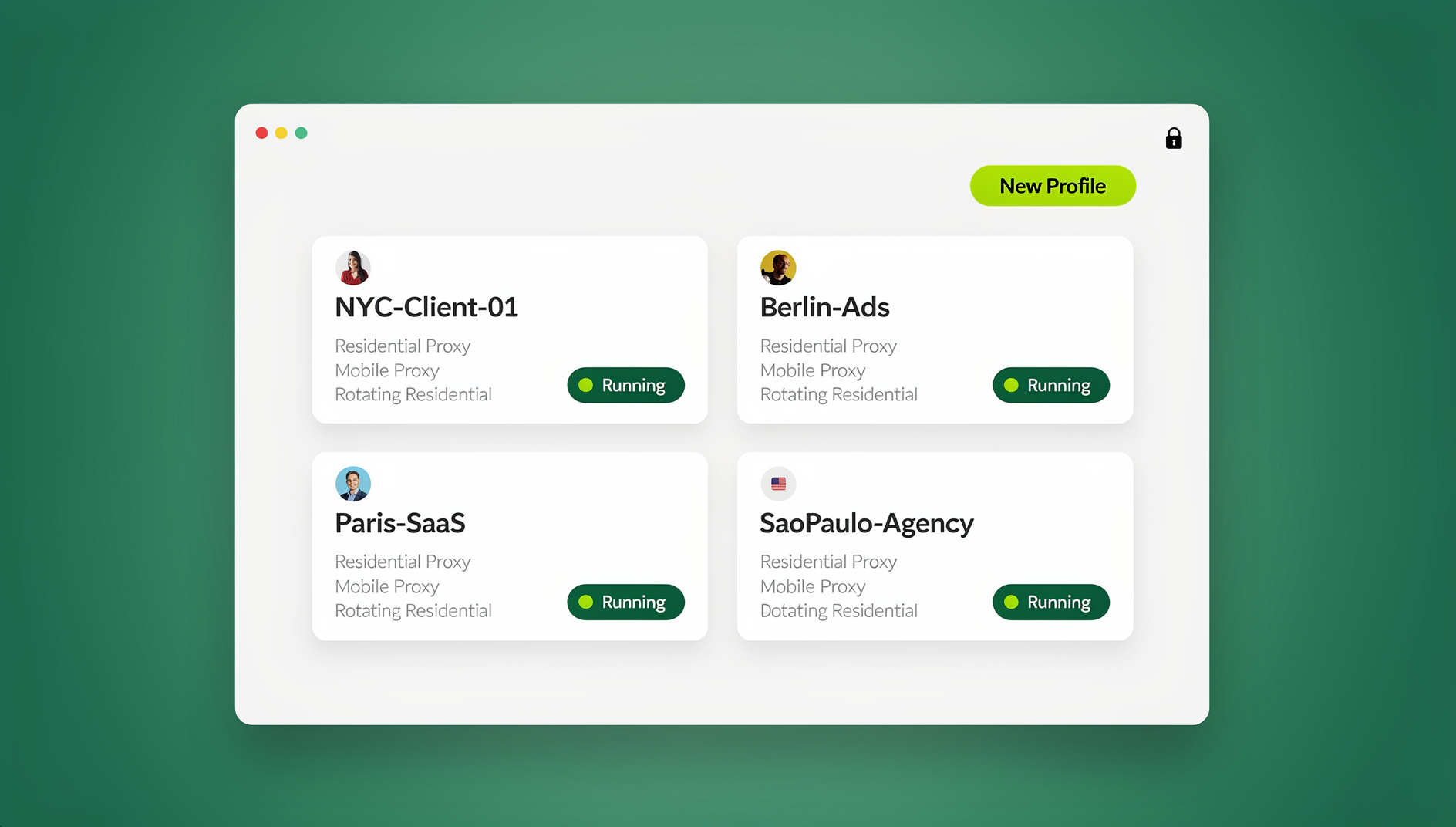
LinkedIn is the largest and most valuable business-to-business networking platform globally. Because of its high commercial value, the platform employs some of the most aggressive security measures in the industry. For agencies representing multiple executive voices, recruitment firms running parallel headhunting campaigns, or sales teams scaling outbound prospecting, a single mistake can result in the immediate restriction of all connected accounts. To navigate these digital boundaries successfully, you need to understand how the platform identifies linked users and how to maintain total technical separation.
While standard web usage allows for simple account switching, commercial operations require a disciplined system. LinkedIn’s terms of service are clear: each individual is permitted only one personal profile. However, agencies and marketing teams regularly need to access client profiles to publish content, send messages, and build networks. Doing this using traditional browsing methods leads to account associations that trigger security checkpoints. This guide explains how to operate multiple profiles safely while respecting technical boundaries.
To successfully manage multiple linkedin accounts multi account management guide 2026 2 recommends using professional browser isolation rather than simple browser profiles. Standard commercial workflows often demand that teams coordinate posts across different departments. If these actions are performed from linked profiles, the platform’s security algorithms will flag the activity as coordinated inauthentic behavior, resulting in account suspensions.
Why Standard Browser Profiles and Cookie Deletion Fail
Many marketers attempt to manage multiple LinkedIn profiles by creating different profiles in standard browsers or by constantly clearing their cookies and cache. While these methods might seem sufficient on the surface, they fail to protect against advanced detection algorithms. Standard browser profiles share the same hardware characteristics, operating system configurations, and network interfaces, making them easily linkable.
When you open a new profile in a standard browser, the underlying application still accesses the same system resources. The browser queries your graphics card, audio configuration, installed fonts, and network interface cards. This data is combined to construct a highly unique identifier known as a digital fingerprint. If ten different LinkedIn profiles are accessed from the same computer using standard browser profiles, the platform’s servers will observe the exact same hardware fingerprint, leading to immediate suspicion.
Clearing cookies is also an ineffective strategy. When you log out of one account, clear your history, and log into another, you are simply resetting the storage indicators. The platform’s tracking scripts can still see that the request originates from the same device fingerprint and IP address. This sequence of logging in and out of different accounts from the same physical device is a classic signature of automated or coordinated account management, which triggers verification demands.
Furthermore, standard incognito windows do not isolate your device fingerprint. Incognito mode only prevents the browser from saving cookies and history locally; it does nothing to mask your hardware characteristics or network address from the websites you visit. To achieve true isolation, you must control the environment at the browser level.
For organizations managing client portfolios, configuring a secure proxy browser setup is crucial. By routing each profile through a dedicated residential proxy, you ensure that each account has a stable, clean IP address. Combined with advanced browser isolation technology, this setup prevents the platform from detecting any common patterns between your managed profiles.
How LinkedIn Traces and Associates Profiles
To safely run client profiles, you must understand the specific signals that the platform’s security systems analyze to link separate accounts. The detection mechanism operates on multiple layers, combining hardware data, network telemetry, and behavioral analytics.
1. Hardware and Software Fingerprinting
Websites use advanced tracking scripts to collect detailed parameters about your system. This includes your operating system version, browser engine details, screen resolution, graphics card rendering patterns via WebGL, audio processing latency, and installed font lists. When these parameters are combined, they create a fingerprint that is unique to your machine. If multiple profiles share this fingerprint, they are instantly flagged as linked.
2. Network Address and Proxy Integrity
Your IP address indicates your physical location and the type of network you are using. Logging into multiple accounts from the exact same IP address is a major red flag. However, simply using any proxy is not enough. Cheap datacenter proxies are easily identified by their subnets and are often pre-blocked. High-quality residential proxies that match the client’s actual geographic location are required to maintain credibility.
3. Cookie Trails and Session Identifiers
Modern web applications store persistent identifiers in your browser’s local storage and IndexedDB. These trackers go beyond simple session cookies. They are designed to survive account logout sequences and can identify if a browser has previously accessed other profiles. Without strict isolation of local storage, these persistent cookies will associate your client accounts.
4. Behavioral and Interaction Telemetry
Algorithms track how you interact with the page. This includes your typing speed, mouse movements, navigation patterns, and the velocity of your actions. If multiple accounts perform identical actions at the same microsecond intervals, the system identifies automated control. Human-like delays and natural interaction models are essential for profile safety.
The Technical Architecture for Safe LinkedIn Management
To bypass these tracking methods, professionals use specialized environments that provide complete environment isolation. The goal is to make each profile appear as if it is running on a completely distinct physical computer located in the client’s home city.
Send.win provides the necessary infrastructure through two primary modes: the Sendwin Browser native desktop app and cloud browser sessions. The native desktop client runs locally on your Windows, macOS, or Linux computer, allowing you to launch isolated profiles that do not share cookies, local storage, or hardware signatures. For teams that require access from multiple locations, cloud browser sessions run the browser on secure remote servers, meaning no local installation is required and profiles can be accessed from any device.
Rather than relying on a simple browser add-on that only separates basic cookies, Send.win isolates the entire rendering process. Each profile gets its own unique Canvas hash, WebGL parameters, screen details, and media device lists. This means that even if a platform checks your hardware specs, it receives a generated profile that matches a standard consumer device, completely separating your business accounts.
By leveraging advanced browser environments, agencies can delegate tasks to multiple team members without password sharing. This workflow improves overall team productivity while protecting sensitive login information. If a team member leaves the agency, their access can be revoked with a single click, eliminating the need to update credentials or reset MFA devices across multiple customer accounts.
A Step-by-Step Workflow for Agency Management
Operating client profiles successfully requires a disciplined onboarding and management process. Following a structured workflow ensures that accounts remain secure during transition and active management phases.
Step 1: Setting Up the Isolated Profile
Begin by creating a new profile inside the Send.win dashboard. Name the profile clearly, such as “Client Name – LinkedIn”. Assign a dedicated residential proxy that matches the client’s home city. This ensures that when the profile logs in, the platform observes an IP address consistent with the client’s usual location, preventing security alerts.
Step 2: Importing Client Cookies
Whenever possible, ask the client to export their browser cookies using a standard cookie exporter. Importing these cookies directly into the Send.win profile lets you keep the active session in a separate, isolated profile, so each client’s cookies and storage stay apart from the others and you avoid repeated username and password entry.
Step 3: Scaling Activity Gradually
If you must log in fresh, do not immediately launch high-volume campaigns. Treat the profile with care. Spend the first few days logging in, reading the feed, and performing light, manual interactions. This warm-up period establishes the new device profile on the platform’s servers, building trust before any outbound marketing begins.
Step 4: Scheduling Content and Collaborating
Once the profile is established, you can safely schedule updates. If multiple team members need to access the profile, use Send.win’s secure session sharing. This allows you to delegate access to team members without sharing the client’s actual password. Team members can open the active session with one click, perform their work, and log off safely.
Best Practices for Content and Connection Management
Maintaining account safety also depends on how you behave on the platform. Even with perfect technical isolation, unnatural activity patterns will trigger manual reviews or automated restrictions.
When publishing updates for multiple executives, ensure that the content is completely unique. The platform’s algorithm checks for duplicate content across profiles to identify spam networks. Stagger your posting schedules so that updates are not published at the same exact minute. Keep your tone professional and natural, avoiding repetitive promotional links.
Outreach campaigns must respect strict daily limits. In 2026, sending more than 20 connection requests per day from a single personal account is highly risky. Stagger your outreach throughout the day rather than sending all messages in a brief window. If your team manages these workflows, consulting a comprehensive browsing protection guide will help establish consistent safety protocols across all client interactions.
Send.win does not offer an automation interface: there is no API, SDK, headless mode or Selenium, Puppeteer or Playwright support on any plan. If your team requires automated workflows, you will need a different tool. Unlike using a standard container add-on or a basic Chrome container tool, Send.win keeps each profile isolated with its own cookies, storage and fingerprint settings.
Outreach and Profile Activity Benchmarks
To keep profiles in good standing, stay within these recommended daily activity thresholds. Going beyond these benchmarks increases the risk of profile restrictions.
| Profile Tier | Connection Requests / Day | Direct Messages / Day | Profile Views / Day | Posting Frequency |
|---|---|---|---|---|
| New Profile (0-3 months) | 5 – 10 | 10 – 15 | 20 – 30 | 1 – 2 times per week |
| Established Profile (3+ months) | 15 – 20 | 25 – 35 | 50 – 70 | 3 – 4 times per week |
| Premium / Sales Navigator | 20 – 25 | 40 – 50 | 80 – 100 | Daily (Monday – Friday) |
Handling Verification Challenges and Account Health
Even with perfect protocols, the platform may occasionally present security challenges. Understanding how to handle these situations prevents temporary checks from turning into permanent blocks.
If a profile receives a temporary restriction, stop all activity immediately. Do not attempt to log in from other devices or change your IP address, as this signals panic and triggers deeper security reviews. Allow the profile to rest for 48 to 72 hours. If the platform requests identity verification, coordinate with the client to submit the required documentation. Always ensure that the profile name and photo match the client’s real government identification.
Monitor your profile health metrics weekly. Track your Social Selling Index (SSI) and search appearance frequency. A sudden drop in search appearances can indicate a shadowban, meaning the platform has restricted your content’s reach. If this occurs, reduce your activity, check your proxy connection, and focus on manual, high-quality engagement for several days to restore trust.
Choosing the Right Infrastructure: Send.win Pricing
Deploying professional profile isolation requires selecting a suitable software plan. Send.win offers flexible pricing tiers designed to support agencies, growing teams, and independent professionals.
Send.win does not offer a free trial. Paid plans start at Pro $19/mo or $83.88/yr, and the first card purchase is covered by a 7-day money-back guarantee. The only free option is the cloud demo at https://send.win/demo-browser/, a 3-minute preview without signup (10 minutes a day with a free account), letting you evaluate the system’s compatibility with your B2B lead generation workflows.
For independent professionals, the Pro plan is priced at $19/month (or $83.88/year). The Pro plan supports up to 150 isolated profiles and includes 5GB of proxy bandwidth. For marketing agencies and larger teams, the Team plan is available for $49/month (or $251.88/year). The Team plan supports 500 profiles, includes 20GB of proxy bandwidth, and 16 collaborative team seats.
By implementing the strategies detailed in this manage multiple linkedin accounts multi account management guide 2026 2, you can scale your outbound marketing, manage executive networks, and build high-converting lead pipelines. Investing in proper isolation technology is the foundation of modern agency operations, protecting your clients’ reputations and your own service delivery.
🏆 Send.win Verdict
Managing multiple client profiles on LinkedIn can quickly lead to bans if you rely on standard browsers or tools that share cookies. Send.win is the perfect professional solution, isolating each profile in its own secure environment. By utilizing either the native desktop client or cloud sessions, agencies can collaborate seamlessly and scale outreach securely.
Try Send.win free today — secure your B2B lead generation campaigns and keep client accounts active.
Frequently Asked Questions
Can I manage multiple LinkedIn accounts from one computer?
Yes. By using Send.win, you can create isolated browser profiles for each account. This prevents the platform from linking your profiles because each session runs in a sandboxed environment with its own cookies, local storage, and unique hardware fingerprint.
Does LinkedIn allow agencies to manage client profiles?
While LinkedIn’s terms of service require each individual to maintain only one personal profile, they recognize that agencies manage company pages. For personal profiles, agencies must use secure session isolation tools like Send.win to access client profiles safely without triggering suspicious login alerts.
Should I use a proxy for each LinkedIn account?
Yes. Routing each profile through a dedicated residential proxy that matches the client’s physical location is essential. Using the same IP address for multiple profiles is a major red flag that leads to verification loops and restrictions.
What is the difference between Sendwin Browser and cloud sessions?
The Sendwin Browser is a native desktop app that runs profiles locally on your computer using isolated browser engines. Cloud sessions run profiles on secure remote servers in the cloud, allowing you to access them from any device without installing software locally.
How does Send.win prevent profiles from being linked?
Send.win isolates cookies, local storage, and database caches. Furthermore, it customizes hardware parameters like Canvas rendering, WebGL hashes, screen details, and media device IDs for each profile, making them look like completely separate physical devices.
Does Send.win offer a free trial?
No. Send.win does not offer a free trial. Paid plans start at Pro $19/mo or $83.88/yr, and the first card purchase is covered by a 7-day money-back guarantee. The only free option is the cloud demo at https://send.win/demo-browser/, a 3-minute preview without signup (10 minutes a day with a free account).
How much do the paid plans cost?
The Pro plan costs $19/month (or $6.99/month billed annually — a 63% savings) for 150 profiles. The Team plan costs $49/month (or $20.99/month billed annually — a 57% savings) for 500 profiles, 16 team seats, and 20GB of proxy bandwidth.
Does Send.win include an Automation API?
No. Send.win has no automation interface: no API, SDK, headless mode or Selenium/Puppeteer/Playwright support on any plan. Each profile stays isolated with its own cookies, storage and fingerprint settings.