The Safest Way to Manage Multiple Trading Accounts Simultaneously
The safest and most secure way to manage multiple trading accounts simultaneously without triggering broker compliance alarms or session lockouts is by using isolated cloud browser environments or a dedicated browser profile manager like Send.win. By running each trading account in a containerized environment with a unique browser fingerprint and dedicated residential proxy, traders can log into multiple broker portals side-by-side without cross-contaminating their sessions or exposing their portfolios to cascading security risks.
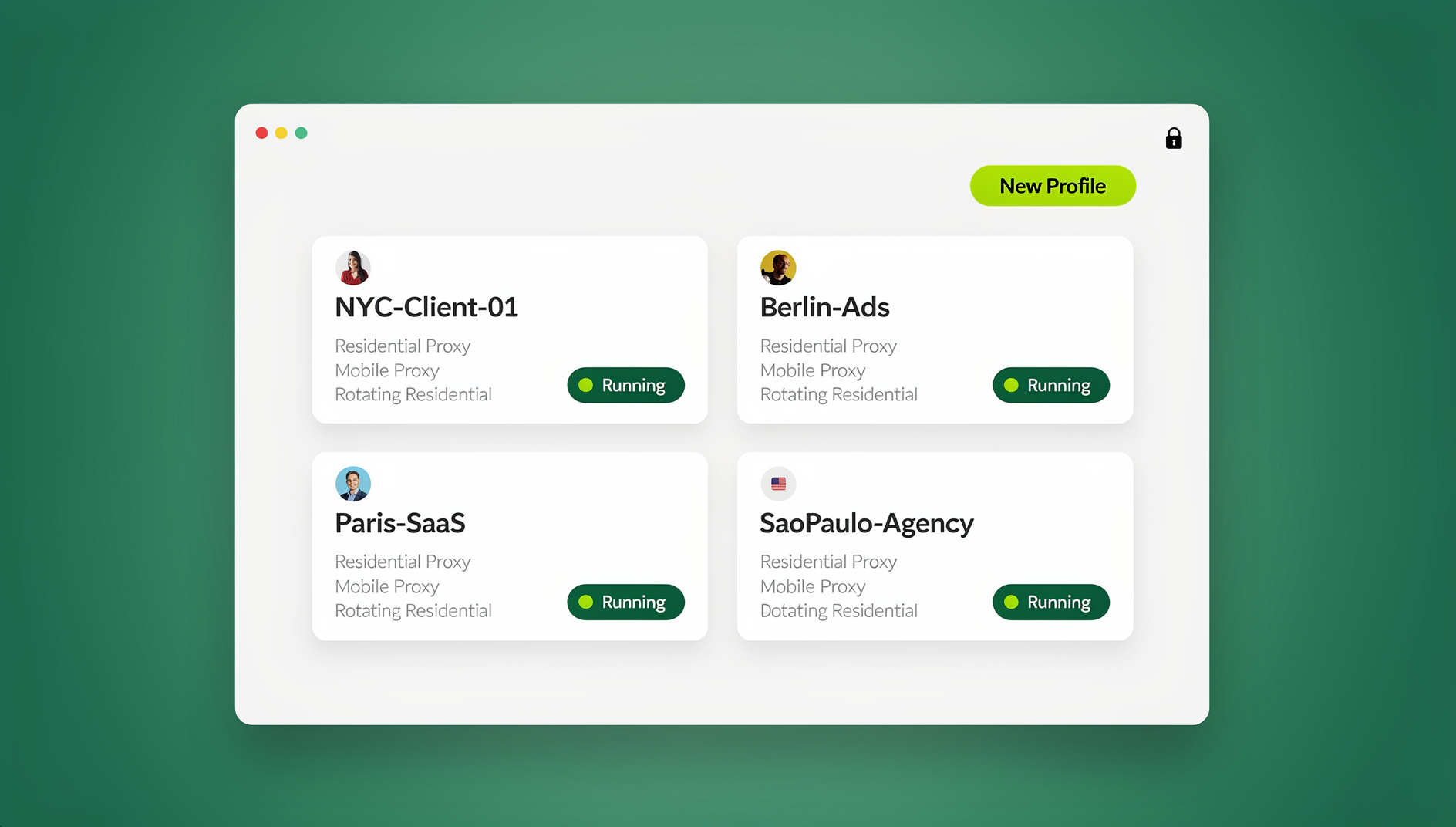
In the high-stakes world of financial trading, efficiency and risk management are paramount. Modern traders frequently operate across multiple brokers, jurisdictions, and platforms to execute diverse strategies, distribute capital, access specific asset classes, or manage funds on behalf of clients. However, accessing several financial portals from a single device using traditional web browsers introduces significant operational challenges. Web platforms utilize cookies, session tokens, and device fingerprinting to track users and protect against fraud. If you access multiple trading accounts under the same browser session or IP address, you risk triggering anti-fraud systems, facing account suspensions, or exposing your financial credentials to session hijacking.
The Technical and Operational Risks of Juggling Trading Accounts
Managing multiple trading portals simultaneously on a single computer without proper isolation presents both security and compliance challenges. Brokerages, trading exchanges, and proprietary trading firms utilize advanced security measures to monitor account activity and prevent unauthorized access or market manipulation. Without proper tools, your accounts remain vulnerable to several major risk vectors.
Broker Policy Violations and Auto-Lockouts
Many brokerages have strict policies regarding multi-account usage. For instance, CFD and forex brokers often prohibit users from opening multiple accounts under different names or executing opposite trades on the same pair (hedging) across different accounts to exploit bonus structures or manage risks. If their systems detect that multiple accounts are being accessed from the exact same device fingerprint and IP address, they will flag the accounts for policy violations. This can lead to immediate account lockouts, frozen funds, and the cancellation of open positions, which can be devastating during high-volatility market events. Understanding the inherent running multiple accounts risks is essential for anyone operating in this space.
Session Cross-Contamination and Data Leakage
Standard web browsers are designed to share cache, cookie databases, and local storage across tabs. If you have Broker A and Broker B open in different tabs, a script from one tab can potentially access session identifiers or data from another. Furthermore, brokers that share the same underlying white-label platform (such as MetaTrader WebTerminal providers) can experience cookie collisions, causing one session to automatically log out the other. This constant session interruption is more than just an annoyance; it can prevent you from closing a losing trade in time, leading to significant capital loss.
The Device Fingerprint Vulnerability
Financial platforms trace your identity far beyond your username and password. They analyze your browser’s digital fingerprint, which includes your screen resolution, operating system details, installed fonts, canvas and WebGL graphics rendering characteristics, and hardware concurrency (the number of CPU cores). When multiple distinct trading accounts log in with identical device fingerprints, it becomes obvious to the broker’s compliance department that they are controlled by the same operator. If you need to trade under different corporate entities or client names, you must ensure that each account presents a unique, distinct hardware fingerprint to the server.
Evaluating Methods to Manage Multiple Trading Accounts
Traders use various technical setups to manage multiple accounts. Let’s evaluate the pros, cons, and security levels of each method.
| Setup Type | Security Level | Session Persistence | Team Collaboration | Best For |
|---|---|---|---|---|
| Standard Tabbed Browsing | None (High risk) | Poor (Collisions) | No | Casual retail traders with one account |
| Incognito / Private Tabs | Low (Shared fingerprint) | None (Resets on close) | No | Quick checks on secondary accounts |
| Virtual Machines (VMs) | High (Isolated OS) | Good (Resource heavy) | Difficult | Heavy systematic traders with powerful hardware |
| Send.win Browser & Cloud Sessions | Very High (Complete isolation) | Excellent (Persistent cloud) | Yes (Profile sharing) | Professional traders, fund managers, and prop firm operators |
Why Traditional Web Browsers Fail Professional Traders
Traditional browsers like Chrome, Safari, and Firefox were designed for general consumers, not for high-security financial operations. They prioritize speed and user convenience by caching as much data as possible and sharing configurations across all tabs. For a professional trader who needs to manage multiple accounts easily, this default design creates continuous friction.
Clear-Cache Workflows Are Inefficient
Some traders attempt to bypass session limits by constantly clearing their cookies and cache before logging into a different account. This is incredibly time-consuming and disruptive. It forces you to re-authenticate, complete multi-factor authentication (MFA) prompts, and re-configure your chart layouts every single time you switch accounts. In fast-moving markets, the seconds lost to authentication loops can mean the difference between a profitable execution and a missed opportunity. This manual repetition is highly prone to human error, which is the leading cause of security leaks in financial setups.
The Single-IP Bottleneck
Standard browsers route all traffic through your local network connection. If you are managing multiple trading accounts, they will all share your home or office IP address. If a broker flags your IP for a network issue or rate-limits requests due to high-frequency trading API calls, all your accounts will be locked out simultaneously. Professional traders require the ability to bind unique, stable proxies to individual account sessions so that each operates on a dedicated IP channel, completely independent from other sessions running on the same machine.
The Power of Session Isolation in Trading Environments
To eliminate these risks, professional fund managers and prop traders utilize session isolation technology. This approach creates distinct digital containers for each broker account, ensuring that session data never leaks between profiles.
How Session Isolation Protects Your Portfolios
By implementing strict session isolation, each trading profile operates in its own sandboxed environment. The browser cookies, localStorage, session storage, and IndexedDB databases of one broker window are completely hidden from the others. This prevents cross-talk between different accounts and ensures that you can remain logged into multiple brokerages indefinitely without experiencing auto-logouts or session conflicts. The sandbox environment acts as an impenetrable firewall, shielding your confidential financial operations.
Mitigating Fingerprint Risks
With an isolated browser setup like Send.win, each profile is assigned a unique, synthetic device fingerprint. Send.win modifies parameters such as navigator objects, screen coordinates, media devices, and canvas noise. To the broker’s security system, each connection appears as a physically separate computer located in a different geographical region, eliminating the risk of automated account association. This hardware-level disguise is essential for operating multiple accounts without correlation flags.
How to Configure Send.win for Secure Multi-Account Trading
Setting up a professional trading environment with Send.win is designed to be user-friendly, allowing you to establish a secure multi-account system in just a few minutes.
Step 1: Downloading the Sendwin Browser App
Choose a Send.win paid plan to get started. Download the Sendwin Browser app for your operating system (Windows, macOS, or Linux). This native desktop application allows you to manage and launch isolated profiles locally on your computer. It features encrypted cloud sync, meaning your profile settings and proxy credentials are safely stored and synced across all your devices, giving you access to your portfolios from any workstation.
Step 2: Setting Up Isolated Profiles for Each Brokerage
Open the Sendwin Browser dashboard and click “Create Profile.” Create a separate profile for each trading account you own (e.g., “Forex Account – Broker A” or “Crypto Account – Exchange B”). Send.win will automatically generate a unique browser fingerprint for each profile, ensuring they look like completely distinct devices to your brokers’ servers. You can easily customize these settings if you need to mimic specific hardware configurations.
Step 3: Integrating Residential Proxies
To prevent brokers from linking your accounts by IP address, assign a proxy to each profile. Navigate to the profile settings and input your proxy details. We recommend using high-quality residential proxies that match the country where your trading accounts are registered. This ensures that your connections look like normal home users, minimizing compliance flags. Send.win will test the proxy connection to verify its speed and location before saving, ensuring maximum uptime.
Step 4: Organising Trade Executions Across Profiles
If you run multiple trading accounts, Send.win’s browser profiles keep each account’s cookies, storage, sessions and fingerprint settings separate, with its own proxy per profile. This makes it an ideal multi-login browser setup for traders who need to stay organised across dozens of accounts.
Platform-Specific Strategies for Multi-Account Trading
Different financial markets and platforms have unique characteristics. Here is how to apply multi-account strategies across various trading sectors.
MetaTrader 4 & 5 Web Terminals
Many forex traders use the MetaTrader web terminal to trade without installing desktop software. When managing multiple MT4/MT5 accounts across different brokers, open each WebTerminal in a dedicated Send.win profile. This keeps your chart layouts, saved account numbers, and indicator settings saved per profile, preventing them from overriding each other and ensuring fast execution speeds. This layout consistency is vital for maintaining situational awareness across multiple charts.
Cryptocurrency Exchanges
Crypto exchanges like Binance, Coinbase, and Kraken employ highly sensitive security systems that track session activity. If you access multiple corporate or personal accounts from the same machine, they can flag the sessions for security reviews. By routing each account through a dedicated Send.win profile with a unique residential IP and matched fingerprint, you ensure compliance with exchange security rules, preventing sudden trade freezes or withdrawal delays. It also lets you deploy arbitrage bots securely across different accounts.
Stock and Options Portals
For stock traders managing multiple accounts (such as a personal trading account, an IRA, and a family trust account), Send.win allows you to monitor all three portfolios side-by-side. You can open different broker dashboards on multiple monitors, each running in its own isolated Send.win window, allowing you to track market movements and execute orders without logging in and out constantly. This setup is particularly effective for options traders who need to balance positions across different accounts in real time.
Risk Management and Portfolio Hardening Best Practices
Operating multiple accounts requires strict discipline. Beyond the technical setup, you must implement strong risk management and security practices to protect your capital. Trading environments are highly dynamic, and any gap in your security perimeter can lead to devastating financial losses.
Establishing Strict Capital Allocation
Distribute your trading capital across your accounts based on the specific risk profiles of your strategies. For example, allocate a larger portion of your funds to long-term investment accounts managed through conservative brokers, and keep a smaller, separate pool of capital for high-risk day trading or options strategies. Never cross-collateralize your accounts, as a loss in one should never affect the liquidity of another. This strategy forms the bedrock of professional asset management.
Centralized Portfolio Tracking
When your assets are spread across multiple brokers, calculating your total exposure can be difficult. Use a consolidated portfolio tracker or a secure spreadsheet to aggregate your positions daily. This helps you monitor correlation risks (such as being over-exposed to a single currency or sector across multiple brokers) and calculate your net daily performance accurately. Having a single source of truth prevents portfolio blindness and limits risk exposure.
Hardening Login Security and MFA
Trading accounts are high-value targets. Enable multi-factor authentication (MFA) on every single account. Avoid SMS verification, which can be bypassed via SIM-swapping. Instead, use authenticator apps or FIDO2 hardware keys (like YubiKeys). In your Send.win profiles, configure your login credentials to be managed via a secure password manager rather than saving them in plain text, adding an extra layer of defense against unauthorized access. This defense-in-depth model keeps your funds secure from external threats.
Send.win Pricing and Plans
Send.win offers clear, predictable pricing options designed to grow with your trading operations. Plans start at $19 per month for Pro, and the first card purchase is covered by a 7-day money-back guarantee.
- Pro Plan: $19 per month (or $83.88 per year). This plan features 150 isolated profiles, 5GB of proxy bandwidth, and is ideal for individual traders.
- Team Plan: $49 per month (or $251.88 per year). Built for trading teams and asset managers, this plan includes 500 isolated profiles, 20GB of proxy bandwidth, and up to 16 seats, allowing you to delegate account access to team members securely.
🏆 Send.win Verdict
Managing multiple trading accounts on standard browsers exposes your capital to severe risks of policy bans and security breaches. Send.win provides the ultimate solution with its advanced session isolation, unique fingerprint generation, and cloud-synced desktop client. Whether you choose to run local profiles in the Sendwin Browser desktop app or launch instant cloud browser sessions with zero installation, Send.win keeps your trading activities isolated, secure, and compliant.
Try Send.win today — Choose a paid plan and experience professional multi-account trading today.
Frequently Asked Questions
Is it legal to own and trade on multiple trading accounts?
Yes. It is completely legal to open and operate accounts with multiple brokers. However, opening multiple accounts under the same broker using different identities to bypass trading limits or exploit promotional bonuses may violate the broker’s terms of service and lead to account closures.
Can brokers detect that I am managing multiple trading accounts?
Yes. Brokers use cookies, IP addresses, and device fingerprints to analyze incoming connections. If they detect multiple accounts logging in from identical hardware configurations and the same IP address, they can flag the accounts for suspicious activity. Send.win prevents this by isolating each account’s session and fingerprint.
Do I need a separate computer for each trading account?
No. Send.win’s isolated profiles act like completely separate computers. Each profile has a unique browser fingerprint, matching operating system parameters, and its own dedicated proxy, providing the same level of security and isolation as using multiple physical devices at a fraction of the cost.
What type of proxies should I use for trading accounts?
We highly recommend using high-quality residential proxies. Datacenter proxies are cheap but are often block-listed by financial institutions and exchanges due to their association with automated scrapers and bots. Residential proxies look like normal home connections, ensuring maximum access reliability.
Is Send.win a browser setup or a standalone application?
Send.win is not a browser extension. It has two real modes of operation: the Sendwin Browser native desktop app (which runs profiles locally) and cloud browser sessions, which run on remote servers and allow you to access your accounts from any device without installing software.
Can I run automated trading bots through Send.win?
No. Send.win does not offer an automation interface: there is no API, SDK, headless mode or Selenium/Puppeteer/Playwright support on any plan.
How does the 7-day money-back guarantee work?
Send.win has no free trial. The first card purchase is covered by a 7-day money-back guarantee. You can also preview the cloud browser with the free demo at https://send.win/demo-browser/ before committing to a paid plan.