For digital agencies and media buyers, managing multiple ad accounts efficiently multi account management guide 2026 2 shows that isolating browser fingerprints is the only way to scale advertising safely. Rather than relying on a risky local browser profile, modern marketers use isolated virtual environments to separate client assets and prevent cascading platform bans.
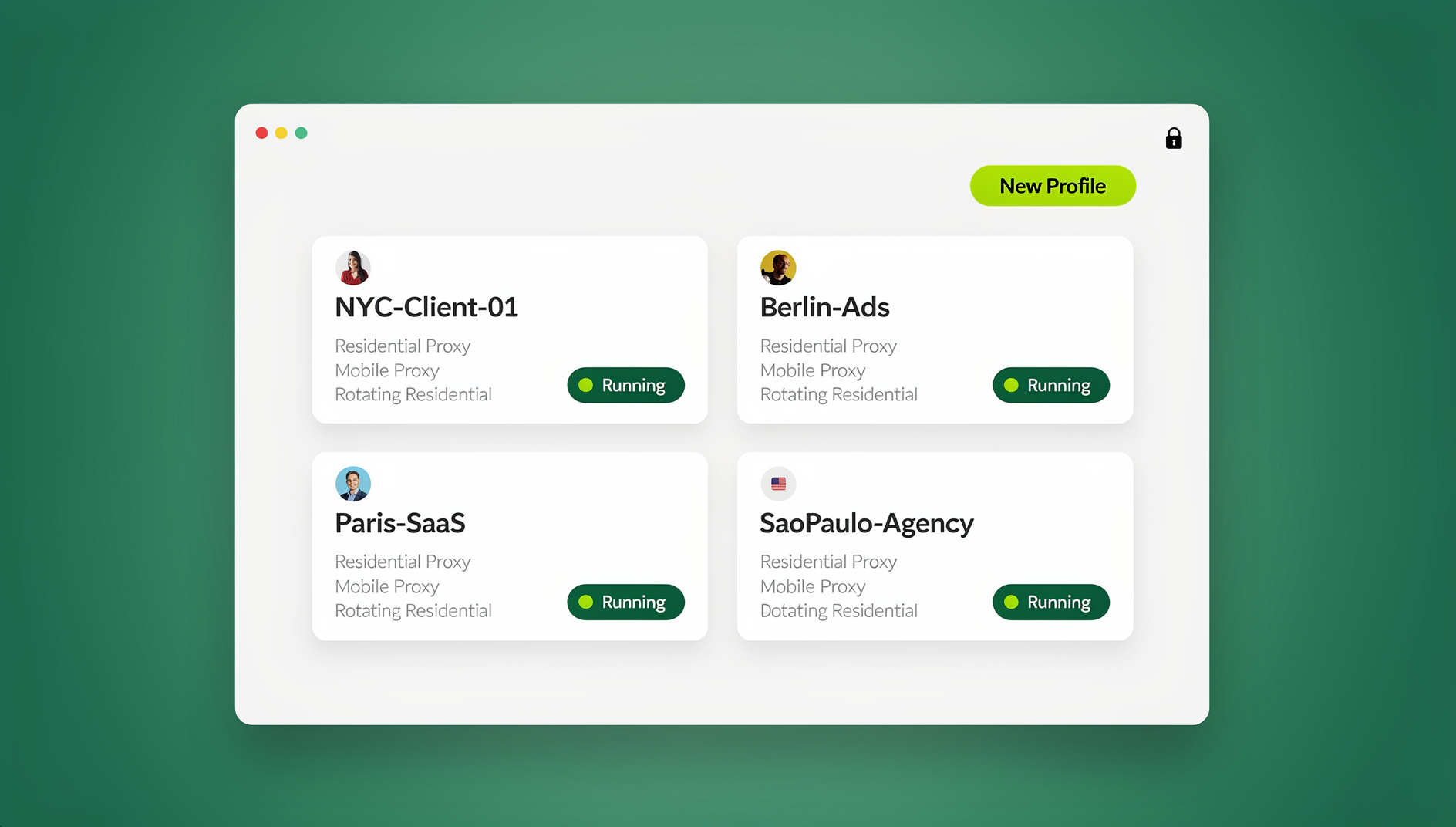
The Technical Challenge of Ad Account Multi-Management
In the digital advertising landscape, running campaign accounts for dozens of different clients is standard practice. However, ad networks like Meta, Google, and TikTok have deployed sophisticated fraud-detection mechanisms. These systems do not simply monitor user behavior; they track deep hardware and network characteristics to link profiles. If your local device is used to access different client accounts under the same browser configuration, the platforms will associate them instantly. When one account encounters a billing issue or policy warning, all linked accounts can face immediate suspension.
Browser Fingerprinting: How Platforms Detect You
Every time a browser connects to an ad manager dashboard, it transmits a massive array of configuration parameters. These signals include your operating system, CPU architecture, GPU specifications, screen resolution, list of installed fonts, system language, WebGL vendor, and canvas rendering patterns. Combined, these details form a highly unique identifier called a browser fingerprint. If a media buyer logs out of Acme Corp’s Facebook Ads Manager and immediately logs into Beta Corp’s account using the same browser, Meta detects the identical hardware fingerprint. For high-volume operations, this cross-profile contamination is a primary cause of account bans.
IP Address Geolocation and Proxy Setup
In addition to hardware signatures, ad platforms monitor the geographical location and reputation of your network connection. Logging into accounts from mismatched IP addresses or jumping between countries in a matter of minutes triggers automated security checkpoints. To prevent this, professional media buyers route each profile through dedicated residential or mobile proxies. These proxies mask the true origin of the connection and present a consistent IP address matching the client’s business location. Understanding proxy browser setup is essential for configuring isolated browsing environments that mimic organic business operations.
Cookie Tracking and Cross-Profile Contamination
Standard web browsers store cookies, session data, and cache databases globally or across open tabs. When you switch accounts in a standard browser, persistent tracking scripts can read cached cookies from other domains, linking your advertising identity. True isolation requires that each profile maintains its own sandboxed cookie jar. Without this segregation, tracking pixels will tie your different accounts together, rendering standard logouts ineffective. Implementing a proper browsing protection guide ensures that your local data remains strictly segregated between client accounts.
Comparing Top Solutions: Desktop Clients vs. Cloud Browser Sessions
Marketers have two main architectures to choose from when isolating multiple ad accounts: traditional desktop-based browser profile clients or modern cloud browser sessions. Below is an overview comparing the core capabilities of these setups.
| Feature | Sendwin Browser (Desktop Client) | Sendwin Cloud Sessions | Traditional Antidetect (AdsPower) | Standard Browsers (Chrome/Firefox) |
|---|---|---|---|---|
| Isolation Method | Native Sandboxed Profiles | Remote Cloud Containers | Local Profiles (Requires Install) | Basic Profiles (Shared Fingerprint) |
| Local CPU/RAM Load | Moderate | Virtually Zero | Very High | Low |
| Proxy Requirements | Configurable per profile | Configurable or Built-in IP Masking | Manual configuration per profile | Global settings only |
| Team Sharing | Built-in Sync | One-click Web Link Sharing | Requires local app & seat fees | No secure sharing |
| Mobile Access | Via Cloud Sessions | Yes (Run in any mobile browser) | No native mobile access | Not isolated |
Sendwin Browser: The Native Desktop Client
The Sendwin Browser is a native desktop client that runs locally on Windows, macOS, and Linux. It operates by creating isolated browser containers directly on your computer. Each profile has a unique, customizable fingerprint that is generated automatically. This native tool is perfect for media buyers who want to execute local campaigns with high speed and direct hardware control, while ensuring that client cookies and session caches never touch one another.
Cloud Browser Sessions: The Zero-Installation Mode
For agencies that demand maximum flexibility, Sendwin provides cloud browser sessions. Instead of running profiles on your local computer and draining your RAM, these sessions are executed inside remote, sandboxed cloud containers. You access the browser interface directly through a secure web link in your existing browser. Because the browser instance runs in the cloud, you can access and manage your client accounts from any device, including tablets and mobile phones, without installing any software or add-ons. This is a game-changer for distributed teams who need to check campaigns on the go.
The Problem with Traditional Desktop-Only Clients
Traditional tools like AdsPower require a local desktop installation and consume immense computing resources. Running ten local profiles simultaneously can easily consume 8GB to 16GB of RAM, slowing down your machine and risking crashes during critical campaign launches. Furthermore, desktop-only clients bind your profiles to the specific hardware they are installed on, making it difficult to share access securely with remote team members without exporting profile configurations or paying steep user seat fees.
Operational Best Practices for Ad Platforms in 2026
Isolating your browser environments is only half the battle. To maintain long-term account health, you must implement strict operational protocols across the major advertising networks.
Meta Business Manager Workflows
Meta’s algorithms are highly sensitive to sudden changes in operational patterns. When setting up Facebook campaigns, never assign the same personal profile to buy ads across multiple unrelated Business Managers. Instead, create separate Sendwin profiles for each client organization. Ensure that each profile is logged into a dedicated Facebook account that has been warmed up properly. Use distinct payment methods for each Business Manager; sharing a single credit card across different clients is a critical linking signal that will lead to rapid cascading restrictions.
Google Ads Manager Accounts (MCC)
Google Ads permits the use of Manager Accounts (MCC) to link client ad dashboards under a single administrative login. While this is acceptable for normal operations, if one of your clients operates in a high-risk vertical (such as finance or health) or has a history of policy violations, do not link them to your primary MCC. A suspension on a linked account can negatively impact the trust score of the entire MCC. Instead, run high-risk client accounts in separate, isolated browser profiles using dedicated proxies to keep them completely isolated from your clean client accounts.
TikTok Business Center and Video Ads
TikTok is particularly aggressive in tracking device patterns and user agents. Because the platform caters heavily to mobile-first content, sudden changes in device indicators can lock your Business Center. When managing TikTok ads, utilize Sendwin’s native desktop tool or cloud browser sessions to maintain consistent mobile-user-agent configurations. Avoid uploading the exact same video creative file across different client accounts without modifying the metadata or file hash, as TikTok’s automated scanners can flag duplicate creatives as coordinated spam behavior.
How to Avoid Cascading Restrictions and Banned Profiles
Protecting your agency’s reputation and your clients’ advertising budgets requires a proactive approach to risk management. When you are focus-testing new ad angles, the process of managing multiple ad accounts efficiently multi account management guide 2026 2 dictates that you never use a single browser profile for different client platforms.
Safe Payment Processing and Billing Rules
Billing discrepancies are one of the most common triggers for automated ad account suspensions. If the name on your advertising profile does not match the name on the credit card, or if the card billing address is in a different country than your connection IP, the platform’s fraud detection system will flag the account. To prevent this, use virtual credit card (VCC) providers that allow you to generate unique, client-specific cards with customizable billing names and addresses. Always match the billing geography with the proxy location configured in your Sendwin profile.
Warm-Up Sequences for New Accounts
Launching a brand new ad account and immediately scaling spend to thousands of dollars per day is a major red flag for ad networks. An administrative oversight in managing multiple ad accounts efficiently multi account management guide 2026 2 is allowing cross-contamination between cookies or rushing the account warm-up phase. Start by running low-budget engagement campaigns ($10 to $20 per day) for the first week. Allow the platform to successfully charge your billing method multiple times at lower thresholds before launching high-budget conversion campaigns. This builds account trust and establishes a positive billing history.
Multi-User Access Controls and Permissions
Sharing login credentials over chat or email is an enormous security risk. If a team member logs in from a different location, the ad platform may flag the attempt as a compromised account and lock it. Sendwin resolves this by allowing you to share profiles and sessions with one-click access. You can grant team members access to specific client profiles without sharing the actual passwords. You can also revoke access instantly when a contractor leaves. This secure sharing system prevents location flags and keeps your credentials safe.
Pricing Comparison: Find the Best Value for Your Agency
Selecting the right software tool for your agency requires looking at the total cost of ownership. Sendwin offers clear, transparent pricing designed to scale with your business without charging hidden fees.
| Pricing & Feature | Sendwin Pro | Sendwin Team | Competitor Base | Competitor Pro |
|---|---|---|---|---|
| Monthly Price | $19/mo | $49/mo | $9.00/mo | $50.00/mo |
| Annual Price (Effective) | $6.99/mo | $20.99/mo | $5.40/mo | $30.00/mo |
| Profiles Included | 150 Profiles | 500 Profiles | 10 Profiles | 100 Profiles |
| Proxy Bandwidth | 5 GB Included | 20 GB Included | 0 GB (Must buy third-party) | 0 GB (Must buy third-party) |
| Automation API | No | No | Limited / Extra cost | Included |
| Team Seats Included | Individual | 16 Seats Included | 1 Seat Only | 3 Seats Included |
Sendwin provides an incredibly generous entry point. The Pro plan costs just $19/month ($83.88/year) and includes 150 profiles, 5GB of proxy bandwidth, and full access to the local browser profiles. The Team plan, priced at $49/month ($251.88/year), includes 500 profiles, 20GB of proxy bandwidth, and 16 team seats. This is far more cost-effective than competitors, which charge additional seat fees and offer very low profile limits on their entry-level plans.
Conclusion
To implement this browser isolation technology, you need to transition your workflows away from risky personal profiles. By leveraging Sendwin’s unique combination of native desktop app containers and cloud browser sessions, you ensure that every client’s asset is kept behind a digital firewall. In conclusion, following this managing multiple ad accounts efficiently multi account management guide 2026 2 will protect your ad budgets and prevent platform bans, giving your agency the technical infrastructure it needs to scale to hundreds of active client accounts.
🏆 Send.win Verdict
Managing multiple client ad accounts requires absolute profile isolation to prevent cascading restrictions. Send.win offers the perfect hybrid solution: a native desktop client for high-performance local browsing and remote cloud browser sessions for instant, zero-install team access. With built-in proxy bandwidth and separate cookies, storage and fingerprint settings per profile, Send.win provides unmatched security and value for agencies.
Try the free Send.win cloud demo — preview it for 3 minutes without signup, or 10 minutes a day with a free account, to isolate your ad accounts and protect your agency from bans.
Frequently Asked Questions
Why do ad platforms restrict multiple accounts operated from one computer?
Ad networks track hardware characteristics, IP addresses, and cookies to identify coordinated account behavior. If they detect multiple client accounts running on the same hardware fingerprint, they assume the accounts are linked. If one account violates a policy, the platform will ban all linked profiles to protect their network integrity.
What is the difference between a desktop client and cloud browser sessions?
A desktop client runs locally on your machine and generates isolated browser profiles using your system’s CPU and RAM. Cloud browser sessions are executed inside remote, sandboxed cloud containers on external servers. You connect to cloud sessions via a secure link from any device without installing any software or local add-ons.
Can I use the same proxy for multiple client ad accounts?
No, you should never share proxies between unrelated client accounts. A shared IP address is one of the strongest linking signals used by ad networks. If one account is flagged, any other account utilizing that same IP address will be instantly linked and scrutinized, often leading to a cascade of suspensions.
Is the Automation API available on all paid Sendwin plans?
No, Sendwin has no Automation API on any plan. Neither the Pro plan ($19/month, or $83.88/year billed annually) nor the Team plan offers an automation endpoint, so there is no integration with Puppeteer, Playwright, or Selenium.
Does Sendwin offer a free trial for digital media buyers?
Sendwin has no free trial. Paid plans are Pro at $19/mo or $83.88/yr, and Team at $49/mo or $251.88/yr, with the first card purchase covered by a 7-day money-back guarantee. Marketers can evaluate the product through the free cloud demo at https://send.win/demo-browser/ before choosing a paid subscription plan.
Is there a browser add-on version of Sendwin available?
No. Sendwin does not offer a browser add-on because add-ons run inside your existing browser and cannot mask deep hardware fingerprints. Instead, Sendwin operates as a secure native desktop app or through isolated cloud browser sessions, ensuring complete technical separation.
How does Sendwin help keep client billing accounts safe?
Sendwin allows you to assign specific proxy locations to each profile, ensuring that your connection IP matches the billing address of the client’s payment method. By maintaining geographic and network consistency, you avoid triggering the automated fraud-detection systems that flag payment discrepancies.